
Is now released! You can go to the website or...

(Pictures from here.)
From what I’m seeing in the media these days, there are a lot of people who neither know what a vaccine actually is nor what risk actually is. So, let’s talk about that.
Your body is the culmination of the following evolutionary trends:
Once life began, other life began to attack it. At first, it was single-celled organisms against single-celled organisms, but then it was single and multicelled organisms against multicelled organisms. My point is that every organism has had to defend itself against other attacking organisms since the beginning of life.
That defense is deep.
For our purposes, our main line of defense against pathogenic organisms—mostly single-celled pathogens or some multicelled parasites—is the immune system. The immune system is ancient and derives from our constant war with pathogens. There are intracellular immune responses—responses individual cells present against an invader—and extracellular immune responses, where the immune system external to the cell attacks invaders.
It's a good system. People who have had some diseases, such as smallpox, don’t get them again. The immune system remembers the smallpox virus. People who get other diseases, such as coronaviruses, get some immunity, but for reasons not well understood, their bodies forget that immunity. In addition, both viruses and bacteria are living organisms, too, and respond when attacked. For a virus or bacteria, an immune response is an attack. After all, they were just sitting there minding their own business, eating the host, when out of nowhere, a bunch of white blood cells eat them in return.
My point is that bodies are in a continual state of attack. Sure, there are good bacteria, but they aren’t what we’re talking about. There’s no scenario when a staph infection is a good thing.
Because pathogens have been attacking us and being repulsed, they are always working on ways to subvert our defenses. In addition, novel pathogens may not be quickly recognized by our immune system.
Vaccines are mechanisms to tell our immune system to wake up and fight invaders, even when those invaders have not yet been encountered. After all, it’s better to meet smallpox with weapons ready than wake up and discover you’re already at death’s door.
And we are talking about death here. All of the pathogens for which we have vaccines have death counts associated with them. Some are close to 100% deadly—rabies, for example. Some are less. Measles has a death rate of 1-2/1000. However, blindness, seizures, and brain inflammation can also occur. Besides, measles has the lovely trait that it wipes out immune memory. All that built up immune response? Gone.
So, we should not just concentrate on death rate. Other complications are also troubling.
Polio is another fun experience. Like a lot of viral diseases, once infected, there’s not much in the way of treatment. Most infected patients have no symptoms or a mild illness—they’re still infected, mind you. But .1-.5% (1-5/1000) develop some kind of paralysis. This is a big deal since, for paralyzed patients, fatality is 2-5% in children (20-50/1000) or 15-30% (150-300/1000) in adults, depending on the age of the patient. But that’s just death. Those who live have lifetime complications.
I grew up knowing children who had survived polio. Children without function in a leg or an arm. Or both legs—President Roosevelt couldn’t really walk because of polio.
If you look at those graphs at the top, you can see something interesting. It presents death rates for smallpox, polio, and measles. Note that the slope remains constant or increasing until vaccination enters the picture. For modern vaccinations, the death rates—and the rates of disease complications—plummet as soon as a modern vaccine is introduced. Even in the case of smallpox, when Jenner’s vaccine was introduced—as primitive as that was—deaths immediately sloped downward. In all three cases, when modern vaccines were introduced, the death rate went close to zero.
I’ve heard about the whole autism issue. It’s bogus. Even the original author who started this mess has recanted. I can understand that people might be concerned about the “inactive” ingredients. So take them out. But tossing vaccines themselves out because of it is idiocy. The CDC recently blamed the COVID vaccine for 10 child deaths out of 96 between 2021-2024. From what I’ve read, these are also bogus numbers, insofar as they present no real evidence to back them up. 270,227,181 people had at least one dose between 2021-2023. That’s .0000037%. According to this source, 30 million kids have been vaccinated, yielding .000033%. The risk of being struck by lightning is 1/1000000 or .0001%. I’ll take those odds.
Hell, I did take those odds. I did. My wife did. My son did. Most of my friends did. Not all of them. Some I knew that didn't, died.
Every medical procedure, every drug, every drive in the car, every waking day is a risk. You have to look at these risks and evaluate them. Which means looking at reputable sources—which pointedly does not include Orange Voldamort or Brainworm Boy and any associated with them.
But going forward.
The mRNA vaccine wasn’t really intended as a vaccine for COVID-19. It was a whole field of technology known as RNA therapeutics. It came out of some studies in the 90s where RNA encoding specific antigens was injected into tumor-bearing mice to induce an immune response. This was successful. The tumors were, in fact, suppressed. This went on to become an original approach for treating melanoma.
That’s right. This technology was first pointed at cancer. It was redirected into making a vaccine against an infectious disease, but it was always intended to target cancer. There’s been success in pancreatic cancer treatment as well.
It’s not a magic bullet—it’s beginning to look like there is no magic bullet for cancer. But it’s a very effective treatment for some cancers and may be useful in many more. It’s even been found to be effective in some kinds of tissue regeneration.
My point with this whole post is that we let idiots scare us. It is getting harder and harder to find original material to evaluate. It gets swamped in all the comments, remarks, and editorializing about such things. Recently, there were some congressional Democrats who made a video reminding members of the military how they were obligated to disobey illegal orders. Regardless of what you might think about what they did, it took thirty-five minutes for me to find the original video buried under commentary.
But that doesn’t release us from the obligation to make the effort. I spent eight years studying biology of one sort or another and the next forty deep in the software industry. Reading about in vitro and ex vivo transmission, T-cells, and antigens is more familiar to me than most. People who don’t work in a given field and try to argue about it are not necessarily reliable—me, included. But a lot of people who demonstrably have zero qualifications—like Brainworm Boy—like to spout off like they’re an authority.
They are not.
The mRNA technology is very exciting. It’s some of the first actual treatments for things like pancreatic cancer. Yet, this technology is under fire—along with most NIH and NSF funded cancer research—by people who either don’t understand it or are being driven by an agenda.
Don’t fall for this. Go find people working in the field. Look up the Wikipedia articles and then go through the references. Weigh the different opinions. If you find six scientific authorities and five of them say one thing and the sixth says another, sure, number six might have something. But the odds are against it. For every stalwart Ignaz Semmelweis or Alfred Wegener, there are a hundred thousand cranks. Make sure that people who make claims have the brainpower to make them. Random Ph.D.’s don’t count. Celebrities don’t count. I think Neil deGrasse Tyson speaks excellent astrophysics. I get skeptical if he starts discussing immunology. Still, he’s better than Brainworm Boy.
Who does these things: here, here, and here.

In one week from today, book two of the Brother to Jackals trilogy, Women’s Country, will be released. This will include three links: Book View Café (BVC), print, and Universal Book Link (UBL). The UBL is live now. The other two will go live next Tuesday. Enjoy.
Here is the back cover copy:
One night with reporter Tamar Longren changes everything. Exposed to the world, gorilla Lethias becomes an overnight sensation—and a political weapon. The Oregon Initiative would make his existence illegal. Religious zealot and presidential candidate Melissa Adenour brands him abomination incarnate.
Thrust onto the campaign trail for incumbent President Shuman, Lethias discovers that politics is a blood sport. Between rallies and speeches, an impossible dialogue emerges across the divide—two people speaking to each other through speeches, a conversation disguised as combat where every phrase carries the weight of desire and betrayal.
On their hidden island, the ape colony’s situation grows desperate. Marcus arms his apes with guns, preparing for the coming war. But in Women's Country, scientist Carroll Sims and gorilla Jefferson are conducting experiments that could change everything and could save them or destroy them.
The question isn't whether the world will discover the breeding colony. The question is what the apes will become before it does.
Women's Country expands on hard SF concepts of biology and physics while diving deep into the brutal machinery of American politics, exploring what it means to be human when humanity itself is no longer alone.
Book 1, Descending from the Moon, and all of my other work, is available on my website.
Book 3 of Brother to Jackals:Appalachian Winter, the conclusion, will be out in June 2026.
(Picture from here.)
It’s not that I’m against love or sex or romantic entanglements. I just have problems when they seem bolted on, like a goose glued onto a wombat. Maybe this is a function of being (*ahem*) older. But it seems like most works have to have some kind of romantic subplot.
This came home to me recently as we were finding a series to watch. We first looked at Invasion (Apple), then Dark Winds (Netflix), and finally The Diplomat (Netflix.) In each case, we’re going along with a really interesting plot, good characters, intriguing mystery, when a (in my opinion, unnecessary) romantic subplot shows up. We finished Dark Winds and The Diplomat but not without yelling at the TV a fair amount.
(Note: in discussing this, I will be mentioning spoilers. So, if that bothers you, stop here. I’m not sure which of my two readers is going to be bothered by this. And, if I insult a show you like, well, everyone has their own opinion on such things.)
Again, I’m not against a relationship showing up in a work of fiction but I want it to come out of love, not a contrived romantic narrative. I mentioned recently The Thin Man and Charade. The Thin Man shows what I would consider a truly loving relationship and Charade has a budding romance between Audrey Hepburn and Cary Grant at the very heart of the film. Both films are excellent and stand up to repeated viewings.
I just get antsy when it seems like the subplot was added against its will.
(Perhaps, there should be regulation on subplot abuse where writers or production houses insist on inappropriately including them in works. I have this image of the romantic subplot on the witness stand in a harassment suit, tearfully recounting how it had to be forced to play in a thriller. “It was horrible,” sobs the witness. “Having to stop the plot to work out relationship kinks while everybody on set was staring at me. They just wanted to continue filming the action, but they couldn’t. They couldn’t!”)
Part of it, I think, is laziness. If you introduce a dangerous romance—which includes all three of the shows I mentioned at the beginning of the post—it pretty much has to dominate the story. If it doesn’t, it’s neither truly dangerous nor as consuming as the plot indicates.
The Diplomat is a particularly egregious in this regard. There are two romantic subplots, one when Kate Wyler, first as US Ambassador then as Second Lady, has close sexual calls with the UK Foreign Minister. The other is when she has a full-on affair as Second Lady and Ambassador with a British spy. Both of these are incredibly risky and shows Kate either as compulsively impetuous or stupid—neither of which is supported by any other part of the show.
If one takes these romantic subplots seriously—which the show doesn’t—then the main character risking the integrity, honor, and credibility of the United States should be center stage. But, no, it’s bolted on.
Within the confines of the show, Kate Wyler is married to Hal Wyler and they alternate between love and hate beautifully. The portrayal of the broken marriage is superb. They are an incredible political team even when they are at cross purposes. That relationship should always be center stage and never diluted by external factors. But I think it scared the writers. The relationship drama was too good. I had this feeling they said to themselves, if we continue this we’re actually going to have to work for a living. And they introduced someone else to take the heat off.
Which, I think, happens a lot. Oh, no! We have an incredibly dark situation between a woman and her husband with the world falling apart. Quick, add a quick sexual encounter in a hallway to distract the audience. Or, we have a woman working border patrol who’s stumbled onto a terrible drug plot. There’s no one she can trust—oh, wait! She sleeps with a guy. Now, she can trust him.
When I first started thinking about this, I thought that maybe they were doing a Tristan and Iseult: two people caught up in all consuming, divine passion. They must fulfill their love or die. I mean, it’s not my idea of a good time but I understand it. I’m more in the Parzifal wing where the Parzifal and Condwiramurs have three nights together without knowing what to do. only to discover things almost by accident.
But, no. These relationships are put in place to serve a purpose. It’s marketing, pure and simple. My problem with all of these is they try to fit complex human situations into neat little boxes so they aren’t investigated in depth.
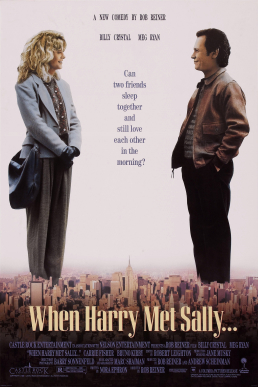
I had a friend that once suggested that Americans really only had three relationships: parent to child, friend to friend, and lovers. There’s even a romantic comedy about how a friendship between a man and a woman was impossible: When Harry Met Sally.
I remember when I watched Hidalgo. There is a scene where a young woman, Jazira, and Frank Hopkins are talking in a tent and they’re discovered. While I watched the scene, I kept thinking Don’t kiss. Don’t kiss. Don’t kiss. And they didn’t. They remained friends and the film was stronger for it.
There are some really interesting films without a romantic subplot: The Imitation Game, Edge of Tomorrow, Wind River, Elementary/CBS. The best relationship in the Marvel Cinematic Universe is Hawkeye and Black Widow which is never romantic but has more love than I’ve seen in many romcoms.
I think humans are incredibly interesting, complex, and capable of greatness. We should be portrayed better than being stuffed into these little boxes.
Oh, and before I leave, countries that have DEI and laws against hate speech are now violating human rights. The incredible risk of COVID-19 to pregnant women and their babies has been documented even while pregnant women are no longer advised by the CDC to get the vaccine. And Orange Voldamort wants a bigger ballroom. Compensation, I suppose.

I’ve been revisiting some of my touchstone works recently.
(Picture from here.)
I don’t know what sort of things other people use in the way of touchstones. Perhaps a place, a relic, a piece of the true cross—I don’t care. I don’t judge.
For me, there are some musical works, novels, and stories and some films. These are things that I will read/view again over time. For example, Rudyard Kipling’s Kim and Mark Twain’s The Adventures of Huckleberry Finn are works that I revisit every few years.
The most recent touchstone novel I read was Gertrude Friedbert’s The Revolving Boy. I talked about that work here some years ago.
There are some films that serve me as touchstones as well. Charade is one. Some Like It Hot is another. The 1963 one with Cary Grant and Audrey Hepburn.
Some of this is, perhaps, comfort. These works are touchstones largely because I encountered them at particular times in my life. Therefore, pretty much by definition, they are reflecting an earlier time.
But another reasons I that every time I experience one of them, I see something different. Sometimes it’s as small as noticing an element I had just passed over in previous viewings. There’s a brief encounter in a scene in Charade where a man is repairing a door and says to Cary Grant that next time he should use the doorknob. My attention was usually focused on Grant and Hepburn but one time I realized he was repairing the hole left by Scobie’s (played by George Kennedy) artificial hand. I’m not going into all the bits of the film. I’ll make a blog post about it someday.
Other times, it is a profound reconsideration of one of the characters. I talked about this here, where I discussed the relationship between Jerry/Daphne (Jack Lemmon) and Osgood (Joe E. Brown) and the film as an exploration of the different kinds of love.
Although, some have suggested I overthink things.
The interesting thing to me about touchstones is not about the works themselves. It is completely about how I perceive them and how that perception changes over time. Touchstones are those works that continually deliver something of value every time I look at them.
Let’s be clear, many works are forgettable. Few works stand up to multiple experiences. And fewer still stand the test of time. So for a work to hold up over decades indicates it strikes something deeply in me. Consequently, every time I see something new it reflects an unexpected facet of myself.
It makes me wonder about how children want to repeat an experience over and over.
When my son was young, he very much wanted to watch “Big Scary Beast,” The Beast from 20,000 Fathoms. A giant dinosaur destroying Manhattan that serves as the model for every kaiju created afterward? Me, too.
But did he see the same film every time? Or was it different for him every time? Was it the repetition that was comforting or the material?
My Mom had a rule about books in our house. I could read anything I could reach. Since I climbed like a chimp, there was little unavailable to me. This allowed me to read From Here to Eternity at about age eight and left me with a unique idea of military life, music, and prostitution that remains to this day. But, it remains a touchstone novel and sometimes I see its echo in my work.
In point of fact, much of my work has connection to these touchstones. Not solely, to be sure. But enough that I can see it. Jackie’s Boy connects to both Huckleberry Finn and Kim. God’s Country reflects pieces of From Here to Eternity. Not directly and not completely. But I’d be lying if I said I couldn’t see the relationships.
When I look at the work of other authors, composers, and film makers I wonder what their touchstones were. Beethoven wrote works explicitly on themes from Handel and Mozart—were they his touchstones? He studied composition with Haydn and certainly his early work reflected that. Then, he moved away from it. Did he ever revisit that? Did he in the privacy of his studio play Haydn for inspiration or just comfort? I have no idea.
We tend to overvalue originality and undervalue heritage here in America. Few—if any—things we create are completely our own. I am either cursed or blessed with what I call annotation, in that I can see echoes of past works in present works. This is not a criticism. It’s good that Hammett’s Red Harvest influenced Kurosawa’s Yojimbo that triggered A Fistful of Dollars coming back to Bruce Willis in Last Man Standing.
That said, when people do adapt my touchstones into other media, (I’m looking at you, Huck) they’re often hard to watch. Not because I might disagree on an interpretation but because they depart from the original material entirely. An example of this is Cannery Row with Nick Nolte and Debra Winger, adapted from Steinbeck’s Cannery Row and Sweet Thursday. Let’s just say that there is no baseball subplot in Steinbeck’s novels.
But that might cover another blog post.
And here is an article showing how China is doing better at moving away from coal than the US. All due to Orange Voldamort. And it’s nice to know Ghislaine Maxwell, purveyor of pedophilia, has a puppy, courtesy of this administration.

Still, I don’t like buying wood. Especially exotic wood—though I’m not above working with a good piece of paduak or purpleheart. And I have really enjoyed working with bloodwood. American hardwoods like walnut or ash are also fun.
But every day I see trees—really beautiful hardwoods—cut down to make subdivisions of McMansions. Whenever I can, I try to snag as much wood as I can—or think I can—use.
However, I don’t have a saw mill and turning an off-center log on my lathe rotating at ten times a second is just scary. I have a band saw but it’s not really up to the task.

Some years ago my old Delta gave up the ghost. That is, the pulleys of the Reeves drive broke. A Reeves drive is one implementation of what is called a continuously variable transmission. It consists of two pulleys made of intersecting cones. (See the link above.) Pulleys trade speed for power. A little pulley rotating quickly that turns a larger pulley means the larger pulley is turning slower but with greater torque. A big pulley rotating slowly turning a smaller pulley more quickly has less torque but runs faster. The Reeves drive allows selecting this with a simple lever.
But the Delta pulleys were of inferior quality. First, the one turning the spindle (which turns the wood) broke but I found a replacement. Then the motor pulley broke and no replacement was available. Delta hasn’t made lathes for some time. (That was then. A new search has suggested replacements might be more plentiful. Oh, well.) I replaced the lathe but the old Delta just hung around the shop. I don’t like throwing things away. It’s a waste.

Finally, I hit on an idea. I’d rip out the pulleys entirely and replace the spindle pulley with the biggest one I could find and replace the motor pulley with the smallest one I could find. I calculated this would get me as slow as five rotations/second—still not great but vastly better than ten. The Delta would then be used as just making blanks from logs. I could use all that wood I’d been accumulating.
I did that and it worked. But now I had a dilemma.
Over the years, I’ve been trying to expand my shop into the left bay of the garage. And this lathe just wouldn’t fit—at least, it wouldn’t fit and leave me space to work with it. But, I thought, wait a minute. I could just take the lathe out of the garage and do the turning outside. Since I planned this to be a seasonal effort, that would work.
But that meant the lathe had to be mobile. Wood lathes are very heavy. Mobility was not in their repertoire.
I came up with the idea of putting it on wheels. This was a good idea but had a significant flaw. I’d put the Delta back on its cast iron stand. The stand’s legs were at a significant angle. The wheels wouldn’t fit.
I tried to make a wooden insert—and broke a chop saw and nearly my finger in the process. That wasn’t going to work.
My friend Eric suggested I pour the insert into a mold. I resolved that was what I would do.


I now had a lathe that I could move easily.

But, where am I going to put all this brand new wood? Uh oh. Is another project in the offing?
Also, Orange Voldamort is going to restart nuclear testing. Antarctica is starting to look like Greenland. OV didn’t create the situation. He is just making things much, much worse. And, of course, the East Wing is gone, as the Brain Caterpillar goes from destroying metaphorical institutions to actual physical ones.

I like my life. I like what we do in the garden and the orchard. But the house gets dirty coming in and out with chestnuts, pawpaws, and the like. But I’ve always heard the best things in life are dirty.
We are nearing the end of harvest and it’s time to take stock.
It’s been a… strange year. Some things came out wonderfully. Some things didn’t for understood reasons. Some things didn’t for less understood reasons.
Let’s start with the main vegetable garden.
We tried several varieties of tomatoes—which, unfortunately, I don’t have all handy. The big winner was a red paste tomato that produced fruit shaped like a butternut squash. It made the best tomato sauce. I’ll put up the name of the variety if I can find it. We’re saving seeds from that. We had a Purple Boy tomato and a set of cherries. The Purple Boy didn’t produce. It seemed more resistant to fungus than some others but it didn’t taste that good. The cherries were adequate.
We had problem after problem with the beans. Some I’ve mentioned before: severe rodent damage. But the rodents left the bush beans alone. We had two varieties, a purple and a normal and neither produced much. I much prefer pole beans—if I can get them past the rodents. We had a single bean plant that survived and it gave up a half pound of dried beans. If I had had a hundred…
Zucchinis came in. We had some nice melons for a bit then some died and another just… disappeared. I mean there was nothing left. We tried golden berries again this year and they were quite nice but I’m not sure what to do with them. There’s a bowl of them on the table and while I like them in small bits, a hundred or so is a bit much.
Carrots did well as did celery. The squash did really, really well for some varieties and not so well for others. The cushaw did very well but only produced one squash. The spaghetti squash and butternuts did very well. We had a good crop of lettuce and there’s a patch of kale waiting for me to harvest.
We planted four varieties of radishes: normal red, Daikon, a French red, and a German giant. The reds did great as did the Daikons. The French reds look good but we haven’t harvested them. The German giant only germinated one plant. We ate the reds in the early summer. I dried the Daikons: 10 pounds of radishes -> 1 pound of dried material for soups. Or just chewing on. They taste pretty good.
Over in the raised beds, the new strawberry patch did well as did the basil, potatoes, and sweet potatoes. The tubers are still out there waiting to be brought in. We had a volunteer tomato that is still producing. We don’t know the variety but it looks something like a beefsteak.
We planted the same sweet potatoes in the main garden and in one of the raised bed. The main garden produced zip but the raised bed did quite well. There were a number raised bed plants that did better than their counterparts in the main garden. Wendy is convinced that it’s the depth of soil. The raised beds are about three feet deep but the garden is on ledge. She wants to terrace the main garden. Hm.
I don’t know what our yield is going to be for the tubers but I’m expecting 30-50 pounds total. I may be disappointed. We will see.
Moving on to the grapes. We got zip. I’m having a problem with grape black rot. This winter I’m going to spray them within an inch or their life and we will see.
Not much in the way of apples, either. We got rid of the trees that had the biggest reservoir of cedar apple rust but I still haven’t controlled it in the remaining trees. Basically, we’re down to two producing trees and they’re not producing much.
The pears did well. We harvest probably 10-15 pounds of them. We would have harvested more but we left for WorldCon right when they were coming in. When we got back, we had lost a fair amount. Next year WorldCon is in Los Angeles a couple of weeks later so we’re talking about it.
We had a good harvest from the quinces this year—the first year of real harvest we’ve ever had. On the order of ten pounds. Quinces are strange. They aren’t really edible off the tree. They come off like a brick and if you take a bite your mouth puckers like they were unripe persimmons. But, if you slice them then and layer them into a jar with sugar, a miracle happens. First, a water that seems nearly the same volume as the fruit appears. Then, after a couple of days you take them out and dry them into the nicest dried fruit you can imagine. They’re not even that sweet—most of the sugar ends up in the water. But the astringency turns into just a little tang.
The big winner this year were the pawpaws. We have five trees and they’ve produced a few. Last year we got a dozen. Well, the trees decided they were ready. We have harvested close to a hundred pounds of pawpaws. The picture above was just a small part of the harvest. There are still fifteen or so pawpaws on the tree as of last night. Each pawpaw is between a half and a pound. We’ve started extracting the pulp and freezing.
We got an okay harvest from the persimmon but that’s mostly my fault. Right now, the area under the tree is my wood pile and that makes getting to the dropped fruit difficult.
There are a lot of conflicting reports on whether one can cook with pawpaw pulp. There’s definitely a toxin in the skin and the seeds. We’ve been harvesting them when they fall and show they are ripe. This may be the defining characteristic. A semi-ripe pawpaw still tastes very good. Friends of ours made some cookies and it was tasty. I get a mild laxative effect from pawpaws but given that two fruit is about a pound of pulp, is that so surprising? Imagine eating a pound of peaches.
Finally, we just finished the chestnut harvest. We’re processing about thirty pounds of chestnuts. I bought some pure gluten so I want to try making real bread with 100% chestnut flour. We will see.
That’s it for now.
Although, here is an article on how Trump’s war on renewables is a huge gift to China. And how Orange Caterpillar gave 20 billion and a whole lot of perks to Argentine and Argentine then made a deal to sell soybeans to China. About have of the soybeans grown by American farmers have been destined to China until the tariffs. And a more general article on the Orange Assault on farmers.

The scablands are an interesting combination in Eastern Washington and Oregon. To understand this, you have to go back about 14-27 million years ago. Then, a series of flood basalt eruptions roared up to become the Columbia River Flood Basalt Group (CRFBG.) These were big eruptions over the entire Columbia River area—thick to 1.8 kilometers (5900 feet) and covering a good chunk of both states. (Note the picture above with the added building for perspective.) Some have attributed the eruptions to the same hotspot under Yellowstone. But that’s still debated.

One of the things that’s interesting is that this was relatively small and contained as flood basalts go. Both the Siberian Traps and the Deccan Traps were much, much larger. The Siberian Traps have been implicated in the Permian Extinction, aka, “The Great Dying”, where most species kicked the bucket. The Siberian Traps were implicated in the Cretaceous Extinction until the meteor hypothesis was more or less verified. Even now, there’s some evidence that the meteor might have reactivated the Deccan Traps, giving the world a sort of horrible one-two punch.
The CRFBG didn’t affect the world as much as it’s two larger brothers, but it goes to show that these were big events. Even the smaller of them is enough to ruin your day for a few million years.
But the basalt cliffs in the picture above had many millions of years of getting covered with soil and sediment. It was largely buried until very recently.
Fast forward until only twenty thousand years ago when the Last Glacial Maximum—the last gasp of the Ice Age—happened. A set of ice sheets, kilometers thick, formed from the northeast corner of Washington all the way over Idaho and up into Canada. Glaciers melt back and advance with the seasons. Between 13,000 and 15,000 years ago, in the latter days of the Ice Age, these glaciers melted into Glacial Lake Missoula. Think of it as a Lake Michigan in Idaho’s back yard. These were all held back by an ice dam at a choke point of the Clarke River. Which gave all at once.

The water tore down anywhere it found an avenue. It ripped over Dry Falls—I’ve heard it described as all of the waterfalls in the world times ten, but it’s a scale I can’t put my mind on. That said, that picture is just a little piece of it.

Some places, boulders got caught in place and spun in the current, causing potholes.

This didn’t happen once. It didn’t happen twice. It happened in excess of a hundred times, at last count, from the ranger at Dry Falls park.
We spent several days in the area, looking at this stuff. Nothing like a good collection of geological features to make you feel small.
And, just to be clear that our executive thinks you’re too small to matter, here is a link on the current war on science. Or how He-Who-Shall-Not-Be-Named wants to control your universities. Or how Orange Voldemort isn’t interested in your dying in a heatwave.

(Picture from here.)
He worked very hard to do this in a nursing intensive program. He did not have a strong background in the sciences—his degree was in psychology. But he took many prep courses. Aced them. Aced his RN courses. Aced his clinicals. Now, he is an RN. He has other goals before him but we can dwell on this accomplishment for a while.
The above description is interesting. We must acknowledge the role of the teachers, mentors, and professors that worked with him along the way, we still say he did this. We, as parents, must also acknowledge that we paid for this—or, at least, loaned him the money. There were some scholarships available for his future goals but the programs were cut. Thank you, Mister President. But we always attribute the effort to him: he did this.
This is appropriate, I think, as the greatest effort and engagement belonged to him.
But it’s also interesting how often we don’t state that personal attribution.
My background is science—that should not surprise either of my two readers. In science, when you read a paper the scientists themselves always have the byline. Often, the supporting institution is listed, such as Harvard, etc. Sometimes there is an explicit financial attribution. If there isn’t, it’s not hard to find the supporting grants. But the specific attribution of the work is to the scientists themselves.
However, when we talk about the government, many times it’s as a whole thing. The government did this. As if the government was one monolithic organization. If it’s not the government, it might be a department or bureau. It’s rarely an individual.
Even when we are critical of a specific person in the government, it’s often blurred: the administration, the Department of Transportation, the Department of Transportation. We do the same with corporations: Exxon did this. Apple did that. Microsoft is completely responsible. The way we talk about organizations protects—or obscures, depending on your point of view—those responsible.
I’ve been reading Who is Government? edited by Michael Lewis. The book intends to find examples of people doing their jobs within the context of government responsibility. The people who are government—those very same people who have been vilified in recent months. (Vilified, I might add, by those I would term crooks and liars. But that’s another post.)
My point is institutions are composed of people. Roger Boisjoly was one of the engineers that said launching the Challenger after freezing temperatures was a dangerous idea. In much of the documentation of that disaster, he and others were overruled ”by NASA.” Not a particular engineer, manager, or set thereof but by the organization. On the other side, one of the stories in Who is Government? is about Christopher Mark, who developed the methodology that prevented coal mining cave ins. Michael Lewis only found him by going through the Service to America medals, an award within the civil service and with little visibility to the outside world. The only evidence of Mark’s achievement is contained in the handbook of the Mine Safety and Health Administration. Until Michael Lewis’ article and book.
(In an aside on The Late Show when Lewis was publicizing his book, he let drop the department that Christopher Mark had run had been laid off as part of the DOGE cuts. Thank you Mister President.)
We need to know the individuals involved in our institutions, for good and ill. We know James Black reported it to the “company executives” back in 1977. And that after that “Exxon” decided to engage in climate change denial. Who made that decision? It’s not clear—not because it’s not known. Just because if you want to know you have to wade through the lawsuit transcripts to find out. And, in August, Exxon had requested the Supreme Court to review the Colorado court decision to allow the lawsuit to move forward. Hm. Wonder how they’ll decide?
There is at least one shining silver lining to what is going on in our political theater these days. We can see the players involved. We might not know who made the decision for Exxon’s climate denial but we damn sure know who on the court will vote for the lawsuit to go forward. We might not know who the scientists were that developed the mRNA COVID vaccine but we know who first made sure it was funded (Trump, Warp Speed) and who will now withhold it from the American people. (RFK, Jr. and Trump.) We might not know who the developers of the climate models that are so helpful in predicting climate and weather but we know who it is that is denying their funding.
As we’re gasping in the dirty air, don’t like the foul-tasting water, and can’t breathe anyway because it’s just too damned hot, we can take comfort that we know who put a stop to us trying to fix it.

 Posts
All Comments
Posts
All Comments


