Wednesday, December 23, 2009

Thoughts on Christmas


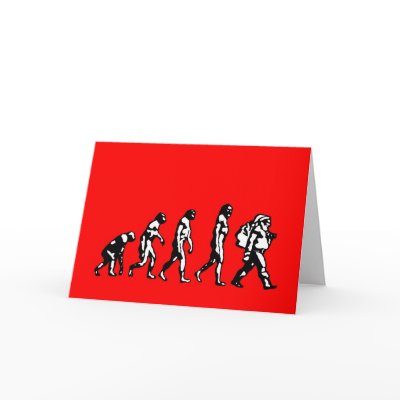
(Picture from here.)

It's going to be Christmas in a couple of days.

Atheist that I am, I truly like Christmas. It has a number of interacting mythologies (Santa, angels, Jesus). It has winter. It has gift giving. What's not to like?

What I find most interesting about Christmas is the complete collision of things. We have the mythologies which can range from Tim Allen's Santa, to the nearly non-theistic angels of It's a Wonderful Life, to all of the different stories of Jesus. We have the economic aspect where somewhere between one third to one half of the revenues generated by many stores centers on Christmas. Economists watch Christmas as much as they watch oil in the Middle East.

Then, there's the family aspect. How many stories (anecdotal or in the media) that center around how terrible it is to be away from one's family at Christmas. I'm not being cynical here. I've seen grown men that fight tooth and toenail to avoid visiting their family during the year openly weep when their flights are canceled because of Christmas weather. Women who hate their ex-husbands and husbands who hate their ex-wives will (for the moment at least) remain cordial to get through a Christmas holiday. The symbolic attachment of family to Christmas is enormous.

Coupled with this is gift giving (and sometimes associated bankruptcy) that rivals a Northwest tribal potlatch.

All ground up together like hamburger and, like hamburger, it's difficult to separate the pieces.

I love it.

So: I'll call my sister (pretty much the other Last Relative Standing for my generation.) and some friends. This year Wendy's family will come to our place. We'll crack open another of the slowly dwindling cellar of Marvinwine. Toast each other. Eat vast quantities of food. Enjoy an inebriated excess of gifting. Sing some songs. And sit back in a pleasant stupor watching the tree blink on. Blink off. Blink on. Blink off.

I won't obsess about work. Or money. Or the weather. Or anything.

Blink on. Blink off. Blink on. Blink off.

Merry Christmas.
=====================

I don't know where to put this: here.

Wall of Idiots
Monsanto and here
Alien giant snakes
Climategate. Again. And here.

Links of Interest
Galileo: The Beginning of Science
National Geographic Adventures
Gardens of the world
Bicycle routes of the world
Elevators of the world
Train rides of the world
Scotland's Hebrides
Very demotivational posters
Printable electronics
Genomic dark matter
Mysteries of Saturn
Made with Molecules

DIY
Fingerloop braids and here
Tile pictures
Peanut butter chocolate chip cookies
Christmas crafts
What to do with all that milk?
Chickens

Monday, December 21, 2009

Disturbando


(Picture from here.)

I had a disturbing conversation over the weekend.

I have this friend who I like very much but who is also a Christian who refuses to acknowledge evolution. He also tends to bring me tidbits of anti-evolution propaganda to talk about.

The conversation tends to devolve quickly. (heh. heh.)

Of course, I think he's wrong and he thinks I'm wrong. The evidence is on my side but that makes no difference in a matter of faith. Because his faith, along with the rest of the anti-evolution crowd, hinges on a piece of science he is honor bound to deny the science. Since he is not a scientist this further descends into a battle of authorities.

Into this came the movie Expelled, Ben Stein's little foray into propaganda.

Like most of the propaganda, it's pretty much a lie or misdirection. If you want to read a refutation of expelled, here are some links:

SciaAm: Here. Here. Here.
Expelled Exposed.
Wikipedia
AtheistEthicist
Roger Ebert

Like other conspiratorial issues, there's a lot of circular reasoning around Expelled. The film centers around a couple of bald faced lies. I don't know if Stein believes them or has been duped but that doesn't make any difference. The conversation about these lies (and evolution itself) goes something like this.

False Proposition: Richard Sternberg was fired for publishing a pro-ID paper in a Smithsonian magazine.
Refutation of False Proposition: Well, no. In fact he wasn't. He was never an employee.
Dilution of Refutation: A lot of people believe that he was fired.
Refutation of Dilution: They're wrong, too. It's not a matter of opinion. It's a matter of fact.
Pursuit of False Proposition: Come on, you have to admit there's some possibility of this. After all, look at all of the people who say it happened.
Repeat of Refutation: So what? Thabo Mbeki and his entire administration refused to believe AIDS was caused by HIV and told people to drink beet tea. Did their numbers make them right?
New False Proposition: Lots of scientists believe that evolution doesn't work. There are lots of holes.

For the people on line, not my friend, it can even go so far as true conspiracy theory.

False Proposition: There are lots of holes in evolution-- enough that we should abandon it.
Refutation of False Proposition: That's not true. Look at (list of things.) Look at these (authorities).
Denial of Refutation: They're just part of the grand scientist conspiracy. They want to get grants and so they manufacture results. The fact that they're putting up [refutations of the false proposition] proves it.

(Note the similarity of reasoning to the same as Global Warming Deniers.)

And on and on.

People make money on this sort of rat crap. One of the lines in Bored of the Rings goes something like, "This book is mainly about the making of money and from its pages the depth of soul of the authors can be seen."

You can say the same about Expelled.

The problem is that there is so much drivel out there about evolution (and global warming and science in general) that people of good faith but little scientific understanding are getting bamboozled. Ripped off. Lied to. If you're standing in a storm and you have to choose between a rock of unknown stability and a rock you're familiar with, you're going to choose the familiar every time. It's human.

We live in a time where liberal compassion is called weak and traitorous. When species once considered canaries in the coalmine of our environment are not only being allowed to die but being shuffled off wholesale while being ignored or deemed unfit by their inability to survive the toxic stew dumped on them. When one state can smash the militia and police of another and then claim superiority because the other side can't maintain itself.

Is it such a surprise that bald faced lies and propaganda are accepted as comforting truth?

For anybody out there still listening, here are the principles that I use to penetrate the fog:

1) Like There Ain't No Such Thing As A Free Lunch (TANSTAAFL), simple answers are rarely correct. There are very few social or scientific matters that don't become wildly complex when you look closely enough. Therefore, be suspicious of simplicity.
2) Science is all about experimental verification. Scientific publication is all about peer review. Anything that doesn't submit to these two principles and calls itself science isn't. (I have a whole rant on how experimental verification can be scientifically applied to non-verifiable hypotheses (such as the Big Bang) but that's for another time.)
3) Numbers are your friend. Anecdotes are your enemy. People find stories stronger than facts. Therefore, stories must not be considered as evidence with much standing.
4) Ideology is no substitute for any of the above. Once Ideology enters the argument, reason leaves.
5) Consider the risks if the idea is wrong or right. (The risks if Global Warming is right? Bad, bad, bad.)
6) Consider the gains if the idea is wrong or right. (The gains if evolution is right? New medicines. Understanding of physiological systems. Explanation and utilization of scientific principles. Gains if Intelligent Design is right? Zippo.)
7) It's not worth reading without citations. If you read an opinion piece and it makes claims of fact without citing the source, don't bother. FactCheck.0rg is your friend.
8) Consider the source of the source. If a bunch of scientists sign a petition arguing against evolution, that's interesting. If, however, on examination those scientists are, say, economists from Oral Roberts University, it's probably not worth bothering about.
9) Most news isn't. If there's enough data to show up on the news, it might be interesting if you can get the original material. But most news is slanted, biased, incomplete and wrong especially when it comes to science. If you're not willing to dig down and figure it out, shut up about it. You're probably wrong.
10) Don't use a single source for anything.

And finally, the most important thing, remember that people who distribute "information" for the money are the least credible sources.

==========================================
Wall of Idiots
Climategate and here, here
Chevrolet Aveo
Parental Issues
Ray Kurzweil
Joe Lieberman

Links of Interest
Mount Roraima
360 Cities
Life on Mars? Here, here.
Gordon's scale of corporate evil
Deimos and Phobos, together at last
Real Data on Temperature Rise
Winter Wonderland and here
Hubcap animals
V: Robert Sapolsky
Physics of Space Battles
Liquid on Titan
New underwater rovers
Copenhagen wheel
Boomeria

DIY

Saturday, December 19, 2009

Perils of Winter


Tonight we're going to get as much as a foot of snow. We're in pretty good shape. We've repaired the canopies over the chickens and the wood pile. The ice remaining on the driveway has been removed.

I've been talking about preparing for winter in New England in previous posts. A few of my friends (those who live in the city)
have suggested I'm overreacting.

Well, here are some pictures.

We used two canopies over the woodpile this year, the big one that is sturdy and I've been working on for some years and a smaller one that we used as a shelter for our summer party. The idea of using the smaller one was to finish up the wood underneath and then fold it up and put it away for the winter. Well, we weren't quite quick enough.

The canopies are both under a hickory tree. I figure about a ton of shown came down and destroyed the weaker canopy. The other one can take a licking and keep on ticking.

Winter in New England is sort of like a bear, except a bear might leave you alone once in a while.

Wednesday, December 16, 2009

Battle of the Extra-Terrestrial Titans

Michael Shermer and Richard Dawkins duked it out recently regarding whether or not an intelligent ET would look like us. You can read the post here. Shermer's position, anyway. To put it succinctly, Shermer thinks it's a virtual uncertainty they'd look like us and Dawkins thinks it's merely wildly unlikely. Both of them miss the mark, in my opinion.

The question always comes back to the nature of "intelligence". If we define such a thing as equivalent to us, then the probabilities go one way. If we broaden the definition to include evidences of similarity, then we have to include evidence such as Pepperberger's work with parrots (definitely not mammalian) and the work with cephalopods. While they are not building cities and running cars, they are using tools to a limited extent and have quite a bit of "intelligence"-- the story about the octopus determining when the staff was gone and carefully sneaking over to an adjacent tank and eating the fish, then returning to his own tank is pretty smart.

My own feeling is that while bipedal may not be the only way to go, a body plan that allows manipulation of the environment seems surely a necessity to achieve anything like human level technological abilities. Similarly, the ability to store information external to the geonome in an easily accessible location (read here, "culture") is probably also a necessity. Both of these, together, have only struck paydirt in the primates. (My own hobby horse on this subject is neoteny. Without that, the rest of the evolutionary process leading to man would never have had a chance.)

What is needed is a circumstance where intelligence can in fact be selected for. Such circumstances appear to be rare.

It's also important to note that once these two components came together, intelligence did evolve more than once: Neanderthals, hobbits, man, etc. While the others didn't reach our heights, to dismiss them out of hand is pure arrogance. Neanderthals didn't change their use of tools much. But for a long time neither did we. But we both did use tools. We both had culture.

If humans ever managed to travel to a distant star and found something as smart as Neanderthal, we'd be quite pleased. Heck, we'd be thrilled if we found something as smart as a magpie.
=============================================
Links of Interest
Go Sukashi

DIY
3D Hell Beast
Mexican Martini
Chocolate Guinness Cupcakes with Whiskey and Baileys
Feather writing quill
Cookie recipes
Play-doh and here
Paper roses
Walking stick
Gifts for men
Gifts for women
Bench power supply
A lamp
Christmas after dinner mints

Monday, December 14, 2009

Consideration of Works Past: Kim, Rudyard Kipling

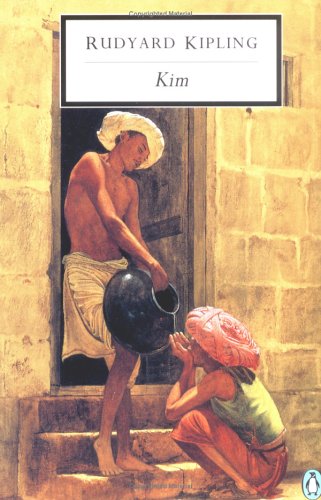
(Picture from here.)

This isn't quite in the same vein as the other posts. For one reason, it's not SF or fantasy. For another, I've been re-reading Kim every couple of years since the seventies.

But I was looking over a paperback version I gave Ben and read, for the first time, the introduction. In it the "professor" said that it was ironic that Kim was termed "Little Friend of All the World" when there was no evidence he had any friends at all. One wonders what book the "professor" was writing since it bears little resemblance to Kipling's book. I am forced to presume there exists a book, Kim, by an author, Rudyard Kipling, that, by a wild coincidence bears the same name of book and author as the work with which I am familiar.

Thus, this entry was born.

Kim is the story of Kimball O'Hara, a poor white boy in India. It bears a similarity to Huckleberry Finn in that both are poor white boys that make their way in the world. They are vastly different in that HF deals with a set of very similar cultures and Kim deals with the vast and diverse of 19th century India. I will not deal here with criticism of Kim as essentially oppressor work about an oppressed country. Similar criticism can be aimed at HF.

Both works deal with an individual coming to a moral sensibility through a path frowned upon by the culture they belong to. However, Huck is born into a world where right and wrong are clearly (if incorrectly) defined. He knows what is right because that's what he's been taught. Huck chooses a different moral path from the one he has been taught, valuing his friendship with the slave, Jim, over any possible damnation from the "moral" world.

Kim has a journey through a different section of the same country. The book starts with Kim having almost no morality whatsoever. Any higher purpose he might serve is washed away in the excitement of his life, poor and destitute though it might be. It is by way of the friendships he makes and keeps that he brings himself to any sort of moral understanding.

In Kim's case, the overbearing morality of the white sahib culture is insufferable. He seeks over and over again to escape it to the freedom of his poverty-- which to him is not any sort of poverty at all. He befriends and is befriended by a lama from Tibet. One of the struggles through the book is Kim's love for the old man and the old man's resistance to that love, since emotional attachments is against his sect of buddhism. Finally, almost in desperation, the old man finds a parable that seems to give him leave to love this boy to whom his heart is drawn.

Oh, there's a bunch of adventure, spying, etc., in the book, too. It's a lot of fun.

So I got to thinking. I've read a fair amount of 18th and 19th century literature. I've worked my way through Dickens, Austen, Eliot, etc. But I find them pretty tame stuff. Not terribly interesting. Clearly, they are works of quality but they are not works to which I'm drawn.

After reading the introduction to Kim and revisiting it, I realized that from what I can tell, the other novels (Dickens, Austen, Eliot, etc.) are safe novels. It's absolutely clear where the moral high ground is in Dickens. The stories are marvelously complex and interesting in the way they navigate the moral high ground but the moral high ground itself is undisputed.

Similarly, the Austen and Eliot are shades of gray morality. The nature of these books, as I see it, are how to negotiate between the heart's desire and the needs/demands of society. Again, the moral high ground is undisputed. These are novels of negotiation. For marriage. For wealth. For love.

(I know there are Austen fundamentalists that would burn me at the stake right now. So it goes.)

Both Kim and Huck both toss out this moral high ground in the first chapter. Morality, high or otherwise, is itself suspect. The path Kim and Huck have to decide is not how to negotiate the path through morality but what is the nature of a morality to which they can subscribe. In Huck's case, it is freeing his friend Jim. Not because slavery is wrong or right (Huck thinks and has been taught it's proper for Jim to be a slave) but because his love for Jim requires him to act as a friend to this slave even if it means he'll go to Hell.

The moral decisions for Kim are not so clear. India, for that matter, is not so clear in this book. All manner of evil and heresy lie about. Kim could pick any one of them and be fine. This doesn't come up because to Kim they are not important. He has an inkling of higher things-- how could he not as a companion to a lama? But what drives him is not a moral decision (as drove Huck) but a denial of the morality itself. He is with Teshoo Lama. He is Teshoo's chela (disciple). That is enough.

In painting Kim's story this way, Kipling strikes out from the safe, moral path to an area of risk. The moral ground of a thinking man is that which the thinking man decides it should be. What is right is what Kim decides it should be. In this way, Kim picks up burdens he chooses, not submitting to the will of others in his life. Morality becomes a matter of personal choice and cannot be dictated.

Now, that said, these are all interpretations of the actions of the character, Kim. Kim doesn't wade through this moral quagmire; he acts. But the acts he chooses change over the course of the novel from a lost but joyful boy to a sober but still joyful young man.

Huck made a moral decision that would make him an outcast in the culture from which he sprang but it is a decision that would gain him acceptance somewhere.

Kim made a different decision. Instead of choosing a particular point of view he denied the necessity of that choice. Kim is presented with having to pick a particular life: sahib, native, etc. He decides to be who he is (sahib, native and etc.) and embrace it. For Huck, the moral decision was to embrace an act. For Kim it is to embrace a life.

Neither choice, and neither book, is safe.

=====================================================
Wall of Idiots
Beck, Limbaugh and Hannity. Surprise!
Senator David Vitter R-LA
Rep. Aaron Schock R-IL
The American Army

Links of Interest
World's scariest swimming hole
Cano's Castle
CO2 + sunlight = Diesel
Obama's toast to Alfred Nobel
V: Obama's Nobel Prize acceptance speech
Fun with giant orangutans
Fun with Fractals
V: National Geographic's Blue Moon
V: National Geographic's Alien Worlds
V: National Geographic's Crocs eating dinos
Looking for Life in the Multiverse
The role of healthy bugs inside us
What's melting the Himalayan glaciers?
Quantum propulsion
Trolley canal boats

DIY
Soft-setting adhesive putty
Home Solar: Here. Here. Here. Here.
Pottery kickwheel
Tarp tents
Ski bike
Butterflake rolls
Air muscles
Millefiori beads
Honey
Laundry detergent

Shop News


(Picture from here.)

Worked on the shop over the weekend. Turns out Rockler had this little Jet dust collector. (See here.) They had it marked down to $100. Turns out I had $125 in gift cards given to me over the last couple of years. But the collector was just too small: 500 CFM.

Damn, I said. I was going to this unit. But when I talked about it with the staff, they pointed out that since the collection bag and exhaust bag were the same thing, the unit didn't do so well when it started to get past half full.

Then, I thought: why not buy two of the smaller units? Link them both to an intermediate trash can with a "Y" juction. I probably won't get 1000 CFM out of the deal but I bet I get 750.

So, I bought them and some additional material. Total = $200. Right now I'm using one of them and moving it around as I need it. I need to make space for the full assembly.

So I made a couple of window inserts over the weekend. All in all, a good time.
=========================================
All DIY. All the time.

DIY
Mini toy car launcher and here
Rocket fuel from aluminum and ice
Interestingly dangerous gift guide
Vintage book hardware
Harvesting battery chemicals
Breakdancing robot
Wimhurst experiments
Christmas and Chemistry
Camera in a rocket
V: Wimhurst Experiments
V: DIY Electrostatic Meter
Wire bending machine
Make your own camera film
Machined figures
Alien projector and here
Electronics handbook
V: Chair from molten plastic waste
V: Cyborg piano
V: Festo cyber kite
Oak wine barrel furniture
Cardboard taxidermy