Sunday, August 18, 2013
Ergaster's Childern
(Picture from here.)
When I first moved up here to Massachusetts I did what I always do, I went to the science museum. There was an exhibit of the cave paintings. The docent talked about them and said (as close as I remember): "Who were these wonderful artists? It certainly wasn't these folks. They just weren't capable." With that he brandished a Neanderthal skull.
That ticked me off. First, because the cave paintings were made long after the Neanderthals had died out. So, while it's true they didn't do the work, since they were already dead it was a meaningless point. Second, it was a snide way at taking a whack at Neanderthals as brutes-- an odd sort of racism. Translated: "They weren't us so they couldn't have done this."
It's not an accident that my first published story, "A Capella", is about a Neanderthal cave artist.
Nothing sparks discussion like the Neanderthals. Were they brutes? Were they not so brutes? Clearly, we succeeded when they failed. How did we do that? Or, translated, in what way were we preternaturally superior to them? After all: we're here. They're not. We must be better.
There have been lots of hypotheses on the Neanderthal demise-- most of which involve some sort of compare/contrast relationship with competing humans. They had bigger brains than ours so that had to be addressed-- and it has, a few times. One study suggests that their brain organization is substantially different than ours. Neanderthals have a larger visual system than that of modern humans and that reduced the available space for cognitive systems. Another one implicated bunnies in their demise-- or, rather, their inability to catch them. Modern humans will eat anything: bunnies, squirrels, birds, each other. The Bunny Hypothesis suggests that Neanderthals did not have the capacity to be this flexible.
As time has gone on the differences in capability between Neanderthals and modern humans has diminished.
Do Neanderthals have complex tools? Check. There's one tool-- a lissoir-- was invented by Neanderthals before the tool was used by modern humans. In fact, there's a distinct possibility that humans learned about the tool from Neanderthals. Did Neanderthals have art and culture? Check, check, check and check. Neanderthals buried their dead with ornamentation, wore jewelry and make up. Did Neanderthals eat things other than big mammals? (I.e., the Bunny Hypothesis.) Check. Neanderthals ate fish and birds, processed wood and hides and ate their vegetables. They may also have understood that some plants had medicinal values. (See here.) Now that's pretty sophisticated.
It's not clear that they ate or didn't eat bunnies. It's also not so clear from what I've read how much small game there was to eat or when modern humans learned to catch it. Paleo-Indians subsisted largely on now extinct mega-fauna: giant beaver, ox, mammoths, etc. Not much different from Neanderthals.
A good deal of new information has been showing up since the Neanderthal genome was fully sequenced. Interbreeding between Neanderthals and modern humans has become pretty definitive now-- to the point a hybrid may have been found. (See here.)
A problem with understanding Neanderthals comes from mis-connecting our own tribe with Neanderthals. For one reason or another, Neanderthals have become defined by their opposition to human beings. There are differences between Neanderthals and modern humans. Possibly the ocular system as mentioned above. The olfactory neurological system in modern humans is 12% greater in size than in Neanderthals. (Which, of course, could not reflect any cognitive deficit comparing modern humans to Neanderthals. Right? Right?)
To me, the most interesting news that is coming out regarding Neanderthals is that they may have largely died out long before they met humans. There was little or no competition between the two groups, though there was enough encounters for interbreeding.
New radio carbon dating techniques (see here) make the time overlap between modern humans and Neanderthals problematic. This is interestingly corroborated with some DNA evidence (see here and here) suggesting that Neanderthal populations may have crashed prior to modern humans came to Europe. In fact, it may have been the sheer dumb luck of timing that a population of modern humans didn't buy the farm right alongside Neanderthals.
There's this concept of refugia in ecology. A refugia is a place of relative calmness when everything else is crashing down-- usually because of either local or global climate change. When the femets hit the windmill a hundred thousand years ago during the Last Glacial Maximum, modern humans hadn't moved north. Their refugia were safer than those of Neanderthals so much farther north. (See here and here.)
Neither group could protect the future. Things were going downhill-- I suspect both groups knew it. They both went where it looked like things could remain if not okay, at least survivable. But the range of choices between the two groups was different. Neanderthals got nailed. Modern humans fared better. When modern humans finally did get to Eurasia the remaining Neanderthal and Denisovan groups were tiny.
As they say, it's better to be lucky than smart.
Which brings us to the question of how did humans really evolve? Annalee Newitz suggests its a crooked, branching road that brought us to now, filled with little groups (such as the hobbits) that didn't quite make it to modern times.
There may even be a new addition to our ranks, the Red Deer People of southwest China. The find there dates to between 14,500 to 11,500 years ago and the skeletons show an intriguing mix of modern and primitive human qualities. Too soon to tell anything about them. But they did clearly overlap humans in time. Were they a relic population of humans? Were they a different sub-species, as were Denisovans or Neanderthals? Were they a completely different species such as Homo floresiensis? We don't know yet.
I wonder sometimes if our continuing defining of other species, even those related to ourselves, only in opposition to what we consider human is a relic of our essential loneliness.
Homo ergaster is the founding species of us all, the more sophisticated descendant of Homo habilis. From habilis came the rest of us, ergaster's children, of which only we, of mixed heritage, remain.
Sunday, August 4, 2013
Consideration of Works Past: Battlefield Earth
(Picture from here.)
Here's where I lose any possible literary creds.
Okay, in the interest of transparency, I like bad movies.
There are several ways a work can fail. It can aim too low and miss. It can aim too high and miss. It can thread the myriad ways of mediocrity and nail the target-- which is a fail in and of itself.
"B" movies) aim at a specific lowbrow target and much more often than not nail it.
This is a good thing.
Sometimes (note Sharktopus, which I saw last night.) the bar is so ludicrously low-- more a strip of paint on the sidewalk-- that the effort to hit the target trivializes anything of value in the work.
My favorite "B" movie director is John Carpenter-- in my opinion, the true heir to Roger Corman. He's produced a fair amount of schlock. But he also gets quite good performances from otherwise limited actors. Go watch Natasha Henstridge in Ghosts of Mars and then go watch her phone in her performance for The Whole Nine Yards.
Battlefield Earth is a "B" movie at its very heart. Made from a "B-" book (Battlefield Earth) by L. Ron Hubbard founder of Scientology. I liked Hubbard's pulp stories. They were a romp-- Ole Doc Methuseleh, for example. The story has been circulating for years that he was out on a boat commiserating with John Campbell about the sorry pay SF writers get. One of them (stories differ) said the real way to make money was to found a religion. It's one of those stories that might tell better than the truth.
Anyway, the whole Dianetics/Scientology thing pretty much took Hubbard away from writing and into wealth. Then, in 1982 he released Battlefield Earth. Followed by a series of equally pulpy books. John Travolta tried to get the movie made for years and it was finally released in 2000 to pretty uniformly bad reviews. It cost $75M to make and barely brought in $20M. It regularly appears in lists of the worst films ever made. (Here's an example.) Rita Kempley at the Washington Post said, "A million monkeys with a million crayons would be hard-pressed in a million years to create anything as cretinous as Battlefield Earth." (See here.)
People in the SF Community hated it.
I mean every now and then it comes up in conversations at conventions and the revulsion is palpable. Part of it is the irritation the SF community have towards most bad SF films. If it's not MST3K worthy, it ought to try to be good SF. Most SF films don't bother. There are so few actual SF films made (as opposed to marketed) that we tend to really want them to be good. Blade Runner is a good SF film. It's not Do Androids Dream of Electric Sheep, the novel it's based on. But it is good SF. Wouldn't it be nice if they actually made a Phillip K. Dick movie?
But Battlefield Earth had a bunch of things stacked against it. Hubbard was disliked by a some of those in the SF community because of the whole Scientology thing-- and if you want to look that up, go ahead. I'm not going into analyzing the problems of a psuedo-religion here. He tried to connect back with the community by the Writers of the Future program. It was run for a while by one of the finest human beings and finest writers, ever: Algis Budrys. But in spite of that, a lot of us felt a little queasy at Scientology's little fiction project.
So: a bad movie with a suspicious heritage. What's not to love?
I saw it last week. And then backed it up with a bracer of Sharktopus. After all, if you're wondering about the quality of a bad film it's important to have a standard for comparison. Sharktopus is an unrelentingly bad film. There is no argument.
Battlefield Earth has actual moments.
Let's be clear: Battlefield Earth is a bad movie. But the same people that hate this film then turn around and say how great Roger Corman is. Roger Corman did Death Race 2000. He did Piranha. He did Battletruck. The Women in Cages collection. These are not good films. They are much worse than Battlefield Earth. I mean they're not Sharktopus but then, what is? Oh, yeah. Sharknado.
Quick synopsis of Battlefield Earth: Earth has been invaded and beaten by the Psychlos for a 1000 years. These are a bunch of sociopathic profit mongers that don't even care much if their own limbs get blown off, much less anybody else's. They strip a world of what it has and then leave it. (And this is different from Independence Day, how? Oh, yeah. It's not.)
A Young Turk is captured who is a bit smarter than the average barbarian. The Psychlo of note, Terl (John Travolta) and his sidekick Ker (Forest Whitaker) figure they'll get the smarter humans to mine gold for them in an area where the radiation would kill Psychlos. The humans get the better of them, fight them, win and then blow up the home planet.
Not a lot different from a lot of other bad SF films. (See Independence Day above.) But, as I said, there are moments.
First, you get to watch Barry Pepper, John Travolta and Forest Whitaker-- even in bad films, these guys are professionals and it's always fun to watch virtuosos play their instruments. Whitaker is like some fiery genius so even on his bad days he's a joy to watch. These guys look like they're having fun.
The aliens are pretty good at being fully realized sociopaths. They have no mercy and no remorse. They have no empathic feelings whatsoever. None. These guys are never redeemed. They are looking out for self-interest at all times. They are fully realized aliens. Yeah, yeah. They have arms and legs-- they're humans in alien suits. But the interaction between them is sociopathically seamless.
Then, there are a lot of neat little bits. There's a scene when the hero and his buds are flying off to find a library full of things they can use to fight the Psychlos. They're using an old Rand-McNally map-- yeah, I know after a 1000 years it's just dust on a counter. Work with me here-- and hero and friends are arguing how lost they must be since they haven't crossed any of those big lines between the states.
There's a sort of continuing homage through the film to Planet of the Apes, where the humans sometimes act like apes. They climb up things and shout and such. Rita Kempley particularly didn't like that.
Yes, there is a lot of laughing out loud at the clumsy dialog and special effects. But, go watch Terminator. The dialog and directing there is much clunkier. The acting is worse and the direction is marginal. Battlefield Earth has fewer stupid things in it than Stargate and that was on television for 10 years!
My point is it doesn't deserve the level of scorn it's gotten over the years. Is it Plan 9 From Outer Space? No. Is it Manos: The Hands of Fate? No. On the other hand, is it 2001? Hell no.
So, on a considerations level, Battlefield Earth was a "B" movie when it came out in 2000 and it's a "B" movie now. If you like "B" movies (I do) it's a fun romp. Park your brain at the door.
And thank your ever loving God you're not watching Sharktopus.
Tuesday, July 23, 2013
Dozois Year's Best on Sale Today
Sunday, July 21, 2013
Consideration of Works Past: A Canticle for Leibowitz
(Picture from here.)
We can't effectively criticize Shakespeare or the Bible because they have so profoundly interpenetrated our culture and our language. People who have never read a word of the Bible know the meaning of the phrase "the patience of Job." People who would barely know the Bard's name know the meaning of the phrase "the green eyed monster." Such works have become the water in which we as fish swim. We read the Bible. We watch the plays. But we're seeing our own culture write large portrayed back to us.
These are big examples of how culture and literature reflect one another. It's the reason we should always have a literary canon. Not because these are the best we have to offer but because they are what inform our cultural milieu.
The process is dynamic and recursive. Some works are magnificent and immediately forgotten. Some distill a moment and continue to evoke that moment for decades after the moment is past. To Kill a Mockingbird shows a particular moment in the mid-20th century south and has become metaphorical in is depiction of American racism.
Racism is timeless. The mid-20th century also experienced something particularly unique: the actual possibility of universal destruction of humanity by war. The prospect of such a holocaust has been around since the Revelation of Saint John but only until the 1950s did it become technically feasible. Humans were forced to confront not only their individual mortality but the mortality of their species. They confronted this prospect best (I think) in literature.
Nuclear holocaust and post nuclear holocaust novels were born.
We know of them as a staple these days. In film. In books. But modern post apocalyptic stories now are explorations of a trope. They don't arise out of impending doom. Those of us who learned to duck and cover are a dying breed and our children and grandchildren are products of a society that (I hope) outgrew such an immediate death. Instead, we'll have a slow chronic sickness of global warming and resource scarcity. Fertile literary ground to be sure but not the same as the quick flash and obliterating thunder.
Two books are still known today close to fifty years later: On the Beach and A Canticle for Leibowitz.
They're good bookends of one another On the Beach deals exclusively with death: there are no human beings alive anywhere on the planet by the end of the book. The work's complete focus is how people deal with the true and actual end of the world.
A Canticle for Leibowitz is almost exclusively about how humans (or human belief) survives the end of the world.
The plot is thoroughly discussed elsewhere and only needs a quick synopsis. Nuclear exchange happens. Most of humanity is killed either quickly or slowly by radiation. The living remainder turn first on those who they think did this, then the scientists and then anyone who can read. Isaac Leibowitz, a Jewish engineer, converts to Catholicism and founds an order that attempts to preserve knowledge in the face of this destruction. Six hundred years later, the order is still alive and has transformed from going out and getting knowledge to preserving what knowledge it has while being unable to understand it. They don't know if the works they are copying and recopying to preserve it is a laundry list or a prescription for paradise. It is at this six hundred year mark that Canticle begins.
The book is written in three parts: Fiat Homo ("Let there be man), Fiat Lux ("Let there be light"), Fiat Voluntus Tua ("Let thy will be done".) Part one begins with the discovery of an ancient (and important) cache of documents and ends with the canonization of Leibowitz into sainthood. It takes place during a dark ages where there are no states of any consequence. Part two involves the rediscovery of the importance and knowledge held within the documents and shows the rise of political states and conflicts. In part three the order is again gathering and preserving knowledge, this time in full understanding of the knowledge they have. The world is crumbling again between two mighty power blocs and on the verge of self destruction. The vast majority of the story takes place in the order's abbey.
Canticle asks some really big questions. What is the role of faith and religion over time? Miller suggests that the Church (and perhaps religion itself) is a means of stabilization over time. It serves as a repository for valuable things that are not currently treasured until that time they are once again revalued. The object in the story is the knowledge of the previous time. But Miller also points out the implications of faith are also held within the church and may never be properly valued in the secular world. This conflict between spiritual morality and secular practice occurs over and over again in the book both in the larger political macrocosm and the microcosm of the human interactions of the abbey.
The characters in the novel grapple with these issues over and over again. At one point in the novel, when there is a nuclear strike near the abbey in part three, the government sets up medical triage tents where euthanasia drugs are handed out to those who have had a fatal radiation dose. The abbot fights this and protests it, not allowing the tent to be set up in the abbey.
The book continually shows intellect at war with itself, at war with morality, at war with passion. It is comprised with adults wrestling with some very big demons. This not the children's coming of age story that most post apocalyptic stories have become. These are adults who have made sacrifices for their beliefs. Who are trying to live to an impossible ideal (Christ) and failing and trying again while knowing all the while that such an ideal is, in fact, impossible.
I do not subscribe to much in the way of faith but Miller shows its nobility. Its intellectual and emotional rigor. The sorts of questions that a person of faith must ask and the integrity that person of faith must have to answer those questions honestly.
Usually, when SF deals with faith the religion is a construction to a purpose. (There's a good article on the subject here in wikipedia.) Often, the purpose is political. Sometimes it is a criticism of the concept of religion itself. Sometimes the religion is an allegory or a sacred mystery. Sometimes the issue is how to reconcile dogma with the physical world. I think, however, the consequences of faith are rarely dealt with head on. The Christian faith contains some hard nuts to crack: caring for your fellow man, the role of the secular leader, the issue of accountability and responsibility. These are not usually the stuff of SF.
There's a point in the book where the abbot of the monastery goes out to visit an old friend, a Jewish hermit named Ben. The implication is that Ben believes that he is Lazarus though it is not explicitly stated. In talking with Ben the abbot realizes that in Ben's madness he believes he is the last Jew and so bears the responsibility and accountability for the acts of every Jew that has ever been. The abbot thinks about this and considers his own role as abbot. What would it feel like to be accountable for the evil acts for every other abbot? This, by extension, is the role of Jesus: to be responsible and accountable before God for every evil act that has ever been committed by man, thereby accepting the punishment for those evil acts and absolving human beings from that crushing burden.
Heady stuff and not for the squeamish.
Canticle has not been out of print since its publication in 1959. It has a kinship with To Kill a Mockingbird. Harper Lee never published another work and has said it's because the popularity of her first novel was so great that any later work would inevitably be compared with it and found wanting. Walter M. Miller didn't publish anything else in his life time. He did work on a sort of sequel and got it a good way along but committed suicide after the death of his wife. I've read some conjecture that the difficulties of the book contributed to his death. Terry Bisson was in the process of completing the work when he died. (Here is Bisson's story of how that came to happen.) Saint Leibowitz and the Wild Horse Woman was published in 1997. I have not read it.
The book stands its ground now pretty much as well as it did when it was first published. We of the duck-and-cover generation still remember the deep, tidal fear of those times and it comes across in the book. But I think later readers will still appreciate it. Anyone born in the last hundred years will understand the apocalypse is always at hand, waiting for the moment when we might embrace it.
Sunday, June 23, 2013
My Own Not-So-Private Writing Screed
(From here.)
I've been reading the entries over at the Aerogramme Writer's Studio. They have a lot of Rules of Writing by various writers. Many of these are very good. So I figured I should have some.
I came up with two.
- Read intelligently.
- Write honestly.
I am not saying the other rules for writing are bad. They are often very, very good. But to me they are refinements. They are methods by which you can made bad writing better or good writing great. They are not (again, to me) rules for writing in and of itself.
Or, you could say that the usual rules for writing reflect what one should do once the state of writing has been achieved. What I'm talking about is the enabling principles to write at all.
At least for me.
Let me explain.
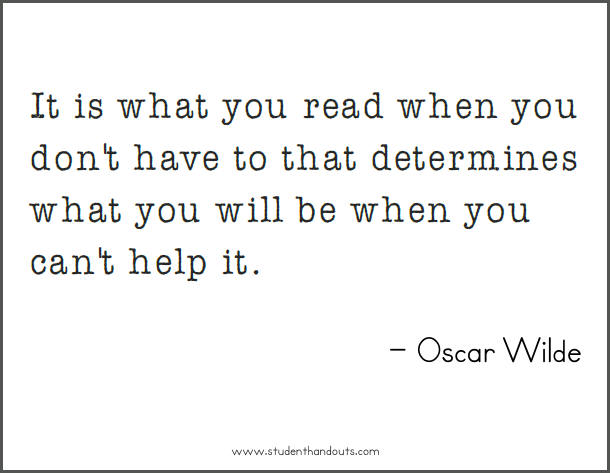
First, read. Read everything. Read bad fiction and good. Read science fiction, mystery, best seller, little known American authors of the thirties, translated Burmese poets. Read about the whisky rebellion, folk music of the nineteenth century, the care and feeding of llamas, the Teapot Dome Scandal and how steam engines work. Be Not Thou Narrow and Do Not Stop. I'm convinced when a writer stops reading he dies inside. William Goldman said it first in The Color of Light: It's all material. Every square bit of it. And you'll need every square bit of it.
Be voracious. Be eclectic.
Second, read intelligently. By this I do not mean narrow the material. I mean that every writer has a point of view. Some defensible. Some not. Some you agree with. Some not so much. But they all have biases. So if you read somewhere that box turtles are vegetarians, be aware It Ain't Necessarily So and corroborate the author. Follow the material down to bedrock. Don't be satisfied until you have wrung your material dry. Tear it apart and build it anew in your mind.
Don't be worried that it won't prove useful. It will and in ways you cannot imagine when you're reading. Do it for fun. The love will follow.
I had a physiology professor in college who always answered questions with material that begged for more questions. Eventually, when the questions could not be answered, it was not because the professor had run out of knowledge; it was that we had run off the edge of the state of knowledge.
Cultivate such relationships.
Then, write. Write incessantly. Write about the sun, the moon, the darkness. Try your hand at plays, poems, stories, novels. But most of all write in your mind. Think about what you read, see, feel, experience. Frame it. Turn it inside out. Change points of view. Would that be the same if the person were a woman? Chinese? A squid? Compare it against what you've read-- bad and good. Compare it against things you know and things you don't.
And write honestly. Don't be satisfied writing someone else's material. Every writer first has to discard the very writers that crystallized the desire to write in the first place. Don't worry. It's all material. It will come back to haunt you but when it does it will be in your voice. Write about people who work, play, have children. You don't have to talk about their work, play or children if it doesn't serve the story. But you will know them and through your knowledge so will the reader even if you never mention a whisper.
There is no character so minor that they don't have a back story.
Let characters come forward in your mind-- I like to think of writing as an exercise in multi-personality disorder. But for fun. You, as the writer, are in charge. But readers are like the audience at a magicians show. You can fool them for a while but if you do the same trick too many times you're just messing with them. They'll see through you and resent you. Treat not the reader with contempt. Treat them like the intelligent people they are and they'll give you their valuable attention. There's no sin in asking the reader to work with you.
Treat not thy characters with contempt. It's a variation on treating readers with contempt. Simon Legree had a business to run. He had a wife and children to support. Yes, he was a cruel sadist that tortured slaves for fun and profit but that's not all he was.
I'll even give a great example of not treating your characters with contempt. In Huckleberry Finn, Huck's father, Pap, was one nasty piece of work. He was the worst kind of drunk. He abused Huck. He kidnapped him to get his money. Huck goes on down the river largely to get away from him and in fear of his life. Twain could have drawn him as a villain with no more depth than a playing card. He did not. The reader does not know how Pap came to this place, what sort of choices he made to get here, the nature of the people he came from and what formed him. But at no point in the novel are you ever in doubt there was a path Pap followed. There were decisions-- mostly wrong but likely looking good at the time-- that brought him to be the person Twain describes. That is writing honestly.
Writing honestly is doing the very best work you can do because you, of all people, know where the bodies are buried and which corners were cut.
Writing honestly is doing your best when you know you will fail at it because you know where the bodies are buried and which corners were cut.
Nobody's perfect. Suck it up and do it anyway.
Sunday, June 16, 2013
Consideration of Works "Past": Nausicaä of the Valley of the Wind
Usually I talk about works I read when I was younger now rediscovered. But in this case, I'm going to talk about something that I've read relatively recently-- not the film version of Nausicaä.The manga.
In a way, this is a cop out. I've been working on a set of posts involving regulation based on science and physics rather than on whim and appearance. I was going to attack gun regulation but it's more work than I anticipated. So I'm taking a break from that one and talking about Hayao Miyazaki.
Miyazaki is primarily a film director and animator and it's by his film work that he is best known. If you haven't seen a Miyazaki film, stop reading this blog right now and go rent one. Kiki's Delivery Service is a good one. Or Castle in the Sky. I have a weak spot for Porco Russo, since it's about seaplane pilots. Or you could go straight to the big guns and get Princess Mononoke or Spirited Away. Or, of course, you could also watch Nausicaä of the Valley of the Wind.
Oh, hell. They're all terrific. Go watch them.
The manga is in seven volumes. If you've seen Nausicaä the film, you'd be forgiven for thinking that the first couple of volumes are pretty much a recap of the film. There are more than one story about why Miyazaki did the manga. Miyazaki couldn't initially get funding for the film and so put out the mangas. Miyazaki couldn't get funding for a film that didn't have an associated manga. Etc. The mangas were written from 1982 to 1994. The film was made in 1984.
A thousand years before the story starts there was a terrible war fought, in part, by God Warriors: giant mechanisms with horrific weapons. Vast areas of the world are now filled with poisonous forests inhabited by giant insects. The forests appear to be fungal in nature and spread by spores, often carried by insects or unwary travelers. However, the poison is everywhere and people eventually die of it.
Nausicaä is a princess of the Valley of the Wind-- the royalty component of the story seems to not have a direct connection to rule. Her father did rule the valley but there are hints toward the end that there may be other paths to being a sovereign than heredity. Regardless, she is looked up to and admired by the folk of the valley.
War breaks out and there are treaty obligations that the Valley send troops. Nausicaä goes with them. The war was between the Torumekeans and the Doroks. As she proceeds through the different convolutions of the war, encountering spiritual battle, biological warfare and enormous cruelty, she becomes more and more important, a force for good in an amoral conflict. Eventually, her influence, the power of the insects and the suffocating horror of the war all come together and she prevails.
I'm not going to get more detailed than that. The plot is intricate and clever but I think is actually a side note to the issues Miyazaki is handling.
Miyazaki has always had environmental concerns. Pretty much every movie has some sort of component that can be construed to be environmental. Even Porco Russo, a story about a seaplane pilot who's become a pig, has a continuing discussion of the balance between selfishness and selflessness-- which, I think, is a stand in for Miyazaki's issues with the environment.
In Nausicaä these issues are front and center. Humans have to live on a poisoned planet-- poison that is of their own making. The poison is killing them. Yet they still war. Religion is a political means to an end. The personal and selfish pursuit of power is the source of the world's evil.
But it's not a screed. It's a story where these bits come out as important plot details. Nausicaä never says "If only humans will somehow sees the immorality of their ways and learn to help one another. Ah, Atlantis." She does lament human behavior more than once but it's more in the vein of "Come on, guys. Stop hitting yourselves."
The film handles some of this but much of the rich and detailed tapestry of Myazaki's world is given only token treatment. The God Warrior is just a prop. The sword master Yupa a part of the chorus. This is the cost of making it into a film. The manga is much more detailed.
One of the interesting things in Nausicaä's character is her continuing avoidance of killing-- not because she's a pacifist. But because she finds out early one the killing rage she has in her own heart and how easily it can be released. She decides that this is something to struggle against and from then on she keeps trying to find different ways to make things better. Not easy in the middle of a war.
This continuing attempt to not kill anybody and to stop people from killing one another, coupled with her own forceful personality, begins to have knock on effects. People start to take her seriously and, by doing so, take her point of view seriously.
Nausicaä is, no doubt, some sort of Christ figure in this. But it's a Christ figure that we're not used to. Nausicaä is not passive. She's not going to volunteer for the cross. If she goes down she's going down trying to save everyone around her whether they want it or not.
I've read this series twice now and this aspect of Nausicaä's character is what stays with me. She's like the members of Doctors without Borders, going out there and working until they drop to save people's lives.
The work has its limitations. There is little introspection regarding motive-- people just do, knowing what they must do instinctively. In my experience there's just a little consideration of what must be done. The ending is a bit abrupt. It feels wrongly shaped-- I think everything happens that has to happen but it seems clunky in execution. Miyazaki did all of the drawing in pencil and the artwork is wonderful. But you want to just see the precise definition of ink in some of the action sequences.
But these are quibbles. It's a terrific read rendered by a master story teller at the height of his powers.
In a way, this is a cop out. I've been working on a set of posts involving regulation based on science and physics rather than on whim and appearance. I was going to attack gun regulation but it's more work than I anticipated. So I'm taking a break from that one and talking about Hayao Miyazaki.
Miyazaki is primarily a film director and animator and it's by his film work that he is best known. If you haven't seen a Miyazaki film, stop reading this blog right now and go rent one. Kiki's Delivery Service is a good one. Or Castle in the Sky. I have a weak spot for Porco Russo, since it's about seaplane pilots. Or you could go straight to the big guns and get Princess Mononoke or Spirited Away. Or, of course, you could also watch Nausicaä of the Valley of the Wind.
Oh, hell. They're all terrific. Go watch them.
The manga is in seven volumes. If you've seen Nausicaä the film, you'd be forgiven for thinking that the first couple of volumes are pretty much a recap of the film. There are more than one story about why Miyazaki did the manga. Miyazaki couldn't initially get funding for the film and so put out the mangas. Miyazaki couldn't get funding for a film that didn't have an associated manga. Etc. The mangas were written from 1982 to 1994. The film was made in 1984.
A thousand years before the story starts there was a terrible war fought, in part, by God Warriors: giant mechanisms with horrific weapons. Vast areas of the world are now filled with poisonous forests inhabited by giant insects. The forests appear to be fungal in nature and spread by spores, often carried by insects or unwary travelers. However, the poison is everywhere and people eventually die of it.
Nausicaä is a princess of the Valley of the Wind-- the royalty component of the story seems to not have a direct connection to rule. Her father did rule the valley but there are hints toward the end that there may be other paths to being a sovereign than heredity. Regardless, she is looked up to and admired by the folk of the valley.
War breaks out and there are treaty obligations that the Valley send troops. Nausicaä goes with them. The war was between the Torumekeans and the Doroks. As she proceeds through the different convolutions of the war, encountering spiritual battle, biological warfare and enormous cruelty, she becomes more and more important, a force for good in an amoral conflict. Eventually, her influence, the power of the insects and the suffocating horror of the war all come together and she prevails.
I'm not going to get more detailed than that. The plot is intricate and clever but I think is actually a side note to the issues Miyazaki is handling.
Miyazaki has always had environmental concerns. Pretty much every movie has some sort of component that can be construed to be environmental. Even Porco Russo, a story about a seaplane pilot who's become a pig, has a continuing discussion of the balance between selfishness and selflessness-- which, I think, is a stand in for Miyazaki's issues with the environment.
In Nausicaä these issues are front and center. Humans have to live on a poisoned planet-- poison that is of their own making. The poison is killing them. Yet they still war. Religion is a political means to an end. The personal and selfish pursuit of power is the source of the world's evil.
But it's not a screed. It's a story where these bits come out as important plot details. Nausicaä never says "If only humans will somehow sees the immorality of their ways and learn to help one another. Ah, Atlantis." She does lament human behavior more than once but it's more in the vein of "Come on, guys. Stop hitting yourselves."
The film handles some of this but much of the rich and detailed tapestry of Myazaki's world is given only token treatment. The God Warrior is just a prop. The sword master Yupa a part of the chorus. This is the cost of making it into a film. The manga is much more detailed.
One of the interesting things in Nausicaä's character is her continuing avoidance of killing-- not because she's a pacifist. But because she finds out early one the killing rage she has in her own heart and how easily it can be released. She decides that this is something to struggle against and from then on she keeps trying to find different ways to make things better. Not easy in the middle of a war.
This continuing attempt to not kill anybody and to stop people from killing one another, coupled with her own forceful personality, begins to have knock on effects. People start to take her seriously and, by doing so, take her point of view seriously.
Nausicaä is, no doubt, some sort of Christ figure in this. But it's a Christ figure that we're not used to. Nausicaä is not passive. She's not going to volunteer for the cross. If she goes down she's going down trying to save everyone around her whether they want it or not.
I've read this series twice now and this aspect of Nausicaä's character is what stays with me. She's like the members of Doctors without Borders, going out there and working until they drop to save people's lives.
The work has its limitations. There is little introspection regarding motive-- people just do, knowing what they must do instinctively. In my experience there's just a little consideration of what must be done. The ending is a bit abrupt. It feels wrongly shaped-- I think everything happens that has to happen but it seems clunky in execution. Miyazaki did all of the drawing in pencil and the artwork is wonderful. But you want to just see the precise definition of ink in some of the action sequences.
But these are quibbles. It's a terrific read rendered by a master story teller at the height of his powers.
Thursday, June 13, 2013
The Snowden Perspectives
Here are some articles that have interesting perspectives on the whole surveillance state.
Edward Snowden probably didn't commit treason
500k contractors have access to top-secret stuff
Booz Allen Hamilton
Five ways to stop the NSA from spying on you
Is a democratic surveillance state possible?
Has the US become a nation from which you must seek asylum?
Will PRISM damage tech companies' reputations for privacy?
Obama is wrong about NSA oversight
NSA asked Verizon for records of all calls in the US
And just to make sure other things are discussed:
The people have taken over American politics and they hate it
Infrastructure Hawk vs Deficit Hawk
Edward Snowden probably didn't commit treason
500k contractors have access to top-secret stuff
Booz Allen Hamilton
Five ways to stop the NSA from spying on you
Is a democratic surveillance state possible?
Has the US become a nation from which you must seek asylum?
Will PRISM damage tech companies' reputations for privacy?
Obama is wrong about NSA oversight
NSA asked Verizon for records of all calls in the US
And just to make sure other things are discussed:
The people have taken over American politics and they hate it
Infrastructure Hawk vs Deficit Hawk
Subscribe to:
Posts (Atom)