Sunday, February 23, 2014

Consideration of Works Past: Immortality, Inc


(Picture from here.)

I just spent the weekend at Boskone. Great fun. But after one of the panels I was asked who were my significant influences.

I quickly rattled of my personal mantra: Robert Heinlein, Clifford Simak, Cordwainer Smith, Mark Twain, John Dos Passos, Phillip K Dick, Alfred Bester. Anybody who's discussed writing with me more than five minutes will get that particular list.

Then, later, I was down in the dealer's room and looking over NESFA's table.

I've been looking for a particular work from my childhood. A book that I barely remembered that, somehow, involved life after death of a yacht designer. It had suicide booths in it. And there, on the NESFA table, I found in the short novels of Robert Sheckly, Immortality, Inc.

It looks like I have to add Robert Sheckley to the list.

BTW: If any of you are interested in classic works by Roger Zelazny or Hal Clement or Zenna Henderson or, really, almost anybody that has fallen out of print or cries out to be collected, check out the fine people of NESFA Press. This is a small press publisher that is bringing together reprints of works in hardcover. They have, for example, three very good books by my special hero, Cordwainer Smith: Norstrilia, The Complete Short Fiction of Cordwainer Smith and the Concordance to Cordwainer Smith. I keep them in my office and hold them close, whispering "my precious." Go look at their catalog here.

Sheckley had a truly skewed view of the world. In terms of sensibility he was more over in the Phillip K Dick side of SF. SF was a mechanism to open up the clockworks of life and examine them. Immortality, Inc is, in part, an examination of our fascination with death.

The plot is straightforward. Tom Blaine is a Junior Yacht Designer in a New York Firm. On the way home from his vacation cabin he has a car accident and dies. He awakes to find himself in a new body in the year 150 years in the future. In this world, life after death is well known and scientifically verified. Anyone who can afford it can get a treatment guaranteed to let them live after death. Most don't survive the "death trauma"-- a lovely wink towards Freud's "birth trauma."

But the plot is just a means by which Sheckley can use this new world as a means to skewer the one where he lives. I'm reluctant to start listing all of the lovely things in the book for fear I'll spoil it for people who have not read it. But here's a couple.

There's "transplanting": the means by which you can share or operate someone else's body. Initially, as normal science fiction uses the idea, it's mostly sold as titillation. But later it is presented as a force for revolution. As the freedom to be anyone you want to be-- held down by those that would oppress us. And there are suicide booths-- I have no doubt the suicide booths in Futurama are a direct homage to Sheckley.

The book is more absurdist than funny. More thought than laugh provoking. It is a satire-- a subgroup of SF that is sadly underrepresented. All good satires are intended to twist your head a bit. Sheckley managed that in all of his work. Immortality, Inc is no exception.

Most of the writers I consider seminal I read everything they wrote. For whatever reason, though he had a strong effect on me, I didn't do that with Sheckley. It might be that there were just too few opportunities to read him. The period I ripped through most of the books is started when I was eleven and went on through college. I was in Alabama for much of that time. No SF bookstores. No conventions I knew of. The SF book club was available-- indeed, that's where I got Sheckley's Mindswap-- but I had to husband my money. Most of my reading came from the library. Unlike Heinlein prior to 1960 or Asimov or other, like, writers, Sheckley was always a bit subversive. Possibly beyond the tastes of those southern librarians.

Imagine my delight when I looked at the NESFA Sheckley collection and found not one. Not two. But three books by Sheckley I'd never managed to read.

Sheckley novels to read:


Other good SF satires


Thursday, February 20, 2014

Sunday, February 9, 2014

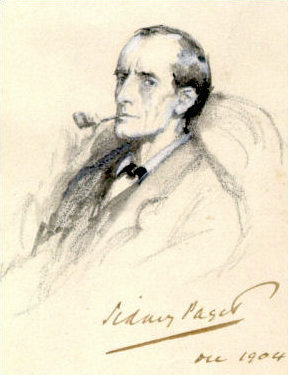
Sherlock vs. Sherlock


Left: Johnny Lee Miller, Elementary
Right: Benedict Cumberbatch, Sherlock
Middle: Sherlock Holmes

I'll say up front: I'm not a Sherlock fundamentalist. I like the original series fine but it's not written in stone or anything. I've enjoyed many of the Sherlock adaptations, the further from the original the better-- They Might Be Giants, for example.

So I've been watching the BBC's Sherlock and NBC's Elementary. I've been struck by a couple of interesting things. I call this the Batman vs. Superman effect.


For those who have been living under a rock, Superman was born on Krypton and once reaching Earth developed god like powers intrinsic to his nature. This is important. He is born with the capacity for these powers. It only takes the power of Earth's yellow sun to bring them out.

Batman is completely different. He is traumatized by a childhood event and through his own determination and endurance trains himself up to near superhuman physical and mental abilities.

If Superman is one end of the scale and Batman is the other, where does Holmes fall?

Well, of course, that depends on the work describing him.

I'd say Doyle's original Holmes, and many of the adaptations, fall towards the Batman side of the scale though not terribly far. Holmes had trained himself to be who he was, to the exclusion of all else.. Things such as human pleasantries, the state of astronomy and possibly bathing were considered superfluous unless it was in the service of fighting crime.

(As a side note, the obsession with fighting "crime" has always seemed an odd preoccupation. I mean, didn't Superman and Batman want to fix the world? Crime's a small part of that.The original Superman comics did but then he got into more interesting material. I suppose that's the reason for all those super villains. Nothing else to do on a Saturday night but get drunk.)

Later adaptations, like that of Basil Rathbone and The Adventures of Sherlock Holmes (also BBC) seemed to stay more or less in the same range. Though very intelligent, Holmes is not Superman-- though, in some material, when contrasted with Watson he seemed to be.

Fast forward to Sherlock and Elementary.

Sherlock seems to fall squarely on the Superman side of the equation. There's all the fun lettering over things to show us what Sherlock sees or thinks-- at its level best when he's drunk. Chair: soft sqiggly thing. There's even been a couple of conversations between Sherlock and his brother Mycroft about their difficult childhood trying to fit in with normal, ungifted, people. This is contrasted to normal Watson. A nice guy who's almost always at sea with Sherlock but pursues him out of plucky friendship.

Elementary falls solidly towards Batman. The cops are a varied bunch. Some stupid. Some definitely not stupid. They recognize Holmes' "gift" for what it is-- a useful tool in police work. And Watson, though lacking training and monomaniacal dedication of Holmes, is every bit as smart-- a fact Holmes readily and repeatedly acknowledges.

Smarter, in fact. Consider Sherlock. Could Holmes and Watson ever change places? I submit that in the context of the show, Sherlock could have become as good a physician as Watson but Watson can never be the detective Holmes is.

In Elementary it's a very different game. Watson was a cardiologist-- pretty much one of the top medical professions in the country. Further, she was one of the best cardiologists. That she messed it up and left the profession is not important. She messed it up for personal, not professional, reasons. The intellectual demands on a cardiac surgeon are every bit as rigorous as being a detective-- even the best of the best, like Holmes. She left that to become a sober companion. She's left that to become a detective. A very good detective. A detective so good that she's outguessed Holmes a few times.

Contrast this with Holmes. He's a monomaniac in detection. He's very very good at that. And he has some other skills that are quite good. Yet, Watson is coming up close behind him. I suggest that Holmes could not become the cardiologist Watson was. Yet, Watson is in the process of becoming as good a detective as Holmes.

The difference between the two approaches is quite stark. It's the difference between avatar and buddha. Between attaining divinity by birth or by effort. Between aristocracy and meritocracy. Between Star Wars and Star Trek.

Hero stories often fall along this same path. As in Young Frankenstein:
Destiny!
Destiny!
No escaping that for me!
(cue dancing girls)
Okay. You caught me. There were no dancing girls in Young Frankenstein. But the image of a can-can being performed by Terry Garr and Madeleine Kahn still haunts me.

Anakin Skywalker is "destined" to bring balance to the force. Prophecies. Oracles. Etc. Or, you can have people of strength that are brought to greatness not by destiny but by their own efforts.

Or you can blend them. Then, it gets interesting.

Parzifal is destined to be great. His heritage is greatness. His strength is unmatched. His courage indomitable. His skill without peer. But he fails. Fails miserably. Fails spectacularly. Fails because he is controlled by rules instead of his compassion.

Destiny shuts him out. You only get one chance.

Parzifal refuses to accept that. And by his efforts creates a second chance where he is redeemed.

In The Stars My Destination, Gully Foyle has strength and intelligence and isn't the least bit interested in advancing himself. But then he is left for dead and the urge for payback transforms him.

It will be interesting how these two shows proceed. People seem to like the ubermensch. For my own part, I like Elementary better than Sherlock.

I've always been more fond of Batman than Superman.


Friday, February 7, 2014

Science of Interest


I follow a lot of science feeds. Among these are Phys.org, Nobel Intent and Science Daily. Io9 is a surprisingly good first step for good and exciting science. In addition, I have a Google alert service for various topics and a couple of individual blogs. I highly recommend John Hawks' blog, for example.

I've been having a bit of trouble talking about science lately. It's not because there's any lack of interesting things; it's because there's so much of it that it's hard to settle on one theme.

So I'll just go over the feeds a little bit.

From Phys.org:
Formula 1 Racing Embraces 'Green' Technology: This is interesting on so many levels. The people the determine the rules have downgraded the allowed size of the engine to a 1.6 L V6 engine from a much larger V8. There are also fuel consumption rules intended to result in a competition not only for speed but for efficiency. Recall that many innovations in automobiles are given proof of concept opportunities at these races. But it's also interesting at a technical. The energy/torque ratio for a gasoline motor is non-linear. More energy doesn't always get proportionally torque. DC electric motors are different. As more energy is applied more torque is achieved linearly. This could be the first step towards a much faster Formula 1 racing car. One wonders what will happen when, as has happened in flight, the speed of events exceeds the human operator.

Solar Wind and Space Dust Make Water: Airless space bodies in this solar system are bombarded continuously by both space dust and solar wind. Solar wind consists, in part, as high energy single protons. Think of them as hydrogen atoms with the electrons stripped off. The space dust is often composed of silicates: compounds made of silicon, oxygen and hydrogen along with a few metals. So the raw material of water, hydrogen and oxygen, is present. This study was able to show water forming on a silicate surface that derives from the impact of the high energy protons. Not only does this suggest a long term source of water on the surface of places such as the moon, it also gives one more mechanism for the ubiquitous presence of water molecules in the universe.

Which dovetails nicely with finding water plumes from the dwarf planet Ceres showing Ceres has surface ice and something like an atmosphere. We should know more when the Dawn spacecreaft reaches Ceres next year.

Development of an energy dense sugar fuel cell is extremely encouraging, Not only does sugar have the benefit of using a material that doesn't explode, it's very easy to obtain. In a few years you might be powering your laptops and cell phones with honey. But, not to trivialize this, sugar is what powers your body and pretty much every other living thing in the world. It's very energy dense-- it's been used for solid rocket fuel. It could potentially circumvent the energy storage issue of fuel cells.

From Nobel Intent:
Antarctic Neutrino Detector Comes Of Age: Down under they did something very cool. They put detectors down in the ice. In effect, they are using a 1 kilometer block of ice as the experimental field. Neutrinos come in all sorts of flavors. What they're looking for are high energy neutrinos. Those particles created in massive stellar events like supernovas. Not the mere humdrum weak neutrinos that are generated in the thousands of fusion bomb equivalents every second in the heart of the sun. So far they've found 30. Not many but considering these are barely even blips, that's very cool. Now they're trying to find out where they came from.

Ball Lightning on Video: For the longest time ball lightning was considered a myth. People reported it but nobody had photographed it or figured out what it was made of. Well, that changed this year. A video of ball lightning was captured along with a spectrograph of it. It turns out that the constituents of ball lightning were the same as found in nearby soil. The current hypothesis is that lightning strikes the ground and causes a plasma of these materials that then take some time to dissipate. That was born out by the spectroscopic analysis of the video. 

I'm going to depart briefly from reporting on the different feeds to a specific article. This one comes from livescience.com. They were kind enough to report on the many interesting wrinkles in human evolution that were discovered or determined in 2013. The existence of the human hand was pushed back to 1.4 million years ago. Neanderthals probably buried their dead. And, which I've talked about before, humans, Neanderthals and Denisovans interbred quite a bit.

Which brings us to the this article from Science Daily:

Neanderthal sunlight adaptation found in 65% of East Asian population: Forget a piddling 6.5 or 3.2 or whatever percent of the modern human genome came from Neanderthals. The adaptation to UV found in the gene Hyal2 is found in a whopping 65% of those in Japan or China. Further, it looks like this particular gene adaptation was lost when humans came out of Africa and then regained from interbreeding with Neanderthals. People have been saying there is evidence that the Neanderthal genes were strongly selected for. You bet. Not only did we dance with the devil in the pale moonlight, we got something to take home from the experience.

And, finally, one from Io9:

Music derived from Voyager 1 & 2: Voyager 2 managed to escape the solar system. Voyager 1 isn't far behind. Domenico Vicinanza works on managing the network that handles Cern and the LHC. He took 320k measurements from the two spacecraft and used them as input to generate quite a good piece of music. Go read about it and enjoy.

Heck, go enjoy all of this stuff.


Sunday, January 12, 2014

Experiments in Narrative

I've been working on novels for the last few years. None of them have shown up in publication at this point. I have a tendency not to submit them.

That said, I've been trying my hand at a different sort of narrative style.

Modern fiction is largely built around the concept of following a particular character or group of characters through a strong prose narrative. It's the style of Mark Twain in Huckleberry Finn, Rudyard Kipling in Kim up to and including most modern writers whether in-genre or out. Even something as out there as Reif Larsen's The Selected Works of T. S. Spivet, while having a wonderful collection of diversions and ruminations, still follows essentially one or two characters closely.

There are other paths through narrative.

Back in college I became enamored of the experiments of various writers of the first half of the twentieth century. It was fascinating reading what with Faulkner's exploding prose and Hemingway's oddly detached perspective. But the writer that really attracted my interest was John Dos Passos.

Dos Passos had a fascinating technique. He used as many points of view as he needed to peer into the works of what he wanted to observe. Some points of view were intimate with a character. Some were more clinical and observational-- his "camera eye" sections of USA Trilogy. Some were bits of publications, headlines, newspapers, etc. John Brunner appropriated this technique in Stand on Zanzibar.

Dos Passos and Brunner both used this mosaic approach for cultural examination. Dos Passos was interested in America and used it to dissect what he thought was going on. Brunner was concerned with the possible consequences of overpopulation and used the technique to demonstrate it to the reader. In both cases it's a fly's eye approach: many different images integrated by the reader into a whole.

I like that. I like the sense of creating a work composed of different parts where the story is not visible to the characters and only apparent to the reader.

I've been trying to adapt this technique for my own use and the effort lies in the debris of unpublished novels.

I dropped my last novel attempt into the workshop last August and a novella attempt a week ago. One of the workshop members-- who shall remain nameless to protect the guilty-- asked what it was that I so liked about this technique? I had some kind of glib answer but it wasn't right and I kept thinking about it ever since.

The best analogy for me is music. If you go back and listen to a Bach fugue, there are a lot of moving parts. The pieces come together and go their separate ways. Sometimes it seems like two these are hard at work at opposite sides of the room with only the wispy threads of rhythm holding them together. Then, they nod to one another. One bit seems to (not quite!) meet another and in the next measure they're connected and finally come together in a wholly unexpected way to climax the piece.

Mahler is another composer where this happens. Beethoven doesn't work the same way. I get the sense in Beethoven's work that I'm a traveler on a complex path. In Mahler or Bach, there are many separate travelers that happen to sometimes converge in glorious harmony.

In Dos Passos I get the same feeling. It's a different feeling from the personal character narrative. Not that the personal narrative isn't powerful. I'll carry the last scene between Kim and the Lama to the day I die and it wouldn't be such a bad image to go out on.

But the mosaic narrative has its own beauty and power. And one of these days I'll get it right.

Sunday, January 5, 2014

Webcomics of Interest


Since it's the new year, let's address some new webcomics.

Most of these are new to me. Some I have been following a bit and still get a kick out of. Some haven't been updating as much as I would like and I'm hoping that sending some traffic their way will do them some good. All of them are terrific.

Of a curious note, many of these involve college life or are in the form of children's book illustrations. Not sure why that attracts me this year.

The Red Calaveras: The Red Calaveras are a punk band selected by the galaxy to save them from crappy bland and boring music. To manage this, the Calaveras brothers must negotiate blue monster-girls, Iowa Mennonite Vampires and the Pool of Ultimate Man Beauty. BTW: a calavera is a skull figure used in the Mexican Day of the Dead holiday. Often they're made of sugar and eaten. You're welcome.

The Lonely Moon: Violet is an eight year old girl lives on a fairly high tech planet and gets in trouble. She gets into trouble in a variety of ways, creating a giant robot that closed all of the empire's toilets for example, and since she is unrepentant she is exiled to Tartarus, a nearby inhabitable moon where she is taken up by the Hartley family.

Okay. It sounds simple. But it's more of a prose story combined with a comic. It feels like a children's story but, like any such story worth its salt, there are darker and more twisted layers beneath. Lots of fun.

933 Dollars: Consider the following questions: "What does a girl, a guy, a chameleon, mad scientists and lust for world power have in common?" Answer: 933 Dollars.

Leanne moves to art college. She can't find a place to stay. She ends up finding a flat that costs $933/month. Her flatmate is Sean who dropped out of college and Cuba, a chameleon left behind by Sean's former roommate. Cuba is intelligent and something of a mystery. People want him and are willing to kill to get him. It gets crazier from there.

Explosive Crash Dummy: Again, exploiting the roommate paradigm. Here's a quote: "Val is an orphan who lives with a mysterious, musically talented girl, a girl who escaped a ninja-nation during a civil war and her half-alien sister." If that doesn't get your interest you're not breathing.

Ignition Zero: Hauntings. Goddesses. Neat artwork. Young kids in college. The hero's glory.

Hm. Roommates and colleges. There's a trend developing here. I wonder if I spent 2013 reclaiming my lost youth. Oh, I found it all right. But I lost the pawn ticket.

Marry Me: I've been following Marry Me since it started it. The premise is that a pop star who is bored with her life impulsively marries someone from the audience. What makes it interesting is the pop star is actually a good and legitimate person and the man she ends up marrying is the right one for her. That was the story, then. Now it's opened up again and the wedding is on. Here's an example quote: "Don't blame me! Blame the God who made me! I see a cake, I must destroy it! It's a medical condition!" Now, go have fun.

Monster Pop: is another of the current crop of comics drawn in a sort of faux children's book way but actually has some meat to its bones. George is a cyclopean woman going to college. (Oh, Jeez. It really is an obsession.) Amity is an integrated school where monsters and humans matriculate together. She dates and has race problems. Also, not so clear on her own sexual identity.

Paranatural: Oh, thank God. It's not about college. Max is twelve years old and has supernatural abilities. He is recruited by the Activity Club. They fight evil. Think Calvin and Hobbes but pissed off. Really pissed off.

Blindsprings: I really don't know where this one is going. It is very new-- just this last Halloween. Girl has a mysterious contract regarding her sister and being locked in a forest. Artwork is a sort of corrupted Disney.

Plume: Western paranatural. Girl loses father but gains father's guardian "spirit." Again, a very new comic. We'll have to see where it's going. No college or school of any kind.

Rigby the Barbarian: Rigby's an archeologist working on a dig. She finds a magic sword that drops her into a world where she may well be a Person of Prophecy. Except they weren't expecting a woman. Rigby wasn't expecting dinosaurs. So they're even.

Shotgun Shuffle: Ellie Buckingham and Quinn Nicks reluctantly live together. Ellie has been cast out of her parents house because she is essentially too lazy to get a job. To support herself she gets a collection of intensely crappy jobs. This is complicated by the fact that Ellie is one of seven sisters, each of which is more motivated than she is. I especially like Mister Fatty McFatFat, Ellie's very large cat. Probably "composed of several smaller cats."

Skullkickers: Big bald guy with big gun teams with pugnacious dwarf that likes to kill people with his axe. Just another day of mindless violence. Quote just prior to a fight: "It's come to my attention that one or both of you have been caught singing 'He interrupted me in the loo.' A clear violation of Bard's Guild Policy."

Solstoria: Magic is toxic and spreading. Against this environment Samantha and Lawrence are siblings. Lawrence attempts to learn magic. He disappears. Samantha attempts to become a knight and search for her brother.

String Theory: It's around 2057. Things went south after the Cuban Missile Crisis and there is still a Cold War. Some parts of the world are uninhabitable. Herville Stein is a scientist and pretty much dysfunctional. He cares little for people and has a heart of the size of a walnut. One of his experiments goes bad and he ends up in prison. String Theory is his journey. Stein is not likable. He's unpleasant and very, very smart. But there's a compelling mystery about him that's worth the effort.

Vibe: Voo doo superheroes. Need I say more?

Within a Mile of Home: Jinjo lives on a floating city. He falls off and ends up with Frim, an alchemist. Frim is trying to make a living. Jinjo is trying to get home.

Harry Potter and the Methods of Rationality: HPMOR is not a comic but I'm always willing to promote it. Imagine Harry Potter with the mind of a scientist and raised not by misanthropic idiots but by loving parents. Then he gets tagged for Hogwarts.


Sunday, December 22, 2013

Nobody Here But Us Mongrels


(Picture from Io9's site here.)

I've been interested in Neanderthals for years.

The idea that there was a previous form of human being-- not quite like us but close enough to talk to-- that used to live essentially next door was irresistible.

My first accepted story involved a Neanderthal/Homo sapiens contact. And it came, as much of my fiction does, in retaliation.

I had just moved to Boston, fresh from the homogeneous midwest, and the amazing diversity stunned me. You could walk down a street in Boston and hear English in three different accents. Heck. You could walk down a street in Boston and hear three different languages. It was a different world.

Not surprisingly, I went to the science museum. At the time there was an exhibit on cave paintings. The docent was a well meaning old man who talked about the painters and how they couldn't possibly be painted by dumb old Neanderthals. This ticked me off and I went home and wrote a contact story from the Neanderthal point of view about encountering those smelly idiots, Homo sapiens. Asimov's bought it and I was off.

It turns out I was right.

Not about the cave paintings. Those are clearly dated and post-date when Neanderthals were in Europe. Not to say they didn't paint things or paint in caves. We don't know and, frankly, it's unlikely we ever will. But I was right in that Neanderthals were a whole lot smarter and like us than some thought way back in the Cretaceous-- that is, when I moved to Boston.

This idea that not only Neanderthals but most of our early relatives have been miscast has been growing over the years. A number of very important stories broke in just the last year.

The stuff that's mostly been in the news has been genetic in origin. One of the earliest discoveries was how some modern humans shared DNA with Neanderthals in such a way as to suggest cross breeding. What made it especially interesting was that the distribution of the Neanderthal DNA was not uniform. Some groups got more than others.

Then came the Denisovans, a group of fossils discovered in Siberia. Those fossils were about 41k years old Sequencing the Denisovan DNA suggested more interbreeding. More Europeans had Neanderthal than other groups. More Asian and folks from Oceania had Denisovan DNA. This suggested interbreeding might be a local affair. After all, Neanderthals were mostly in the mideast and up into Europe while Denisovans were more in Asia.

Then the Denisovans were compared with Neanderthals. Sure enough, there was interbreeding there, too. In point of fact, there was evidence that there was interbreeding between Denisovans and a potentially unknown hominin.

It shouldn't come as any surprise that humans will pretty much have sex with anything. Any perusal of a porn site will demonstrate that pretty adequately. Or you can read this in Scientific American. But go with an open mind.

That lack of surprise should therefore lead to a lack of surprise that we interbred with those previous cultures had considered, well, beasts. We're starting to look at our cousins as more and more like ourselves. Different, to be sure. There are a lot of differences, too. For one thing, your average run of the mill could toss your top star line backer over the goal posts. There appears to be a fairly vast difference in potential strength between our two groups. It also looks like Neanderthals had a different way of speaking and, potentially, seeing. They were different.

But not, apparently, different enough not to be taken seriously persons of affection.

This has caused several anthropologists and archaeology  to rethink the whole idea of what species we all might be to one another. There are species fundamentalists that believe that if two individuals can interbreed they are, by definition, the same species. By that definition, none of these folks are separate species at all.

But it gets even more interesting.

Let us travel to Dmanisi, Georgia.

The Dmanisi site is quite old-- 1.8 million years old. Five skulls have been found. All skulls have been dated to a similar time frame. All are quite different-- not different enough to be unrelated, mind you. The variation between the five skulls is similar to variation between random skulls of humans or chimps. But different enough that if they had not been found together they might have been considered different species. John Hawks has a good discussion of the Dmanisi skull here.

One of the interesting things Hawks mentions is that the most human like skulls were adolescents while the adult skulls in the same site had significantly reduced brain case sizes.

This is an interesting indicator to me. We know that we have bigger brains than our distant ancestors. That requires two things: variation in brain size and selection pressure in favor of larger brains. A mechanism might be nice. Possibly the mechanism for this is our lengthening childhood. We end up not selecting directly for big brains but for the variation in lengthening time as juveniles which give us the opportunity to develop sufficient brains to make a selective difference. Be interesting to see if that shows up in future science.

Be that as it may, it appears that diversity in the human species may well be the name of the game. Instead of differing species (Homo erectus, Homo neanderthalensis, Homo sapiens) there is one human species for the last ~2 million years with lots of variation. We're an experimental species. It's interesting to note a symmetry between our biological heritage and our proclivities.

One thing Hawks says and I believe it is true. He says that recent humans are not a good measure of our history. We're now pretty much the only game in town. All of our cousins are either dead or absorbed. We like to believe that we're still the same as we ever were: now, a hundred years ago, a thousand years ago. Maybe that's true. Or maybe that's just the conceited present thumbing its nose to the silent past.

A hundred thousand years ago we were not alone. There were other intelligent eyes peering out of big brained skulls seeing things differently from us.

I'd guess from the genetic evidence we found that pretty attractive.

Further links:
Nature
A. P. Van Arsdale
Early stone tipped projectiles, here and here
Mystery human species
Pushing back the clock on human finds