Monday, April 26, 2021

The Myth of the Myth of the Competent Protagonist


(Picture from here.)


Let’s wander back into the SF stories of the 50s and 60s. This was the age of the competent protagonist. Engineers were good at what they did. The world was pristine and pure—surely nothing as lovely as advanced technology would ever harm the earth. Urbanization was good and we all had flying cars.


Come the sixties and seventies and cracks appeared in this foundation. We had flawed characters. Incompetent characters. Bumblers. Stumblers.


Granted, we had better fiction. I’ll stand up The Left Hand of Darkness against anything Heinlein ever wrote. But Genly Ai, the main character, was barely able to withstand the weather much less bring the world to diplomatic heel.


Let’s be clear: I don’t have a problem with good characters, competent or incompetent. But they have to be good characters and not just a convenient mouthpiece for how the author wishes the world worked. This is too often the case for the competent protagonist. Lazarus Long, in Time Enough for Love, falls in the convenient mouthpiece category. Genly Ai does not.


Note, the title above. I am not specifically talking about the concept of the competent male. John Varley’s Gaea trilogy has a competent female in the form of Cirocco Jones, a woman so desirable and accomplished that ex-lovers had been known to commit suicide. She’s much more likeable than Lazarus Long, Heinlein’s famous example, but that’s because Varley burdened her with such things as guilt and alcoholism. The quality of a person’s character is not determined by their sex chromosomes.


Heinlein is always trotted out as the worst example of authors creating competent protagonists. This old quote from Lazarus Long in Time Enough for Love is often quoted:


“A human being should be able to change a diaper, plan an invasion, butcher a hog, conn a ship, design a building, write a sonnet, balance accounts, build a wall, set a bone, comfort the dying, take orders, give orders, cooperate, act alone, solve equations, analyze a new problem, pitch manure, program a computer, cook a tasty meal, fight efficiently, die gallantly. Specialization is for insects.”


What, in fact, is wrong with this statement? I mean, I’d make few changes. These are Heinlein’s ideals, not mine.


I’d drop invasion planning and efficient fighting and I’d change set a bone to splint a bone. First Aid’s important. I’d change dying gallantly to dying well. Butchering a hog is not that big a deal provided you’re strong enough or have a block-and-tackle. I don’t know if Heinlein was thinking of modern agriculture or those little pot-bellied pigs. Say, butcher a chicken. Cook a meal? Change a diaper? Of course. Comforting the dying is part of the human condition. At one point or another, we will all do that. As we will all die. The best hope we can have is to do it well after a life well lived.


My point is that all of those skills are attainable. It takes interest, effort, and opportunity. Adequate execution of most of these skills is not that difficult.


Note, I said adequate.


I am definitely not saying that one has to be Shakespeare but the rules of sonnets are very clear. It’s not that hard to write one. One doesn’t have to be a professional poet or a surgeon or a general or a gourmet chef. One has to be adequate. These are human life skills, not lofty ambitions.


I do not know what Heinlein had in mind. I do know his males were often brilliant. So, if his intent was to say that we’re all supposed to be Mozart and Eugene O’Neil... Well, that’s a problem.


If, however, his intention was to create a canon of skills that are attainable and should be expected of a person... I have no real problem with that. I might choose a different list and I suggest that each of us should have our own list. But I have no problem with aspiring to and achieving some list.


When my son was born, I had a set of skills that I wanted him to know. How to write. How to play a musical instrument. Math and Chemistry. Literature. Understanding the workings of government was a must. Basic biology and evolution—my own little Lazarus Long list. He pretty much achieved all of them before he finished high school. Not because he is Prokofiev but because they were all attainable life skills.


Mainly, I wanted him to have enough critical understanding to learn anything he needed or wanted to learn.


Further, I think learning these sorts of things is important because it provides a basic understand of those who are geniuses. I cannot play Gershwin’s Rhapsody in Blue. It’s beyond my meagre ability. But I can read music and follow what a good pianist can do with it. Because of my limited skill and knowledge, I have a much deeper appreciation of Gershwin’s work and what it takes to play it.


My worry is that by denigrating “competency” we are, in fact, limiting ourselves. I really believe in the ability of human beings to do great things. That little girl dancing on the stage in her first year of ballet class is keeping company with Baryshnikov. That little boy playing his first piano recital is keeping company with Horowitz.


We have this terrible difficulty not being the best. If we can’t be the best at something, we give up. Maybe this is the cost of celebrity culture—we hold up the best as our competition.


My idol in this area isn’t Lazarus Long. It’s Ben Franklin. Now, he’s someone to admire.


There is a dark side, though, to this competency idea. The implication in Heinlein, and others. is that if one isn’t a competent protagonist, one is less worthy. It marks a hidden transition from aspirational goal to moral imperative. This is bad for lots of reasons.


Most of the stories of competent protagonists in fiction imply that the person acquired the skills as a matter of interest and correct living. The underlying leisure time, available food, security, and access to materials is conveniently left to one side. After all, it’s hard to learn the piano if you’re in a war zone or starving to death. It’s easy to look down on the oppressed if you neglect the fact of their oppression.


I grew up in a middle-class suburban household, different in details but drearily the same as many. I had opportunities to pick up some of these skills. It would be unfair of me to expect anyone to acquire those skills if they do not have at least those same opportunities.


It’s convenient to look at someone like Franklin and hold him up as an example of a person who can attain polymath success without having wealth and neglect that he really was a genius—and recognized as such as a young man. Then, promptly forget most people aren’t geniuses and condemn them for not achieving as much as Franklin did. If we want a particular outcome from people, we need to invest in them.


There’s a line in Kipling’s Kim, "I will change my faith and my bedding, but thou must pay for it."


We can certainly demand a level of expertise and understanding from the members of our society. We should. People will rise to the occasion because humans have innate capacity for great things.


But if we demand it, we need to be willing to pay for it.


Tuesday, April 13, 2021

Danse Mécanique Pre-Release Announcement


I have a new book coming out called Danse Mécanique on 7/6/2021. You can pre-order the ebook, and all my other books, via my website at www.stevenpopkes.com

Sadly, the print book can't yet be pre-ordered. I'm working on that.

Monday, April 12, 2021

Plying the Trade


(Picture from here.)

Recently, a friend of mine lamented that he’d fallen into a particular way of writing books. He didn’t like it. He found it inefficient.


The conversation left me wondering how I write books—or any fiction, really.


I do have a process, though it feels more like blundering around in the swamp. At night. When it’s raining. Baleful, disappointed eyes stare at me in the dark. So many, many eyes...


*Ahem*


Anyway, here’s how I do it.


I know many people more creative than I with regard to ideas. Some are writers. Some are not. I can’t say I’ve originated all my ideas in my own head, but I’ve at least stolen from the best and made sure to file the serial numbers off. But, though SF is considered the “literature of ideas,” ideas are not the most interesting part of science fiction.


Regardless, I take those ideas, wherever they come from, and write them down. I don’t know about you, but nothing I don’t write down sticks. Many times, I’ll think, “that’s such a striking idea, I’ll surely remember that!” Only to find the imperfect translation of short-term to long-term memory has done it to me again and the idea is lost forever.


Not, mind you, the ideas I write down are always worth keeping. I’ve woken up from a sound sleep with something terrific, groped in the dark for a pencil and paper, written it down verbatim, and find the next morning find that it was complete and utter drivel. Only useful as a cautionary tale as to what is keep worthy and what is not.


More often than not, I’ll find myself wanting to write about something. I want to write about elephants having human intelligence. (Jackie’s Boy) Or if there was a God that had to obey physics. (God’s Country) Or if there were physics that allows the existence of a God. (God’s Country, again.) And there it sits for a while. Sometimes a while. Sometimes a very long while.


Until I have what I call a take.


A take can be a point of view on an idea. It can be a character that captures something I want to say—or a character I want to talk about. Or an image that strikes me. It is, essentially, anything that captures the thing I want to write about into a thing I can write about. Until I get a take, the stuff just lies around in my head somewhere gathering dust. Not all takes work. But nothing works without the take.


Once I have a take, it still sits around waiting for characters, plot, setting, etc. Or, at least, enough of that material that I can get started. Say, you’re thinking about a story about a man in a spacesuit. Well, that’s fine. Where is the space suit? On Mars? Venus? The Moon? On a station? In a ship?


Most of the time I can get started when I know who and where the story is. I may not know why, but once I have take, character, and location, I can begin pulling things together.


Which, for me, begins with geography.


I’m the kind you met in elementary school that loved maps. Globes. Star charts. Books on how to do things. In Junior High, I was obsessed with books talking about the exploration of Africa, diseases in Brazil, how to make a miniature zoo. (How to Make a Miniature Zoo, by Vinson Brown. I was obsessed with that book. It told me how to catch wild animals, house and feed them and make a display area for anybody to see them. Not just big animals like raccoons and mice but flies, water bugs, and stick insects. But I digress.)


So, first I need to know where things are set, and then I have to know what that place is like.


If you’ve read Jackie’s Boy, you’ll see that each section begins with a map. The book takes place over the broken post-apocalyptic roads between Saint Louis and Pensacola. I pored over these places. I used google maps relentlessly, blowing up the map with one mile across the screen. I knew everywhere my characters went.


While this is going on, I’m thinking about the characters.


I’m not going to delve deep into character development—every writer has their own way of doing things. It's an article in and of itself. For me, writing is an exercise in making multiple personality disorder work for you.


I write a lot of notes on characters, journey, backstories, etc. But here I have to start being careful.


I learned something about myself years ago: part of the joy of this process—part of the necessary satisfaction with it—comes from this discovery process. If I go into too much detail, the work will stall. It will die stillborn. I’ve never been able to bring one of those dead organisms back to life.


This means that when I start that first scene, I don’t know anywhere near as much about the characters, environment, and journey as I will at the end. I learn more with each page written.


The problem with this approach is that it means that there is a lot of wasted material. I can write fifty pages and reach a dead end when my subconscious tells me something like, “well, that won’t work. He was born female.” Or, “He’s going to have trouble driving over that ocean.”


To which I reply: “You couldn’t have told me back when I was figuring this out?” Shriek and start over.


I call these studies.


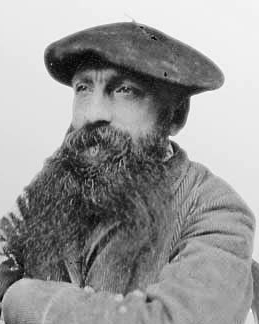
Once, back in the day, I went to a Rodin exhibit and the St. Louis Museum of Art. The Museum has a fair number of pieces but this one was different. This had drawings, scribbles, wax experiments—everything Rodin needed to do before he started on a piece of bronze or marble. And they were extensive. The drawings sometimes were no more than scribbles—charcoal trying to figure out a texture. The wax sculptures were of different shapes, sizes, configurations, contortions. Some resembled the final product. Some resembled the final product in no way I could see.


It was a wonderfully encouraging exhibit. It said, right up front, there was absolutely no way a work of art appeared whole and intact from the id of the artist. There had to be intermediate steps. (Okay, yeah. There are artists that can do that. Mozart, for one. But, me, I’m with Rodin.)


So, I don’t begrudge these attempts that don’t hit the target. I get a little pissed at my subconscious, sometimes. I mean, really? You couldn’t tell me earlier?


From then on, it’s a two steps forward, learn something, drop back a step, and shore up the material, go forward another two steps.


Once the writing is going, there are two phases: fan-out and fan-in.


Fan out is in the beginning. During this period the characters learn about each other, their journey, what they can reveal, what they can’t. This is the period where people meet each other. When new characters are introduced. When the setting is introduced. There is a fair amount of meeting people meeting people meeting the obstacles meeting more people—hence, fan out. Imagine the story as a graph of interactions that spreads out as new events and characters come into play.


Eventually, this voyage of discovery comes to an end and the motivations of the characters and the necessities of the plot begin to take precedence. The new relationships are now in place and begin to pull events together. New relationships between characters we’ve met might happen as a consequence of what we learned in the fan-out period, but now the lines of the story are coming together. Hence, fan-in.


The transition from fan-in to fan out is a crystallizing moment. When I was working on God’s Country, I was 70k words in and the work was still in fan-out. I got very nervous. Eventually, fan-in began and I breathed a little easier. But the work ended up being 160k words.


Once fan-in starts, the book reaches a point where it starts to write itself. There is still discovery going on but no sleepless nights. No sitting outside with a beer staring at the robins figuring out who the characters are. By then, the next scene is pretty much predicted by the scene I just finished.


Until the end.


Usually, I know the end of a work long before I start. But not always. This used to be paralyzing but I’ve come to trust my subconscious (damn him.) to let me know what is necessary just in time to keep me from driving over a cliff.


Not that he’s any more reliable with endings than he is with anything else. I came up with an ending in one story that required me to backtrack halfway and start up again.


So: is this an efficient way of doing things?


I have to say not when compared with some techniques. If I were able to outline a work within an inch its life to the point where I just had to type in the words, writing a work would certainly take less time. However, when I’ve done that no work was forthcoming. Comparing anything with an efficiency of zero makes it look good.


Regardless, I’m pretty much able to write a book or so a year. Would a more efficient methodology give me a better book? I’m not sure. Most of the “efficient” books I’ve read are not books I would want to write. I’m not saying they are not good books. But the take on things is not something I’m interested in writing.


What’s the point of writing a good book efficiently if I don’t enjoy the road to get there?


That’s my way of doing things. It’s not complete. There are a lot of steps I’ve left out—figuring out the characters, for one. Determining geography for another. I’ve left out theme but then I’m not terribly interested in writing theme-driven books.


I’m more the kind of writer that sets up all the situations, characters, and setting, and then let the characters fall on their face on their own.

Monday, March 15, 2021

Consideration of Works Past: Androids vs Blade Runner


 Picture from here.


I am, of course, talking about Philip K. Dick’s Do Androids Dream of Electric Sheep and Ridley Scott’s Blade Runner.


There. Will. Be. Spoilers.


Dick’s novel takes place after a nuclear war exchange where large swathes of animals have been rendered extinct. The list includes spiders, owls, bees, hummingbirds—most animals living in the wild are gone. Only those human beings care for remain in any number.


Humans are also greatly reduced after the war. In addition, the war has become the gift that keeps on giving. People are growing sterile and feeble-minded from the lingering radiation. There are many empty, ruined buildings.


Animals have become precious. To own an animal is essential. Not owning an animal signifies you have no empathy and are little better than an inanimate object. Animals are also a means of signifying status. A small animal denotes small status. A large animal, larger status. If one can’t afford an animal, an electric, robotic substitute can be purchased. The deceit is debilitating to the owner.


Essentially, the entire society has been taken over by a sort of survivor’s guilt. People live close to terminal depression and to combat this is the Penfield Mood Organ, where a user can select a desired mood. There is also a kind of post-devastation religion called Mercerism. People join together empathically via an empathy box and join with Mercer as arises from the dead, ascends a mountain while being struck by rocks, attains the summit where he is killed, and falls back among the dead.


The government has given up. They are trying to get humans to leave and colonize Mars with the promise of wealth and androids that can cater to their every desire. In spite of that, many humans desire to live on this decaying world until they inevitably succumb, mentally or physically, to the encroaching radiation and dust.


This cheery place is where we meet Rick Deckard, a free lance bounty hunter that works for the San Francisco Police Department. Androids escape and Deckard’s job is to hunt them down. At this point, androids are nearly indistinguishable from human beings save for a significant lack of empathy. This is, in fact, the main way that Deckard determines android from human: the administration of the Voigt-Kampff personality survey test.


Deckard has an electric sheep, replacing his real one that died the previous year. He yearns for a real, large animal. A goat. Or a horse. He gets an opportunity: his supervisor was shot while trying to “retire” an android. The remaining six are now still at large. With the money from all six, he can buy an animal.


The androids that have come to earth are the new Nexus-6 types—so sophisticated is some doubt that the V-K test won’t work. He’s sent to the Rosen Corporation to try one out. He’s presented with a human, Rachel Rosen, as a human. The test almost fails but Deckard has an idea and asks Rachel some additional questions that reveal her to be a Nexus-6. Shaken, he returns to SF to hunt down the androids.


One after another, he succeeds but with escalating cost to his equanimity. Until finally, he retires Luba Luft, an opera singer. This embitters him—how could her beautiful voice be other than an asset to society? He is reminded by a co-worker that each of these androids had to kill, or allow to be killed, the family that had owned them in order to escape back to earth. It doesn’t matter. Deckard has begun to feel empathy for androids.


Okay. I’m departing the summary here to make some points


By this point in the novel, it’s become clear that there is a sort of “life” and “death” principle at work here. Humans and animals, though incredibly flawed, exhibit the life principle. They bond in their limited groping way. They can extend their nature to include someone or something else. Androids cannot. In the middle of the novel, the experience of killing the androids is too much. Deckard uses all of the bounty he has collected so far and the promise of more to purchase a beautiful goat.


To contrast, there is this lovely scene involving the two women androids, Pris and Irmgard, and JR Isadore.


Isadore is a “chickenhead”—a human whose mentality has been damaged by the radiation below acceptable norms. Isadore has found a spider in the ruins and is terribly excited. He brings it back to the apartment where he and the androids are hiding. Pris and Irmgard decide that the spider has too many legs. Eight is extravagant. It should be able to get along with four. They cut four of its legs. Roy Baty—Irmgard’s husband—urges it to move with his cigarette lighter.


JR is utterly horrified with the entire experience. The androids don’t really understand.


There is a subplot involving a set of radio and television personalities that appear to be unflagging and inexhaustible. It’s fairly clear early on they must be androids. That said, no one seems to twig to that or don’t consider it important. Continually, they harp on a great discovery. When it is broadcast, they have found the seedy, alcoholic actor that played “Mercer.” The Mercer experience is a fraud.


Deckard succeeds in killing all six androids and it is too much for him. He flees north into Oregon where he confronts a hallucination of Mercer. Mercer admits the fraud. He judges no one, least of all himself, since all are flawed. Mercer points out that the androids will not understand when their revelation makes no difference. When Mercer disappears, Deckard finds an extinct toad—one of Mercer’s totem animals.


He returns from Oregon to his wife excited with his discovery. Once home, he is told that Rachel Rosen has killed his goat. Then, his wife discovers that the toad is an electric copy. He is depressed beyond despair but his wife puts him to bed with care and love.


It’s not by any means a perfect book. I very much like Deckard’s wife, Iran, though she doesn’t get much air time. At one point, when she and Deckard are fighting, he suggests they end the fight by choosing the moods they had scheduled for that morning on their Penfield Mood Organ. Iran says she has scheduled a three-hour existential depression. Deckard is appalled. Why would she pick that? She says the world they live in terrible enough that someone should feel it.


Where the book shines is in what Dick is saying and how he says it. The sense that we must be in this together. Not in some perfected sense but because of and in spite of our terrific flaws. The things that we create cannot substitute for us. The things we invent outside of ourselves must, without exception, embody that death principle. The only source for the life principle is life itself.


Okay. (Deep breath.) Blade Runner.


There’s no wife. Deckard is still a bounty hunter and there are still V-K tests. But where Deckard-Androids understands Saint Augustine, Deckard-BR has more in common with Mickey Spillane. The androids are vicious killers, without much in the way of empathy for anything other than themselves. Scott got that part right. But Deckard isn’t much different. The androids they aren’t very smart, either. They’re more like vicious four-year-olds than sociopathic adults.


Rachel-Androids is methodically attempting to destroy every bounty hunter she meets, by sleeping with them if not by other means. She has a goal. Rachel very nearly succeeds with Deckard. That fact that she fails is why she kills Deckard’s goat.


Rachel-BR is a lovely woman, aching to be human. (I will gloss over what appears to my 2021 eyes as Deckard coercing sex from her.) At the end, Deckard fails to kill Roy Baty. Instead, Roy manages save Deckard. As Roy dies on cue, he decides to become a sort of human.


Deckard-BR’s world is wet and teeming with life. There is ferment in crowds. The air and water are foul but it’s a foul from too many people, rather than nuclear dust.


I very much like DADOES in spite of its flaws. It’s not particularly sexist for the time. Women have agency. There are very few detective cliches. The world is completely realized. I don’t necessarily agree with Dick’s point, but I understand it.


I think that Scott’s point is more that we are as human as we want to be. That if there is no discernible difference between humans and machines, there is no difference. He goes further in Blade Runner 2049, where Rachel has had a child, erasing the last difference between humans and androids—between, in effect, humans and machines.


I can understand this point, too. But I don’t think Scott realized it as well in BR as Dick did his in DADOES. Even in the most recent, final cut, there is still very little actual discussion of the consequences of acts. Very little realization of the implications of their world. Roy still thumbs out his creator’s eyes. Deckard runs from him but he can’t hide. Roy releases a flying dove as his last living act. Deckard watching, dumbfounded. (It looks to me like it’s Harrison Ford wondering what the f***, Ridley?)


My biggest problem with Blade Runner is that it is not Do Androids Dream of Electric Sheep. If anything, it’s a refutation of DADOES. A counter argument. An opposition.


DADOES is a dark and complex book. The characters revolve around the world they live in a close and broken orbit. An opposition film, like BR, would have to be equally dark and complex world. And it just isn’t.


I’ve spoken of Dick’s work before. (See here. And here.) I’ve been thinking of going over his novels in a more systematic way. Let me know if this is of interest in the comments.