Monday, May 24, 2021

Consideration of Works Past: Hancock and the Superhero Trope


(Picture from here.) 


A little context. Iron Man, the first entry of the Marvel Cinematic Universe, came out in the USA in May. Hancock, Will Smith’s superhero movie, came out in July that same year. No one knew at that point what a juggernaut the MCU would become, nor that eventually the Disney behemoth would be behind it. Regardless, Iron Man was a beautifully produced, well directed, finely realized superhero film. Hancock was not really a superhero film—at least not in the Iron Man mold. It was inevitable the two would be compared. Hancock was declared the lesser film. Problematic. A mess. Iron Man was praised as a terrific achievement.


Back in 2008, I wrote this entry regarding Hancock. I would have left it there but over the last couple of years with all of the fireworks over all of the different superhero movies (I’m looking at you, Justice League.)  a couple of reviewers brought out all of the old criticisms. So, I watched it again to see how it weathered.


I think Iron Man was terrific. But I think Hancock was brilliant.


Though the years have not changed my opinion, my reasons have changed.


The majority of superhero stories follow a set number of beats:

  1. Character discovers he has powers.
  2. Character discovers the nature of his powers.
  3. Character discovers the moral dimension of having powers.
  4. Character determines the path forward regarding the powers

The decisions the character makes in step 4 determine whether the character becomes superhero or supervillain. Superheroes see duty. Supervillains see opportunity. Peter Parker in MCU’s Civil War said this: “When you can do the things I can. And you don’t. And the bad things happen. They happen because of you.”

 If you look at the original Spiderman comic: Peter Parker discovers he has powers. He explores them. He does not engage with the world regarding his powers—in fact, given the opportunity to stop a criminal he opts out. That criminal kills his Uncle Ben. His guilt and responsibility for Ben’s murder cause him to become a superhero.


Not all beats happen in that order or with equal importance. The first Thor opens with him having full knowledge of his powers and their nature. But he’s a dick—so the film largely concerns itself with steps 3 and 4. The Iron Man arc through the films has Tony Stark create and extend his powers through the first couple of films. He spends the next several films exploring the moral dimension of his powers—each film changing the rules and having him adapt. By the Endgame film, Tony knows exactly who he is with relation to his abilities. I would argue his path through Endgame is the natural process of him deciding the logical end point of where those moral decisions take him.


There are several of superhero franchises in comics and two big ones in the film industry: MCU and the DC Universe with Superman and the rest. In all of them there’s a tension between character and abilities. Marvel made a decision to lean on character. DC made a decision to lean on abilities. Every now and then, DC will point out that Clark’s important memories are of Clark Kent, not Superman. But it never lasts. With Marvel, on the other hand, few people refer to Tony as Iron Man. He’s Tony Stark.


These emphases make a difference in the tone of the above beats but not their presence. They’re always there.


The reliance on these beats, and certainly the money involved, tends to make these stories keep in continuous spin. In the comics, no one stays dead and no profitable product ever ends. The DCU has certainly stayed with that idea. But the MCU has managed to kill a couple of major characters. That could prove interesting.


Enter Hancock. (Remember Hancock? This is an entry about Hancock.)


Hancock accepts that these beats occurred. But they failed. By this, I mean at some point in his life Hancock went through all of those beats and decided to become a hero—did it at least twice, according to the film. And they weren’t enough. The moral decision—by itself—is insufficient. At the beginning of the film, he’s still doing heroics but his heart isn’t in it. He’s drunk most of the time. There is no joy in his life. He is alone.


One of the most obvious comparisons between Iron Man and Hancock is that Tony Stark is loved. Oh, he’s an incredible dick. But there are people who care for him. Support him. Sympathize with him. Later in the MCU (and the DCU) the heroes themselves care for one another. Hancock has none of this.


It’s like the MCU and DCU wander across these four beats over and over: 1234, 3421, 1114, and all other combinations.


Those beats are Hancock’s past. Hancock has already learned all the lessons, fought them, rejected them, accepted them, left them behind. He’s still going through the motions—like Peter said, if you don’t, it’s on you. But it’s empty. A meaningless moral sham.


I wonder if the difference between Hancock is the perspective of age. Growing up is a continuous process of learning oneself and proving oneself. But, at some point, that learning is accomplished. That proof is done. What’s left? A joyless existence marching towards death? That’s where Hancock starts.


At the core of Hancock is the relationship between Hancock himself and Ray Embrey. Ray is one of many Hancock saves in the worst way possible—these bad saves are so common in the film that people neglect the fact of the save only to denigrate the way Hancock did it. (In this case, Ray is stuck on a train tracks. Hancock saves him by standing in the way of the train which destroys the train, the tracks, and a lot of real estate.)


But it’s Ray who realizes he has been saved, regardless of how it was done. It is Ray that reaches out to Hancock and wants what’s best for him. It’s Ray that realizes how the world is losing a remarkable human being--- Hancock’s powers are almost an aside. It’s Ray that creates a place where Hancock can find his way home. Ray doesn’t preach to him. Ray just shows Hancock things Hancock has done badly and asks: don’t you want to better?


At the core of the story is a person of abilities that is lost and a person that helps them find themselves.


See? Not a superhero story at all.

Monday, May 10, 2021

State of the Farm, May 2021


(Picture from here.)


Spring in New England is a shambling walk to summer. Warm days stumble into light snow, fall over into rain reminiscent of November, stagger back upright into warm sun.


Rinse. Repeat.


It doesn’t stop the flowers.


That said, starting in April we began getting blooms on first on the Cornelian Cherries and then on the honeyberries. The new plums opened up one after another, the first closing just before the second opened, so that pollination is questionable. (These are new plums supposedly resistant to black knot, the disease that killed our other plums and took out most of our apricots.)


Then, came the almond and the volunteer nectarine. The volunteer just appeared one spring. I suspect that one of the nectarines was eaten by a squirrel and buried. We’ve been watching it carefully. Nectarines are one of my favorite fruits.


Two years ago, I pulled up the plums from one of the espaliers, leaving a long, empty fence-like structure next to the driveway. Last summer we planted strawberries there. This year we have blossoms on one variety and buds on the other. I have good memory of our strawberry beds. When Ben was two or three, he discovered that he could go out there and pick strawberries anytime he wanted. He also discovered the difference between green and red strawberries. Ah, good times.


We were planning on planting quinces there, thinking that strawberries would match easily with them. Quinces are in the apple family and don’t get black knot so if there was any left in the soil, the trees would be safe.


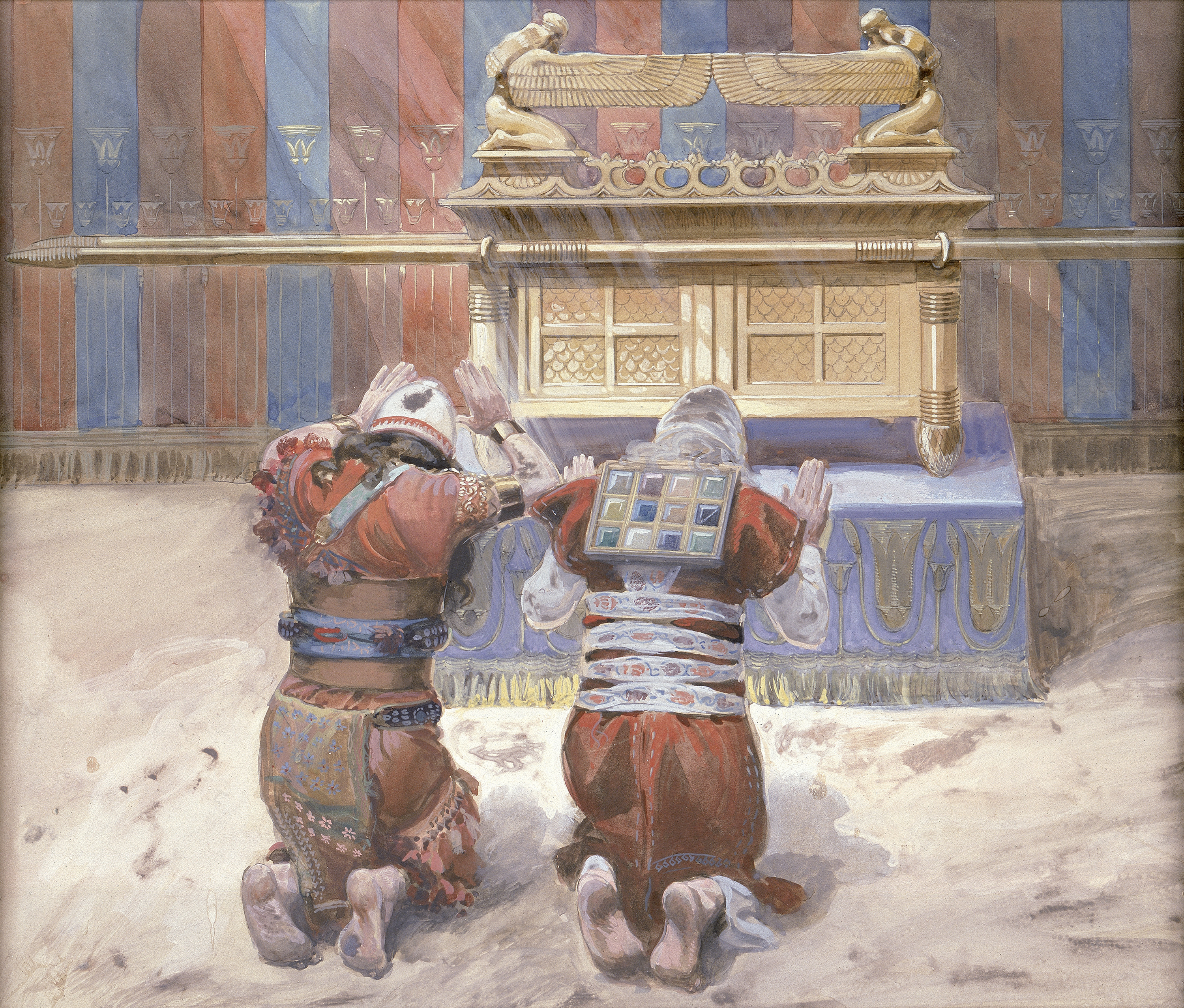
I had originally planned on pulling the old stumps so we could plant the quinces in the central portion of each section. But the stumps defeated me. I dug out one and just couldn’t face the idea of digging out three others. So, we’re letting them rot in place. Instead, I’ve come up with a different approach inspired by the angels on the top of the Ark of the Covenant in Raiders of the Lost Ark.  Each angel was holding their arms and wings to point to the other. So, that’s what I plan to do. We have four “cells”, one for each tree. So, I’ll plant them on the outside of each cell pair and grow each member of the pair towards the other one.


That was the plan, anyway.


However, we didn’t get the quince delivery. When it came to service our order, the nursery, apparently, went to their stock room and found it empty of quince. They, of course, didn’t mention it to us until we asked. Then: so sorry. Here’s a refund. Won’t be doing business with them anymore.


*sigh*


The apples leafed in and were covered in buds. Our sole current quince did the same but I noticed some of the leaves were wrinkled. I pulled them apart and found, unsurprisingly, tiny caterpillars. The apple blossoms were already opening but quince blossoms open later so I figured I had at least a couple of days. I pulled out a hand sprayer and hit the quince with Captain Jack’s Dead Bug Brew—an extremely powerful insecticide. This stuff kills on contact. Since there were no blossoms to attract bees and rain was forecast the next day, I figured the risk was worth it.


I still have to spray the rest of the apple blossoms with kaolin clay—a material that is not a poison but essentially acts like ground glass. The caterpillar eats it and gets ground up from the inside. It’s safe for bees and other insects that don’t actually eat the plant so we can spray when the blossoms are open. Insects that eat the plant, well...


We tend to avoid sprays when we can but, unfortunately, that’s not always possible. We ask a lot of our plants and sometimes we ask too much. We have several apples and two big cedar trees. Cedar trees harbor cedar apple rust—little orange spots on the apples that do a fair amount of damage. But I love those cedar trees. They remind me of life back in Missouri. They’re old trees—cedars don’t grow quickly. They were planted all across the area back in the Depression and they’ve been dying and falling over. We’ve kept these two alive for the last thirty years. So far, the cedars show no symptoms. The same can’t be said for the apples.


So, this winter, I pulled out a strong fungicide and dormant-sprayed all the apple trees. Lo and behold, no orange spots so far. After the blossoms fall, I should spray fungicide again.


The biggest worry we have for the fruit trees is the low number of pollinating insects. This year we neglected to order orchard bees. We were hoping the local honeybee and bumble bee populations would be able to do the trick. However, not so many showed up. We’ve decided that we’re going to have to put ladybugs and orchard bees on the yearly purchase list. Ladybugs for the aphids that like the greenhouse. Orchard bees for pollination.


Let me point out we are extremely careful in the use of insecticide. When I sprayed the quince, it was with a small hand pump sprayer like what you’d use to clean a counter. And I was careful to keep it to the tree so it didn’t inadvertently cover any open flowers. That said, we don’t live in a vacuum and I have no idea (and little faith) that our neighbors are as judicious as we are. We are surrounded by MacMansion subdivisions that use a lawn care service and on the other side of the hill is a golf course—site of more chemicals/square foot than nearly any other industry.


We have two pollinating areas: the garden/orchard and the greenhouse. Turns out honeybees are great outside but fairly poor in a greenhouse. Bumblebees do great in a greenhouse but buying bumblebee hives is expensive and temporary. People have to do it every year. It’s only feasible for industrial hydroponics operations. Orchard bees seem to do okay but not great.


We’ve been considering getting into beekeeping for the garden/orchard but I have to say I’m a little intimidated by it.


I grew up in Southern California and there were orange groves everywhere. There were, of course, honeybees everywhere. As kids we caught them all the time and learned how to tell which variety would sting and which wouldn’t. There was a variety we called the “H-bee”—because the fur on the back resembled the letter “H”—that would never sting. That was the one we caught all the time and played with, then letting them go. I’ve never found that variety in our research.


Back in the garden, we’ve started putting in some sets and direct seeding for those garden plants that can take a frost—Wendy reported light snow the other night. Nothing that stuck but our shamble towards spring has a lot of stumbles on the way. The snow peas are in. So are the radishes. We’re trying beets this year. Back in the greenhouse, we have corn sets, and others, ready to be planted when the weather is right.


We’re also trying sunchokes (“Jerusalem artichokes”) again. We tried them a number of years ago and gave up on them because while the tubers were tasty, they would not keep. We figured they might be interesting as a summer only crop. They are easy to grow and over winter handily.


A final note.


A couple of people have asked me where I get the energy to do the things I do. Well, there is one simple answer for this: there is no I. Wendy and I are a team on this project. She does at least half the work and in some cases, as in the greenhouse, most of it.


When I was asked this question, I realized that I was giving a false impression that I—and only I—was doing all this work. Nothing could be further from the truth. I don’t mention Wendy or Ben much in this blog for a couple of reasons. We didn’t want Ben to have an online presence while he was a child. And I didn’t feel comfortable flinging Wendy’s name about in public forum. But if anybody has ever read the Copyright and Credits section of any of my books, her name is prominently displayed.


That’s it for now.


Monday, April 26, 2021

The Myth of the Myth of the Competent Protagonist


(Picture from here.)


Let’s wander back into the SF stories of the 50s and 60s. This was the age of the competent protagonist. Engineers were good at what they did. The world was pristine and pure—surely nothing as lovely as advanced technology would ever harm the earth. Urbanization was good and we all had flying cars.


Come the sixties and seventies and cracks appeared in this foundation. We had flawed characters. Incompetent characters. Bumblers. Stumblers.


Granted, we had better fiction. I’ll stand up The Left Hand of Darkness against anything Heinlein ever wrote. But Genly Ai, the main character, was barely able to withstand the weather much less bring the world to diplomatic heel.


Let’s be clear: I don’t have a problem with good characters, competent or incompetent. But they have to be good characters and not just a convenient mouthpiece for how the author wishes the world worked. This is too often the case for the competent protagonist. Lazarus Long, in Time Enough for Love, falls in the convenient mouthpiece category. Genly Ai does not.


Note, the title above. I am not specifically talking about the concept of the competent male. John Varley’s Gaea trilogy has a competent female in the form of Cirocco Jones, a woman so desirable and accomplished that ex-lovers had been known to commit suicide. She’s much more likeable than Lazarus Long, Heinlein’s famous example, but that’s because Varley burdened her with such things as guilt and alcoholism. The quality of a person’s character is not determined by their sex chromosomes.


Heinlein is always trotted out as the worst example of authors creating competent protagonists. This old quote from Lazarus Long in Time Enough for Love is often quoted:


“A human being should be able to change a diaper, plan an invasion, butcher a hog, conn a ship, design a building, write a sonnet, balance accounts, build a wall, set a bone, comfort the dying, take orders, give orders, cooperate, act alone, solve equations, analyze a new problem, pitch manure, program a computer, cook a tasty meal, fight efficiently, die gallantly. Specialization is for insects.”


What, in fact, is wrong with this statement? I mean, I’d make few changes. These are Heinlein’s ideals, not mine.


I’d drop invasion planning and efficient fighting and I’d change set a bone to splint a bone. First Aid’s important. I’d change dying gallantly to dying well. Butchering a hog is not that big a deal provided you’re strong enough or have a block-and-tackle. I don’t know if Heinlein was thinking of modern agriculture or those little pot-bellied pigs. Say, butcher a chicken. Cook a meal? Change a diaper? Of course. Comforting the dying is part of the human condition. At one point or another, we will all do that. As we will all die. The best hope we can have is to do it well after a life well lived.


My point is that all of those skills are attainable. It takes interest, effort, and opportunity. Adequate execution of most of these skills is not that difficult.


Note, I said adequate.


I am definitely not saying that one has to be Shakespeare but the rules of sonnets are very clear. It’s not that hard to write one. One doesn’t have to be a professional poet or a surgeon or a general or a gourmet chef. One has to be adequate. These are human life skills, not lofty ambitions.


I do not know what Heinlein had in mind. I do know his males were often brilliant. So, if his intent was to say that we’re all supposed to be Mozart and Eugene O’Neil... Well, that’s a problem.


If, however, his intention was to create a canon of skills that are attainable and should be expected of a person... I have no real problem with that. I might choose a different list and I suggest that each of us should have our own list. But I have no problem with aspiring to and achieving some list.


When my son was born, I had a set of skills that I wanted him to know. How to write. How to play a musical instrument. Math and Chemistry. Literature. Understanding the workings of government was a must. Basic biology and evolution—my own little Lazarus Long list. He pretty much achieved all of them before he finished high school. Not because he is Prokofiev but because they were all attainable life skills.


Mainly, I wanted him to have enough critical understanding to learn anything he needed or wanted to learn.


Further, I think learning these sorts of things is important because it provides a basic understand of those who are geniuses. I cannot play Gershwin’s Rhapsody in Blue. It’s beyond my meagre ability. But I can read music and follow what a good pianist can do with it. Because of my limited skill and knowledge, I have a much deeper appreciation of Gershwin’s work and what it takes to play it.


My worry is that by denigrating “competency” we are, in fact, limiting ourselves. I really believe in the ability of human beings to do great things. That little girl dancing on the stage in her first year of ballet class is keeping company with Baryshnikov. That little boy playing his first piano recital is keeping company with Horowitz.


We have this terrible difficulty not being the best. If we can’t be the best at something, we give up. Maybe this is the cost of celebrity culture—we hold up the best as our competition.


My idol in this area isn’t Lazarus Long. It’s Ben Franklin. Now, he’s someone to admire.


There is a dark side, though, to this competency idea. The implication in Heinlein, and others. is that if one isn’t a competent protagonist, one is less worthy. It marks a hidden transition from aspirational goal to moral imperative. This is bad for lots of reasons.


Most of the stories of competent protagonists in fiction imply that the person acquired the skills as a matter of interest and correct living. The underlying leisure time, available food, security, and access to materials is conveniently left to one side. After all, it’s hard to learn the piano if you’re in a war zone or starving to death. It’s easy to look down on the oppressed if you neglect the fact of their oppression.


I grew up in a middle-class suburban household, different in details but drearily the same as many. I had opportunities to pick up some of these skills. It would be unfair of me to expect anyone to acquire those skills if they do not have at least those same opportunities.


It’s convenient to look at someone like Franklin and hold him up as an example of a person who can attain polymath success without having wealth and neglect that he really was a genius—and recognized as such as a young man. Then, promptly forget most people aren’t geniuses and condemn them for not achieving as much as Franklin did. If we want a particular outcome from people, we need to invest in them.


There’s a line in Kipling’s Kim, "I will change my faith and my bedding, but thou must pay for it."


We can certainly demand a level of expertise and understanding from the members of our society. We should. People will rise to the occasion because humans have innate capacity for great things.


But if we demand it, we need to be willing to pay for it.


Tuesday, April 13, 2021

Danse Mécanique Pre-Release Announcement


I have a new book coming out called Danse Mécanique on 7/6/2021. You can pre-order the ebook, and all my other books, via my website at www.stevenpopkes.com

Sadly, the print book can't yet be pre-ordered. I'm working on that.

Monday, April 12, 2021

Plying the Trade


(Picture from here.)

Recently, a friend of mine lamented that he’d fallen into a particular way of writing books. He didn’t like it. He found it inefficient.


The conversation left me wondering how I write books—or any fiction, really.


I do have a process, though it feels more like blundering around in the swamp. At night. When it’s raining. Baleful, disappointed eyes stare at me in the dark. So many, many eyes...


*Ahem*


Anyway, here’s how I do it.


I know many people more creative than I with regard to ideas. Some are writers. Some are not. I can’t say I’ve originated all my ideas in my own head, but I’ve at least stolen from the best and made sure to file the serial numbers off. But, though SF is considered the “literature of ideas,” ideas are not the most interesting part of science fiction.


Regardless, I take those ideas, wherever they come from, and write them down. I don’t know about you, but nothing I don’t write down sticks. Many times, I’ll think, “that’s such a striking idea, I’ll surely remember that!” Only to find the imperfect translation of short-term to long-term memory has done it to me again and the idea is lost forever.


Not, mind you, the ideas I write down are always worth keeping. I’ve woken up from a sound sleep with something terrific, groped in the dark for a pencil and paper, written it down verbatim, and find the next morning find that it was complete and utter drivel. Only useful as a cautionary tale as to what is keep worthy and what is not.


More often than not, I’ll find myself wanting to write about something. I want to write about elephants having human intelligence. (Jackie’s Boy) Or if there was a God that had to obey physics. (God’s Country) Or if there were physics that allows the existence of a God. (God’s Country, again.) And there it sits for a while. Sometimes a while. Sometimes a very long while.


Until I have what I call a take.


A take can be a point of view on an idea. It can be a character that captures something I want to say—or a character I want to talk about. Or an image that strikes me. It is, essentially, anything that captures the thing I want to write about into a thing I can write about. Until I get a take, the stuff just lies around in my head somewhere gathering dust. Not all takes work. But nothing works without the take.


Once I have a take, it still sits around waiting for characters, plot, setting, etc. Or, at least, enough of that material that I can get started. Say, you’re thinking about a story about a man in a spacesuit. Well, that’s fine. Where is the space suit? On Mars? Venus? The Moon? On a station? In a ship?


Most of the time I can get started when I know who and where the story is. I may not know why, but once I have take, character, and location, I can begin pulling things together.


Which, for me, begins with geography.


I’m the kind you met in elementary school that loved maps. Globes. Star charts. Books on how to do things. In Junior High, I was obsessed with books talking about the exploration of Africa, diseases in Brazil, how to make a miniature zoo. (How to Make a Miniature Zoo, by Vinson Brown. I was obsessed with that book. It told me how to catch wild animals, house and feed them and make a display area for anybody to see them. Not just big animals like raccoons and mice but flies, water bugs, and stick insects. But I digress.)


So, first I need to know where things are set, and then I have to know what that place is like.


If you’ve read Jackie’s Boy, you’ll see that each section begins with a map. The book takes place over the broken post-apocalyptic roads between Saint Louis and Pensacola. I pored over these places. I used google maps relentlessly, blowing up the map with one mile across the screen. I knew everywhere my characters went.


While this is going on, I’m thinking about the characters.


I’m not going to delve deep into character development—every writer has their own way of doing things. It's an article in and of itself. For me, writing is an exercise in making multiple personality disorder work for you.


I write a lot of notes on characters, journey, backstories, etc. But here I have to start being careful.


I learned something about myself years ago: part of the joy of this process—part of the necessary satisfaction with it—comes from this discovery process. If I go into too much detail, the work will stall. It will die stillborn. I’ve never been able to bring one of those dead organisms back to life.


This means that when I start that first scene, I don’t know anywhere near as much about the characters, environment, and journey as I will at the end. I learn more with each page written.


The problem with this approach is that it means that there is a lot of wasted material. I can write fifty pages and reach a dead end when my subconscious tells me something like, “well, that won’t work. He was born female.” Or, “He’s going to have trouble driving over that ocean.”


To which I reply: “You couldn’t have told me back when I was figuring this out?” Shriek and start over.


I call these studies.


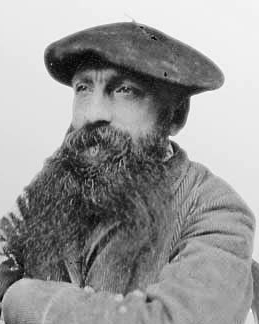
Once, back in the day, I went to a Rodin exhibit and the St. Louis Museum of Art. The Museum has a fair number of pieces but this one was different. This had drawings, scribbles, wax experiments—everything Rodin needed to do before he started on a piece of bronze or marble. And they were extensive. The drawings sometimes were no more than scribbles—charcoal trying to figure out a texture. The wax sculptures were of different shapes, sizes, configurations, contortions. Some resembled the final product. Some resembled the final product in no way I could see.


It was a wonderfully encouraging exhibit. It said, right up front, there was absolutely no way a work of art appeared whole and intact from the id of the artist. There had to be intermediate steps. (Okay, yeah. There are artists that can do that. Mozart, for one. But, me, I’m with Rodin.)


So, I don’t begrudge these attempts that don’t hit the target. I get a little pissed at my subconscious, sometimes. I mean, really? You couldn’t tell me earlier?


From then on, it’s a two steps forward, learn something, drop back a step, and shore up the material, go forward another two steps.


Once the writing is going, there are two phases: fan-out and fan-in.


Fan out is in the beginning. During this period the characters learn about each other, their journey, what they can reveal, what they can’t. This is the period where people meet each other. When new characters are introduced. When the setting is introduced. There is a fair amount of meeting people meeting people meeting the obstacles meeting more people—hence, fan out. Imagine the story as a graph of interactions that spreads out as new events and characters come into play.


Eventually, this voyage of discovery comes to an end and the motivations of the characters and the necessities of the plot begin to take precedence. The new relationships are now in place and begin to pull events together. New relationships between characters we’ve met might happen as a consequence of what we learned in the fan-out period, but now the lines of the story are coming together. Hence, fan-in.


The transition from fan-in to fan out is a crystallizing moment. When I was working on God’s Country, I was 70k words in and the work was still in fan-out. I got very nervous. Eventually, fan-in began and I breathed a little easier. But the work ended up being 160k words.


Once fan-in starts, the book reaches a point where it starts to write itself. There is still discovery going on but no sleepless nights. No sitting outside with a beer staring at the robins figuring out who the characters are. By then, the next scene is pretty much predicted by the scene I just finished.


Until the end.


Usually, I know the end of a work long before I start. But not always. This used to be paralyzing but I’ve come to trust my subconscious (damn him.) to let me know what is necessary just in time to keep me from driving over a cliff.


Not that he’s any more reliable with endings than he is with anything else. I came up with an ending in one story that required me to backtrack halfway and start up again.


So: is this an efficient way of doing things?


I have to say not when compared with some techniques. If I were able to outline a work within an inch its life to the point where I just had to type in the words, writing a work would certainly take less time. However, when I’ve done that no work was forthcoming. Comparing anything with an efficiency of zero makes it look good.


Regardless, I’m pretty much able to write a book or so a year. Would a more efficient methodology give me a better book? I’m not sure. Most of the “efficient” books I’ve read are not books I would want to write. I’m not saying they are not good books. But the take on things is not something I’m interested in writing.


What’s the point of writing a good book efficiently if I don’t enjoy the road to get there?


That’s my way of doing things. It’s not complete. There are a lot of steps I’ve left out—figuring out the characters, for one. Determining geography for another. I’ve left out theme but then I’m not terribly interested in writing theme-driven books.


I’m more the kind of writer that sets up all the situations, characters, and setting, and then let the characters fall on their face on their own.