Monday, October 24, 2022

"Abundance?"


Remember Paul Ehrlich and The Population Bomb?


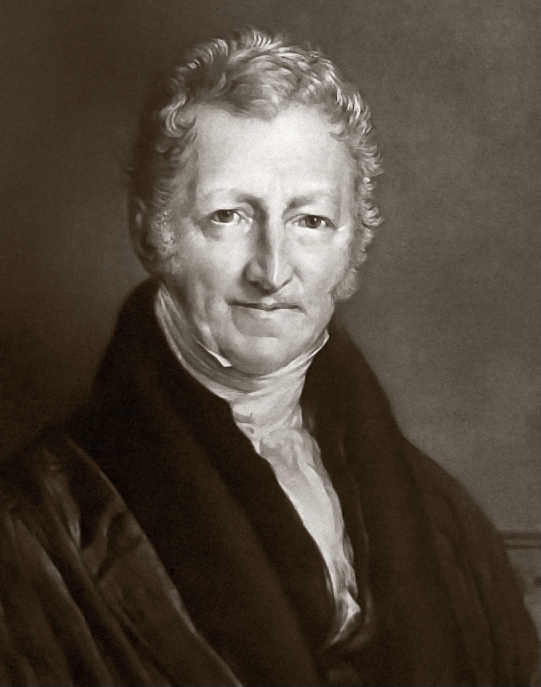
(Picture from here.)


TPB was about Malthusian economics, unsurprisingly invented by Thomas Malthus. It was Malthus’ proposition that resources such as food and water showed linear while population growth was exponential. Given this hypothesis, his conclusion was that all populations would eventually outgrow their food supply and die back to a manageable level.


This was big in the seventies. The publication The Limits to Growth in 1972 used a computer simulation to suggest there were, well, limits to the growth of society. I.e., unregulated population growth and its concomitant resource exploitation could result in catastrophe.


The Malthusian disaster was averted by the Green Revolution—a long term technology transfer through the fifties and sixties that improved agricultural production markedly. This involved chemical fertilizers, mechanization, new varieties of traditional crops, and a full suite of techniques to wring every little bit of calorie from the earth. This seemed to prove the critical response to Malthusianism that the Industrial Revolution broke mankind out of the Malthusian trap. There was no end of human ingenuity and it would always rise to the crisis and avert any and all problems.


Right.


The problem both Malthus and his critics seem to miss is that the symptoms of Malthusianism reflect a deeper issue of scale.


I fully believe in human ingenuity. We can pretty much think our way out of any problem if the problem is narrowly focused. Do we need indefinite power? Let’s run that black rock through a heat engine and generate electricity. Individual transportation? Burn that sticky stuff and use it to turn wheels that run on a surface made of the same sticky stuff. Problems with bacterial diseases? Flood humanity with compounds we find in nature that kill them. Problems with getting enough nutrients to crops? Extract Phosphorous from Florida and add Nitrogen from the air using the sticky stuff again.


All of these techniques work in the timeframe of the problem. The issue here is that the solutions have long term effects we don’t like: global warming, pollution, and the continuous use of more and more acreage. Not to mention how much damage that proceeds from our activities into the sea, land, and air.


Back to the issue of scale: if there were a tenth as many humans on the planet, our effects lessen proportionately. As the number of humans increase, the effect on the planet increases—and knock-on effects make that effect exponential. Case in point, one side effect of global warming is the melting of the permafrost in the northern hemisphere. This allows decomposition of the vast peat reservoirs into methane and CO2. Consequently, our direct contribution to the atmosphere is multiplied into exponential effect.


This scale effect seems to be ignored or sidelined by a lot of popular media. Many scholars have shown that the abundance of resources over time has increased per unit individual as the population swelled.


This is true but the total cost of those resources has also increased and this is often not mentioned or belittled in the narrative. Instead of total cost, the price of goods is what is examined. This isn’t always a good comparison or the time frame of the comparison is cherry picked to prove the point. For example, in 1950, a pound of bread was $0.12, inflation adjusted to $1.37. The price of bread in 2016 was $1.80— not much different. (We can say that in 2016 there were many more kinds of breads and different prices such that apparent inflation actually reflects the increase of choice rather than change in the money supply.)


But the total cost has to include the pollution caused by fertilizing the wheat, CO2 in the atmosphere from the burning of fuel in the tractor, transportation of the goods to market, and the taking that bread home. The potential cost of power to handle all of the manufacturing has to be considered as well as the environmental cost of dumping the bread’s plastic bag into a landfill. These costs are not represented in the price of that pound of bread. Some costs, like global warming, aren’t yet represented much at all. At best, weather disasters amplified by climate change or tax cost of pollution cleanup get transmitted to the consumer via taxes but most are, at the moment, ignored.


As I’ve been saying, all of these costs scale. The natural systems of the earth have excess capacity for us to harvest and abuse—we can take so many fish, use so much land for crops, pollute so much air and water, and natural systems will absorb that abuse and loss and fill in the gap. Cod produce millions and millions of offspring every year. We can take below a certain percentage and the cod would be just fine. We didn’t and the cod fishery crashed from overfishing and climate change. But we overfished because so many people wanted to eat cod. We have global warming because we have built the lives of ~9 billion people on carbon that was planted in the ground over two hundred million years ago.


Ehrlich was absolutely right about the problem. He was just wrong about the symptoms.


There is, apparently, money to be made denying all of this. It fits a political narrative that is quite popular. It is also reassuring. If it’s all wrong, we don’t have to change anything, right? I would love for them to be right but they’re not.


I think we have to scale down the world. Not necessarily the economies involved—at least, there’s no reason I can see that we need to tie our economies to population size. But unplanned shrinkage is going to be a big issue both economically and socially.


This is not an easy thing to change. “Growth” is built into the economic engine of the world. Nobody every congratulated a CEO on having maintained the same level of profit this year as last year.


That said, it's interesting that as time has progressed, population growth has begun to diminish. This appears to be the result of education and the availability of family planning. Girls’ education seems to be very influential. Growth starts to approach zero around 2100. It’s possible it might go negative. This makes population like peak oil: oil is a finite resource and eventually we start to run out of it. It’s not a matter of if we’ll run low; it’s a matter of when.


Population is similar. Like oil, it’s not a matter of if population will decrease, it’s a matter of when. The question then becomes, like oil, do we manage a soft and graceful landing or do we crash into a wall and break into tiny, tiny splinters.


Given that, I’ve been watching Japan a lot.


Japan led the world in automation in decades past. They are masters of doing more with less. They’re still mired in the same match of number of workers to productive hours. But I think that will change. Japan has been investing heavily in robots: animals, domestic, rescue, industrial. Some of this is to help care for an aging population—and, let’s face it, any reducing population curve is going to get weighted towards the far end. The old will inevitably outnumber the young.


But additionally, this is going to help with the transition from a human, numbers based approach to the economy to an economy that is based much less on human intervention. There’s been a lot of talk about AIs taking our jobs—or helping us with them—anyway. So, maybe that’s like peak oil, too. If it’s going to happen, why not make it work for us instead of against us? Why not start reducing population—and environmental impact—now? Embrace the coming change so we can be benefitted instead of harmed?


Oh, right. This is the same species that resisted COVID vaccines and denies global warming.


I can dream, right?

Monday, September 26, 2022

Consideration of Works Past: The Stars My Destination


This book got me kicked out of a reading club.


Decades ago, I was interested in this woman. She was the kind of person that beautifies their environment. I admired that.


Anyway, she was in this book club and I was interested in her so I joined as well. We went through several books—some good, some not. One I liked was A Yellow Raft in Blue Water by Michael Dorris. They suggested I pick an SF book. Most of the books we'd been doing were a little tame and I thought to shake things up a bit. So, I suggested The Stars My Destination. It's a rough book but I figured they were up for it.


I was wrong. And was thoroughly excoriated. The girl I was interested in terminated whatever minuscule interested she had in me and I left the club. The moral of the story: TSMD isn't for the squeamish.


TSMD is about redemption and forgiveness. Books about such things usually talk about tame things: I was a neglectful father. I did something stupid and feel wretched about it. The problem is that most people don't really do much that really needs redemption and forgiveness. Our scale of what to feel guilty about is skewed. When somebody comes around who has really done something nasty, we like to think of them as unforgiveable. We want them to think of themselves as unforgiveable. Or, better yet, don’t think bad of themselves at all so we can feel good when bad things happen to them.


Forgiveness and redemption is, in my opinion, a peculiarly Christian notion. If you read the Greek plays, there is payback and revenge but it's all tied up in fate. The Greeks would have had no trouble understanding Karma. But Christ comes along and says you can be forgiven for your sins. This brings to the front the concept of redemption and creates a new class of stories. Of course, once you've introduced the idea of short-circuiting guilt, payback, and karma, you've created a means by which people can evade guilt, payback, and karma. People are fine with that in their own little club but not so much for outsiders. Hence, some things become "unforgiveable". That is, unless you join the club.


I don't read the gospels that way. From what I can see, all is forgivable if the heart is sincere. That's the way people emulate Christ. Of course, if one can emulate Christ effectively, one can be Christ. Every man can be his own Messiah. Which makes things all Gnostic—can't have that. And so, we're back to what is forgivable and what isn't forgivable.


That long little digression brings us to the interesting piece of TSMD: the character of Gully Foyle, the protagonist. Foyle is an intelligent but uneducated. Able but incredibly lazy. He is sparked to greatness for the sake of revenge. Foyle was abandoned in space and subsequently bends his efforts to finding who did this, why, and exact payback on them. However, when he finds those responsible, he finds he has transformed himself into a thinking animal and discovers he actually now has a sense of right and wrong. He also becomes a messianic figure in that he has determined how humans can teleport to the stars.


Hence the problem the book club had with this book. In pursuit of revenge, Foyle becomes a murderer, rapist, thief and traitor. He leaves behind him a trail of broken people. At the end of the book there is the implication is he will be—or, at least, can be—forgiven. (The book never actually reaches the point of redemption. It reaches a point where redemption is possible and stops. Something I like.) The book club didn't think he'd done enough, been punished enough, or refused the possibility that he would be able to do enough, to be forgiven. I didn’t agree and we parted ways.


What I learned from the book was that a dark protagonist could be interesting if that protagonist is honest about it. Modern SF has few characters like Foyle. Even the vampires, parasites that they are, have been prettified or made tragic. Foyle's character has muscle. He is not pleasant. He makes no apology for what he does and only comes to see himself as loathsome after he has changed himself. Even then, he doesn’t whine about it.


Alfred Bester wrote a slew of wonderful short stories and a handful books. Two of them, The Stars My Destination and The Demolished Man shook the foundation of science fiction. It was a new way to write SF stories. DM is more psychological and, in my opinion, not as good as TSMD. DM was written in 1953 and TSMD in 1955. While he continued to write short stories, he didn't do any novels until 1975 when his health began to fail. Unfortunately, they were not so impressive as his first two novels.


The Stars My Destination was never made into a film. Just for fun, I've played with writing a screenplay of it several times but never did any actual work.


Hey! Anybody out there in Hollywoodland! This one would be great.

Monday, September 12, 2022

Cheese Ends, 20220911

Random mutterings from science!


(Picture from here.)


Let’s start with the SLS—NASA’s Space Launch System.


The SLS was initially scheduled to launch at the end of August. This was cancelled because of a coolant problem with one of the engines. Rocket engines burn hot and hydrogen/oxygen engines burn really hot. To correct for this, the hyper-cooled liquid hydrogen is circulated through the engine bell prior to combustion. This has two positive effects: it keeps the bell cool and it pre-heats the fuel. Thus, not being able to cool the engine is a big deal. Scrub launch number one.


Launch number two was scheduled for early September. It also got cancelled because of a hydrogen leak. Hydrogen is such a small molecule that when it’s cold and under pressure it can escape easily. The SLS sits on the pad getting continuously topped up through fast disconnect valves. Just before launch, the valves disconnect and the SLS takes off. A little hydrogen leakage is accounted for but this was too much. Next launch is latter September.


The issues with hydrogen are well known—this was a continuing problem with the shuttle and the SLS is based on shuttle technology. Why base the SLS on technology from the seventies? Blame congress. We have to keep Morton-Thiokol in business.


Personally, I want the SLS to succeed. I like the idea of NASA having its own rocket and I hate seeing NASA used as a punching bag all the time. The glorification of SpaceX gives me heartburn. Often, it’s an excuse to say government can’t do anything.


I don’t agree with that sentiment. For example, SpaceX has trumpeted it set the record of 40 missions this year. (See here.) No government can do that, right? Well, China launched orbital launch 36 and 37 recently. SpaceX may be the world leader in orbital launches but China is not far behind.


Moving on.


Bridgestone is moving away from using oil in the manufacture of its tires to using a plant called guayule. It takes on the order of seven gallons of oil for each tire and more than 2 billion tires are made every year. It is good news that Bridgestone (and other tire manufacturers) are moving away from oil. But 2 billion tires are going to require a lot of guayule.


This is an inherent problem with moving away from fossil material. When we pull oil out of the ground we’re taking advantage of millions of years of captured sunlight. It takes about 200 tons of plant material to make a gallon of crude oil. (I pulled this from here and combined it with here.) Using bamboo as an example, that’s about 28 acres over a season of about five months or 150 days. So, one tire, using seven gallons of oil, is on the order of 200 acres. You can imagine how much 2 billion tires is going to cost. (That does presume a gallon for gallon equivalent which may not occur.)


Those numbers weren’t in the article but it’s a problem. How to capture enough sunlight to drive civilization is a problem. One solution is for tires not to require seven gallons of anything. And maybe not require 2 billion per year.


On a similarly negative note, Greenland is going to raise sea levels.


A recent study has managed to model the quantity that is already baked in to Greenland glacier melting. They can’t say when it’s going to happen but by neglecting that aspect of things they can tell how much.


They did this by calculating how much of the Greenland ice is vulnerable to current conditions, current conditions not going away any time soon. This allowed them to calculate how much water would come from those vulnerable glaciers. The answer was enough to raise the world sea level close to eleven inches. When? That is not part of the study but warming is still increasing and we’re not close to stopping the problem.


On that happy note, another study has suggested it was actually hotter 55 million years ago than previously thought. This, probably not coincidentally, took place in or around the Paleo-Eocene Thermal Maximum, though the study doesn’t reference the PETM. The timing is about right in that the study takes place between 35 and 60 million years ago and the PETM took place about 55.5 million years ago.


The point of the study was that since the time was hotter with understood CO2 amounts, the environment might be more sensitive to CO2 than previously thought.


The technique was pretty interesting. The measurement was of carbon and oxygen isotopes in the shells of foraminifera. Earlier studies measured the oxygen/carbon isotope ratio directly. However, depending on temperature, isotopes “clump” together. Isotope clumping can be calibrated to temperature without the need of determining salinity or other factors. That’s the good news. Bad news is, of course, it was significantly hotter than previously estimated.


Let’s go to some not-quite-so-negative news prior to the finale.


This involves my favorite small animal, tardigrades. Tardigrades are tiny animals called “water bears” that live in water droplets in moss. Or salt or fresh water sediments. Or in deep sea trenches. They have my vote for the most likely alien visitor. They go from a normal moist environment to a tun state when that water dries up. When in tun, tardigrades can withstand vacuum, high impacts, etc.


Tardigrades dehydrate pretty much completely when going into tun and they stay that way until they either fall apart or get more water. It’s been a mystery how they do that.


In 2017, a paper demonstrated they used a disorder protein (“tardigrade-specific intrinsically disordered protein” or TDP) that suspends the cell so it doesn’t collapse when the water disappears. The new paper presents a different mechanism. Instead of suspending in a glassy TDP substance, the new paper suggests that “cytoplasmic-abundant heat soluble proteins” (CAHS) are responsible. These form gel-like filaments rather than glassy material. The filaments appear during dehydration and gradually disappear during rehydration.


What’s even more interesting is they spliced the CAHS genes into insect and human cells. The proteins behaved the same way in insect cells and had limited functionality in human cells.


Finally, not a down note but some sad news: Frank Drake, creator of the Drake Equation, has died.


Drake was 92 and died peacefully in California. He had a long and distinguished career independent of his famous equation as a radio astronomer. Asteroid 4772 Frankdrake is named after him.


The Drake Equation was an attempt to formalize the probability that there was intelligent life in the Milky Galaxy. It did not solve the problem. It only presented it as a mathematical proposition shown above.


Where:

  • N  : Number of detectible Milky Way civilizations
  • R*  : Number of suitable stars created every year.
  • fp   : Fraction of stars with planets
  • ne  : Number of habitable planets
  • fl    : fraction of planets where life actually appears
  • fi    : fraction of life bearing planets where intelligence appears
  • fc   : Fraction of those planets where a technology arises that can be detected
  • L   : Length of time a given technological civilization produces detectable signs.

We are only now getting a sense for some of these variables. R*, for example, depends on what kind of star we’re considering. If we’re only talking about G-type stars, like our sun, than that is one rate of formation. However, recently red dwarfs are also being considered since they are so long-lived. They have issues, too, like lethal solar flares. fp has some data, too, from the Kepler and TESS missions. We have an inkling of ne  in that we’re getting an idea of how many rocky planets might be in the habitable zone but no real idea if they're habitable. The rest are unknown. Thus, the Drake Equation is really a valuable mechanism for discussion and speculation.


Thanks, Frank. We’ll miss you.