Monday, June 19, 2023

Toonsi Crater Speculation


Be patient with me while I talk about this. 


(Picture from here.)


Humans separated from chimpanzees between 4-7 million years ago. This time is a significant point of discussion in the human evolution community. The most recent value I’ve found is 6.9-9 million years ago. (Original article here.)


Fossil timing is a bit different. The earliest genus associated with human evolution is Australopithecus. The ancestor of Australopithecus is Ardipithecus. The earliest known Ardipithecus is Ardipithecus kadabba. Ar. kadabba is thought to be 5.77-5.54 million years old. (See the above illustration to show the timeline I’m trying to describe.) Ar. kadabba is thought to be close to the dividing point between chimps and humans. Although, if the 6.9-9 million figure is borne out, there is a lost 2 or so million years to account for.


Somewhere between Ar. kadabba and Homo habilis, the populations changed from pre-human to human—maybe not modern human but for better or worse, everything in genus Homo is human.


There have been massive studies and speculation as to what caused that transformation. This has included pocket population isolation, changes in ecology, and specific mutations. But none of this is conclusive. There were ecological shifts in the areas where Ardipithecus, and subsequent Australopithecus, lived. Many of the Australopithecus species show specific adaptations to local conditions—which one would expect from evolution. As we know, correlation is not causation. We know a series of evolutionary events occurred but we’re hazy on the cause. 


If we go back to the timing (see the above illustration again), we see Ar. kadabba a little less than six million years ago. This is followed by Ar. ramidus, around 4.4 mya. After that, speciation comes thick and fast until H. habilis shows up about 2.3 mya.


Ar. kadabba was discovered in the Middle Awash of Ethiopia. Ar. ramidus was discovered nearby in the Afar region. Australopithecus species existed in eastern Africa beginning in 4.2 mya and became widespread throughout eastern and southern Africa. 


That’s the picture I want to paint: Ardipithecus living in Ethiopia, then Australopithecus a couple of million years later. Australopithecus spread around and eventually birthed Homo habilis.


My wife and I regularly watch geology YouTube channels. One of our favorites (and a favoritism we share with many) is GeologyHub


A few days ago, we watched one of the new videos describing a new crater discovered in Saudi Arabia: Toonsi Crater, described in the original paper by Abdulrahman Toonsi. This crater borders the Harrat Rahat volcano formation. Toonsi’s paper suggests that the crater is quite old since there is no basalt of the volcano formation in the breccia created in the impact. The geologist behind GeologyHub believes it is considerably younger than that since the rims of the crater interrupt the basalt of the volcano field. He estimates it is 4-6 mya. GeologyHub estimates that the immediate fire zone of the impact to be about 320 miles away from the crater. 


I’m listening to this and the dates stick out at me. I look up the material I described previously. Sure enough, the GeologyHub date happens smack in the beginning of the Ardipithecus/Australopithecus period. The crater itself is about five hundred miles from the Middle Awash and the Afar region of Ethiopia—out of the fire zone but well within any potential ecological disruption. 


I am not saying that the Toonsi impact caused world wide ecological devastation like the Chicxulub impact did. I am saying there’s a potential impact event possibly dated to the cusp of some big changes in human evolution. Correlation is not causation but isn’t it interesting?


The research has not been peer reviewed so it could fall apart. I’m not sure it’s going to be—Toonsi is a 15 year old geologist of serious talent but that may not get him as far as he would like. 


But I want somebody out there to look at it. 


Tuesday, June 6, 2023

New Book Announcement: Nuthatch County


My new novel, Nuthatch County, is not available for pre-order in many places. The Universal Book Link is here. When the book is available at Book View Cafe, I'll send out another entry. Here is the back cover copy:


Jeremy DaFoe looks human enough. He farms soybeans and corn on his small farm. His wife Betty loves him. His best friend Buddy admires him. His enemy Luke plots revenge.
     
But Jeremy is an ancient being of incredible power trapped in Nuthatch County. His presence has shaped its body and soul for thousands of years. The people, plants, and geology revolve around him. Old resentments, historical wrongs, and past social pressures have built over the years like tectonic forces.
     
The time has come for change.

Some in the County want it to be violent. They may get their wish.

Monday, June 5, 2023

Normacy and Narration


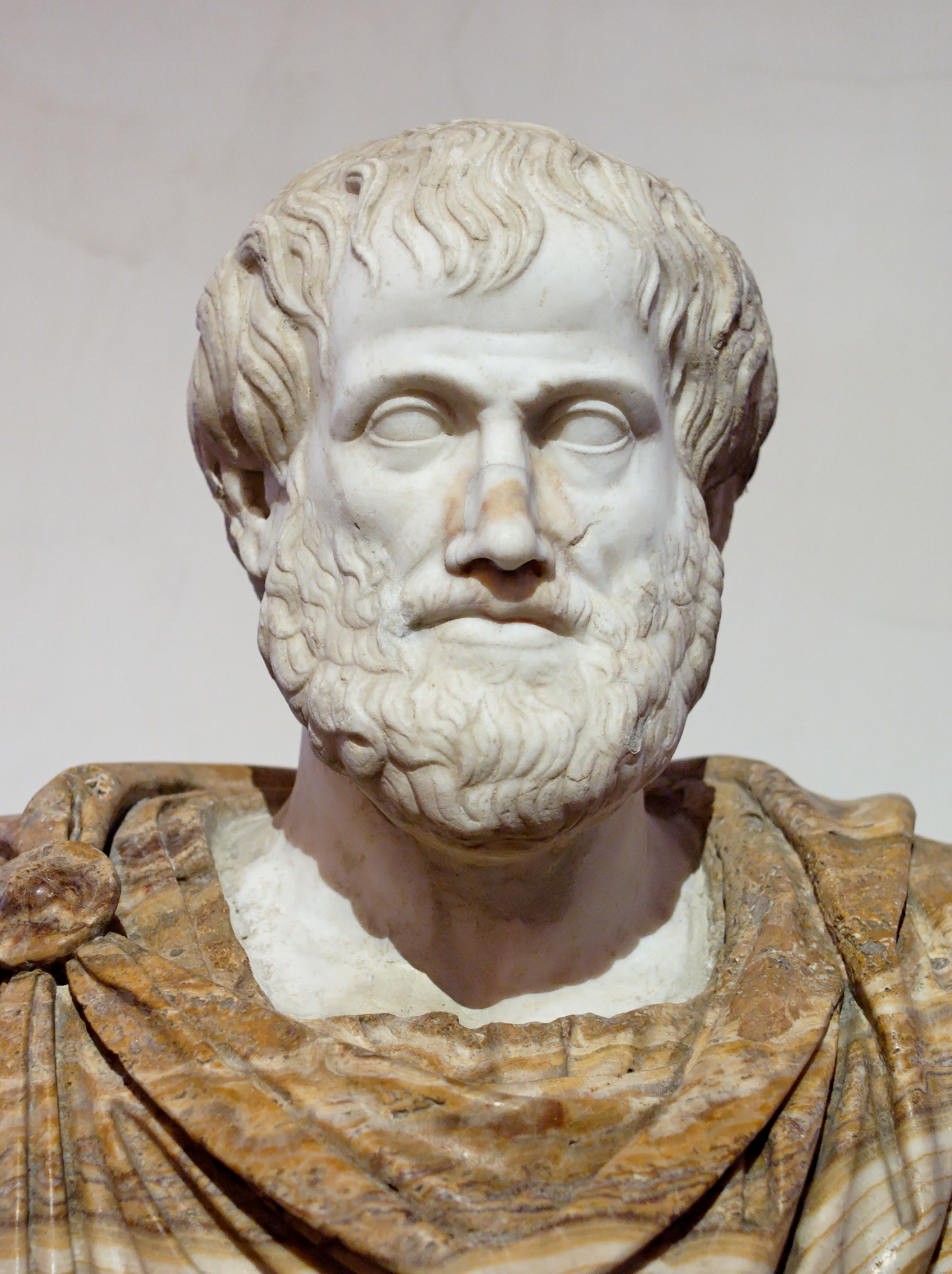
If you read any book on fiction writing, you’ll end up reading about the three-act structure


(Picture from here.)


Often, it is discussed as a character proceeding along a particular path that is then disturbed by some kind of inciting incident. The character then spends the rest of the story attempting to return to the character’s original path and failing. Ultimately, the character attains some kind of resolution that is not the original character’s arc but a new path and the story ends. 


It is attributed to Aristotle but he observed its existence. He didn’t invent it. It is even likened to Newtonian mechanics: an object with a given direction and velocity will remain the same until perturbed by a collision and that will result in a new direction and velocity. 


It pretty much describes every Hitchcock film ever.


This is one venerable and respected description of story plot and I won’t criticize it at this time but it leaves unknown the reasoning, understanding, and heritage that creates the character path in the first place.


Back in the eighties when I was first working in the software field, I met a very interesting individual. Let’s call him Dwayne. 


Dwayne was very smart and a recovering alcoholic. He did not disguise either of these features. In his opinion, people who were put off by either of these qualities were not worth his time. 


(He had an interesting take on alcoholism and people’s response to it. To paraphrase, if someone came out of anesthesia and acted bizarrely, people would blame the drug. Why, then, are people surprised when drunk people act out? It’s the drug, not the person. The problem is getting the drug out of the person’s system. But I digress.)


Dwayne viewed people as having a normal state. This is not “normal” in the sense of average or societal acceptance. Instead, he viewed it as the ground state of the person. The state where the person felt comfortable. Where things were accepted. Where things felt normal. And that people attempted to preserve that state and defended it regardless if the state were good, bad, or catastrophic. In his opinion, determining what one felt was normal and then critically standing it up against a desired state was the job of a thinking adult. Altering one’s perception of normal was how one created change in one’s self.


I left that job in the early eighties and lost contact with Dwayne. I suspect he never gave me much more thought but I’ve been thinking about him—and normalcy—ever since.


Normalcy determines the path the individual remains on in the absence of other perturbations, either internal or external. If one grows up in an alcoholic household or as a child soldier, that feels normal. It’s not good. It’s not even necessarily what the individual wants. But it is what the individual knows and that gives it a strange kind of comfort. A good story is standing up an example that conflicts with that normal, either worse or better, and having the character wrestle with attempting to reconcile a familiar ground state with the possibility of something new.


The advantage of this approach to characters is that it opens a mechanism that one can examine how human beings change internally. It defines the ground state that the character begins with and presents a metaphor the character can use to present how the character’s internal state changes—from the point of view of the character. That change is something I am very much interested in. 


The interesting character in the original Star Wars three films and the prequels is, of course, Anakin Skywalker/Darth Vader. Anakin goes from an innocent boy who loves his mother to a monster and from that monster to a redeemed saint. You can argue the execution was clumsy and the—well, all of the criticisms are valid. We’ll leave it at that.


But the arc is terrific, regardless of how badly it was implemented. Anakin’s corruption from boy to monster does not result from corruption by Palpatine but by incrementally worse and worse choices. Aided by the corruptor, to be sure, but Anakin made those choices. He is a moral participant in the story, not a mindless automaton. What makes those choice interesting is the ground state he begins with—the life with his slave mother—and how he reacts to changed circumstances. As a moral actor, why didn’t he save his mother? What was the moral choice of following the priesthood vs. his earthly duty? 


The failure of the films is not the presentation of the arc. It’s the lack of presentation of those internal state transitions.


In The Apprenticeship of Duddy Kravitz, Duddy is a poor Jewish young man in Montreal who dreams of being successful. He has a particular image of what success means—landedness—and the story is how he achieves it and the costs to get there. He is less changed by circumstances than he changes himself. The arc of the story allows the viewer to witness those changes. The act of side characters confronting Duddy is the means by which Duddy has to justify himself and justify those changes he decides to make.


Understanding the normal state of the character—the character’s ground state—gives the author the degrees of freedom both in how a person can change and how a person will change. It wraps up the inciting incident with motivation and takes that passive Newtonian object and turns it into a character.

Monday, May 15, 2023

State of the Farm 2023: May Planting


I don’t normally put up much on the farm this time of year but I’m fairly excited this year.


We’ve had an extraordinarily warm April followed by a fairly warm May. Normally, we wait for full planting until Memorial Day—the time when we can be assured of no late frost. But this year we’re taking a chance on the weather.


First, let’s talk about the orchard.


None of the stone fruits managed to create blossoms. Between the drought last year and the mild winter punctuated by below zero cold, they seem to have said to hell with reproduction. Let’s just try to stay alive.


That’s okay. There’s always next year. I don’t blame them one little bit.


To make up for it, all of the paw paws, apples, pears, cherries, and Cornelian Cherries, seem to be setting bumber crops. We have four pear trees. Two are long established and two are about four years old. The long established pears have on the order of fifty blossoms each. One of the young trees has a few blossom and I think the other is thinking about it for next year. We have evidence that there are set fruit on all of the blooming trees but don’t have an idea of how many.


It helps that there are a lot of bees this year.


All of the apples—even the ones that have not shown blossoms before—bloomed. There’s some evidence that there might be fruit set but nothing to count on at this point.


We have two cherry trees full of set fruit and same for Cornelian Cherries.


Even the new quinces that I planted last summer—that were pounded by the falling hickory—have blossomed. Heck, even the brand, spanking new quince that I pulled from the box a week ago has blossoms. (The white stuff is Surround, a clay caterpillar preventative.)


We have five paw paw trees. Three of them are now old enough to put out blossoms—the remainder are still too young. Paw paws take a while. The Elder Tree is covered with flowers from base to crown and the two younger trees next to it have blossoms true so we should get some cross pollination. Paw paws taste like the best part of mangos and bananas mixed together and a hint of sparkling wine.  We are hoping, someday, have to solve the problem of fruit storage. So far, we’ve just eaten them.


Now, let’s turn to the garden.


This is the first year we’re going to try to truly scale up. The target has always been to get a significant amount of our calories from the garden. This year we’re going to put what we’ve learned toward that goal.


I’ve mentioned before we’ve decided to implement cattle fence panel trellises. We bought six of them and set them up in pairs. Each panel is 16 ft x ~4 ft so this gives us three trellis tunnels eight feet long. The plan is to plant beans, squash, etc., on the trellises and we’re dedicating a significant section of the garden to bush beans. We’re trying for significant poundage from beans.


But the big calorie source is going to be from potatoes. We’re planting two thirty-pound bags worth of seed potatoes. So far, we have two Birdie Beds and a big chunk of the east garden planted—about 2/3 worth of the seed potatoes. We’re hoping for a three-fold increase but we would like to get much more.


Squash has always worked for us and we’ll be hopefully getting more yield there, too.


It does mean we’re going to have to be serious about storage. The beans will have to be dried. We’re going to need something to act as a root cellar for all those potatoes.


Man, that’s a problem I’m looking forward to solving.


It’s still a big risk. While I’ve got more time these days to manage the garden we’re always at the mercy of the weather. We can manage a drought as long as it’s not so severe we’re attacked by the wild life. But a cold, wet June is hard to recover from.


We shall see.


Next time I promise I’ll talk about something else.