Monday, November 20, 2023

Thanksgiving, 2023


I like Thanksgiving. I’m not a fan of turkey but any holiday that encourages excess of food and beverage is all right to me. Besides, I can fall into a tryptophan-induced coma in front of a movie, television show, or football game with the best of them.


(Picture from here.)


But the idea of a historical Thanksgiving with Indians (that’s what they were called at the time) sitting down in friendly congress with Pilgrims is, at best, a sweet metaphor. At worst, it reflects a rapprochement that is most politely called fiction.


There is one character in all of this that, to me, stands out: Tisquantum, often called Squanto. 


Tisquantum is portrayed as the Friendly Indian who helped the Pilgrims learn the skills they needed to survive, translated to the surrounding tribes, and pretty much made himself indispensable. This is, in fact, true, as far as it goes. But like so many things, it is a pale, shredded version of the truth.


First, in the years before the colonization of Plymouth, the New England coast was a vibrant community. Perhaps as many as a hundred thousand people lived in the area. Fields of maize and squash could be seen from offshore during the summer months. Behind them, were acres of chestnut and hickory trees—there is some evidence many of these were deliberately planted. 


In 1605 and 1606, Samuel de Champlain visited Cape Cod with the idea of planting a settlement. He gave up on the idea: too many people were already living there. 


What we call Plymouth was occupied by the Patuxet. All accounts of them suggest that they were a very successful agrarian and fishing community. They occupied the seaside during the summer and moved inland when the winter weather approached. Tisquantum was a Patuxet.


Some years before the Plymouth colony, Tisquantum met Captain John Smith as part of his sachem’s entourage. The meeting went cordial enough. Smith moved on to Maine leaving Thomas Hunt in charge. Hunt also invited the group on his ship and promptly kidnapped them, murdering those whom he couldn’t manage to stuff down in the hold. From here, Hunt took his prisoners to Málaga, Spain, to sell them as slaves.


This wasn’t unusual. A lot of Europeans dropped into the New World to pick up a native or two as if it were some kind of overnight truck stop. 


The Roman Catholic priests in Málaga intervened—at that point, the Church opposed brutality towards the natives. Tisquantum was saved from slavery. He persuaded the priests to let him attempt to return home. He made it as far as London where he stayed with a shipbuilder who maintained him as a sort of souvenir. The shipbuilder had interests in Newfoundland and Tisquantum managed to get passage to a fishing camp there. Hey, only a thousand miles from home.


He persuaded another of Smith’s cohort, Thomas Dermer, to go down to New England with promises of easy wealth but that went south through positively byzantine circumstances and Dermer started to return to England but met his boss, Ferdinando Gorges, at sea. Dermer promptly turned back to New England. 


When Tisquantum was kidnapped, the entire New England coast was alive with interlocking tribes, villages, and fields. He returned to desolation. The coast was empty. Homes were rotted and crumbling. The fields were untilled. Bleached skeletons lay exposed to the elements. As Dermer and Tisquantum sailed south from Maine to Massachusetts, they followed a blighted coast.


Tisquantum landed and went inland with Dermer to find his village. Save for him, the Patuxet were all dead. An epidemic had raged up and down the northeastern coast and killed as much as ninety percent of all natives. Disheartened, Tisquantum followed Dermer back to Maine but ended up walking back.


Massasoit, the sachem of the Wampanoag adjacent to the Patuxet was in terrible trouble. His community of twenty-thousand had been reduced to a thousand. His local village to sixty. Worse, his neighbors, the Narragansett, had not been terribly afflicted. Tisquantum was captured and sent to Massasoit. Thereby, Tisquantum tried to persuade Massasoit that the English could be allies.


Meanwhile, the Pilgrims—remember them?—landed and tried to make a colony in Plymouth. If there’s a group less prepared for their journey, I haven’t read about them. The Donner Party had nothing on them. Their fishing gear didn’t work in the waters of the bay. They had thought to be agriculturists but their seeds were inappropriate and they didn’t bring livestock. They had little idea what they were doing. And, finally, the Mayflower landed them in Massachusetts on November 21, 1620. This was back when winter was winter—not the easy winters we have up here now. This was snow and frozen ground. In my experience, November begins with a cold, brittle rain and goes from there. 


The only way they could survive was by raiding the graves and village remains of—you guessed it, the Patuxet—for food stores. Anything. Half of them died.


Meanwhile, Massasoit gets word of these Europeans setting up shop on land he could claim as under his control but without any way of enforcing such control. Tisquantum keeps buzzing his ear about how the English could be useful. The kidnapping, murder, and other attacks by the English tend to make Massasoit skittish. He doesn’t trust Tisquantum so he gets Samoset, who has limited English but at least has something, to talk with these interlopers first. After this first interaction, Samoset returns, this time with Tisquantum who was much more fluent due to his five years abroad. Massasoit wanted to incorporate the Pilgrims into his own political agenda and fend off the Narragansett. 


Tisquantum moved in with the Pilgrims. He did help them learn how to grow their own food using native seeds and techniques. He proved invaluable and the next fall, the Pilgrims had a good enough harvest that they could have a harvest feast. Massasoit attended (not necessarily invited but showed up because the celebratory gunfire might be an attack) with about ninety people. Both sides sat down and ate a lot of food. 


I have this image where both sides are eating together and on the left side, the holocaust visited upon the natives before the meal, and on the right side, the holocaust visited upon the natives afterward. 


Just a grudging bit of peace in the middle: Thanksgiving.


Note: a lot of the material for this post came from Charles C. Mann’s 1491: New Revelations of the Americas Before Columbus. I strongly recommend it. Tisquantum’s story, as presented, is highly abridged. The more detailed version in 1491 is vastly more interesting than this tiny excerpt. Any errors are, of course, my own and not Mister Mann’s. 


I haven’t read the sequel, 1493, yet. 


If it’s of interest, then I also recommend Wengrow and Graeber’s The Dawn of Everything, which I am currently reading.

Monday, November 6, 2023

State of the Farm: Reckoning 2023


The harvest is done. The experiment for this year is complete.


(Picture: our wee carrot harvest. Including rocks.)


Now, we decide what it means. 


I have a spreadsheet with all of the plants we planted, including the fruit and nut trees. But we will not dwell on that level of detail here. Instead, we’ll hit the highlights by category. 


The goal this year was to make a dent in the actual calorie count from the garden, nut, and fruit crops. In some ways, it was a success. In others, a failure. In the remainder, something in between.


Fruit

As I mentioned in previous posts, many of the fruit trees didn’t bear at all this year for various reasons. In the case of the peach family and the pawpaws, it was the late frost. The exceptions to this were the persimmons, medlar, and cherries. The medlar is a medieval fruit that vaguely resembles the taste of apple sauce. We have about a dozen or so on the tree but we can’t pick them until after the frost.


We had a good apple crop—at least, for us. We have a low fruit/tree ratio we’re trying to improve. We dried them and they are good to eat in the winter.


The persimmons did very well. We’ve made wine and persimmon bread. We tried persimmon pie but it didn’t work out so well. The astringency made the pie inedible. Yet another occasion where I miss the chickens. The bread turned out well. Since both were made from the same batch of fruit, we’re scratching our heads on that one. The difference might be the bread had rum in it and the pies did not. Possibly the alcohol mitigated the astringency. 


The sour cherries were reasonable this year. We didn’t try all that hard in picking them and so got one pie worth.


Non-tree fruit included the melons and the grapes.


The melons did poorly this year. We always have trouble with melons. It’s either too hot or too cold, too wet or too dry. We’re still experimenting with variety. 


The grapes have developed black rot and we have to deal with this. Most of the grapes either didn’t produce well or the grapes withered before harvest. We also had a vacation in the middle of harvest and so we ended up feeding the birds, too. We did get about ten or so pounds of Concords so five gallons of wine are percolating on the counter.


The new strawberry patch is too new. 


Spices

We have much pesto from the basil. The dill didn’t do well. The fennel was nice—had a nice fennel and cheese dinner last night. But while Wendy can taste the anise flavor, I could not. The flaw might be in the taster, not the taste.


The mint came in very well. We have about two pints total of ground-up mint for my tea this winter. That’s a win.


Sugar?

Not sure where to put the sugar beets. They’re a vegetable, I suppose, but we’re making sugar from it. We planted an eight-foot row and got about ten pounds worth. It’s reducing to syrup downstairs right now. I’ll be making sugar from it today or later in the week. Significant animal damage in that whole section: carrots, turnips, and beets. Have to think on that next time—if there is a next time.


Nuts

We now have three chestnut trees online and this year we got on the order of 30-40 pounds dry weight of chestnuts and we’re still processing them. We use it as flour adding it to bread recipes, and soups. We tried to make pasta from it but failed. We’ll try again. A definite win. 


We also got about sixty pounds of black walnuts from a friend as a “gift.” We’re figuring that one out.


Vegetable

The biggest category of all. 


We did fairly well with most of them. We had problems with carrots depending on location. Starting was an issue everywhere but the full sun carrots ended up giving us about five pounds of good yield. The carrots under the trellis were put in later and ultimately shaded by the beans. They gave us many tiny carrots.


Cucumber, eggplant, and peppers were pretty good. The cucumbers gave us many pickles and the eggplant came in strong. The problem with eggplant is it doesn’t store all that well and it’s hard to use up fifteen pounds before it rots. But we managed. The peppers did all right but we also didn’t really work on them. Hot peppers did well.


We had some trouble with the cold crops: broccoli, Brussel sprouts, kohlrabi, and the like. We do have some sprouts waiting in the garden until I get to them but it was only four plants. There’s also some bok choi waiting for us. We did plant five cabbages and got five cabbages, so that’s a win. By and large, I’d say the cold crops were a wash. 


Turnips were in the same area as the sugar beets. We got three big ones but the others were chewed up.


We like to grow celeriac (celery root) because it tastes good in soups. Usually, they sort of pod up like kohlrabi. These didn’t and looked like brittle stars or hairy snakes. Not sure if this is the variety we used or something in the environment. More investigation needed. 


Finally got some zucchini. Usually, we’re pulling literal feet of them from the garden but for some reason, they didn’t really get started until mid-August. So, we got a couple of big ones but nothing like the usual crop. Again, more investigation needed.


We did well on the beans. About eleven pounds total, which is a pretty terrific return on investment from four packages. Runner beans gave us two pounds. Pole beans gave us nine. We didn’t do so well with the pinto beans. I think that was a location error. No idea regarding the bush beans as we picked them fresh and ate them. I think we did all right but I have no numbers to back that up.


Finally, the potatoes. We did very well with the potatoes. Right now we have on the order of forty pounds in storage that we’re working through. 


Conclusion

The goal was to aim to make an impact on our calorie consumption from our crops. Between the chestnuts, the beans, and the potatoes, I think that experiment succeeded. That said, two of those crops are starch heavy so they’re good for calories but don’t contribute all that much to protein. The beans are an exception there. 


We use beans in stews and soups. I’ve been told that one pound is the equivalent to one preparation and that preparation results in about three meals. That means we have on the order of thirty-plus meals from the beans. If we say two pounds of potatoes/meal (which is fairly generous), that means twenty or so meals there. Presuming this is mostly dinner, that’s fifty meal/days from those two crops. 


The chestnut is harder to quantify since we don’t actually use it as a meal. Instead, we add it to other things. Chestnut flour might, for example, end up in one of those soups. 


The remaining crops that we’ve stored such as persimmon, carrots, etc., add to a meal but don’t constitute a meal in themselves. They have an impact on the pocketbook but not necessarily on meal/days. 


We haven’t yet determined our loss from storage. I’ll know more about that come spring. 


Every year we try an experiment. This year was the sugar beets. It looks like I’m going to get about a pint of syrup from ten pounds of beets. This translates into perhaps a half pound of sugar. At this point, it has an interesting and not unpleasant taste. Pulling this into production requires handling the pest problem and figuring out a better way to extract the sugar. According to my research, the most efficient way of getting sugar is also the most efficient way of getting an off, beet flavor. We chose the more inefficient way which gave us about four gallons of “sap.” 


We might try the grinding method and then attempt to filter out the bad taste.


Next year, I think my experiment will be sorghum. There are a couple of varieties that seem to have high yields and good taste. We will see.


That’s it from the farm until next year.

Monday, October 16, 2023

Expanding on The Expanse


Fantasy has its Game of Thrones. Science fiction has its The Expanse.


(Picture from here. Leviathan Wakes is the first book of The Expanse.)


Game of Thrones was the TV adaptation of a successful set of novels. (A Song of Ice and Fire by George R. R. Martin.) The Expanse was the TV adaptation of the set of equally successful novels and other works by James S. A. Corey. Both deal with cultural conflict and war. Both have “magic”—actual magic in Game of Thrones. Alien technology that defies known physics in the case of The Expanse


They are quite different in their characters. While there are rough characters in The Expanse, nothing compares to the unnatural evil that works its will in Game of Thrones. You’ll find genocide and child endangerment in The Expanse but you get incestuous murder in Game of Thrones


While I am an SF writer the more important thing in this discussion is that I’m an SF reader. I’m much more drawn to alien tropes than dragons. Less drawn to monarchies than autocrats. So, I’ll talk about The Expanse here rather than Game of Thrones. Besides, I haven’t read the Martin books.


The Expanse is brilliant television and a set of excellent novels but both are flawed in interesting ways. Those flaws reflect curious writing decisions. 


Note: I will be discussing things that happen in the books so if you’re spoiler-sensitive, don’t read any further.


The prose Expanse consists of nine novels and a few stories and novellas. In its future, the solar system has been opened to humanity by an incredibly efficient and powerful propulsion known as the Epstein Drive. This has divided humanity into three distinct groups: those from Earth, those from Mars, and those that live in the free space and moons of the solar system known collectively as the Belt. Those that live in the Belt are called Belters.


Mars is independent and on a continuous war footing with Earth since Earth has never really given up its hold on Mars. Think Britain and the US in the eighteen-hundreds. Mars is technologically superior to Earth but cannot match Earth’s industrial base. The ships of Mars are better but Earth has more of them. Neither much values the Belt.


The third is the growth and eventual factionalization of some Belters into terrorists. It is absolutely clear that Belters are an oppressed people in The Expanse. The Outer Planets Alliance (OPA) purports to represent the Belters but is, itself, divided. Some factions of the OPA are terrorists. Others want political autonomy. Think Sinn Féin and the Irish Republican Army (IRA.)


Any work with such grand themes needs lots and lots of characters to carry out the work. The novels have lots of point-of-view characters—one has fifteen. 


The first book brings out the characters and ends with Eros crashing into Venus. The second book plays out the war footing that happens between Mars and Earth and the unscrupulous scientists building human/protomolecule hybrids. It ends with whatever the protomolecule has built on Venus launching into space. Book three begins after the Venus structure has moved out beyond the orbit of Uranus and reshaped into a ring structure. This is the book where the Belt begins to really make its presence known as a political entity as each of the players—Earth, Mars, and the Belt—are interested in figuring out the benefits of the ring. This is when the protomolecule reveals its agenda: it is intended to build connections to all of the other ring structures built by ancient aliens. Now, the solar system is part of a vast network of planets.


Book 4 explores how this new real estate affects the political stability of the solar system. Who is in control? It also personifies the protomolecule in its search for its creators. The protomolecule is not conscious but it is intelligent. Its purpose is to serve those that created it but it can’t find them. It does not succeed.


Book 5 involves exploring what is going on with the rest of the solar system through the eyes of the main characters. This book also shows the coalescence of some Belters into a military organization—the Free Navy. The Free Navy drops large asteroids onto Earth, decimating large swaths of land and population, and ultimately encamps just outside of the protomolecule ring, preventing anyone from using the new real estate. Book 6 involves the resolution of all of the threads in the previous books. The Free Navy is defeated but the Belt is now in charge of the Ring. 


Books 7-9 take place some thirty years after the end of book 6 and have little direct impact on the events of the first six books. I’m not going to directly talk about them.


This is a large work. It has many, many characters. Some characters come into prominence and then fade out. Some stay the course for most of the books. Some appear for a particular scene and then are never heard from again.


In most cases, talking about the books is the same as talking about the show since the show closely follows the book. Issues of one are replicated in the other.


One decision—perhaps a flaw—is the way these characters appear, have a major impact, and then are never heard from or thought of again. One of the main characters is Naomi Nagata, the engineer of the Rocinante. She is a through character from day one all the way to the end. About halfway through the series, we discover that she had been a member of a violent OPA faction, had a son with its leader, and then left the faction and necessarily the son. It is represented in the work that she thought of the son often. 


The son, Filip, shows up in the latter books as an important opposing character. Whole sections of the work involve the conflict between Filip and Naomi. Then, at a crucial juncture, Filip leaves the conflict and is never heard from again. In later books, he is never mentioned. Naomi doesn’t think about him. He never seeks her out. He has disappeared.


This is a continuing pattern: characters or events are important at the time but their reverberation across the work is severely limited. 


From what I can tell, this is entirely intentional. The size of The Expanse is huge—close to five thousand pages over nine books. Probably a couple of hundred characters and hundreds of scenes with them. Dealing with dangling plot lines with an iron fist is probably necessary. 


That said, Naomi was Filip’s mother. She didn’t think about him after she thought he died. I know mothers who agonize over their dead children for decades afterward. The loss of a child can destroy a marriage. 


Filip’s father—Marco Inaros—is a charismatic leader who is more than a bit crazy. He dies along with his crew in the climactic moment of book six. His death is what breaks the Free Navy. But there is no mention of martyrdom. He does not appear to be venerated. Pol Pot died in 1998. He presided over the Cambodian Genocide from 1975-1979. We still talk about him. Inaros, by dropping asteroids on Earth, killed billions. But he’s not spoken of in later books. 


I think this is a flaw. But others might just think it is a necessary decision based on the scope of the work. 


There’s a simplification of events and personalities in the villains of the book. The evil scientists doing Mengele’s work hybridizing humans and protomolecule and destroying Eros are pretty cartoonish. The authors attempt to get around this by introducing techniques by which people are made into sociopaths who are, in effect, addicted to the work. This is introduced early but not fully embraced later as more and more people are doing these terrible things that have clearly not been so modified. A couple of the characters are distinguished from Simon Legree only by the lack of a mustache. 


Again, is this from the scale of the work or is it a mechanism by which the evil is shown? Sauron is a simple villain, too. His motivations are never really explored and it’s not at all clear what his endgame would be if he won. 


(One wonders what The Expanse would be like if told from the point of view of the villains. Think John Gardner’s Grendel.)


This may be a fundamental problem with complex fiction. James Michener wrote huge books that attempted to explore in depth the slice of the complex world he was describing. In my opinion, he did so at the cost of complex characters. James Clavell did the same with his Asian novels: complex world/simple characters.


SF, in particular, relies on world-building. Some have said that in SF the surrounding world is an additional character. Dune is an example of this—again, I would argue, relatively simple characters.


One of my favorite writers, John Dos Passos, seems to have the ability to create complex worlds inhabited by complex characters. But he seems to do so at the cost of a complex plot. Most of his books have many events involving interesting characters but they are more event collections than a plot. 


It makes me wonder if there is a three-legged stool in writing: complex world vs. complex character vs. complex plot. Pick any two. 


Complexity is messy. Our world is complex. It has no easy answers. Not everything is known. The reasons things happen are not always clear. 


Humans are complex, too. What drives us inside is rarely visible to those outside—and certainly invisible as long as we don’t reveal it. Sometimes, they are not even known to ourselves. Emotions tangle with each other and impulses come, one after another. All we see of other people are their surfaces. Often, we cannot know the darkness that roils below.


This is hard to represent in fiction. Maybe it requires an iron hand.


Monday, October 2, 2023

We Must Look Forward


(Picture from here.)


Humans are both hyper-cooperative and hyper-competitive. Often, at the same time.


There’s a continuing discussion of human intelligence that goes something like this. Well, that is a quality that no other animal has. Therefore, humans are special. Oh, wait a minute. Other animals have something of that quality, so what we have isn’t so special, after all.


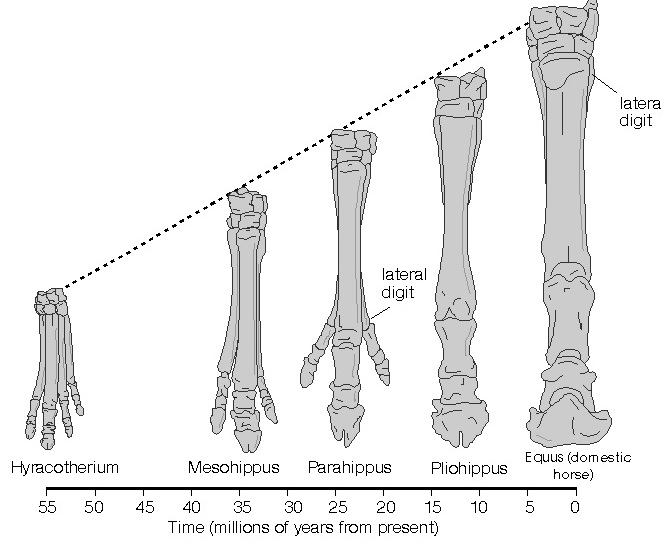
This is a completely specious argument. People just shouldn’t indulge in it. The horse “foot” is really an elongated middle finger. The “foot” is the last digit of that middle finger. The hoof is derived from the fingernail. So, in effect a horse is traveling on its fingernail. To say that since other animals also have the middle finger, the horse “foot” isn’t that special. 


We have language, use tools, have society, cooperate, and compete. Crows communicate information using sound. Chimps, crows, and cephalopods use tools. Ants, bees, mole rats, chimps, and wolves cooperate. All animals compete. Individual qualities are shared across whole families and classes of animals. Species’ use of those qualities—species specialization—is local to that species. Crows and humans use tools. They evolved them separately. But the human use of tools puts us in a separate class.


So far as we know, no other earthly species has ever built a skyscraper or reached the moon. We did it using our curious mix of hypercompetition and hypercooperation. We seem to be unique in this sort of thing. We are excellent engineers given our limitations.


We are incredibly special. Keep that in mind for the moment. Now, let’s look at something a little different.


I first ran into this concept in an article from Michael Shermer, though I don’t think it was original to him. He posited that humans were inclined towards fabulation because of an evolutionary bias: nobody ever died as a result of thinking a lion was in the bushes when there wasn’t one. Conversely, people did die as a result of thinking a lion wasn’t in the bushes when it was. The bias is in favor of creating dangers when they aren’t there. 


That was suitable for our ancestors several million years ago when we were the prey and other animals were the predators. It became less and less useful as we took over the planet. Now, it’s not suitable at all when fabulating a threat can be a menace.


My point is that the same beautiful engineering mechanism I so admire when we’re building a space shuttle or creating the internet—the same wonderful blend of cooperation and competition—can service a fabulated threat just as well as it can service something wonderful. We can mobilize that same frontal lobe computer for anything. The same frontal lobe that got us to the moon can create terrific scenarios concluding we fabricate it. As Larry Niven said in Protector: Intelligence is a tool that is not always used intelligently.


I’ve said this before and I’ll say it again here: what got us here is not what will get us further.


By this, I mean that the traits derived from the evolutionary pressures of the veldt—the fabulation of facts, the determination of threats by what other people say are threats, the falling under the sway of a group, nation, or leader, the embracing of the exceptional nature of one’s tribe so that others are not considered true humans—cannot take us forward. 


We want a good world. We want clean water, clean air. We don’t want to poison ourselves. We don’t want to starve. We want good long lives for ourselves and our children. Yet, when we pursue such things, the same obstacles get in our way: one group is pitted against another group. We follow the crowd we know and marginalize the crowd we don’t. Our group deserves those good, long lives but that group over there does not. Our group deserves to run things and that group should just shut up and stay where they belong.


I think this is, in part, the trap of story. We like stories. We revel in them. Heck, I write them all the time. I love stories.


Stories are by their nature simplifications of the world. To me, the best stories (I’m looking at you, Three Billboards Outside Ebbing, Missouri) are those that attempt to capture the complexity of human beings. Human complexity is inconvenient. As stories get simpler, they devolve from intricate portraits to caricatures and we end up with my group: good. Their group: bad. The problem is we believe stories before we believe facts.


So: get out of your comfort zone. Find sources of news that discomfit you. Prove them wrong—not by listening to your gut or your friends but by facts that can be verified. Question those you want to lead you. Trust sources not by how they agree with you but whether they can be verified. Leaven your trust—no source is completely right all the time. Test them by things you know to be true. I use science in this regard because it has the best track record. If a source says water is steam and you find that in chemistry text book, then that source has a track record. If a source says water is natural gas—well, find yourself another source.


Test sources that disagree with you. More importantly, test sources that agree with you—your own bias is the hardest obstacle. 


People have a tendency to apply their intellect discriminately. I see a bad person from my group and that person is an aberration. I see a bad person from their group and it’s an example of the whole group. Don’t do that. Apply the same rigor to all things. 


You can do this. You’re as specialized a species as a whale or a robin. You’re the species that invented critical thinking, objectivity, science, forgiveness of sins, loving your enemy. All things beyond what we did as walking chimps. No other species can do what you do. No other species has had to.


This is hard, honest work. It’s also a good way to alienate your friends and relatives.


After all, no good deed goes unpunished.