Monday, June 17, 2024

State of the Farm: June, 2024

We managed to get pretty much everything planted by the end of Memorial Day weekend. This is, more or less, the traditional planting time up here in New England. Of course, global warming has brought spring in two weeks early and pushed summer out two weeks later. In addition, it has changed our location in the USDA plant hardiness map


This has some pros and cons. On the pro side, we get to start planting two weeks early and can harvest into early October. That is, if we pick the right seeds. It gets hotter now in the summer—we’re looking at a record heat wave in the coming days—which might be good or bad. The beans last year didn’t set fruit above 95F. But the melons like the heat. 


On the con side, the heat is a problem for many of the plants. The extended growing season also extends the opportunity for pests and diseases. We’re having record slug and rodent problems. Slugs (“They can’t hear. They can’t speak. They can’t operate machinery.”) have never been that much of a problem. But with the warmth and the wet, they are starting to be a real issue. We’re investigating a number of solutions but haven’t implemented any as of yet.


The rodent problem comes from multiple sources. For one thing, we’ve not had an outdoor cat for a few years now. Cats don’t just kill everything that moves, rodents and similar animals are scared away by their urine. Cats are happy to oblige. For another, we lost a large hickory last year. That served as a food source for squirrels. I think the squirrels competed with the chipmunks and helped keep the population at least a little bit down. Finally, the longer season and the mild winter no longer keeps the smaller rodents in check. 


We had redone the garden fence, putting in chicken wire and lining the ground with hardware cloth. This held back the mice and most of the voles. However, it didn’t stop the chipmunks one little bit. 


We’ve been trapping them regularly and that makes a dent but only a dent. It’s another problem we’re working on.


So.


We have three main garden areas—the turtle garden, the main garden, and the raised beds—and several fruit trees and arbors. 


There are three sections of the turtle garden: north, central, and south. We planted potatoes and sorghum in the north area. The potatoes are doing okay but the sorghum is a little stressed. If we continue with sorghum, we will likely move it. In the central section: more potatoes, pinto beans, and sugar beets. The beets and sorghum are part of my continuing experiments to be able to generate sugar. So far: failure. But I’m still trying.


The south section is fava beans and asparagus. Fava beans are another experiment. They are supposed to be a perennial up here but we will see. The asparagus bed is now close to three years old and supplies us with spears.


I overplanted the main garden last year and had too much competition. I reduced what I was planting this year and every plant has a clear area to grow. The list this year is:

  • Basil
  • Daikon radishes
  • Carrots
  • Sunflowers
  • Goldberry
  • Brussel sprouts
  • White beans
  • Brown beans
  • Bush beans
  • Cucumbers
  • Melons
  • Rutabagas
  • Kohlrabi
  • Celery
  • Squash

Aaaand we’re already having issues. I planted eight lovely basil sets in the southwest corner of the garden and came in two days later and they were gone. Eaten to the root. Then, we found a hole under the fence. Too big for a mouse. Too small for a squirrel. I’m betting on chipmunks. But what rodent preferentially eats basil? We’ve never had that. Planted eight more purchased sets and they’ve been picked off, one by one. We are down to four. The brown beans came up and about a quarter of them had their tops bit off. Clearly, we have to handle this.


Of the four squash beds we planted, two didn’t come up at all. The peas I planted back in April had the same issue. We did notice that during COVID there seemed to be a seed germination issue. It might still be percolating through the system.


The raised beds have now been planted:

  • Strawberries
  • Potatoes
  • Peanuts
  • Peppers
  • Basil

We’re getting strawberries. The early radishes (not listed above) didn’t really produce. The potatoes are being ravaged by potato beetles so I sprayed them with Dead Bug. For the record, we like to garden because we like to know where our food is coming from. That doesn’t mean we’re “organic” in the traditional use of the word. We’re not above using fertilizer, insecticides, or fungicides. It does mean that we’re judicious in their use and selective as to what we apply.


In the fruit department, the pears, apples, peaches, blueberries, and grapes look great. We lost all of the Manchurian pears—they either didn’t pollinate or the chipmunks got them. I think the former. A number of fruit trees produced huge amounts of blossoms but did not yield fruit at all or a lesser amount. This was the first time in several years where we didn’t put out orchard bees. That may be the problem.


The paw paws were like this. We have four trees. Three of them had blossoms. The fourth is too young. Across the three trees we only have about a dozen fruit growing. Paw paws are notoriously difficult to get pollinated. First, they cannot self-pollinate. Pollination must come from a genetically different plant. This means you can’t take a cutting and grow it next to the parent plant to get pollination. In addition, they are generally beetle pollinated and small beetles at that. Bees don’t help. There’s some evidence that a few paw paw species are pollinated by flies since the odor of the flowers resembles carrion or dung. 


All of this means that if you take a paw paw out of its range, you may or may not get fruit. In Europe, for example, they all hand pollinate. We might try that next year.


Finally, we’re attempting a grand experiment.


In the picture above, in the background, two items are circled. The left circle shows the use of bird tape on the strawberries and a blueberry bush. The right circle, in the background, is what looks like a tunnel. This is the blueberry house. 


We’re using bird tape on the lesser blueberry bushes. The blueberry house is covered with netting. 


We don’t like to use netting. It’s a complete PITA to deploy. It catches everything—leaves, branches, dirt. It supposed to be pulled after the harvest so leaves and snow can come in. And, sometimes, it catches birds. Some birds can be released. Others are not so lucky.


We saw the bird tape being used in Vermont. We’re hoping it works here. It doesn’t seem to work so well with strawberries. It’s possible the red color is so inviting that it overcomes whatever the bird tape does. Or, it’s possible we’re not using the bird tape correctly. We will see.


This is a good time in the garden—minus the pests. Just a little weeding is sufficient to keep control. Watering isn’t much of a problem because we’re having good rain. Not a lot of work. As the summer progresses, the work load gradually increases. Weeds get more persistent. Harvests have to be managed. Right now is good.


Finally, an apology. I didn’t get this out at the right time. So, in effect, it’s a day late. I’m sorry about that.

Tuesday, June 4, 2024

Upcoming new novel: Smilodon Country


 I have a new novel, Smilodon Country, being released on 6/25/2024. Here's the description:


In the ruins of Saint Louis, Lucio has been a Long Bottom Boy for as long as he can remember. He has scavenged. He has been hunted for food. He has eaten his fill of human prey. He has been both the abused and the abuser.

He's been okay with this.

One day he sees things differently. Can he stay? Can he leave? Where can he go? Who can he trust? Is there a place for him anywhere?

He does not know it but he is on his way to Smilodon Country.
 

This one has an 18+ age range.


The Amazon pre-release link is here. My website will have further links as they become available.


Monday, June 3, 2024

The Language of Artificial Intelligence


I find the AI discussions at best distracting and at worst irritating. I mean this down to even referring to it as AI. This is clearly a marketing ploy and it’s distressing that it works so well.


(Picture from here.)


Remember, AI is a Spielberg movie. And one of the most famous intelligent computers is HAL from 2001.


The underlying systems involve neural networks and large language models. What I think the resulting trained systems should be called deep analysis pattern determining predictive machines. I know that this isn’t as sexy as AI but it’s more descriptive. Here is my reasoning.


Machine learning involves deep analysis of the training data across thousands of dimensions. No, not dimensions like in the old show Sliders. I mean dimensions of analysis. 


Let’s say we described an object in terms of geographical location, temperature, altitude, velocity, and color. Each of these attributes can be evaluated to a value. That value can be described as being a point on a line. Altitude in meters. Velocity in meters/second. Color as a list. Etc. Each of these attributes can be referred to as a dimension. The dimensional values allow the representation of the object as a point in a multidimensional space, allowing comparisons between different points in the same space. This is analogous to plotting something on an x/y graph. The distance between two points can be determined. Similarly, “distances” between two points can be derived from their relative values in their dimensional space.


That’s the deep analysis. The next component is its ability to determine patterns in a huge dataset. It can be done because of the previous data representation. There are several types of machine learning used to discover patterns but the ones that most concern this discussion are unsupervised learning, supervised, learning, and reinforcement learning. Unsupervised learning derives patterns from unlabeled data. The patterns are determined solely from the system itself. 


Supervised learning where inputs and a desired output value are used to train a model. The training set represents data that the model would expect—radiology images, for example. The desired output is specified and associated with the input data. The goal is that when the model inputs new data it will be able to generated outputs will reflect the what the model learned in the training data. In a radiological image example, the model might be trained on lung cancer images. Then, presented with new images be able to detect lung cancer. 


Reinforcement learning doesn’t require labeled input/output values as in supervised learning. Instead, the model determines action from unlabeled input data and its decisions are then evaluated and positive or negative feedback is given. This is similar in the way animals are trained to do tricks. Say, you want a dog to run up a ramp and jump through a hoop. First, you might reward the dog when it approaches the ramp. Then, further reinforce the dog when it starts to walk up the ramp, and so on.


Prediction is when given an input they output the most likely expected material.


I am not criticizing these systems. These are highly useful—especially the more specialized systems such as used to determine drug discovery and other disciplines. What I object to is that the language we use to describe them gives them qualities they cannot possess. 


While these systems are certainly artificial and “intelligent” in the broadest sense of the term, they are not conscious. They do not understand what they are doing. Yet, we use language that implies both of these things. 


For example, all of the above systems have a problem with generating data that reflects their training but do not represent anything possible or desirable. These have been termed “hallucinations.” A hallucination is defined to be “is a false perception of objects or events involving your senses: sight, sound, smell, touch and taste.” (See here.) These systems do not perceive and have no senses. They have no ability to experience. 


Or we might say “ChatGPT tells me that there should be glue on pizza.” To tell something implies a intentional communication between two conscious entities. That’s not happening here.


Humans project all the time. We see two dots with a curve under them and perceive a face. Our cat rubs its head on our knee and we declare it loves us. We trust that our leaders have our best interests at heart. None of these assertions need be true—and some are provably false—but we believe them all the same. 


The AIs that are now in use in search engines, in offices, on the shop floor have demonstrable failures. Yet, they are still being forced on us.


Describing them as human is propaganda and we should recognize it as such.


Monday, May 20, 2024

Cheese Ends, 20240519


I’ve been in a cranky mood the last couple of weeks. Health issues have been rearing their ugly heads and the world hasn’t been particularly pleasant to read about.


Then, several articles came across my desk that clearly came under the why-we-can’t-have-nice-things category. In pure pseudoscientific babbalese, I interpret this as the universe telling me to go with it. 


So, here we go. 


(Picture from here.)

**

In the old days—back, say, in the thirties—about twenty-five percent of foodborne diseases came from the ingestion of raw milk. This was just as true in Europe and the reason Louis Pasteur invented the means by which milk could be mostly sterilized without ruining the flavor—called, of course, pasteurization


That hasn’t stopped people from deciding that raw, unpasteurized milk, has unprovable and dubious and health properties. 


I have a little skin in the game on this as my father’s family raised milk cows. The stories he told were quite funny and interesting and suggested that unfiltered, unpasteurized milk was something to be avoided. 


Recently, some dairy cows have been exhibiting H5N1 bird flu infections. It doesn’t seem to hurt the cow much but the virus does seem to preferentially infect the udders. Some cats have ingested infected raw milk and died of brain infections. One could deduce that maybe drinking infected raw milk might be dangerous.


That hasn’t stopped raw milk enthusiasts from demanding to get raw milk from infected cows in order to get some kind of imaginary immunity to H5N1 flu. 


*sigh*


Moving on.

**

What is the economic impact of the new weight-loss drugs?


The United States has a bizarre and unique drug pricing mechanism. For some reason, people seem to believe that market forces will prevail in a system where the patient has to have a particular drug. This is called, in economic terms, an inelastic demand: where demand remains unchanged whether price rises or falls. Health care falls largely within this system. 


Many other countries recognize this problem and fix prices or otherwise handle the issue. 


Not in America.


The other item in this discussion is obesity—well shown to be a strong factor in health issues. Enter the new GLP-1 drugs like Ozempic and Wegovy. 


Wegovy costs $809/month/patient in the USA. In Denmark, it’s $186/month. Yale researchers have estimated that the drug can be manufactured profitably at $5/month.


Adult obesity in the USA is about 35%. It’s been estimated that if half (looking to the future) the adults in the US started taking Wegovy, the collective cost would be around $411 billion/year—more than all other drugs combined. It’s projected that by 2031, cost of purchase of all drugs (including weight loss drugs) will exceed 1 trillion dollars. The drugs have long ranging health effects but are so expensive that the cost/benefit ratio is not in their favor. 


Remember, these prices were decided on. They are what the manufacturers figure Americans are willing to pay. Note the Yale study and the concept of inelastic demand. 

**

One of the continuing problems I have is how science is perceived. Like the colloquial concept of theory versus the scientific concept of theory. “Well, it’s just a theory...” is a common phrase. As if a scientific theory wasn’t backed up by evidence, mathematics, and laboratory studies. It’s scientific theory that can reassure you that during the night the sun hasn’t gone nova on the other side of the world. 


This issue of language isn’t limited to the word “theory.” It covers other words, too. Like “believe.”


I might say, I believe in Divine Right of Kings. I am stating that I support the idea that Kings rule based on the derived power of God incarnated in them. You could say that’s dumb. You believe in the concept of democratic representation: the will of the people to allow some to govern in their name. We both might adhere to these beliefs to the point we will die for them—or, at least, die for the symbols that represent them like King and Country.


These are beliefs in the common sense of the word.


When scientists say they believe in, say, the Cosmological Principle, they are saying they believe in a principle that can be inferred by other, provable, mechanisms. And they are committing to a rejection of that belief if it becomes falsified.


As long as one understands the difference, all fine and good. But that doesn’t seem to be happening in the media. If you say—to use the article’s example—that scientists know the earth is warming, that is far closer to the truth than to say those same scientists believe the earth is warming. “Believe” in scientific vernacular is far closer to “know” in the common vernacular.


This is a big problem in media. Most scientific reporting is commitment phobic. Media folks are not stupid. I believe they know the difference but squishy reporting is more comfortable. Less vulnerable.


And it makes a difference. Research has shown that content presentation is as important—or even more important—than the content itself. To quote them: “’Know’ presents [a statement] as a fact presupposing that it is true, ‘believe’ does not.” This was supported in their experiments.


I’m a writer and I know words are important. People who use words nefariously know it, too. So should readers.

**

There’s a whole youtube channel devoted to unexpected consequences to well-intentioned action. I won’t link to it here because I don’t always agree with the agenda behind the videos. But it’s fun. 


As far back as 1953 laws in North Carolina prohibited public masking. This was done in order to prevent actions of secret societies like the Ku Klux Klan and others. Best of intentions, right? Of course, masks can be used for public health situations, right? Recently, however, demonstrators have been showing up wearing surgical and other kinds of public health masks. 


This last week, the North Carolina Senate voted to repeal a legal exemption, enacted during COVID, for public health masking. The immuno-compromised, sick, and those that didn’t want to get sick, would not be able to wear masks in public.

**

Did you know there was such a thing as a zombie fire? I did not—well, sort of. I knew about smoldering coal fires in Pennsylvania and other places. But a zombie wildfire?


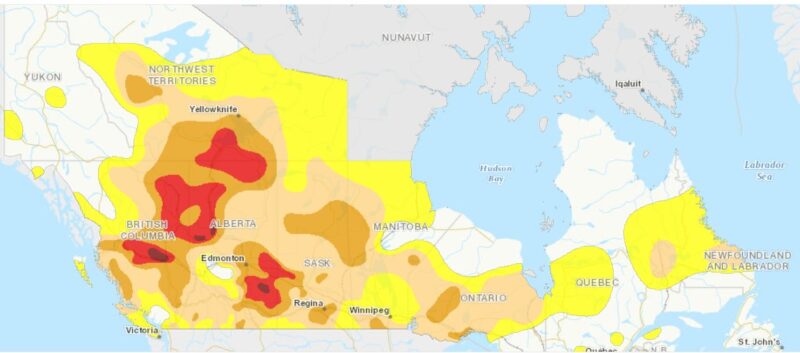
Turns out that the drought in Canada is bad enough that fires can smolder through the winter and wake up in the spring. Canadian Zombie Fires.


The reason this is in the why-we-can’t-have-nice-things category is that this is clearly due to global warming. Just like the models say it is. Just like the scientists believed would happen. Just like we should have expected.

**

Okay. Okay. Okay! Some positive things.


China has created the worlds first high-definition lunar geologic atlas. This is the best collection of lunar geographic data since the Apollo missions. Fully public. Accessible. Usable across the world by anyone. And published by China. This is a big deal.


NASA is doubling down on advanced concepts for space exploration. These include:


  • Pulsed Plasma Rocket: fission powered propulsion that could get humans to Mars in two months.
  • Radioisotope Power Cells: for missions that require power long and far beyond solar cells.
  • FLOAT: A lunar railway for Moon settlements. Flexible Levitation on a Track. Far and away the best acronym of all time. Roll out the track and you have an instant cargo carrier. 


One last thing.


Every year fish swim up the river in the center of Utrecht where they meet a lock preventing them from going further. The lock is closed in the spring. The Utrechtians (?) set up a camera at the bottom of the boat lock and put the live feed up and a button. (A doorbell.) Watch for the fish and if you see one, press the doorbell. That alerts the lock keeper that there are fish waiting. When enough fish are detected, the lock keeper opens the lock and lets them proceed to their spawning grounds.


Here. Go free the poor waiting fish.


Happy now?