Sunday, January 25, 2015

Thermoregulation 102


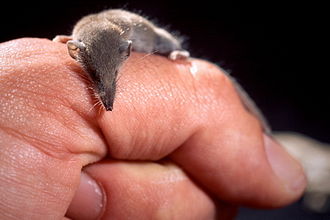
(Image from here.)

Before we spoke of the physical requirements of thermoregulation. Now we're going to have fun: we're going to see how animals solve these physics problems.

But it's a big question and the possible scope is vast. So we're just going to stay inside Kingdom Animalia and endothermy and work from there.

We'll leave poikilotherms and plants for another day. (Plants thermoregulate as well but have a completely different set of constraints.)

Okay. First we have to go back to that table from last time that shows the relationship between surface area and volume. Surface area is a square function and volume is a cube function. Consequently, surface area dominates for small animals where volume dominates as animals get larger. This means that the challenges animals face changes qualitatively as the animal size changes quantitatively.

This is interesting. Often when considering engineering problems the issue of scale comes up. A solution that works on the small scale can fail magnificently when the mere size of the problem is increased.

Many animals have significant size ranges. Birds range from hummingbirds to extinct moas. Reptiles range from tiny lizards to komodos and great crocodiles. Mammals have a huge size range, from shrews to whales. As said before, the problems at the ends of the scale are different. The problems of the very small are not the same as the problems of the very large.

Let's stay with endotherms. Remember, endotherms maintain a constant body temperature metabolically.

Down at the small end we have the three champions: the Etruscan shrew (Suncus etruscus), Kitti's hog-nosed bat (Craseonycteris thonglongyai) and the bee hummingbird (Mellisuga helenae). All of these animals range from 1.6 to 2 grams. A gram is about the weight of a paper clip-- for those of you who can remember those. Or about the weight of a single non-glossy business card. I expect these are the bottom end possible with Terran endotherms.

Etruscan shrews inhabit a relatively warm climate between 10 and 40 degrees latitude-- or from about Colombia in South America to the boundary between Kansas and Nebraska in the US. That's a fairly broad range. It's found across most of that range from North Africa up through France-- from places that have mild to nearly absent winters to places where winter would be a threat but does not last terribly long. It goes into torpor when it's cold but mostly prefers warm habitats.

Kitti's bat has a very narrow range in parts of Thailand and Burma. It roosts most of the time with brief feeding activity periods. These periods can be interrupted by wet or cold weather.

The bee hummingbird is restricted to Cuba. Like all hummingbirds, it's dedicated to a life of eating the sugary goodness of nectar. It can visit upwards a thousand or more flowers a day.

How would we analyze these little guys?

Well, bats and birds have dedicated their physiology to flight. This has huge energetics requirements over and above thermoregulation. However, while the cost of flight is high it has a benefit of generating heat. In the case of birds, feathers are wonderful insulators. Even so, hummingbirds are in the same boat as most small animals: they're dominated by heat loss. Hummingbirds make up for it by eating from a lot of flowers and using a very easily metabolized food.

Kitti's bat has taken a different strategy. Instead of eating a lot and staying active, the bat has instead taken the opposite tack and lowered its requirements. If it's only active an hour a day that's a major energy requirement that has been lowered. In addition, many bats can lower their body temperature when roosting.

It's interesting that many animals follow this same paradigm: work when you have to and let the body temperature drop when you don't. Hummingbirds are notorious for dropping their body temperature at night.

One wonders how penguins manage.

Let's think about hair, feathers and insulating fat for a moment. We always have to keep in mind that evolution is inherently an economic system. Every adaptation has a cost and that cost must be born in order to reap the benefits. Hair is not as good as feathers (especially down) at insulation. It traps less still air. But it's not as expensive as feathers. That said, there's a weight penalty to hair.

So consider our tiny shrew. How much hair can the shrew put on to insulate itself? What are the cost benefits? Hair has a metabolic and weight cost. It can interfere with the quick speed of hunting. It must be groomed-- one of the features of our shrew is that it grooms constantly. More hair might be good at keeping our shrew warm but the cost of maintenance might exceed its benefit. Ditto fat. Fat is much more expensive flesh than protein or sugars. And it doesn't serve any active purpose: it just insulates.(Except for brown fat. More later.)

This has got to be a problem with bats. They don't have the luxury of feathers. They have to make do with plain old hair with all its attendant cost. Especially with that living flight membrane that has to be kept alive. At least exposed feathers are metabolically inexpensive once they're out there. The flight surface of birds requires little metabolic upkeep. Birds have fat but, again, the needs of flight make the cost of fat a premium.

It's also important to remember that birds and mammals evolved endothermy separately. Both evolved from ectothermic ancestors. Consequently, it is unreasonable to expect that the endothermy mechanism would be different. They are, in fact, different and similar.

Energy capture in the cell mostly happens in the mitochondria. Sugar and fat is burned and that energy generates ATP-- adenosine triphosphate--as a sort of energy packet. ATP is distributed across the cell and used for processes that require energy. The process by which ATP is produced can be tightly coupled or loosely coupled. "Tightly coupled" means that the process is maximized towards ATP. It's efficient and doesn't produce a lot of heat. "Loosely coupled" means that not as much ATP is produced but more of the burned sugar escapes as heat.

The mitochondria is not only where the energy is produced, it is also the primary location where heat is produced. Again, it's a trade off. How much heat is actually necessary to keep the body going?

Both mammals and birds generate heat by decoupling but they use different enzymes to do so. (See here.) Not a surprise since the two groups developed endothermy separately.

Mammals have something extra called brown fat. This is fatty tissue that is riddled with capillaries and mitochondria. It serves to generate heat in animals that can't shiver: infants and hibernating animals. It's brown because it has so many capillary beds to get oxygen and distribute heat and so many mitochondria to burn, baby, burn. It's seen often in animals that need to get out of torpor or hibernation since in such states shivering not only doesn't work; it can't happen. Mammalian muscles don't do well when they're cold.

Which brings us to the three different ways animals can avoid spending energy maintaining their body temperature: torpor, hibernation and aestivation. Torpor is state where activity lessens and the body temperature drops on a temporary basis-- daily, when the temperature drops. Hibernation is a similar process where the animal prepares for the state, enters it and remains for an extended period of time. They look similar. In both cases, body temperature drops to ambient, heartbeat slows, brain activity reduces, metabolism is a bare thread of itself. The difference between an active bat metabolism and a torpid bat metabolism is about a factor of forty.

There's a lot of discussion as to whether mechanisms of the two are the same. Many authorities think that hibernation is just pre-planned torpor.The literature goes back and forth on this one. Until I get a good understanding of the underlying mechanisms involved, I tend to think of them as separate but related things. There is so much planning that goes into hibernating: finding a place, building up a fat load, determining optimal time from calendar and sunlight cues, determination optimal time to wake up. It's my intuition on these things that when there is an opportunity for selection and evolution to take place, it does. These pre-hibernation and post-hibernation operations are just such an opportunity. So all of the evolution goes into staging the event and the event itself remains unchanged? Dubious. But I've been wrong before. Twice.

Aestivation is also similar but for when dormancy is required for high temperatures. In all cases, maintenance of the body temperature and general metabolism is reduced to save energy, retain water, etc. But in the case of aestivation, the body temperature is much higher. Aestivating animals are much more easily aroused.

But these are fairly gross mechanisms. Are there any subtle and elegant mechanisms?

Certainly. Many of them centered on controlled blood flow and countercurrent exchange. But to do that we need to expand our horizons and start looking at large animals. Which we'll do in Tthermoregulation 103.

(For further reading, I strong and enthusiastically recommend Knut Schmidt-Nielsen's How Animals Work. You can get a sample of it here or buy it.)

Sunday, January 11, 2015

Thermoregulation 101


I write science fiction and I like writing science fiction about aliens. To do this I look at how animals handle challenges the world throws at them. Since it's winter, we'll talk about a particular issue all life faces on this planet: temperature.

We're mammals. One of the characteristics of mammals is that they keep their own temperature constant in the face of an inconstant world. This is called  homeotherms. "Homeo" for similar and "therm" indicating heat.

The opposite of homeothermy is poikilothermy  where the internal body temperature is variable.

Homeotherms maintain their internal body temperature by some mechanism. Poikilotherms tend to be at the mercy of the elements. The activity of that mosquito buzzing the light is driven largely by temperature: it is a poikilotherm.

But wait, you say. Where are endotherms and ectotherms in this? Isn't that what I learned in high school biology?

Well, yes. But they more describe how an animal manages its temperature rather than the process of maintaining that temperature.

In our case, we burn energy to maintain a close temperature tolerance. That defines us to be endotherms-- also called being warm blooded.

But consider a tortoise basking in the sun. It likes a particular temperature. If it thinks it's about to get too hot it moves into the shade. If it thinks its going to be too cold it moves back into the sun. It is maintaining homeothermy but not metabolically. It uses energy external to its own metabolism. It is an ectotherm.

Of course, it's a bit more complex than that. Our friend, the tortoise, might maintain a fairly constant temperature over a portion of the day when it's grazing, moving in and out of the shade. But when the sun sets, it seeks as warm a place as it can and waits for the next day. During that time its temperature can drop.

In this example, the tortoise is practicing homeothermy during the day and then allowing poikilothermy during the night.

Why do that? you might ask. Surely it must be better to be warm.

Certainly, I would agree with you but there are grave costs to endothermy. It's expensive. My resting metabolism requires about 2025 calories today. (Calculated here.) This is what is called the Basal Metabolic Rate.

Here is a site that discusses the calorie requirement for various forms of exercise. According to that table, one hour of extremely hard stationary bicycle work would require about 1386 calories. It would probably be less since I'd likely die part way through.

Still, it's quite a bit less than the metabolic requirement of merely breathing. What could we possibly be doing with all that energy?

Well, thinking for one. About 20% of human metabolic energy goes to run the brain. That's 400 calories/day-- the equivalent of running two and a half miles at about 8 mph. Which one would do on top of those 400 calories/day.

A small portion of it is overhead just running the system: energy for heart beat and lungs, kidneys and the like. But most of it is just to keep us warm. If the temperature drops, we burn more. If the temperature rises, we burn less. After a point the energy cost of trying to cool down can actually generate more heat than the cooling can remove resulting in a positive feedback loop. Typically, animals die if that's not rectified.

Interestingly, this is one of the reasons the traditional desert garb in societies like the Bedoun involves so much clothing. Sure it's hot but the heat load generated by the body is nothing compared to the heat load being received from the sun.

Maintaining a constant body temperature metabolically is good for body processes but it comes at a high cost. Endotherm efficiency for translating food energy into usable biomass, minus overhead, is about  1.4%. Ectotherm efficiency for the same process is about 50%. (See here.) Most of the world is either poikilotherm or ectotherm largely for energy reasons.

Why have a specific temperature at all?

This has to do with chemistry.

Almost all chemical reactions operate optimally at a particular temperature. Many metabolic reactions happen in the cell at much lower temperatures than they might in a laboratory. This is because of enzymes: particular proteins that promote specific chemical reactions by lowering the required energy. A given chemical reaction when mediated by an enzyme might take place at a much lower temperature (say, like that within a cell) than without that enzyme.

This is great but many enzymes are themselves sensitive to temperature. Some work best at mammalian body temperature. Some higher. Some lower. And when those enzymes aren't at the right temperature, they don't function as well as they could. Too hot or too cold and they might not function at all. More extreme temperatures can kill the protein entirely-- as anyone can see when transparent egg white becomes white. The protein is permanently broken.

Mammals range in body temperature around 97F to 103F, depending on species and size. Birds about 104F-108F. This appears to be more or less optimum. It's interesting how close those ranges are for birds and mammals. Mammal and bird lineages separated long before endothermy evolved in them. It would be interesting to know if the thermoregulatory mechanisms in the two groups were the same-- a topic for another post.

Temperature is one of the driving forces behind many of the interesting adaptations in mammals.

All animals exist in the tension between surface area and volume. Surface area increases as square function while volume increases as a cube function. Take a cube of edge length s and the surface area is:

sa = 6 * (s*s)

However, volume increases to the cube. That same cube's volume is described by:

v = s*s*s

Consider the following table:


S
SA
V
SA/V
1
6
1
6.00
2
24
8
3.00
3
54
27
2.00
4
96
64
1.50
5
150
125
1.20
6
216
216
1.00
7
294
343
0.86
8
384
512
0.75
9
486
729
0.67
10
600
1000
0.60
11
726
1331
0.55

Where S = the size of the cube edge, SA is the calculated surface are, V is the calculated volume and SA/V is the ratio between surface area and volume. Notice how initially the ratio between the amount of surface area and the volume hugely favors surface area. But then, for a cube of s=1, there's a cross over and from then on volume dominates surface area.

This relationship factors into a lot of things like respiratory gas exchange, blood flow patterns and, of course, heat exchange. Heat traverses into and outside of the body via the surface. So if the volume scales up more quickly than the surface area, heat exchange slows down as the animal gets bigger and speeds up as the animal gets smaller. It's one of the reasons children are more likely to get hypothermia than adults. Not wearing a coat is another.

It means that large animals, like elephants, whales and sauropods have a problem getting rid of heat. While tiny animals, like shrews mice and chickadees, have a problem retaining it.

Mass factors in here, too. The more mass in an object the more heat can be stored in it. We're essentially water. The laboratory definition of calorie is the amount of heat required to heat a cubic centimeter of water one degree C. But the calories used in nutrition are actually kilocalories-- 1000 calories (known as Calories as opposed to calories, if that wasn't confusing enough.) Two thousand kilocalories is two million calories: the amount of heat required to raise 1000 liters 1 degree C. Or the amount of heat to raise 100 liters of water (100 kg) 10 C.

This means that 2025 Calories can maintain my imperfect body 20C over current body temperature if there were no overhead or brain. (Insert joke here.)

This is the physical reality animals have to live with. In my next post we'll talk about how they manage.

Sunday, December 14, 2014

Consider the Hand


(Picture from here.)

And I am back.

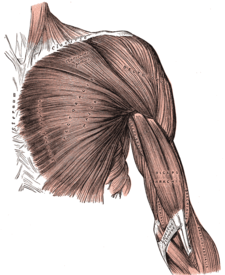
It’s been a rough month. I tore my biceps tendon in judo back in October and it had to be reattached. Which meant it had to be in a cast for a month. As keeping it in the thumbs up position is sort of counter productive, I’ve been working on moving it back to typing position for the last few weeks.

The biceps brachii isn’t just the big honking muscles that bulge out during a biceps curl. That is, the biceps gets bigger when you curl but there are a lot of other muscles that lift—notably the brachialis muscle. In fact, one can tear the biceps pretty bad and regain most or all of the strength of the lift.

What the biceps really does is lift and rotation. If you bear down to turn a screw you’re using your biceps. It is intended to turn the hand to the outside and flex the elbow. This is why the biceps curl has the hand turned towards your face: that’s where the biceps is fully contracted. If you curl with your hand pointing the other way, like some 19th century boxer, the biceps can’t fully contract.

So, in the interested of making lemonade, I’m going to talk about the evolution of the biceps most important friend, the human hand. After all, if the main intention of the biceps is to be able to rotate the arm, what’s the point without the hand?

First, let’s look at a hand.

Four fingers and a thumb. Hm. Well, mice have five fingers. How far back does that go?

Let me present Protungulatum donnae, a rat like ancestor of placental mammals from the very end of the Cretaceous. It had five fingers.

But this isn’t so surprising since if you look at the front claws of an iguana you see… five fingers. If you look at a salamander… five fingers. Amphibians, reptiles, dinosaurs, birds and mammals all belong to the superclass Tetrapoda. One of the defining characteristics of tetrapods is the five distinct carpals. Some may be fused as in crows and horses but many groups from rats to iguanas to apes have the same five carpals. Hold up your hand and you see the same bones as would a Komodo dragon lizard.

(Both pictures from here.) 

But they’re not hands like we think of hands. Monkeys have hands. Lemurs have hands. Chimps definitely have hands.

What makes a hand? Hands have thumbs, right? Where did the thumb come from?

It turns out that thumbs appeared in primates about 70 mya. There’s some evidence of the beginnings of a thumb in dinosaurs but since mammals and dinosaurs split off many millions of years ago it’s unlikely there’s any connection.

Let’s look at the hand again. Thumb off to one side. All fingers in the same plane with the thumb underneath.

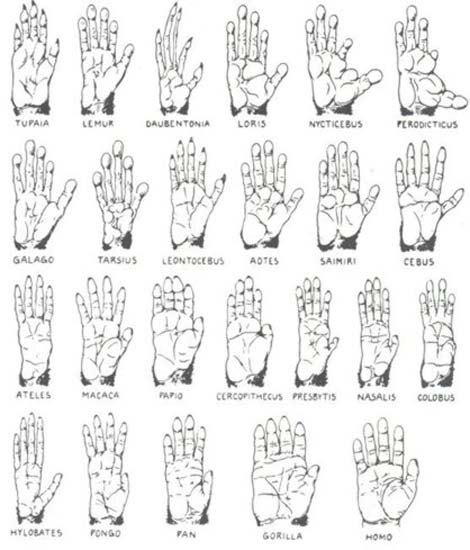
If you look at the picture of primate hands you can see the movement of the thumb. In lemurs it’s nearly in the same plane as the other fingers. But by the time you look at the great apes the thumb has definitely migrated to the front of the hand—not as much as in the human hand but there are clear resemblances.

Now if you look at the hand of the great apes: orangutan, chimp and bonobo, gorilla and human, there’s a definite difference between them. First, there’s a definite reduction in the length of the fingers of the human hands. Gorillas and baboons have an almost human looking fingerset where the others have a different palm to finger arrangement. The thumb, again, is strongly differentiated between the humans and the other apes. It’s more divided away from the rest of the hand and further rotated towards the front—the “opposable thumb” of people comes from that rotation.

Remember, though, the fundamental bone and muscle architecture underneath is almost the same. There’s no new muscles or bones. A radius and ulna in the human and the other great apes are very similar. They even have a biceps for rotation. It’s very similar to the way I spoke about the shoulder a while back. Chimp shoulders and human shoulders are very similar but humans have eroded just a little bit so we can throw things. Chimps can’t do that.

The evolution of the human hand from the common ancestor it had with the other great apes has been a continuing area of discussion. For one thing, tool use has been presented as a strong selector—which it no doubt is. Chimps and monkeys and crows can use tools such as twigs and rocks but only humans have managed the dexterity to make napped stone. And I don’t think it’s just intelligence. Our ancient ancestors weren’t much smarter than chimps but they made many more tools than they ever had. I suspect it wasn’t because they were so much smarter. It was because of their hands.

Evolution only works on what you have. Consequently, humans must initially had a slight advantage for tool use over other groups of apes. Just enough that the slight advantage became an object of selection towards the modern hand. After all, we used fire a million years ago.

Tool use is one important selection mechanism. But are there more?

Remember the human shoulder? It enables us to throw things. It enables us to throw things that we can grasp in that odd pre-human hand.

There’s been a school of thought that this throwing mechanism (See Richard Young’s article.) is one of the primary mechanisms of evolutionary pressure. Analysis of the hand suggests two fundamental human grips: the precision grip and the power grip. One is for delicate operations and the other is for the application of force. The human hand is capable of both. The chimp is not particularly capable of either by comparison. We can nap flint and pound with a club using the same appendage. This extends, though, into throwing things like spears or rocks—something we’re also peculiarly adapted to in our shoulders.

William Calvin pursues this even further in his “throwing Madonna” idea. The interesting thing here is that if we throw a spear (or a fast ball) the signal to turn the hand just so to release the object has to be on its way to the hand before the shoulder throw is complete. We can’t reach the right point and then send the message—neurons just aren’t that fast. So the system has to plan it and set it up in place. And we do it really well. It is his contention that the same forces that acted on the hand acted on the brain.

Okay. We can apply power with the power grip. We can build things with the precision grip. And we get a brain along for the ride. Why can we make a fist?

Look at that fist. The fingers are at a right angle, exposing the knuckle. There’s some serious bone on that knuckle—not at the level of a gorilla knuckle walker but it’s substantial. Why would we evolve something like that?

To punch each other.

There are a lot of hand configurations that give us a precision and power grip but only one that gives us a fist. That seems kind of a rough start to things. Surely there would be other evidence if that were the case.

There’s this thing called the human face. It’s an odd thing. Flat in the front. Nose is recessed except for a soft bit that protrudes. High cheekbones flush around the eyes. Turns out this makes the face tolerate a punch much better than that old ape face. (See here.) And it’s somewhat sex specific: men’s faces are better designed to take a hit than women’s.

So: hands evolved for tool use, throwing and brawling and the brain came along with it.


One wonders if the hand evolved to throw a punch maybe the brain evolved so we didn’t have to. 

Additional: Good slide show on the evolution of the human hand here.

Sunday, November 2, 2014

Status of the Farm

I'm about to go off line for a month or so. I tore the tendon in my right arm and in about three hours a good surgeon is going to reattach it. It will be in a cast for about a month so I don't know when I'll be able to type again.

I'm sure this will dismay both of my readers.

Anyway, it's now past the harvest and well into fall. It seems to me that this is the true yearly cycle. We start planning for the next year around Thanksgiving. We order any new trees or seeds around January and start seeds in February. The first planting happens in April: snow peas and spinach. The true planting is complete by the end of May. Final harvest and handling of the fruit is complete by the end of September. Cleanup happens all through October.

That's when we take stock.

It was a pretty good year, all told. We planted or replanted a dozen fruit trees. The mulberry was trying to take over the espalier but seems to like its new space. New apples and pears down in the south patch. We used to have an old hickory down there. After it died the mossy area went to grass and we decided to make a small orchard.

It is clear we're going to have a deer problem. They ate a lot of the new growth. We put fencing around much of it. So we had a control and an experiment. The control is clearly suffering and the experiment (the fenced material) is doing well.

We harvested a lot of peaches but instead of preserving them we ate them either raw or in pastries. We didn't dry any of them but there is still some left in the freezer. There are liable to be peach pies around Christmas.

We got one Granny Smith apple and one crabapple so this goes down as the worst year ever for apples. We had a huge caterpillar bloom in the spring and I'm convinced they had a special liking or apple blossoms.

We had a general problem with pollination this year. The bumblebees didn't show up much in the spring and there were few honeybees. We also didn't see much in the way of native bees. I mean we saw bees but the usual massive hum in May and June was absent. I don't know if this is reflecting the general bee problem or just something specific to our area. We're looking into getting a hive.

It was curious how different plants had different responses to this. We had (and are still having) a bumper crop of persimmons. But they have few seeds. The peaches and grapes did well as did the beans and other garden material. No apricots or apples to speak of. We got four whole nectarines. Count 'em. Four.

The deer have left the main gardens alone in the past. Not this year. They left nothing but weeds. They even ate the squash vine. I don't know what is going on. Over population? Loss of natural forage? We invested in a solar powered electric fence and that stopped them but the damage was done.

The grapes did well. I had a good concord harvest and the Marechal Fochs looked like it was really going to produce well. But then the turkeys got about half the crop. I made about five gallons of wine out of it. The Concords are still  holding down the contents of the freezer. I'll look into that after my arm heals.

It was a good year for wines. I made a currant and a plum wine. We bottled the Reisling over the summer and I put the final cork in six gallons of Albarino  back in August to make way for the M/F. That was bottled and put in the cellar two weeks ago.

We had an outstanding crop of chestnuts. Maybe twenty pounds. We've put them in soup, mostly, and dried the rest.

The garden is still producing a little lettuce. Wendy has set up a late winter garden over on the west side. We'll see how that turns out. We still have to put up fencing around some of the young trees. And we need to plant two mountain ashes over in the newly cleared area near the power lines. Next year we have to finish clearing it out and put it to use.

But I don't want to plan right now. Today, it's enough to watch the leaves fall.

I'll start planning when Thanksgiving rolls around.

Sunday, October 19, 2014

Consideration of Works Past: The Fittest


(Picture from here.)

I'd pretty much given up on this one. It was one of those stories where you remember bits and pieces but can't recall the title or author. I'd put up phrases I remembered and got nothing.

Then I was reading an article on "cozy catastrophes" (see here. for the article and here for the wiki.) The phrase is attributed to Brian Aldiss. It means different things to different people. To some, it's a catastrophe that ends with a whimper rather than a bang. The result may or may not be horrific but it leaves behind people who are trying to live in the resulting world and the result isn't all that bad-- for them.

One of the premiere examples-- Oh, wait a minute. Forgot to introduce the novel. The book is The Fittest, by J. T. McIntosh.

Back to cozy catastrophes.

The example often used in SF is Day of the Triffids by John Wyndham. The cause of the catastrophe is a stunning light show high above the atmosphere that draws people out by the millions. The next day they are blind. This opens the way for the triffids, a walking plant thing that has been raised for its oil, to try to take over the world. The few sighted people left quickly settle into a few camps, some clearly evil, some misguided and some who are actually better suited to the new environment than the old.

It's this latter category that can give people heartburn. It's analogous to the problems I talked about in Farnham's Freehold. In FF, the main character before the catastrophe is a misanthropic abusive asshat But once the catastrophe is over and the piece picking begins, those people who are preserved or thrive in the aftermath do well precisely because of those asshat qualities that either emerge or were there beforehand.

We've seen this before in a lot of post-apocalypse films. Usually violence. Selfishness. That sort of thing. Heck, The Admirable Crichton, is a play about exactly that, substituting a shipwreck for a global catastrophe. But where the cozy catastrophes can go off the rails is when these qualities turn out to be sqishy. Where people of race or profession or gender are "naturally" disadvantaged in the new world.

Now we get to The Fittest.

In this case, the catastrophe is the endowment of certain animals with human like intelligence: cats, rats, mice and dogs. (There were horses but it didn't work out.) They escaped and the world fell apart. The animals early on figure out that though they were enemies of each other, they didn't like human beings, either. So they did their best to bring down human civilization-- not with that in mind. They weren't that smart.  But they were above to figure out that humans valued wires. So the rats and mice chewed on that. They figured out how to eat what humans sowed. Civilization falls.

This is the kernel I remembered: what happens when animals we either intimidated or dominated were suddenly smart enough to figure out the trick?

There's an old trope in SF where the humans are shrunk down to the size of mice and often have to contend with the household cat or dog. The cat thinks of them as mice with the inevitable conflict. The dog smells them and realizes they are his master and helps. Or some variation thereof. The whole mice or rat with human intelligence has been done a million times in film. Not to mention various indigenous people's tales and Greek stories.

This put a different stripe on it that I liked. It was sort of cool that we could have intelligent animals. What I remembered was the idea and the ending where two of the intelligent dogs take up as partners with the humans. What I had forgotten was the rest of the book.

The Fittest is not a very good book. The main character is the son of the same Paget that invented the animals. Once the danger of the pagets (the popular name for the animals) is realized, his family is persecuted and escapes to France. But the animals take down the world and now it's survival of the fittest. (Hence the title. Get it? Get it?) He ends up with a community in Britain that has successfully repelled paget invasions. There are other surrounding communities that are filled with losers. One community is rapacious, preying on the weak in the evil Mad Max villain manner. Another serves up tribute to them. But only Paget's community has the character to withstand the strife of the new order. Ultimately, they are attacked by the predators, both paget and human, and hold fast. Those that were ill suited to the new life (the weak women, non-whites, and disloyal) are killed.

The roughness is not the problem. Heck, I liked Mad Max. All of them. Rapacious post-apocalyptic psychopaths are my cup of tea. The problem is the choice of survivors, both human and animal.

I can see how intelligent mice and rats, and maybe even cats, could turn on us. Not in the Emperor Palpatine, moustache twirling way that is in this book. Certainly, intelligent mice and rats would give us a terrible time-- hell, we have a problem with them now. Go watch this video and then imagine they're smart. And I think that the relationship we have with cats isn't always based in love. I'm a little dubious about dogs. Not completely. I had a friend who bred Canaan Dogs and they're smart enough to realized they don't have to obey if nothing's in it for them.

But while our relationships with cats and dogs may not be the sweetness and light we want it to be, it's not so antagonistic, either. Smart dogs and cats could make use of us just as we've made use of them. In The Fittest they take a perverse (and often self-destructive) turn towards tormenting humans just for the fun of it. That part I didn't buy. And, at the end, when a couple of dogs actually throw their lot in with the humans it comes to the characters as a surprise.

Hm. Nobody thought to negotiate with the dogs? Or the cats? At least to the extent of making a deal with them against the mice? I guess intelligence is not favored in this brave new world.

I think McIntosh was too enamored of the horrific aspects of the world he was creating. That sort of took over. Still, there's a lot of problems with women characters in this book. They range from the silly and the weak (but beautiful) to the rough yet vulnerable. And they're all scared of mice. Not smart mice. Ordinary mice.

(Where did that idea even come from? I've never met a woman intrinsically afraid of mice. I mean no one wants to get bit in a dark basement. But that woman standing on that chair over there on the movie screen, snatching up her skirts and screaming? Never met her.)

 So: a sad end to a long search.

There's another catastrophe book I want to re-read. It's a story involving the politics of nuclear war, incurable plague, Australian politics on the world stage and killer rabbits. It may be Not with a Bang by Chapman Pincher. But we'll see see how that turns out.

Sunday, September 28, 2014

The Bones of the Matter


(Picture from here.)

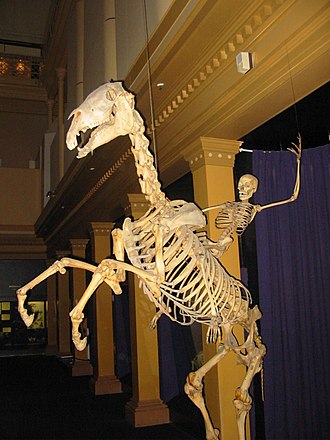
I've been getting over an injury I got doing judo about a month ago. So, of course, I started thinking about bones.

The skeleton is one of our most obvious anatomical features. I know we can see and feel skin and eyes and hair. But the skeleton is one of our clearest examples of an anatomical system. The bones articulate. They move together. Muscles attach to them.

Where did they come from?

Well, we're vertebrates. That meas we have a dorsal notochord. There's an erroneous concept that vertebrates are animals with backbones. But that's a little tough since chondrichthyes (cartilaginous fish) don't have a "bone" in their skeleton, excepting teeth. The structural members are all cartilage, not bone. A more precise definition is that vertebrates are animals that have a vertebral column, which may or may not be composed of bone. The column is composed of different elements, called vertebrae, and house the spinal cord. And that sharks have, too.

The two great branches of fish in the vertebrates are the chondrichthyes and the osteichthyes. And that's where mammalian heritage of bone begins. We are descended from the osteichthyes and the hard, calcium rich substance has been with us since.

Fish evolved cartilage before they evolved bone. The cartilaginous fish evolved into two groups: Agnathostomata (fish without jaws) and the Gnathostomata (fish with jaws.)  Agnathostomata include such pleasant fish as lampreys and hagfish.

The Gnathostomata are no stranger to bone. Placoderms showed up over four hundred million years. Some species have bone; some do not. The bones serve as armor, teeth or other purposes. They do not server as structural members. That came later.

The critical feature of bone is the mineralization of the softer tissue. At some point, we developed the ability to impregnate that nice soft tissue with rock. More importantly, we impregnated particular tissue with rock. Structural tissue. Cartilage, though, is crucial. The processing of cartilage is a necessary precursor to bone growth-- mice grown without crucial genes involving cartilage development lack bone. (See here.)

So, how did mineralization get going.

Well, about 1.5 billion years ago a tremendous amount of Calcium Carbonate (CaCO3) were washed into the oceans from volcanic and other sorts of tectonic activity. So many organisms took advantage of this new found chemical trove. A lot of weird animals in the Cambrian showed up a bit more than .5 billion years ago. Animals that wore their skeletons on the outside.

A skeleton, inside or outside, soft or hard, gives muscles something to pull against. The structural skeleton can be made out of enclosed water, cartilage, other muscle or bone. The important thing is to give a rigidity to the structure so that organized movement can occur-- at least more than squishy oozing along.

We had, back then, no shortage of skeletons on the outside. This should not come as any sort of surprise. Lots of animals had hard outer bits. Clams, for example, Growing hard bits on the outside was relatively common. So it doesn't seem all that hard to put hinges between the hard bits and get crustaceans and trilobites.

Vertebrates belong to the phylum Chordata, animals with notochords. We have notochords, too. Inside our vertebral column. We like to call it a spinal cord. What's different about chordates is they put their notochord on the dorsal (back) side instead of the belly side. Very early on, we wrapped that notochord with vertebrae and we were off. The skeleton evolved from the vertebrae. Consequently, our skeleton evolved from the inside out while the other animals with hard parts evolved their skeleton from the skin inward.

All of the animals at that time with moving hard parts refined them. We end up with shrimp, crabs and the afore mentioned trilobites. Back in vertebrate company, we evolved fishes, fishes with jaws and jawed fish with bony armor. But no mineralization of the structural members.

One big shift in the vertebrate world was to shift from our friend calcium carbonate, so beloved by our exoskeletal brothers, to calcium phosphate. (CaPO4). This was in the form of calcium hydroxyapatite. (Ca5(PO4)3(OH))

Why change strategies when calcium carbonate had been around for a long, long time?

One idea was that the original use of calcium phosphate wasn't as bone at all. Instead, it was a storage mechanism of phosphorus-- often a biochemical limiting factor. Anyone who has used phosphate based fertilizer knows its utility. ATP/ADP (adenosine tri-phosphate and adenosine di-phosphate) are the way the cell stores and release energy. That P in the abbreviation is for phosphorous. But as nice as this is, why did vertebrates evolve it and not invertebrates? After all, it would have been good for both. It could be that the change to phosphorous was for a wholly different reason and the storage advantage was a happy accident.

Another idea derives from vertebrate activity. From the fossil record and from observation of vertebrate animals in the wild, it looks like we're active creatures. We don't sit around. We run. We hunt. We don't sit and wait for our food to come for us. We go and get it. One of the side effects of this activity is a change in pH-- the acid or base values of the tissue. Calcium carbonate is much more soluble material than calcium phosphate. Consequently, fish that tried to swim hard could find their hard bits not so hard.

The first structures resembling bone we find in the fossil record are teeth or teeth like structures. They are with us to this day. Sharks have teeth. Lampreys have teeth. Teeth are a bit different from normal bone. Both bone and teeth are calcium phosphorous structures but teeth are much harder than bone. But bones can heal. Teeth can't. However, the biochemical structures are close enough that one wonders if the biochemical pathway that brought forth teeth was torqued a bit to bring forth bone.

There are also teeth like structures in the skin to form shields. Remember placoderms? One of the arguments in paleontology is which came first? Teeth or shields? Genetically, they appear to derive from the same source.

Early skeletons were cartilaginous but were not based on collagen, the primary structural protein in connective tissue. Later, when collagen evolved, it was used in the skeleton such as those involving sharks and such. It fell to the ancestors of the bony fishes to invent ossification.

There are two mechanism of ossification: intramembranous ossification, where the bone is laid down directly into connective tissue, and endochondral ossification, where cartilage serves as a template for the bone. Intramembranous ossification happens in bone repair and in the early construction of certain head structures. Endochondral ossification is how the skeleton gets formed.

It didn't happen all at once. Apparently, endochondral ossification started with surrounding connective tissue-- biochemically similar mechanisms for embedding bone in the skin. Eventually, the process of cartilage replacement occurred. How this occurred. There is fossil evidence that early sharks had the ability to deposit bone in tissue though it was not used structurally.

There is also current evidence (see here.) that some sharks can mineralize cartilage in a similar way to how bony fish do it. That said, is this development that occurred since sharks diverged from the rest of the fish? After all, the biochemical means by which mineralization occurs is very old in the vertebrate family tree-- recall our constant friend, the placoderm. And the mechanism for laying down a supportive skeleton is represented in both the boney and cartilaginous fish. We often look at what we call primitive animals and forget that they've been around just as long as we have with just as nasty and powerful selective pressures on them. Sharks diverged from our line 400 million years ago. But they haven't been sitting around since then. They've been evolving, too.

Once structural mineralization occurred, though, the advantage it gave was tremendous. It enables fish to swim fast. In fact, the cartilaginous fish have to derive structures analogous to bone in order to get that upper speed.

Marlins, for example, have a bony skeleton stiffened not only by having just a few vertebrae but also by strapping those vertebrae together with bony strips and ropes of connective tissue. Mako sharks are similarly fast but don't have any such things. How do mako sharks swim fast? They increase their internal pressure against a skin which does not stretch. In this way they mimic what the marlin does. Essentially, they create a fluid skeleton to make up for any deficiencies in their skeleton.

Not to mention that a mineralized skeleton set the stage for invading the land. There are a lot of reasons even an average sized vertebrate dwarfs the largest land invertebrates that ever lived. Skeletal scaling is one of them.

Which brings me back to my ankle. I wish its intramembranous ossification process would get its act in gear.

Sunday, September 21, 2014

Consideration of Works Past: Farnham's Freehold


(Picture from here.)

I've been avoiding writing this post for a bit now. Heck, I've been avoiding reading Farnham's Freehold for a while now. There is a whole lot of controversy on that book. While race showed up regularly in his work, FF was the only book where he attempted to actually confront it.

There was a controversy about Podkayne of Mars. It is nothing compared to the controversy around Farnham's Freehold.

Spoiler alert: it's a bad book and not worth re-reading.

But not for the reasons one might think. Or, at least, not solely for those reasons.

Here's the plot, FF's main protagonist is Hugh Farnham, a self-made millionaire. He's one of Heinlein's Perfect Men: He's older, handsome, able to shoot a gun and appreciate a Picasso, incredibly wise-- so wise that everyone defers to his wisdom even when they completely disagree with him. So intelligent that other people appear stupid around him-- wait a minute. Other people are stupid around him. Farnham has a reasonable IQ and everyone else is a Delta Moron. Did I pick up Idiocracy by mistake? Nope. Heinlein's name is on the front page and it's a book, not a movie. Hm.

Anyway, Farnham has built the worlds greatest fallout shelter in his basement and, because Farnham is always right, a nuclear holocaust occurs. They all go to the shelter: Hugh, his worthless son, Duke, his whiny useless wife, Grace, his somewhat useful daughter, Karen, Karen's hot friend, Barbara, and Hugh's black servant, Joe. All of them act out all sorts of Generation of Vipers shtick to show how smart Hugh is and how callow everyone (but Barbara and Joe) is. Everyone goes to sleep except Hugh and Barbara. And they have sex. After all, what should a twenty-something beauty do during the apocalypse than have sex with her grandfather?

The big one hits and blows them forward in time a thousand years. They don't know this originally. They just know that they're in exactly the same spot as they were but everything is beautiful and rustic.

They eke out the pioneer life with Hugh as boss. Karen is also pregnant-- predating nuclear holocaust because, well, reasons. Hugh will not consort with Barbara because he is an Honorable Man and still married to whiny, bitchy Grace. So it looks like it's going to be a Karen/Joe and Barbara/Duke future Eden. (Except that Karen tells Barbara that if Hugh would have her, she'd pick him. Incest be damned.) But Karen dies in childbirth.

Then, they are discovered by the true rulers of earth: Black People.

Turns out that Africa wasn't harmed by the nuclear exchange and ended up colonizing the USA and Europe. All white people are slaves. Our merry band of misfit toys would be slaughtered for just being there (it's a park, sort of) but for Joe. Since Joe is black, they must be his slaves and therefore they won't be hurt but Joe is held responsible.

Long story short: Hugh makes himself indispensable to the Lord Owner. (Surprise!) Grace ends up Lord Owner's consort-- which she likes. She finagles her son (Duke) to be with her but that requires Duke to be castrated. She's comfortable with that. Since he's getting good drugs, Duke is, too. It is discovered that not only have the Black Lords enslaved white people, they are eating them. White people are the main meat staple of the culture. For thousands of years. I'm guessing cows, pigs, chickens, kangaroos, armadillos, dogs, cats, possums and rats were in short supply.

Got to say this about human beings. We're as hard to kill (and as uplifting) as a cockroach.

Lord Owner sends Hugh back to his own time with a device to make it accurate so he can commercialize it. Hugh, of course, dumps the device. They find a mine shaft and stock it in the time they have left and then sweat out the apocalypse with the idea they will be able to change the future. Or it's a parallel world. Something. Afterwards, they make themselves into good frontiersman libertarians. The end.

Okay. That took longer than it should have.

Here's what I think Heinlein was trying to do. And I'm being charitable here. So don't shoot me. I think Heinlein was less malicious than he was inept.

First, I think deep in the abscesses of Heinlein's mind he was thinking that he really wanted to treat any black characters as he would treat any other character. He probably thought the sameness was a virtue. I'm sure he thought he was combating racism. Hugh had to be white-- he was espousing all of Heinlein's pet ideas. He was, in effect, Heinlein himself: he had to be white.

He wanted to put his white characters in a position of oppression-- a role reversal. That's obvious enough. Black/White role reversal to combat racism has a long history from Watermelon Man (Godfry Cambridge) to White Man's Burden (Travolta/Belafonte) to John Howard Griffin's Black Like Me. (The book, not the movie made from the book.) One cannot fault Heinlein for attempting something difficult in a noble cause. One can fault him for doing it badly.

But he had a problem: Hugh has to be right. This is the salient point of the entire novel. Hugh is always right. But he's white so if the oppressors are black, Hugh is not going to get much traction. Hence, Joe was born. Joe could have been a partner. A colleague. A friend-- but the structure of the novel prohibits that. Hugh can have no peer. Joe could have been family but Heinlein wasn't that progressive. So Joe is a servant.

Later in the novel Joe ends up throwing in with the black aristocracy. There's a rather good scene where Hugh upbraids him for doing so. Joe responds that until Hugh has tried to hitchhike in Mississippi, he has no understanding of the situation. It is likely the sole place in the book where somebody stands up to Hugh and isn't immediately forced to admit the error of his ways.

And that example is one of a few things where I think the book was on point. Joe owed Hugh (or Heinlein) nothing. Shoes on the other foot: fine. We can't all be saints and it's clear in the context of the book that Joe is trying to get them as good a deal as he can get within the limits of the culture he's in and without sacrificing his own neck.

You can make the argument that the blacks were merely white men with black skins. I can see that. The book takes place thousands of years in the future so I would not expect future blacks to resemble current African American culture. You could make the argument that Joe, being a representative of current African American culture should actually resemble said culture. But Joe is on camera so seldom compared to the white folks he scarcely gets the chance. You could make the argument that Joe, being second only to Hugh in importance of the frontier family's survival and probably the second most important character in the book should have a lot more camera time.

Yeah, you could.

Which brings me to the real problem with the book. Yes to a lot of the criticism of it. Yes it handled race badly. But the core issue of the book is that it is inept. It's clumsy. It stumbles. It's broken. It should have been pulled by the editors as a bad book. Not a controversial book.

Like the whole cannibalism thing. Okay, Heinlein was probably thinking that slavery consumes people's soul. So it's a metaphor for what slavery does to the human spirit.

Come on, Bob. This book was published in 1964. I surmise it was written in 1963. King's I Have A Dream speech, Bob. The Medger Evers murder, Bob. The Birmingham Campaign, Bob. The Birmingham Church Bombing, Bob. Hell, I was an eleven year old kid in Thousand Oaks, California, and I heard about these things. Do you think that maybe, just maybe, a book where a black aristocracy is literally eating white human flesh could be, oh, misinterpreted? 

Like Barbara, and every other woman that shows up in the book (with the exception of his wife) wanting to sleep with Hugh. Including his own daughter. I mean, Heinlein's view of women in this book is little more than sex kitten/breeders but even in that context that's a bit much.

(It would be an interesting thought experiment to rewrite the book from Grace's point of view. Hugh is every bit the despicable villain Grace thinks he is. He connives what he does and makes good sounding excuses afterwards. He built the fallout shelter because of a sick, paranoid fantasy. The fact the nuclear annihilation actually occurs is a coincidence. She is sick and distraught at what she has to do to save herself and her son, viewing the role Lord Owner's consort as consent to rape. Pretty much what every slave woman submitting to master probably thought. That it would have been better to die in the nuclear fire than to have to live here under these circumstances, under these rules. To have Karen think about having sex with Hugh to appease him. Barbara having to view her coming child as a brutal compromise for survival. But I digress.)

Like vast numbers of pages taken up describing interminable hands of bridge. Pages. People agonizing over decisions they made. In bridge.

The book was published in 1964 sandwiched between Podkayne of Mars and The Moon is a Harsh Mistress. I commented on Podkayne here. Podkayne has its problems. Harsh Mistress is, in my opinion, Heinlein's best adult book. It's flawed but he manages to pull everything he's ever tried to do together in one book. I think it works though it is a product of its time. One of these days I'll put up a post justifying my opinion.

Harsh Mistress is followed by I Will Fear No Evil, which I had considered the worst Heinlein book I had ever read until I reread Farnham's Freehold. Clearly, it was the beginning of the end.

What I was hoping to find was a book where a writer whose work I respect had come out swinging at a subject few in SF were considering in 1964. A swing and a miss is still a swing. What I found was a boring slog through the mud. The game was rained out long before it ever had a chance to start.