
Is now released! You can go to the website or...

(Pictures from here.)
From what I’m seeing in the media these days, there are a lot of people who neither know what a vaccine actually is nor what risk actually is. So, let’s talk about that.
Your body is the culmination of the following evolutionary trends:
Once life began, other life began to attack it. At first, it was single-celled organisms against single-celled organisms, but then it was single and multicelled organisms against multicelled organisms. My point is that every organism has had to defend itself against other attacking organisms since the beginning of life.
That defense is deep.
For our purposes, our main line of defense against pathogenic organisms—mostly single-celled pathogens or some multicelled parasites—is the immune system. The immune system is ancient and derives from our constant war with pathogens. There are intracellular immune responses—responses individual cells present against an invader—and extracellular immune responses, where the immune system external to the cell attacks invaders.
It's a good system. People who have had some diseases, such as smallpox, don’t get them again. The immune system remembers the smallpox virus. People who get other diseases, such as coronaviruses, get some immunity, but for reasons not well understood, their bodies forget that immunity. In addition, both viruses and bacteria are living organisms, too, and respond when attacked. For a virus or bacteria, an immune response is an attack. After all, they were just sitting there minding their own business, eating the host, when out of nowhere, a bunch of white blood cells eat them in return.
My point is that bodies are in a continual state of attack. Sure, there are good bacteria, but they aren’t what we’re talking about. There’s no scenario when a staph infection is a good thing.
Because pathogens have been attacking us and being repulsed, they are always working on ways to subvert our defenses. In addition, novel pathogens may not be quickly recognized by our immune system.
Vaccines are mechanisms to tell our immune system to wake up and fight invaders, even when those invaders have not yet been encountered. After all, it’s better to meet smallpox with weapons ready than wake up and discover you’re already at death’s door.
And we are talking about death here. All of the pathogens for which we have vaccines have death counts associated with them. Some are close to 100% deadly—rabies, for example. Some are less. Measles has a death rate of 1-2/1000. However, blindness, seizures, and brain inflammation can also occur. Besides, measles has the lovely trait that it wipes out immune memory. All that built up immune response? Gone.
So, we should not just concentrate on death rate. Other complications are also troubling.
Polio is another fun experience. Like a lot of viral diseases, once infected, there’s not much in the way of treatment. Most infected patients have no symptoms or a mild illness—they’re still infected, mind you. But .1-.5% (1-5/1000) develop some kind of paralysis. This is a big deal since, for paralyzed patients, fatality is 2-5% in children (20-50/1000) or 15-30% (150-300/1000) in adults, depending on the age of the patient. But that’s just death. Those who live have lifetime complications.
I grew up knowing children who had survived polio. Children without function in a leg or an arm. Or both legs—President Roosevelt couldn’t really walk because of polio.
If you look at those graphs at the top, you can see something interesting. It presents death rates for smallpox, polio, and measles. Note that the slope remains constant or increasing until vaccination enters the picture. For modern vaccinations, the death rates—and the rates of disease complications—plummet as soon as a modern vaccine is introduced. Even in the case of smallpox, when Jenner’s vaccine was introduced—as primitive as that was—deaths immediately sloped downward. In all three cases, when modern vaccines were introduced, the death rate went close to zero.
I’ve heard about the whole autism issue. It’s bogus. Even the original author who started this mess has recanted. I can understand that people might be concerned about the “inactive” ingredients. So take them out. But tossing vaccines themselves out because of it is idiocy. The CDC recently blamed the COVID vaccine for 10 child deaths out of 96 between 2021-2024. From what I’ve read, these are also bogus numbers, insofar as they present no real evidence to back them up. 270,227,181 people had at least one dose between 2021-2023. That’s .0000037%. According to this source, 30 million kids have been vaccinated, yielding .000033%. The risk of being struck by lightning is 1/1000000 or .0001%. I’ll take those odds.
Hell, I did take those odds. I did. My wife did. My son did. Most of my friends did. Not all of them. Some I knew that didn't, died.
Every medical procedure, every drug, every drive in the car, every waking day is a risk. You have to look at these risks and evaluate them. Which means looking at reputable sources—which pointedly does not include Orange Voldamort or Brainworm Boy and any associated with them.
But going forward.
The mRNA vaccine wasn’t really intended as a vaccine for COVID-19. It was a whole field of technology known as RNA therapeutics. It came out of some studies in the 90s where RNA encoding specific antigens was injected into tumor-bearing mice to induce an immune response. This was successful. The tumors were, in fact, suppressed. This went on to become an original approach for treating melanoma.
That’s right. This technology was first pointed at cancer. It was redirected into making a vaccine against an infectious disease, but it was always intended to target cancer. There’s been success in pancreatic cancer treatment as well.
It’s not a magic bullet—it’s beginning to look like there is no magic bullet for cancer. But it’s a very effective treatment for some cancers and may be useful in many more. It’s even been found to be effective in some kinds of tissue regeneration.
My point with this whole post is that we let idiots scare us. It is getting harder and harder to find original material to evaluate. It gets swamped in all the comments, remarks, and editorializing about such things. Recently, there were some congressional Democrats who made a video reminding members of the military how they were obligated to disobey illegal orders. Regardless of what you might think about what they did, it took thirty-five minutes for me to find the original video buried under commentary.
But that doesn’t release us from the obligation to make the effort. I spent eight years studying biology of one sort or another and the next forty deep in the software industry. Reading about in vitro and ex vivo transmission, T-cells, and antigens is more familiar to me than most. People who don’t work in a given field and try to argue about it are not necessarily reliable—me, included. But a lot of people who demonstrably have zero qualifications—like Brainworm Boy—like to spout off like they’re an authority.
They are not.
The mRNA technology is very exciting. It’s some of the first actual treatments for things like pancreatic cancer. Yet, this technology is under fire—along with most NIH and NSF funded cancer research—by people who either don’t understand it or are being driven by an agenda.
Don’t fall for this. Go find people working in the field. Look up the Wikipedia articles and then go through the references. Weigh the different opinions. If you find six scientific authorities and five of them say one thing and the sixth says another, sure, number six might have something. But the odds are against it. For every stalwart Ignaz Semmelweis or Alfred Wegener, there are a hundred thousand cranks. Make sure that people who make claims have the brainpower to make them. Random Ph.D.’s don’t count. Celebrities don’t count. I think Neil deGrasse Tyson speaks excellent astrophysics. I get skeptical if he starts discussing immunology. Still, he’s better than Brainworm Boy.
Who does these things: here, here, and here.

In one week from today, book two of the Brother to Jackals trilogy, Women’s Country, will be released. This will include three links: Book View Café (BVC), print, and Universal Book Link (UBL). The UBL is live now. The other two will go live next Tuesday. Enjoy.
Here is the back cover copy:
One night with reporter Tamar Longren changes everything. Exposed to the world, gorilla Lethias becomes an overnight sensation—and a political weapon. The Oregon Initiative would make his existence illegal. Religious zealot and presidential candidate Melissa Adenour brands him abomination incarnate.
Thrust onto the campaign trail for incumbent President Shuman, Lethias discovers that politics is a blood sport. Between rallies and speeches, an impossible dialogue emerges across the divide—two people speaking to each other through speeches, a conversation disguised as combat where every phrase carries the weight of desire and betrayal.
On their hidden island, the ape colony’s situation grows desperate. Marcus arms his apes with guns, preparing for the coming war. But in Women's Country, scientist Carroll Sims and gorilla Jefferson are conducting experiments that could change everything and could save them or destroy them.
The question isn't whether the world will discover the breeding colony. The question is what the apes will become before it does.
Women's Country expands on hard SF concepts of biology and physics while diving deep into the brutal machinery of American politics, exploring what it means to be human when humanity itself is no longer alone.
Book 1, Descending from the Moon, and all of my other work, is available on my website.
Book 3 of Brother to Jackals:Appalachian Winter, the conclusion, will be out in June 2026.
(Picture from here.)
It’s not that I’m against love or sex or romantic entanglements. I just have problems when they seem bolted on, like a goose glued onto a wombat. Maybe this is a function of being (*ahem*) older. But it seems like most works have to have some kind of romantic subplot.
This came home to me recently as we were finding a series to watch. We first looked at Invasion (Apple), then Dark Winds (Netflix), and finally The Diplomat (Netflix.) In each case, we’re going along with a really interesting plot, good characters, intriguing mystery, when a (in my opinion, unnecessary) romantic subplot shows up. We finished Dark Winds and The Diplomat but not without yelling at the TV a fair amount.
(Note: in discussing this, I will be mentioning spoilers. So, if that bothers you, stop here. I’m not sure which of my two readers is going to be bothered by this. And, if I insult a show you like, well, everyone has their own opinion on such things.)
Again, I’m not against a relationship showing up in a work of fiction but I want it to come out of love, not a contrived romantic narrative. I mentioned recently The Thin Man and Charade. The Thin Man shows what I would consider a truly loving relationship and Charade has a budding romance between Audrey Hepburn and Cary Grant at the very heart of the film. Both films are excellent and stand up to repeated viewings.
I just get antsy when it seems like the subplot was added against its will.
(Perhaps, there should be regulation on subplot abuse where writers or production houses insist on inappropriately including them in works. I have this image of the romantic subplot on the witness stand in a harassment suit, tearfully recounting how it had to be forced to play in a thriller. “It was horrible,” sobs the witness. “Having to stop the plot to work out relationship kinks while everybody on set was staring at me. They just wanted to continue filming the action, but they couldn’t. They couldn’t!”)
Part of it, I think, is laziness. If you introduce a dangerous romance—which includes all three of the shows I mentioned at the beginning of the post—it pretty much has to dominate the story. If it doesn’t, it’s neither truly dangerous nor as consuming as the plot indicates.
The Diplomat is a particularly egregious in this regard. There are two romantic subplots, one when Kate Wyler, first as US Ambassador then as Second Lady, has close sexual calls with the UK Foreign Minister. The other is when she has a full-on affair as Second Lady and Ambassador with a British spy. Both of these are incredibly risky and shows Kate either as compulsively impetuous or stupid—neither of which is supported by any other part of the show.
If one takes these romantic subplots seriously—which the show doesn’t—then the main character risking the integrity, honor, and credibility of the United States should be center stage. But, no, it’s bolted on.
Within the confines of the show, Kate Wyler is married to Hal Wyler and they alternate between love and hate beautifully. The portrayal of the broken marriage is superb. They are an incredible political team even when they are at cross purposes. That relationship should always be center stage and never diluted by external factors. But I think it scared the writers. The relationship drama was too good. I had this feeling they said to themselves, if we continue this we’re actually going to have to work for a living. And they introduced someone else to take the heat off.
Which, I think, happens a lot. Oh, no! We have an incredibly dark situation between a woman and her husband with the world falling apart. Quick, add a quick sexual encounter in a hallway to distract the audience. Or, we have a woman working border patrol who’s stumbled onto a terrible drug plot. There’s no one she can trust—oh, wait! She sleeps with a guy. Now, she can trust him.
When I first started thinking about this, I thought that maybe they were doing a Tristan and Iseult: two people caught up in all consuming, divine passion. They must fulfill their love or die. I mean, it’s not my idea of a good time but I understand it. I’m more in the Parzifal wing where the Parzifal and Condwiramurs have three nights together without knowing what to do. only to discover things almost by accident.
But, no. These relationships are put in place to serve a purpose. It’s marketing, pure and simple. My problem with all of these is they try to fit complex human situations into neat little boxes so they aren’t investigated in depth.
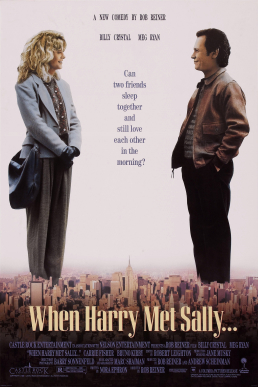
I had a friend that once suggested that Americans really only had three relationships: parent to child, friend to friend, and lovers. There’s even a romantic comedy about how a friendship between a man and a woman was impossible: When Harry Met Sally.
I remember when I watched Hidalgo. There is a scene where a young woman, Jazira, and Frank Hopkins are talking in a tent and they’re discovered. While I watched the scene, I kept thinking Don’t kiss. Don’t kiss. Don’t kiss. And they didn’t. They remained friends and the film was stronger for it.
There are some really interesting films without a romantic subplot: The Imitation Game, Edge of Tomorrow, Wind River, Elementary/CBS. The best relationship in the Marvel Cinematic Universe is Hawkeye and Black Widow which is never romantic but has more love than I’ve seen in many romcoms.
I think humans are incredibly interesting, complex, and capable of greatness. We should be portrayed better than being stuffed into these little boxes.
Oh, and before I leave, countries that have DEI and laws against hate speech are now violating human rights. The incredible risk of COVID-19 to pregnant women and their babies has been documented even while pregnant women are no longer advised by the CDC to get the vaccine. And Orange Voldamort wants a bigger ballroom. Compensation, I suppose.

 Posts
All Comments
Posts
All Comments


