Monday, November 21, 2022

State of the Farm, November 2022


John Gardner, in his novel, October Light, referred to this period as “locking time.”


One of these days I will go over some John Gardner books here but that is not this entry.


“Locking time” is the time after the flush of autumn when the light condenses and one is finally convinced of the coming winter. There are deeper and deeper nightly freezes with less and less recovery in the daylight until, the snow lands on the hard frozen ground.


That’s where we are. Tonight is the first deep freeze of the coming winter: 21 F. There is ice in the coves and the hollows of the ponds and ice where water caught on the edges of barrels. Snow has fallen hard to the west of us. It’s a time to contemplate what we are doing over the next few months until spring.


It’s also the last time we can actually accomplish anything before falling temperatures turn the soil to concrete. It’s now too late to dig up the garden. We’ll be seeing the ghost sticks of corn until spring. Sometimes we get a reprieve Thanksgiving week and the ground thaws just enough to get a little bit more done but that can never be counted upon.


Regardless, it’s now time to get ready for winter.


We have set up two more Birdies raised beds. We had set up two of them already. One, we raised potatoes in quite successfully and one we filled up with my mint crop. Next year looks promising.


Remember the vole and mice problem we had over the summer? Turns out they like transforming Birdie beds into warrens. We’re investigating how to handle that. At the moment, we put some more soil in the holes to keep the cold air from damaging exposed roots and planted daffodils all around them. Next year, we’ll plant onions and garlic along with the target crop.


In the new beds, we dropped eighteen bags of drainage rock to cover up the floor to the edge. Let them dig through that. Now, we’ll fill it with base material, chips, and, finally soil. Not sure yet what we’ll be planting in them.


Often, fall involves wood because we use a wood stove to supplement our heating. Someday, we’ll wean ourselves from natural gas to a heat pump but that is not this day. At least, CO2 from wood isn’t fossil CO2. It’s CO2 drawn down from the air and bound to the earth, now released from its confinement. Free at last!


Wait a minute… That doesn’t sound… right.


Anyway, we’ve planted four new quinces and some other fruit trees this year. They will have to be trimmed and set over the winter. Sometime in February, we’ll need to do the winter trim. And we’re planning a garden expansion in the spring.


This year we lost both a very large hickory and a relatively small one. At the same time, I helped a friend fell a collection of sumac trees. Who knew sumac grew into actual trees? These were forty feet tall and eighteen inches in diameter? I am in the process of turning this wood into usable product as well as firewood. Much chain sawing and splitting.


We, sadly, lost our old peach when we took down the smaller hickory. Peach trees typically last only a little over a decade but we’ve been nursing this one along for nearly thirty years. But it’s been ailing and having a major branch knocked off is a big trauma. So we bit the bullet and took it down. It turns out that fungus had ravaged much of the trunk so it would have likely died this winter, anyway. I salvaged what wood I could—fruit tree wood is lovely.


I already know hickory wood pretty well. This is not the first hickory we’ve had to handle. I’ve found it to be far harder than most other hard woods. I have enough that I can make a modest amount of actual lumber. At least, planks. I cut some slabs out of a log a couple of days ago and it is nice material.


Sumac I am not familiar with. It’s much softer than most hardwoods—more like a pine without the resin. I have read that it has an alternating green/white grain which I saw in some of the thicker pieces. I’m interested in trying to make something of it.


Thus, I now have enough wood to both keep us warm through the winter and make pretty things at the same time.


Which brings me to my next winter project: the shop expansion.


For a long time, we had two cars: a Honda Fit and Scion xA. Both of these were tiny and fit in the two bays of the garage. But we turned in the Scion to get a Jeep Patriot in order to have full access to the cabin up in Vermont. Also, to haul things.


The Jeep does not fit in the garage. This means that the left bay, adjacent to my wood shop, is now open to my use and I am extending the shop into it. This is an ongoing project but I expect to have fun with it. I certainly have enough wood to work with.


For years, I have been gradually acquiring equipment that I haven’t really had the space to use. I’ve been hauling the table saw out to the driveway, do the sawing, and bring it back into storage. Now, I’ll have the space to use it. A sanding station. Maybe a space where I can do some welding and other metal work. A tiny forge? All things are possible.


That’s it for now.


Monday, November 7, 2022

Consideration of Works Past: The Arrangement


I’m not sure when I first ran across The Arrangement.


The book (picture from here) was written by Elia Kazan in 1967 so it could not have been before that. That would have put me in high school, either in Alabama or Washington depending on when it percolated down to me.


I was certainly familiar with Kazan’s work as a director.


I grew up in southern California in the fifties and, by coincidence, the local television stations didn’t have a lot to fill the daytime hours. If you wanted to watch television—and I did—it was old movies or soaps and I didn’t like soaps. I saw a lot of Humphrey Bogart and W. C. Fields, Joe E Brown and Orson Welles, Peter Lorre and Greta Garbo. And, of course, a lot of films directed by Elia Kazan.


(All in black and white, of course. We never got a color television. I never knew The Wizard of Oz was in color until I was in college.)


Pretty much everything Kazan directed was gold: On the Waterfront, East of Eden (my personal favorite), A Streetcar Named Desire. He started writing novels in the sixties. Of them, I have only read The Arrangement.


I’ve been reading and re-reading The Arrangement every few years. For reasons I find obscure, it’s a sort of touchstone novel with me, along with The Adventures of Huckleberry Finn, The Stars My Destination, and Kim, among others. I don’t know how this works with other authors but to me touchstone novels are curious things. They don’t necessarily have to be good—but often are. They clearly don’t have to be science fiction, though some are. By their nature, they are books that I find something new and interesting them every time I read them.


There are going to be spoilers in this discussion. Be warned.


The Arrangement is about the breaking of a life.


Eddie Anderson is a second-generation Greek working as a very successful advertising executive. He has arranged everything in his life to his own satisfaction. He continuing affairs. His success is based on lies—at one point, Eddie masterminds an advertising program for a cigarette company. This is right when the cancer association is becoming fully public and he works out a way to take advantage of the scare to sell cigarettes.


Eddie’s own name is a lie. He was born Evangelos Arness but, besides Eddie Anderson, he also goes by Evans Arness. He has a second career as false as the first: he writes hit pieces on right wing figures for liberal magazines. It’s a point in the book that he usually makes up his mind about what he will say long before he meets the person he’s discussing.


The critical thing is he doesn’t think he’s doing anything wrong—in fact, by the end of the novel when he has changed everything, it’s not clear he thinks anything he had done was morally wrong. He’s sorry about some things and hurting some people. But he has no real moral crisis. The book pursues a personal redemption rather than a moral redemption.


These days, such a novel would have to examine Eddie’s psychopathology or consider him a psychopath or sociopath. The novel does none of these things. Eddie does confront the damage he’s done but it is personal damage.


Eddie’s life is perfect as far as he’s concerned. Then, into his life walks Gwen Hunt.


Gwen starts showing up in conferences and presentations under the direction of the president of Eddie’s company. He doesn’t like her. She doesn’t radiate approval for what he’s doing—which is something Eddie lives for. Eventually, they begin an affair and things begin to break apart. He falls hard for Gwen—trying to convince himself that he’s not that struck by her. They break up at one point and things seem to go well for him—he avoided a dangerous challenge to his life.


Then, as he’s driving his sports car to work, something seems to reach down and twist the steering wheel into a terrible car wreck. He recovers but it starts a gradual descent into paranoia and psychosis—a “nervous breakdown” in the vocabulary of the book. Things break apart one by one. He returns to his father—now a sick and dying man—to be with him as he dies.


What’s happening here is the lies by which he has lived are, one by one, being detached. It’s not that Eddie didn’t know he was lying—he was constantly aware of it. Depending on the lie, he either accepted it as the way things were done or reveled in it—these lies were being broken. Even the lies about his name and who he had fashioned himself to be. 


Until the monster he is—Eddie’s own words—can be embraced. He ends up with Gwen. Only the two of them can stand up against each other. Other people—as shown in the book—are ultimately destroyed in one way or another.


Why is this book important to me? Or worse, what does having this novel as one of my touchstones say about me?


That’s not an easy question to answer. I read it recently and it is a rough book to read. It was rough when I first encountered it and it has not dulled with age. The relentless damage people do to themselves—Eddie’s not the only transgressor here—gets tough to watch after a while. My appetite for observing self-destruction is not as strong as it was when I was younger.


That said, along with that relentless damage is a relentless honesty. The narrator is telling the story of what happened to him and by him and he does not spare himself or anyone else. He doesn’t justify himself. He doesn’t evade what he did. He doesn’t blame anything on anyone else. Eddie just tells the reader what happened. He doesn’t blink while he’s talking. He started out selfish and he ends up selfish but in a different way.


Most stories tend to be romantic in nature. By this I don’t mean high school heart throb stuff. I mean that there is usually a little glossing over this or that. The villain is evil pure and through—that’s romantic. It’s idealized. Nothing is pure evil. Good is painted as better than bad. Moral authority wins through. Or moral authority loses. It’s good when the good guys when. It’s bad when the good guys lose.


None of this is wrong but it’s not completely true, either. Eddie just tells the truth, step by step. He makes no moral judgements of himself or anybody. He makes personal judgements—that hurt his wife. This hurt his friend. But no moral judgements.


I think this struck a deep chord in me. This idea of personal redemption without moral redemption. I was raised in the religious south and moral redemption stories always have a little bit of religious feeling about them—religion is often romantic, too. This is quite likely a character flaw but it’s my character flaw, thank you very much.


The Arrangement has none of that. Which, I think, is why I keep reading it.


Monday, October 24, 2022

"Abundance?"


Remember Paul Ehrlich and The Population Bomb?


(Picture from here.)


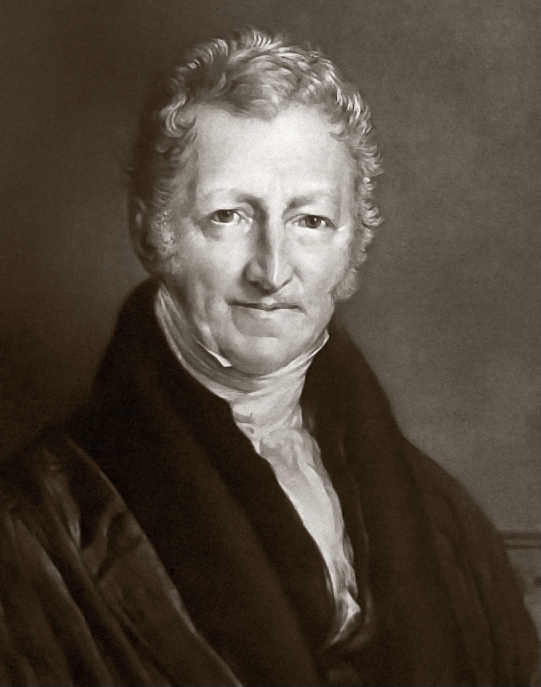
TPB was about Malthusian economics, unsurprisingly invented by Thomas Malthus. It was Malthus’ proposition that resources such as food and water showed linear while population growth was exponential. Given this hypothesis, his conclusion was that all populations would eventually outgrow their food supply and die back to a manageable level.


This was big in the seventies. The publication The Limits to Growth in 1972 used a computer simulation to suggest there were, well, limits to the growth of society. I.e., unregulated population growth and its concomitant resource exploitation could result in catastrophe.


The Malthusian disaster was averted by the Green Revolution—a long term technology transfer through the fifties and sixties that improved agricultural production markedly. This involved chemical fertilizers, mechanization, new varieties of traditional crops, and a full suite of techniques to wring every little bit of calorie from the earth. This seemed to prove the critical response to Malthusianism that the Industrial Revolution broke mankind out of the Malthusian trap. There was no end of human ingenuity and it would always rise to the crisis and avert any and all problems.


Right.


The problem both Malthus and his critics seem to miss is that the symptoms of Malthusianism reflect a deeper issue of scale.


I fully believe in human ingenuity. We can pretty much think our way out of any problem if the problem is narrowly focused. Do we need indefinite power? Let’s run that black rock through a heat engine and generate electricity. Individual transportation? Burn that sticky stuff and use it to turn wheels that run on a surface made of the same sticky stuff. Problems with bacterial diseases? Flood humanity with compounds we find in nature that kill them. Problems with getting enough nutrients to crops? Extract Phosphorous from Florida and add Nitrogen from the air using the sticky stuff again.


All of these techniques work in the timeframe of the problem. The issue here is that the solutions have long term effects we don’t like: global warming, pollution, and the continuous use of more and more acreage. Not to mention how much damage that proceeds from our activities into the sea, land, and air.


Back to the issue of scale: if there were a tenth as many humans on the planet, our effects lessen proportionately. As the number of humans increase, the effect on the planet increases—and knock-on effects make that effect exponential. Case in point, one side effect of global warming is the melting of the permafrost in the northern hemisphere. This allows decomposition of the vast peat reservoirs into methane and CO2. Consequently, our direct contribution to the atmosphere is multiplied into exponential effect.


This scale effect seems to be ignored or sidelined by a lot of popular media. Many scholars have shown that the abundance of resources over time has increased per unit individual as the population swelled.


This is true but the total cost of those resources has also increased and this is often not mentioned or belittled in the narrative. Instead of total cost, the price of goods is what is examined. This isn’t always a good comparison or the time frame of the comparison is cherry picked to prove the point. For example, in 1950, a pound of bread was $0.12, inflation adjusted to $1.37. The price of bread in 2016 was $1.80— not much different. (We can say that in 2016 there were many more kinds of breads and different prices such that apparent inflation actually reflects the increase of choice rather than change in the money supply.)


But the total cost has to include the pollution caused by fertilizing the wheat, CO2 in the atmosphere from the burning of fuel in the tractor, transportation of the goods to market, and the taking that bread home. The potential cost of power to handle all of the manufacturing has to be considered as well as the environmental cost of dumping the bread’s plastic bag into a landfill. These costs are not represented in the price of that pound of bread. Some costs, like global warming, aren’t yet represented much at all. At best, weather disasters amplified by climate change or tax cost of pollution cleanup get transmitted to the consumer via taxes but most are, at the moment, ignored.


As I’ve been saying, all of these costs scale. The natural systems of the earth have excess capacity for us to harvest and abuse—we can take so many fish, use so much land for crops, pollute so much air and water, and natural systems will absorb that abuse and loss and fill in the gap. Cod produce millions and millions of offspring every year. We can take below a certain percentage and the cod would be just fine. We didn’t and the cod fishery crashed from overfishing and climate change. But we overfished because so many people wanted to eat cod. We have global warming because we have built the lives of ~9 billion people on carbon that was planted in the ground over two hundred million years ago.


Ehrlich was absolutely right about the problem. He was just wrong about the symptoms.


There is, apparently, money to be made denying all of this. It fits a political narrative that is quite popular. It is also reassuring. If it’s all wrong, we don’t have to change anything, right? I would love for them to be right but they’re not.


I think we have to scale down the world. Not necessarily the economies involved—at least, there’s no reason I can see that we need to tie our economies to population size. But unplanned shrinkage is going to be a big issue both economically and socially.


This is not an easy thing to change. “Growth” is built into the economic engine of the world. Nobody every congratulated a CEO on having maintained the same level of profit this year as last year.


That said, it's interesting that as time has progressed, population growth has begun to diminish. This appears to be the result of education and the availability of family planning. Girls’ education seems to be very influential. Growth starts to approach zero around 2100. It’s possible it might go negative. This makes population like peak oil: oil is a finite resource and eventually we start to run out of it. It’s not a matter of if we’ll run low; it’s a matter of when.


Population is similar. Like oil, it’s not a matter of if population will decrease, it’s a matter of when. The question then becomes, like oil, do we manage a soft and graceful landing or do we crash into a wall and break into tiny, tiny splinters.


Given that, I’ve been watching Japan a lot.


Japan led the world in automation in decades past. They are masters of doing more with less. They’re still mired in the same match of number of workers to productive hours. But I think that will change. Japan has been investing heavily in robots: animals, domestic, rescue, industrial. Some of this is to help care for an aging population—and, let’s face it, any reducing population curve is going to get weighted towards the far end. The old will inevitably outnumber the young.


But additionally, this is going to help with the transition from a human, numbers based approach to the economy to an economy that is based much less on human intervention. There’s been a lot of talk about AIs taking our jobs—or helping us with them—anyway. So, maybe that’s like peak oil, too. If it’s going to happen, why not make it work for us instead of against us? Why not start reducing population—and environmental impact—now? Embrace the coming change so we can be benefitted instead of harmed?


Oh, right. This is the same species that resisted COVID vaccines and denies global warming.


I can dream, right?