Monday, January 15, 2024

Arisia: Graphic Novels of Prose Works


I’m on the Arisia panel: Beyond Classics Illustrated—Comic Book Adaptations of Prose Works.


(Picture from here.)


Now, I would prefer that this be Graphic Novel Adaptations of Prose Works. But you can’t have everything.


By the time you read this, Arisia will be over and I’ll be home in the shop or something. But, let’s get on with it.


I’ve read comics pretty much my entire life. Some of them were Classics Illustrated. CI wasn’t bad—I liked it as a kid. But the “classics” that were illustrated weren’t generally works that I needed to see illustrated since I read them myself such as Little Women, Huckleberry Finn, etc. (I had issues with Huckleberry Finn but then I have issues with all adaptations of Huckleberry Finn. Someday, I’ll do a post about it.) Works that I didn’t read on my own, I didn’t necessarily need to read illustrated since they didn’t hold my interest—I’m looking at you, Ivanhoe


All that said, it does seem fertile ground for an adaptation. In the interest of research, I read the following graphic novel adaptations of prose material with which I was familiar:

  • 1984: The Graphic Novel, George Orwell, Fido Nesti
  • To Kill a Mockingbird: A Graphic Novel, Harper Lee, Fred Fordham
  • The Odyssey: Homer, Gareth Hinds
  • Macbeth: Shakespeare, Gareth Hinds
  • Ringworld: Larry Niven, Robert Mandell/Sean Lam
  • The Stars My Destination: Alfred Bester, Byron Preiss/Howard Chaykin

All of these are intended to be full explorations of the work. They are not reimagining the work but presenting the work as representative of the original. That said, they are adaptations—as a film or a play might be. They cannot be the original—the original is available to be read. I think—I hope—they are intended to present a different dimension of experience to the original. In addition, I chose these because I thought they were not works that required the original to be understood.


These are all fine works. They are well-produced and well-illustrated. Each individual work had an interesting visual approach. In 1984, Nesti took almost an almost Edvard Much approach to the illustration. Howard Chaykin took a sort of fifties serial illustration approach to The Stars My Destination. Hinds took a different approach between The Odyssey and Macbeth. In The Odyssey, the figures looked robust and strong—almost material ideals though they were clearly real people. However, in Macbeth, the figures looked more differentiated and less ideal. Ringworld is in a manga style. Fordham used a sort of Andrew Wyeth sensibility when he drew Mockingbird


I mention the art because the visual creation is what’s brought to the table in the graphic narrative. One is not imagining Scout in Mockingbird; one is seeing her right there on the page. Imagination is not required.


Visual narrative is completely different from prose narrative. I’ve been working on adapting one of my stories into a comic. The original was 1200 words—barely a story at all. At this point, the story is twelve pages long and only a little over half done. Things that could be glossed over in a sentence might take six panels in a comic. Conversely, a scene that might require 200 words could be shown in a single panel. It’s a different medium.


This presents the first hurdle for the visual adaptation: what to leave in. What to leave out. Does the prose work in the confines of the comic? What to do if it does not.


Film and television adaptations have similar problems but different tools. For example, the outside narrator has a long and honored history in comics. Most narrators in films are at best redundant and at worst distracting. In film/television, the scene has to show real people in a sequence of time. Sequence—even timing within a given panel—is under much tighter control in comics. In Bruno, Chris Baldwin drew nearly every strip as one long horizontal panel, unbroken by any divisions. He managed to show both character interaction and the movement of time in a single image.


Given the premises that 1) the adaptation cannot be the original, and 2) the adaptation must stand on its own without requiring the original, how do the example adaptations measure up?


Macbeth, 1984, and The Stars My Destination all seem to have a similar problem: they are being too faithful to the original material. In 1984 and TSMD, a significant amount of prose is lifted directly from the original work and entered into the graphic novel. This means that the reader is getting overlapping information. A lot is coming from the page—the interior of the broken ship in TSMD and Winston’s apartment in 1984—and a lot is coming from the embedded prose. It feels conflicted. I see the Winston’s apartment. I don’t need to see it described. I see the Foyle’s ship. I don’t need it to be described.


What I want is the information I’m getting from the imagery and the information I’m getting from the prose (if any) to complement one another. Not repeat and not conflict. Macbeth has a similar problem—we read Shakespeare for the language as much as anything else. A graphic novel of a Shakespeare play without the beautiful dialog doesn’t seem to have much point. That said, it seemed to me that a graphic novel of Macbeth should go where a play wants to but can’t. Not sure Hinds’ effort did that for me.


Hinds was more successful with The Odyssey. The work was still dialog-heavy but in this case, the characters were all talking to each other. I do think he would have been better off leaning more on the visuals and less on the prose.


Mockingbird is much better. There is some narrative prose but not all that much of it—some could have been cut but that’s just me. Lee’s book contains a great deal of dialog which transposes well to the graphic novel form. Most of the prose Lee uses is to set the scene and that is well done with Fordham’s art.


Finally, Ringworld. The art/prose balance is very good here. There’s a bit of leading prose to set up the Known Space concept—it worried me when I started it. But it disappears pretty quickly. That said, I don’t like the art. This is not an objective observation. I just didn’t like it. Adaptation’s good. Dialog is good. Hits the story points properly. But I kept getting bogged down in the actual visual character representations.


I think the first issue to be handled with any visual representation of a prose work—be it film, television, or comic—is if the art works for the reader. As I said in the very beginning, comics are primarily a visual medium. If the eyes don’t like the work, you can stop there. That is an entirely subjective—and I suspect, unconscious—response. For example, I like the roughness of Miyazaki’s Nausicaä manga. It’s very different from the smooth imagery of the film.


This is one thing one can get from just looking at the work.


The second hurdle is how to represent the prose work structurally. As is pretty obvious from what I’ve said previously, I’m in favor of letting the art do the heavy lifting. There’s a lot of narrative description and observation that can just be shown rather than told. That said, artistically, showing appears to be much more difficult and requires a higher level of creativity than telling. Too much telling turns the comic into illustrated prose. That’s fine but I don’t think it’s the goal. Barry Moser is one of the finest illustrators I’ve ever seen but his work is absolutely dependent on the surrounding text. I think graphic novels should be something different.


The third hurdle is the same as for any visual media: how to visually represent the characters. I consider this separate from the artistic approach of the work. Chaykin’s choice to represent TSMD with a retro sensibility is one thing. But how he chooses to draw Gully Foyle’s face is independent of that.


This problem is addressed head on in Fordham’s Mockingbird. The strongest image almost anyone has of Atticus Finch is his portrayal by Gregory Peck in the film. Peck was six foot/two and towered over many people in the film. Fordham chose to portray Finch as average sized—in some panels smaller than some of those around him. The courtroom scenes often show people sitting or from shoulder to the top of the head, with only a single individual in a given panel. This makes it impossible for Finch to tower over anyone. His face is broader than Peck’s and he has the look of an accountant: an ordinary-looking man containing extraordinary strength of character.


I have a problem that I have a great deal of trouble transitioning from a film or television representation of a character to a representation of that same character in a comic. Spock or James Kirk? Can’t read the comics. Mal from Firefly. Nope. I think it’s an uncanny valley problem—they look enough like the human that inspired them that I can’t accept the differences. It’s curious that I don’t have the same problem with actual people—a comic containing Barack Obama doesn’t bother me at all.


I had no such problem with Fordham’s Finch. His Finch could not be mistaken for Gregory Peck. Gold star for Fordham.


In conclusion, do not let me put you off of any of the works I’ve discussed. These are completely subjective opinions. They’re mine. They don’t have to be yours.


I’m just pointing out some considerations.


Thursday, January 11, 2024

Steven Popkes to be at Arisia this weekend

 I'll be at Arisia this weekend. I have two panels:

Saturday, January 13, 2024
17:30: Beyond Classics Illustrated – Comic Book Adaptations of Prose Works
19:00: Invertebrates and Entomology in SFF

Come have fun.

Monday, January 1, 2024

Fossil Fuels: Price at the Pump


I’ve been thinking about how we’re going to get shut of fossil fuels.


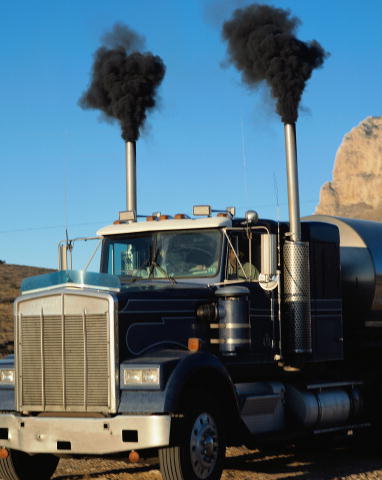
(Picture from here.)


Oh, yeah. Why? We have an increasing carbon dioxide footprint in the atmosphere. It’s causing the earth to grow warmer than it has ever been in the history of our species. We have built our civilization based on that temperature range including housing, food, transportation, and other infrastructure. With the increase of temperature, all of those adaptations are at best at risk and at worst doomed. The earth will abide but what we’ve built will not. The biggest contributor to that CO2 footprint is burning fossil fuels. 


Therefore, stopping the input into the atmosphere is a necessary first step.


So...


First, a quick overview of the technical issues.


The biggest technical issue is that we have an entire industry built to supply fossil fuels and an entire economy built to consume them. Power? Right there with natural gas. Transportation? Cars. Trains. Trucks. Ships. Construction? Tractors. Backhoes. Bulldozers. Industry? Power, for one. But also furnaces. Kilns. Forges. Smelting. Ore refining. Mining.


Sure, some of these can convert to electricity. Aluminum refining is already one of the larger consumers of electric power. But mining? Heavy construction? All of them are built on fossil fuels. The container ship bringing your Christmas presents?


I’m pretty sure we can convert light transportation such as cars and trains to electricity. Pushing the combustion back to a central source means the source can be transformed from using something like natural gas to nuclear or renewables. Electricity is fungible.


I’m less sanguine for more intense uses such as air travel, ships, and construction equipment. That said, Volvo has an electric compact electric excavator. Some electric mining equipment is now available. I haven’t seen a lithium powered crane yet. And it’s not clear to me what the duty cycle is. It’s also possible to create artificial fossil fuels that do not come from petroleum—to me that’s the likely path for things like air travel and ships. Things that don’t have a ready plug to charge up and expend a lot of energy.


If we just say that it’s possible that we can replace all combustion-based systems with electric equivalents, what’s the problem? Now, we get into the social aspect of things.


The problem is, as always, cost.


This is where to my mind we have a social issue that is masquerading as a technical problem. Cost is required currency (read money, energy, or other like material) in order to cause an action. Filling up the Buick to drive to Grandma’s house represents the required currency to visit Grandma. The monetary representation of that is the numeric quantification of that cost commonly called price.


The problem is that quantification.


The cost of a tank of gas is the cost of the drilling process, transportation and refinement of the crude, transportation of the gasoline to the station. It includes the maintenance of the equipment to process all of them. It includes a bit of profit for each stage of the process. There’s a tiny amount to maintain the roads embedded in the final cost. So, if you’re up here in Massachusetts and paying $3.09/gallon (which I just did), about 9% of that went to fix those potholes. It works out to barely ten percent of what Massachusetts spends on transportation.


What that $3.09 does not include is the remaining 90% for transportation, the cost of cleaning up oil spills, CO2 emissions, health effects of CO2 and non-CO2 emissions, effects on the food supply, and the rebuilding from climate-change caused storms. These are external costs—costs not borne by the producer of the product. The cost of CO2 is not borne by the producer of the product that creates the CO2, either the user of the fossil fuel consuming product or the producer of the fossil fuel itself. Essentially, both the producers of fossil fuels and the products that consume them get these external costs for free.


Sometimes, external costs are good things. Roads and bridges are a good example. In this case, society has made a decision that the benefits of having roads and bridges are of sufficient value that the costs are better absorbed by society as a whole. That’s a good example but I have a better one.


Unlike most countries, the USA does not require most airports to charge landing fees. (It’s a little different for large airports like Boston or Chicago. This applies more to mid-to-small-sized airports.) If I am a student pilot in Canada and I want to do a set of practice landings, I have to pay for each one. Not in the United States. The natural consequence of this is that student pilots do a lot more practice landings in the USA than in Canada. The FAA made the conscious choice that this was a good thing and decided that absorbing the external cost of practice landings was worth it.


However, usually external costs are not good things. The societal costs of smoking were not borne by tobacco companies until they were forced to by the courts. Similarly, the health costs of patients with mercury poisoning from coal power plants, their lost revenue, and the trauma to their families is an external cost—not borne by the coal power plants. The increasing destruction by storms, floods, and sea level rise caused by rising CO2 are external costs not borne by fossil fuel manufacturers or fossil fuel burners even though they are responsible for that CO2.


I went and tried to find out what the true cost of gasoline was including these externalities. One article I read suggested it would more or less double the cost/gallon. Another article suggested closer to three times. Personally, I think these are underestimates.


Regardless, these indicate that the actual cost of gasoline—incorporating environmental and health costs—would be much, much higher than we’re experiencing. Forget the direct subsidies to the fossil fuel industry, they also get a subsidy in the form of these external costs. I bet if the construction industry had to choose between a somewhat more expensive electric bulldozer and a cheaper one that costs twice as much to operate, that calculus might be interesting.


A similar sort of economic approach to the Tesla semi-truck was analyzed here, indicating the economics of repair along with cheaper electricity could make the Tesla superior to traditional diesel trucks, provided the supporting infrastructure was done correctly. This would be an even better outcome if the actual cost of diesel was included in the calculations.


A significant part of the problem, then, is these hidden, external costs. We think we’re paying the right price for gasoline but we are, in fact, subsidizing the health and environmental costs of that gasoline. We are either ignoring the cost, hoping it will go away, or pushing the cost onto a societal mechanism like government or the courts—not the most efficient mechanism.


We could incorporate those costs into the price of the product. Given that we’ve ignored this issue for over a century, it would be painful to just do it now. But I think there’s an interesting side effect. Let’s say that we phase in these costs over a long period in the form of fuel taxes. That tax can be used to subsidize the cost of EV purchase. In addition, the EV (or electric construction equipment) owner will never have to pay the tax. We could even have intelligent pricing at the pump by gas mileage, where the vehicle class drives the amount of tax paid for by the owner.


This would push the cost of the product back on both the producer and consumer of the product. This is not at all unheard of. Recognizing an external cost as the price of doing business is something that happens all the time. It’s called regulation.


That tax revenue doesn’t have to be spent by the government directly. Governments rarely do anything themselves. Instead, they sub-contract out. There’s no reason the fossil fuel corporations couldn’t bid for a remediation contract like anyone else.


I just had this lovely vision of Exxon and BP bidding for a contract to reforest the fracking fields of Pennsylvania.


Monday, December 4, 2023

Cheese Ends, 2023/12/04

We can’t talk about anything in science and technology without talking about the second Starship launch.


(Picture from here.)


I found this one much more exciting than the last one for a few reasons:

  1. The launch pad didn’t disintegrate and toss material around for miles
  2. Separation actually happened using a reasonable approach.
  3. Both components of the craft more or less performed.

Musk has said that the idea is to move fast and break things, learning in the process. That said, this means the process is entered with at least a nod towards something adequately thought out to be tested. 


The first starship launch, in my opinion, didn’t rise to that level.


This launch, however, did.


Starship is a two-stage enormous space system. It’s the first system that I think is a contender for the role originally held by the Saturn V. (At two billion dollars+/launch, I don’t think the SLS is a real competitor.)


The thrust for the first stage is far and away the most built by Americans. Here are some comparison numbers:

Starship needs that thrust for its payload capacity:

Although, these numbers are little misleading. The design of the first stage of Starship is to get the second stage where it’s going. The second stage is the actual spacecraft with reentry capabilities. Thus, that 100,000 kg payload is payload in addition to the reentry vehicle. In this manner, Starship is more comparable to the Space Shuttle. In the case of the Saturn V, SLS, and Proton, the payload has to include the reentry vehicle. Thus, the true payload would be whatever is being sent up into space minus the coast of the vehicle to get it there. Starship payload doesn’t need to include that.


If Starship is successful, it’s a big change. It doesn’t hurt that Starship is reusable, uses a relatively innocuous chemical process for thrust, and is intended to be a really cheap method to deliver payloads to space. It’s a good example of the economy of scale. Sort of like freight trains: they are already so massive that adding a bit more doesn’t cost all that much.


A lot rides on Starship’s success.


The launch happened. The stages separated. A few seconds later as the booster was trying to get situated for return, it exploded. The second stage proceeded for a few seconds more. There was some kind of gas cloud that showed up and then Starship, the spacecraft, was no more.


What happened is still under investigation. Current hypotheses are: the booster had progressive engine failures causing an explosion. Possibly because it was unable to effectively impart directed thrust so the liquid propellant and oxidizer could be properly pushed into position within the effectively weightless structure. The spacecraft (second stage) aborted possibly due to propellant leaks that would have prevented it from reaching its target.


So: work fast and break things. This launch fulfills that goal.


The terminations aside: launch was good. Separation was good. Texas had no concrete chunk rain as from the first launch. Basic goals were achieved even if the mission was unsuccessful.


Color me cautiously optimistic. I would still like to have an additional option than Starship to launch with. Especially, with someone as volatile as Musk in “charge.”


Moving on with more space news.


Salt glaciers have been detected on... Mercury?


These fall from the same sort of thing discovered in the polar craters of the Moon. There’s evidence of water ice in permanently shielded craters on the poles of Mercury. Not ice ice but glaciers made of salt exposed via meteoric impacts. It’s possible volatiles (read water) might still be there.


These are big, too. Several miles deep.


More on salt, Ganymede may be covered in salt and organic material. This came from the Juno mission currently orbiting Jupiter. There’s some evidence that Ganymede, like some of the other ice moons, might have a deep ocean. Spectroscopic analysis from a recent Juno flyby has shown hydrated sodium chloride, ammonium chloride, and organic (i.e., containing carbon) material. They might have originated from inside of Ganymede in a similar fashion to spouts seen on Europa.


A Chinese AI trained in chemistry has discovered an oxygen catalyst that could be made from meteorites. This catalyst can be used to trigger the oxygen evolution reaction (OER) that delivers oxygen to be used. Best of all, the meteorites in question are on Mars and the OER is against Martian soil.


Maybe we can live off the land there.


Moving from outer to inner space, there are new studies on microbes found within the earth’s crust.


These microbes used to be thought rare but it’s now thought that if we weighed all the microbes in the earth’s crust they would show a greater biomass than all life in the oceans. There’s something alive down there.


The study has been examining the strategies used by these microbes to survive. It turns out there are two basic approaches: minimalist, where a microbe survives by eating the same thing all the time. And maximalist, where a microbe is ready to eat anything anytime.


The cost/benefit of both approaches is interesting. The minimalist approach doesn’t need to invest in a lot of different biochemical machinery because it’s only eating one thing. Hopefully, it doesn’t run out. That’s the bet that microbe has made.


The maximalist approach bets that a lot of different material will show up and it will be ready. But the cost is that it has to keep around a lot of different biochemical machinery to be ready when the food shows up.


Once you have life, it gets into everything. One wonders what might be on Mars.


There’s no understood mechanism on where these deep microbes came from. It presumes that plate tectonics and the reabsorption of rock under the crust is their source. It is highly unlikely they evolved there.


However, (and the however here is mine) there is some new research on prebiotic biochemical pathways. These are biochemical reactions that resemble living systems but don’t require living systems to work. The cited article is describing sugar reactions.


There are a number of biochemically active compounds that all have to be in place for life to happen: nucleic acid chains, proto-proteins, and sugars. Specifically, pentoses: sugars that are made up of five carbons. These are everywhere in living systems. Prebiotic pentose reactions are an integral, and often overlooked, area of research. They are eclipsed by their celebrity cousins, proteins and nucleic acids.


What I find interesting here is that we always talk about life starting up on the effective surface of earth—sea bottoms are part of the earth’s surface. There’s a lot of problems with that scenario, notably how do we keep proto-life from getting swept away. But if the reactions are captured and brought underground, they are isolated enough that they can’t be diluted.


It’s an interesting idea—not likely, you understand. I would expect to see cells or cellular debris coming up from undersea smokers if that were the case. That said, rock is often exposed after it’s been pushed underground. It doesn’t seem unlikely that some of that exposed rock could contain cells.


Going on from that, Chinese agricultural scientists have been working to determine of bacteria could make lunar regolith more like soil. Specifically, they were studying if bacteria could free up phosphorous that could then be taken up by plants. They’ve had significant success.


Lunar regolith is a big impediment to lunar settlements. It’s electrostatic so it gets into everything. It’s made up of essentially not-so-ground glass. Its compounds are not easily picked up by earth plants. So, since we’re not going to seed the Moon with prairie soil from Kansas, we need to make it work for us. This is a step in the right direction.


Finally, we get back on earth with new agribot technology.


I’ve been watching this for a while now. We need to get away from chemical-based farming yet we can’t feed billions of people without industrial scale. The idea of killing everything we don’t want so we can eat the survivor isn’t sustainable.


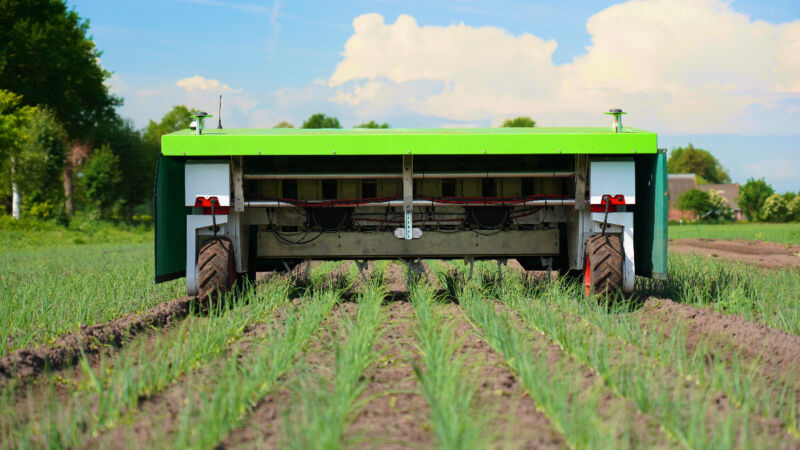
Enter Sweden’s Ekobot.


Ekobot is a weeding machine. It weeds. Twelve hours a day. Every day. And, if you weed, one of the major reasons we use herbicides goes away. Ekobot weeds onion, beetroot, carrots, or other vegetable fields. It uses an AI and machine vision to figure out what’s a weed and what isn’t. Then, it uses a little finger to pull out the weeds. It looks like a metal finger—there’s a video at the site.


This is smart technology. Using the kill everything and let Monsanto sort it out is dumb technology.


Next time.


Friday, December 1, 2023

Story Collection Announcement


A new story collection is coming out on 12/26/2023!


Pre-order is available.


The best way is to go through my website, www.stevenpopkes.com, which has the universal book link. As new venues become available, they will be attached to that link. So, for example, right now on 12/1/2023, the only pre-order available is the ebook on Amazon. However, in the next week or so, other venues (I'm looking at you, Apple) will host it.


Might make an interesting present the day after Christmas.


Here's an excerpt from the title story:


Tom nodded. Dan was sitting close to his right. Tom reached for his glass as if he’d forgotten he’d finished it, made a fist and backhanded Dan with all his strength. Dan fell back off his chair. Tom followed up the blow with a vicious kick to Dan’s groin. Dan doubled up and the breath came out of him in a faint shriek. Tom pulled open Dan’s coat and found the pistol he knew was there and a small glittering knife he didn’t.


“Kids.” Tom put the barrel of the pistol against Dan’s throat. “Where do you think Derek is?”


“Trolley,” Dan croaked. “A street entrance to the underground.”


“Thank you.” 


“Tell me,” said Dan as soon as he was able to breathe. “Do you know she’s not your daughter?”


“Yes.” Tom hid the pistol in his jacket pocket and left the tavern.