Monday, May 20, 2024

Cheese Ends, 20240519


I’ve been in a cranky mood the last couple of weeks. Health issues have been rearing their ugly heads and the world hasn’t been particularly pleasant to read about.


Then, several articles came across my desk that clearly came under the why-we-can’t-have-nice-things category. In pure pseudoscientific babbalese, I interpret this as the universe telling me to go with it. 


So, here we go. 


(Picture from here.)

**

In the old days—back, say, in the thirties—about twenty-five percent of foodborne diseases came from the ingestion of raw milk. This was just as true in Europe and the reason Louis Pasteur invented the means by which milk could be mostly sterilized without ruining the flavor—called, of course, pasteurization


That hasn’t stopped people from deciding that raw, unpasteurized milk, has unprovable and dubious and health properties. 


I have a little skin in the game on this as my father’s family raised milk cows. The stories he told were quite funny and interesting and suggested that unfiltered, unpasteurized milk was something to be avoided. 


Recently, some dairy cows have been exhibiting H5N1 bird flu infections. It doesn’t seem to hurt the cow much but the virus does seem to preferentially infect the udders. Some cats have ingested infected raw milk and died of brain infections. One could deduce that maybe drinking infected raw milk might be dangerous.


That hasn’t stopped raw milk enthusiasts from demanding to get raw milk from infected cows in order to get some kind of imaginary immunity to H5N1 flu. 


*sigh*


Moving on.

**

What is the economic impact of the new weight-loss drugs?


The United States has a bizarre and unique drug pricing mechanism. For some reason, people seem to believe that market forces will prevail in a system where the patient has to have a particular drug. This is called, in economic terms, an inelastic demand: where demand remains unchanged whether price rises or falls. Health care falls largely within this system. 


Many other countries recognize this problem and fix prices or otherwise handle the issue. 


Not in America.


The other item in this discussion is obesity—well shown to be a strong factor in health issues. Enter the new GLP-1 drugs like Ozempic and Wegovy. 


Wegovy costs $809/month/patient in the USA. In Denmark, it’s $186/month. Yale researchers have estimated that the drug can be manufactured profitably at $5/month.


Adult obesity in the USA is about 35%. It’s been estimated that if half (looking to the future) the adults in the US started taking Wegovy, the collective cost would be around $411 billion/year—more than all other drugs combined. It’s projected that by 2031, cost of purchase of all drugs (including weight loss drugs) will exceed 1 trillion dollars. The drugs have long ranging health effects but are so expensive that the cost/benefit ratio is not in their favor. 


Remember, these prices were decided on. They are what the manufacturers figure Americans are willing to pay. Note the Yale study and the concept of inelastic demand. 

**

One of the continuing problems I have is how science is perceived. Like the colloquial concept of theory versus the scientific concept of theory. “Well, it’s just a theory...” is a common phrase. As if a scientific theory wasn’t backed up by evidence, mathematics, and laboratory studies. It’s scientific theory that can reassure you that during the night the sun hasn’t gone nova on the other side of the world. 


This issue of language isn’t limited to the word “theory.” It covers other words, too. Like “believe.”


I might say, I believe in Divine Right of Kings. I am stating that I support the idea that Kings rule based on the derived power of God incarnated in them. You could say that’s dumb. You believe in the concept of democratic representation: the will of the people to allow some to govern in their name. We both might adhere to these beliefs to the point we will die for them—or, at least, die for the symbols that represent them like King and Country.


These are beliefs in the common sense of the word.


When scientists say they believe in, say, the Cosmological Principle, they are saying they believe in a principle that can be inferred by other, provable, mechanisms. And they are committing to a rejection of that belief if it becomes falsified.


As long as one understands the difference, all fine and good. But that doesn’t seem to be happening in the media. If you say—to use the article’s example—that scientists know the earth is warming, that is far closer to the truth than to say those same scientists believe the earth is warming. “Believe” in scientific vernacular is far closer to “know” in the common vernacular.


This is a big problem in media. Most scientific reporting is commitment phobic. Media folks are not stupid. I believe they know the difference but squishy reporting is more comfortable. Less vulnerable.


And it makes a difference. Research has shown that content presentation is as important—or even more important—than the content itself. To quote them: “’Know’ presents [a statement] as a fact presupposing that it is true, ‘believe’ does not.” This was supported in their experiments.


I’m a writer and I know words are important. People who use words nefariously know it, too. So should readers.

**

There’s a whole youtube channel devoted to unexpected consequences to well-intentioned action. I won’t link to it here because I don’t always agree with the agenda behind the videos. But it’s fun. 


As far back as 1953 laws in North Carolina prohibited public masking. This was done in order to prevent actions of secret societies like the Ku Klux Klan and others. Best of intentions, right? Of course, masks can be used for public health situations, right? Recently, however, demonstrators have been showing up wearing surgical and other kinds of public health masks. 


This last week, the North Carolina Senate voted to repeal a legal exemption, enacted during COVID, for public health masking. The immuno-compromised, sick, and those that didn’t want to get sick, would not be able to wear masks in public.

**

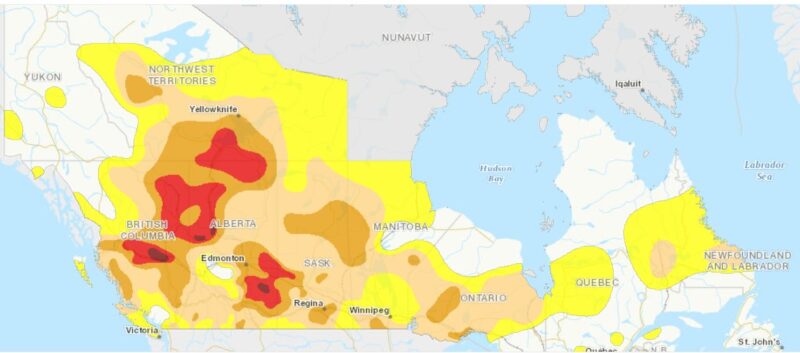
Did you know there was such a thing as a zombie fire? I did not—well, sort of. I knew about smoldering coal fires in Pennsylvania and other places. But a zombie wildfire?


Turns out that the drought in Canada is bad enough that fires can smolder through the winter and wake up in the spring. Canadian Zombie Fires.


The reason this is in the why-we-can’t-have-nice-things category is that this is clearly due to global warming. Just like the models say it is. Just like the scientists believed would happen. Just like we should have expected.

**

Okay. Okay. Okay! Some positive things.


China has created the worlds first high-definition lunar geologic atlas. This is the best collection of lunar geographic data since the Apollo missions. Fully public. Accessible. Usable across the world by anyone. And published by China. This is a big deal.


NASA is doubling down on advanced concepts for space exploration. These include:


  • Pulsed Plasma Rocket: fission powered propulsion that could get humans to Mars in two months.
  • Radioisotope Power Cells: for missions that require power long and far beyond solar cells.
  • FLOAT: A lunar railway for Moon settlements. Flexible Levitation on a Track. Far and away the best acronym of all time. Roll out the track and you have an instant cargo carrier. 


One last thing.


Every year fish swim up the river in the center of Utrecht where they meet a lock preventing them from going further. The lock is closed in the spring. The Utrechtians (?) set up a camera at the bottom of the boat lock and put the live feed up and a button. (A doorbell.) Watch for the fish and if you see one, press the doorbell. That alerts the lock keeper that there are fish waiting. When enough fish are detected, the lock keeper opens the lock and lets them proceed to their spawning grounds.


Here. Go free the poor waiting fish.


Happy now?


Monday, May 6, 2024

State of the Farm: May, 2024


Now that it’s May, we can attempt to start work on our garden without a high expectation of weather damage. 


Of course, that’s a hope. Last year we got a hard freeze in May and lost all of our stone fruit. Other years, we get a Hammer of God heatwave. New England isn’t the easiest place to garden in the US to begin with. Global warming has made it much more... interesting.


We finished the cattle fence arbors and now have a sort of T structure: two cattle fence arbors next to one another—think of it as an 8 foot by 5.5 foot wire tunnel—bordered at the end by two more such arbors at 90 degrees. It works very well and there are now bud on the grapes. I have high hopes for the future on this. The arbor is much more open and much easier to manage.


The adjacent arbor is essentially a square with a mesh roof. The square itself is about 10x10 feet and the height about seven. Originally, we intended it as a grape arbor as we saw at Lookout Farm a while back when we went and picked Saturn Peaches. I fell in love with this variety and we’re trying to grow some ourselves.


If you look here, and browse through the pictures, you will see some grapes. The farm is quite large and there are small paved roads between the sections. These roads are shaded by grape arbors. I was quite taken by this and attempted to recreate it with the square arbor. We didn’t have much luck with grapes and it has now transformed into a kiwi arbor. 


Kiwi has a different structure. Instead of little tendrils holding onto the support, it wraps like bittersweet. We’ll see if it eventually rips apart the wire “ceiling” of the arbor.


We’ve made a heavy commitment to the Birdie’s metal raised garden beds. We bought three kits a few years ago. This translated to three large beds and two smaller beds. Last year, we set one up as a strawberry bed, used two for potatoes, one of the smaller ones for mint and one of the larger ones for peppers and eggplant. They did quite well. 


We found with the first set that rodents love to turn such beds into hives. The mint bed was riddled with tunnels and, this year, the innards are collapsing. We filled the bottom of subsequent beds with drainage rock and that seems to have kept the rodents out.


We bought three more. One we finished today. It now requires only the last foot of soil. We plan to fill the next one with the contents of the mint bed, then line the bottom with drainage rock. We’re taking our time and not planning to have all three new ones ready until the end of the season. 


They have a couple of big advantages. One, they are quite tall—about three feet. This means very little bending to manage the bed. That’s a big advantage for someone that’s getting less flexible as they age. The other is longevity. Because they’re metal, they don’t degrade the same way. We’ve seen no corrosion in the years we’ve had them. We got the idea from Self Sufficient Me and his beds seem to be going fine.


We’ve been having a very good blooming of the fruit trees. At this time, we have almond, apricot, peach, apple, Cornelian cherries, pie cherries, and pears either open or passed. No freeze.


If we have a good harvest, I’m going to have to revisit the solar dryer. I built it about eight years ago with the collector being only black sheet metal. It was an experiment to see if I built a porch of the same construction, it could be used as a heat collector for the house. The experiment failed. It kind of works in that it does capture some heat but nothing like the clear collectors. 


The problem is that we’ve been getting too good. I have to dry many pounds of beans and other produce. We will still dry truly wet produce—like peaches or bananas—in the electric dehydrator. But drying beans swamped us last year. Hence, revisiting the old solar dryer. 


Last year we had a very good crop of blueberries. We made a hoop structure using the cattle fencing and covered it with plastic netting. The plastic netting was an incredible pain and when we took it off for the winter it because irretrievably tangled. In addition, the structure itself collapsed over the winter. The width of the structure was too much for the steel and it fell in. We propped it up with some poles. The plan is to make those poles permanent—probably using galvanized pipe. We haven’t got to that part yet.


We used knotted netting this year. It was much easier to handle and we hope it will keep out the birds. However, it doesn’t fully cover the structure. We’re going to make permanent end caps. The idea is we remove the netting every year because of the snow load. The blueberry flowers have just opened so we have until the first of June or so to get it up.


Not all of the blueberry bushes are under the structure. For those, we’re trying bird scare tape. We saw this being used up in Vermont. The bushes seemed to have a fair crop of blueberries so we will see.


I planted some peas and they didn’t really take. I think I planted them incorrectly. Wendy planted peas a couple of weeks later and they are coming up fine. Also, fava beans and radishes. We have started sugar beets and melons in the greenhouse. We’re planning to try peas again in the fall after we harvest the beans. We’re planning on bringing them out around Mother’s Day. In the same garden, I planted schisandra and it is coming up well and covered with blossoms.


This week I will finish clearing the main garden and prepare for planting in the next two weeks. We used to plant Memorial Day weekend—and a lot of cold sensitive stuff will be planted then. But, with global warming, planting season comes two weeks early and harvest season ends two weeks late. A small benefit from the coming catastrophe. 


Coming? Hell. It’s here. The best we can do is adapt to it.


Monday, April 15, 2024

The Transcendental Eclipse


Like much of the country, I spent Monday afternoon staring at the sun.


We have a cabin in northeast Vermont. Up there it’s referred to as a camp. Which is a synonym for shack. No running water and an outhouse. 


It’s in beautiful country and—despite having a difficult neighbor to the east—we love it. 


This year we especially loved it since it was in the bottom end of totality. We got 1 minute 38 seconds. If we’d driven thirty-seven miles north, we could have made over three minutes. But we were skittish.


Turns out we weren’t wrong, though we probably could have driven north and been just fine. We knew the back roads and many of the upcoming tourists did not. Near us there didn’t seem to be many people coming up for the day. Regardless, we didn’t try. We came up Saturday and returned on Tuesday. From what we understood from friends, this was the way to go. Some took twelve hours to get home.


Last time, in 2017, we were staying in Colorado Springs, many hours south of totality. We left at four in the morning, figuring to make it to Casper, Wyoming. We did not. We ended up stuck on the road about thirty miles south. Instead, we drove into a highway rest area and parked, along with a thousand other people. The toilets broke. People grumbled. But we were in totality and it was totally worth it.


Let’s be clear, any eclipse or portion thereof is wonderful. Seeing the sun carved in half by the Moon is terrific in and of itself. But totality is a different animal.


An eclipse takes a while—this one took about three hours from when the Moon first starts carving away until the time it  finally leaves the sun alone. Totality, when the Moon fully obscures the sun, is a tiny fraction of that. To me, it’s three hours of very interesting observation with a minute and half of transcendental ecstasy in the middle. (XKCD has a terrific graphic for this here.)


Total eclipses are a function of the Moon being close enough to the earth that it completely obscures the sun when it passes between them. In the distant past, when the Moon was much closer to the earth, total eclipses were much longer. The Moon is gradually moving away from the Earth. 50 million years ago, or so, the Moon moved out far enough to exactly cover the sun. In about 50 million years, total eclipses will be a thing of the past.


This year we had our neighbor yell at us when we pulled up next to the cabin. Then, the bed broke and we had to sleep on cots—only one of which really worked. Then, our friend Bill got stuck on Sunday when Gina Google misdirected him onto a road that is only open in the summer. My brother-in-law, Dan, got stuck on Monday the same day and we had to hurry to get him out before things started happening. My camera didn’t really focus properly—the picture above is a little blurry. Dan’s pinhole camera didn’t work as well as he would have liked.


But when totality hit and we saw Bailey’s Beads and the red and purple of prominences flying out into space, it didn’t matter. 


It was totally worth it.


Monday, April 1, 2024

Arts and Crafts V: Two Funeral Urns

About twenty years ago my parents died. First my father, after being treated for prostate cancer. Then, my mother, from a stroke. Through a strange set of circumstances, their cremated remains were on top of our piano until this year.


The story of why they remained there is a long one but has no place in this post. My parents were both veterans. During World War II, Dad was a retired Naval aviator and Mom was a WAC code clerk in the Pentagon. Mom had said she always wanted to be buried at Arlington National Cemetery but then, as I grew up, she quit saying that. I don’t know why but I suspect it was because Arlington filled up and no longer accepted the bodies of veterans except for special occasions. That’s how it rested until about four years ago.


At that time, I checked and found out that though bodies were no longer being accepted, cremated remains were and I had two on top of my piano. I passed the idea past my sister and after about a year of discussion, we decided to go ahead with it. Three years later—it took that long to get the documents together, apply, and be scheduled for an interment—we got a date. March 21, 2024. 


Mom’s urn was within the size limits but Dad’s was not. They were not very nice urns, anyway. I talked to the family and asked if I could build the urns for them. They said yes and I started.


The specifications were fairly simple: it had to fit inside of a 9-inch cube and hold the ashes of my parents. I had been through a similar situation with wood turning an urn with a friend and we’d already run into the situation where the result had been too small and we had to start over. I was not going to make that mistake. 


Just to make sure, I purchased two urns as a plan B.


The following is how I built them. They came out well but this is sort of like showing the ins and outs of a magic trick. So, if you like their picture up there and want to preserve the mystery, read no further.


I decided on a simple ceramic 9-inch cube for each of them, figuring it would shrink below the size limits. I settled on blue-green over black as the base. It seemed somber without being morose. I would use ½ inch slabs of clay “glued” together with slip. Finally, I would have small ¼ inch feet.


To this end, I first built a protourn, using the ½ inch slabs sans feet at a four-inch scale size. I liked the result but it seemed too dark. Also, the glaze ran a little bit. I resolved on the final product to use more blue-green on the outside. The protourn could be dipped in the glaze but the larger urns could not be. I would have to pour the glaze over the urns and then scrape off any excess glaze.


First, I had to layout and cut the slabs: six per urn. Five for the sides and one for the top. The bottom and top slabs were cut straight but the side slabs were cut with a bevel. This would prove a bit problematic later.


To keep the slabs straight as they dried to the point that I could assemble them, I dried them between sheets of dry wall loaned to me by my teacher, Cheska. Thank you, Cheska. Thank you for so many things. Drying took a bit less than a week.


Once they were dry enough, I assembled them. I did this by cross-hatching where the edges were to connect and then applied slip and pressed them together. There were some issues here. Fingerprints and indentations were left in the clay. I cleared much of them up but Cheska suggested I leave the remainder: they were my fingerprints in the urn of my parents. At this point, I trimmed as much as I could to make the surfaces flat and added the feet.


The process for making things in our studio goes something like this:

  1. Make the raw clay product (greenware)
  2. Let it dry to the right point.
  3. Assemble and trim
  4. Let it get bone dry
  5. Bisque fire the clay (bisqueware)
  6. Do any repair or sanding of the bisqueware
  7. Apply glaze
  8. Glaze fire
  9. Any post glaze work

There was some warpage in the bisqueware. Unfortunately, I did not capture any images of the bisque product. I poured glaze, black first, then blue-green, on the sides and then the bottom. After that had dried, I tried to do the same for the interior. That just didn’t work. I ended up with far too much pour material on the outside which I had to scrape off. I did it differently on the second urn: I just painted the interior with black glaze.


At this point, the class went on break. I had scraped a great deal but it was too wet to do much. Cheska was in the studio during break and was kind enough to scrape off some more.


Then, the urns had to dry completely. If there had been any moisture from the glaze into the clay (bisque absorbs water) it might have exploded in the kiln. I did have a plan B for a reason.


 The result was... problematic. One of the panels had sprung away from the other and made a large crack.


 In addition, there was significant warpage between the lid and the chamber.


Finally, the glaze on one of the urns was too thick and dropped, making ugly pedestals. These, I would have to grind off. 

Cheska suggested several possible repairs for the crack. One was apoxie, a sandable epoxy product that was more like clay than putty. At least, so it said on the box. For the lid/chamber mismatch, I decided to seal the two with black beeswax. It would hide the warpage and blend in with the rest of the urn.


I had solutions for 2 of the three problems and a possible solution for the third, the crack.


I tried the crack repair first, thinking if that failed, there was no point in going further. Fortunately, it worked. I could see the repair but when I showed it to people who knew about the crack but hadn’t seen it, they couldn’t find it. There was a problem with sanding in that while apoxie could be sanded, it left streaks in the material giving a visible gray look. I covered that over with Sharpie.


After I ground down the bottom, there remained these pox pits (my word for them) that I found truly ugly. The apoxie had worked so well on the crack, I figured it would work on the bottom.


It didn’t. This was a schlimmbesserung: an improvement that makes things worse. Wendy suggested that I cover the bottom in black felt. I thought this was a good idea. I had planned on copying the label from the original urns to these new urns. Framing them with black felt might work.

It did. It was so successful that I wished I had left the ground surface without the apoxie.


Meanwhile, Wendy had been tackling the problem of the labels. She started with water decals and tried several brands. They didn’t print well. The one that did, curled up when it dried. She ended up using transparent vinyl decals. This worked well enough that one of the funeral people admired the “engraving” of the tops. We gracefully accepted the compliment.


The round image on Opal’s is the WAC service medal. Earl has Naval aviator wings.


At this point, we had a family Zoom meeting. I felt I needed family approval for this. To make a long story short, they approved.


Now, I had to seal them. Back to the protourn for a test. This was successful. But the warpage in the actual urns was greater than the protourn. Also, the wax I used for the test was not the wax I used for the final urns. (Both were from candle kits. I had trouble finding black beeswax any other way.)


I layered strips of the wax on the urn, using a heat gun to make it soft enough to adhere. When I had enough, I heated it nearly to melting and put the lid on top. Beeswax isn’t putty. There are only about fifteen seconds of malleability. After putting down the heat gun so it didn’t start a fire, that’s about seven seconds. When I was done, the wax was bulgy. Wendy has steady hands and she was kind enough to trim back the wax to a more attractive state. Then, I took the heat gun and softened out the cut marks.


They were done. Now, I just had to get them to DC.


We packed them up and drove down.


I have to say, I sweated every inch of this. They were done but they weren’t done until they were out of my hands and interred. We got to ANC and I carried the box in, thinking I would carry Earl and Opal the last mile. Inside, I took them out of the box and put them on a couch in one of ANC’s family rooms. There, pictures were taken and they were approved by the funeral liaison—a lovely man named Bill.


Who then informed me they needed to go back to our car and wait for him.


My sister and I each carried one of the urns back to my car. There, we waited for Bill to meet us. Once he drove up, we had to put Earl and Opal in his car. (This last mile was getting pretty long.)


We followed Bill to the site of the ceremony. There, a representative of the Army and a representative of the Navy took the urns to the site and the ceremony was held. I’ll talk about that sometime but not today.


Then, we had to carry the urns to the actual gravesite. This one my sister and I delegated. My son carried Opal and my sister’s daughter carried Earl. They were just as nervous as we had been. In the back of my mind, I remembered that there in the back of the car was still my Plan B. Just in case.


The urns were put on the ground for the benediction. And we were done.

We did not stay to see the urns actually put into the ground. There was no ceremony for that and, frankly, if there was an accident, I didn’t want to see it. Instead, we went out for dinner. 


Thanks to Wendy, Ben, Cheska, Hana, the whole Hopkinton Center for the Arts ceramics gang.  I couldn't have done it without your help and support.


That was last week and even now, I can’t really believe they’re not in the front room holding down the piano. 


Still, I think they approve.