Sunday, October 4, 2015

State of the Farm: The Revenge of the Two Cycle Engine


 (Picture from here.)

It's harvest time on our tiny, tiny farm. It was an interesting summer.

A woodchuck found its way into the garden and it took some doing to get him out. The old fellow was too smart for traps. We tried a few ways to just persuade him to go. Things like about a pound and a half of mothballs down the hole.

This didn't dissuade him. For all I know he absorbed the naphtha and became a mutant, inhuman, hybrid woodchuck. You wanted to know how the Aliens in Alien came to be? Naphtha and woodchucks. I'll tell you that for free.

Anyway, we finally did in the woodchuck but not before he managed to do in a lot of the garden. So most of the cold crops-- broccoli, cabbage, kohlrabi, etc.-- are history. We've been waiting for the weather to turn to replant. It's not so productive to plant broccoli in 90 degree weather.


The beans and the corn survived. So did the carrots. The cold and wet June did in the melons. The woodchuck plundered the pumpkins but left the basil.

So we'll refer to this season as a "learning experience."

Made quite a bit of wine this year and ran into a couple of snags there, as well. We did three fruit wines this year: rhubarb, cornelian cherry and strawberry. The rhubarb came out fine. A bit dry and pleasant. Very nice. But the CC and the strawberry came out too sweet.

I thought it might be temperature. Last year I bottled a currant wine that was a little sweet and discovered over Christmas dinner I had created a currant champagne. I have been warned since to never open the wine at the dinner table again. Remembering this, I brought up the strawberry. No change.

I went over the log book and lo: I had added additional nutrients to the currant and rhubarb but failed to do so on the CC and the strawberry. Next one I'll add scads of nutrients and see what I come up with.

But it is now fall and we have to set up for winter.

About two years ago we had three large trees felled on the property. I gave them a measuring stick and a size and sure enough only about a third of the wood fit in the wood stove. We burned through it but had this evil woodpile in the front lawn.

It also turned out that we had to clear out from under the power lines. Ben and I tore at that last summer and dropped about twenty medium sized trees, exposing the power lines and (more importantly) the land under the power lines. We did this with hand tools because I don't like chain saws.

Not that I have anything against a device that ruin a human limb in a split second and cut it off in a few seconds more. What's not to love about that?

No. It's the dreaded two stroke engine.

Let me explain.

Your car has a four stroke engine in it. The piston goes up and comes down to pull in fuel and air. Then it rolls back up and compresses the mixture and ignites it. Then it comes down again and returns, this time pressing out the waste gases. The "stroke" means the travel of the piston: two up and two down. They are named:
  1. induction (down)
  2. compression (up)
  3. power (down)
  4. exhaust (up)
Also referred to as "suck, squeeze, bang and blow."

A two stroke engine does that in two strokes. That is, one up and down movement of the piston. Suck-blow and squeeze-bang. You can see it in the GIF above.

There are a lot of reasons to like a two cycle engine. Fewer moving parts means it's lighter. There's a very good power to weight ratio. The fewer moving parts means that it's cheaper to produce. Lubrication is by the addition of oil into the fuel.

But all of these things means that the two stroke engine has been the power source of choice for small fuel powered appliances: lawn trimmers, clippers, edgers and, of course, chain saws.

Because they are intended for a market that is very price sensitive (i.e., me and people like me.) they cut corners. In fact, they have cut so many corners on these products they could easily be called spheres.

So, I've never had a chain saw last more than a few hours. Never had a trimmer that lasted more than a season.

Now, there are reasons for this. Alcohol in modern gasoline plays hell with the cheap parts of these sorts of engines and turn the carburetor into a glue block. I've gone to alcohol free gasoline, run the unit dry and cleaned it thoroughly each time. But it costs money to rebuild the carburetor every season.

In addition, a chain saw is one of those essentials for a place like ours. If we're in the middle of Deep Winter and run out of wood, I can go out and cut a few trees with a handsaw. But I can't cut a cord of wood that way.

This year I had a nice unit I'd gotten from a friend and I babied it. Sweet store bought gasoline brought by angels. Oil produced by the finest crushed Cretaceous bees. Cleaned it every day. And it still crapped out on me. I tried cleaning the innards but no joy. Took it to a repair person I knew.

Glue block.

Plus the unit had low enough compression it wasn't worth saving.

So I went back home and rummaged around in garage. There, in smudged glory was an electric chain saw. Not very strong. But no two stroke engine, either.

I sharpened it up and went out to cut wood without much hope.

Two cords later I'd had enough and took it back to the house. This was promising.

Next time, I took it apart and cleaned it-- simple enough, really. Sharpened it up again. Two cords more. Then, three.

We have now about five cords in the shelter. There are a few pieces left but this has largely been a success.

Hm, I'm thinking. We went to solar a few years ago so using an electric chainsaw makes ecological sense. It's a lot cheaper-- a new electric chainsaw is about $50. A good gas unit is about $350. So I could go through one a year with no pain if I had to. But the way it's going, it doesn't look like I'll have to.

The long extension cord is a pain but so what? Finishing the day with the two stroke and having one arm longer than the other from pulling the start cord was a bigger pain.

Ecologically sound and easy? I'm sold.


And screw you, two cycle engine.

Sunday, September 6, 2015

How to Bike in Boston


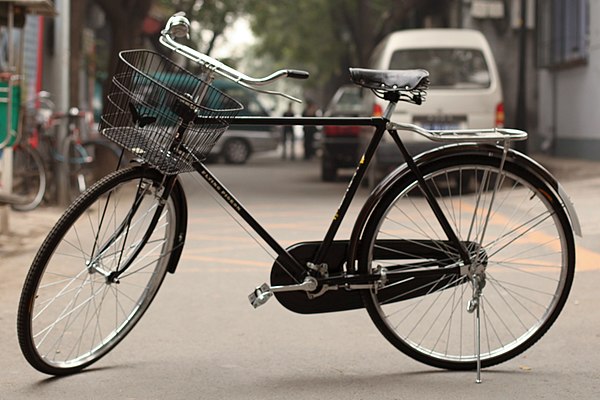
(Picture from here.)

I’ve been biking in Boston for the last three years via the Hubway system.

Hubway is a bike rental system. You find a corral where the bikes are located, pick one and rent it and then drop off at a corral near your destination. Since I come into Boston on the train, I only had two choices: one of those collapsible bikes or the Hubway. The train won’t allow regular bikes during my commute time.

It’s sort of a choice between the sublime and the ridiculous. The collapsible bikes are pleasant, light and as nice to ride as a regular bike. But they’re expensive and once you bring the bike in you’re committed to riding the bike out again.

Remember those clunky bikes you rode when you were eight? Coaster brakes, three speeds—and only two worked—balloon tires fit for the moon and it outweighed you by ten pounds? That’s a Hubway bike. They have hand brakes instead of coaster brakes but the rest is much the same. They’re built to be tough. Elegance and pleasantries are distant luxuries. But they cost $85/year for an unlimited number of 30 minute rides. There are a bunch of corrals near the endpoints of my commute and if it rains in the middle of the day I don’t have to get the bike home somehow.

Ridiculous wins again.

So, over the last three years I’ve seen a lot of miscreant biking.

The hierarchy of vehicles in Boston goes cars to pedestrians to bicycles. The peds might disagree with this. I have seen a man in the middle of green lit lane staring at the oncoming cars and daring them to run him down. I take that as evidence that at least in the mind of some pedestrians they are on top. Still, I have to give it to the cars. The old kinetic energy = ½ mv**2 still holds better for cars, given their mass and velocity.

In the hierarchy of bikes, it starts with the Olympic multithousand dollar bikes ridden by people wearing not much more than an oil slick, the plethora of medium cost bikes, collapsible and then Hubway. 

Yup: bottom of the barrel again.

I’ve come up with some rules by which one might bike in Boston and live to tell the take.

Rule Number 1: Wear a Helmet
Really. This one should be obvious but I see about half of the bicyclists without them. I mean it won’t protect you from broken bones or wrenched ligaments but it will keep your noggin alive. Isn’t that what it’s all about? My Dad used to say as long as he had his right eye, right hand and his brain intact, he wanted to live. And the eye and hand were optional.

I did know one bicyclist who didn’t wear a helmet because he said it made him more wary of the traffic. He also said that he shouldn’t wear a helmet because it was the cars’ fault. If it wasn’t for them he wouldn’t need it.

The nice thing about helmets is it protects the stupid and smart equally. It’s a democratic safety measure. If you make a mistake—and all of us have done that—it helps you. If the other guy makes a mistake, it still helps you.

Yeah. Helmets are a pain. So are concussions.

Hell, you could make a case for pedestrians to wear a helmet. They’re the ones that get hit the most. Not drivers, though. If airbags, seat belts and crumple zones don’t save you, nothing will.

Rule Number 2: Pay Attention
The thing about riding around Boston is that nobody is looking. They don’t see you. They don’t even look up. When I’m riding and run into a situation, nine times out of ten it’s because somebody wasn’t paying attention. They were arguing with someone next to them, listening to music, yelling into a cell phone, arguing with their child. And then there were the pedestrians who weren’t looking either.

Nobody evades physics. The sharp pants and teardrop helmet are not going to save you if you’re not looking where you’re going. Or, worse, you’ve made the decision to make a curl around a pedestrian with half an inch to spare and they suddenly turn towards you. It’s not their problem. It’s yours.

And while we’re talking about physics, remember that old KE=½ mv**2? Cars have both ends of that equation. They are your predator. You should feel about them the way gazelles feel about a lions. Moral superiority has no effect on physics. You might be right turning into traffic the correct way and still get squished. We’ll put “He was right” on your tombstone.

Rule Number 3: Survival Trumps Traffic Rules
It only takes a drop of quinine to spoil a bowl of ice cream. It only takes a few idiots to mess up traffic—driver, pedestrian or bicyclist.

I have absolutely no qualms about running a red light or slipping through stopped traffic. That said, if you decide to do this you are in the wrong. You have no special dispensation because you’re a bicyclist so someone obeying traffic has the perfect right to give you the finger. But, then, if you were paying attention (See rule 2) you wouldn’t have cut them off and put yourself and them in danger.

Traffic rules are not bad things and not things to be ignored without thought. If I come up into an intersection that has a red light on four sides to let pedestrians cross the intersection, I don’t have a problem going through it. But—and this is a big but—I have no right to put people in danger when I do so. It’s incumbent on me to go through safely. (Again, see rule 2)

Survivorship doesn’t just mean the cyclist. It means everybody concerned. It means stop the bike when it’s clear you can’t get through without hitting someone. It doesn’t mean plow ahead they’ll get out of the way because slowing down will bring down your time. It means going slow over bridges and hanging behind a pedestrian until it’s safe to pass. It doesn’t mean yelling at them to get out of your way.

Rule Number 4: You Are Not That Important
Yeah, yeah. You want to make your train. You want to shave a few seconds off your time. You want to get a good workout and look good doing it.

So what?

If you’ve caused a driver to brake unnecessarily or a pedestrian to run to get out of the way or made another cyclist who had right of way stop to avoid hitting you, you messed up! It’s not their fault. It’s yours.

Get over it. Cope. Don’t give them the finger. If you’re lucky enough not to hit somebody or get hit, take it as a lesson and quit doing it. There’ll be another train. Those seconds were eaten up by the stoplight anyway. Ride a little bit further to make up the workout.

Rule Number 5: Don’t Do Anything Stupid
Emblazoned in my mind is a woman I saw going up Broadway in Cambridge on the wrong side of the street, without a helmet and carrying a puppy. I am not making any part of this up.

I see people willfully doing really dumb things all the time. Riding up Charles Street the wrong way. I’m not against disobeying traffic rules (See rule 3) but Charles Street, Boston, is a hot street. You are asking for trouble. Remember KE=½ mv**2? That’s velocity squared. Which means if the car is coming towards you at 30 and you’re traveling towards it at 15, the velocity of impact is 45. If it’s the other way, the velocity of impact is 15. 225 is a lot less than 2025.

These are my rules. They all apply to me—at one time or another I’ve violated all of them. But that’s no reason to continue the violation.

When I was learning to fly, one of the lessons was about not being stupid. Every risk is statistical. So if you act irresponsibly there’s a significant chance you’ll get away with it. The tendency is, then, to downgrade the risk.

But the risk hasn’t changed. If there’s a 30% risk you’re going to get clobbered by the oncoming truck and it misses it doesn’t change the risk the next time. It’s still 30%. The only change is you have decided the risk doesn’t apply to you.

Physics hasn’t changed. Physics always wins.

Sunday, August 30, 2015

Parenting in an Evolutionary World


(Picture from here.)

Tomorrow we take our son to college.

Yes, it’s an emotional. We’re taking someone we’ve known for 18+ years, who has essentially been the center of our lives for all that time and putting them in an environment where we no longer have control. He has to sink or swim on his own. High school is more forgiving than college and college is more forgiving than the outside world. So this is a step that still is somewhat protected. That said, it’s still a step and a big one for him.

So, as I tend to do, I want to examine this in a larger context.

Humans are incredibly diverse. We have some common behaviors: religion (in its broadest sense), managing the relationships between men and women, rearing children, language, music. One of the common markers across all cultures is the transition from child to adolescent to adult. It can be as abrupt the onset of menstruation determining a woman is fit to marry or as long as going through high school, college, graduate school, internship and, finally, a job. But the passage is marked.

Evolution suggests that we express our heritage in our behavior and frame. The horse’s hoof is made of the same material as human fingernails, though its form is different. Even the furthest relatives to us, perhaps single celled eukaryotes and even bacteria, still use the same DNA that we do, though they use it differently. It shouldn’t be surprising that our closest relatives show common ground with us in their behavior and frame.
They mark the passage from child to adolescent to adult as well.

In general, chimpanzee community retain the male children while the females migrate away to join other groups. This isn’t universally true. Flo, one of Jane Goodall’s Kasakela community subjects, had several children both males and females. The males stayed with the community as expected but several of her daughters did as well. Flo’s status passed down through her offspring. Several of her sons and daughters gained high status in the community. All of them retained relationships with their siblings and their mother for the duration of her life.

Still, the transition is important. Chimps nurture their offspring for about five years. While the childhood phase passes after that there are often strong sibling relationships—similar to adolescent to child or adolescent to adolescent relationships in human families—for a long time after. Goodall talks about one of her subjects, Sniff, who at six adopted his little sister when his mother died. However, Sniff didn’t manage to get her the milk she needed and she died. Sometimes, adult females will adopt orphaned children. One wonders, then, if Sniff’s attachment to his sister was a help or a hindrance.

You can cast the same story into human terms: a young boy struck with grief at his mother’s death and holding onto his sister as his sole remaining family member. But the boy is too young to care for her properly and the community too disorganized to step in. Tragedy occurs. Would it be any less a tragedy for Sniff and his sister? I don’t think so.

I wonder, then, how the parents of the chimps that leave feel. There’s no direct way to determine the nature of the relationships between parent and child in the chimpanzee. We can infer relationships by how many times one chimp grooms another, how often they are in each other’s company. But we can’t tell if Flo is proud of Figan’s rise to prominence or if she might grieve the loss of a daughter when she leaves for a new community.

When we look at our relatives closely, a gulf opens up, made up of our inability to communicate directly and how we must guard ourselves from projecting human attributes on what is clearly something different. Not to say there is not common ground—there is enormous common ground. But when we try to apply things that are important to us—pride in our children, shame at past deeds, hope for the future, despair at our own inadequacy—these cannot be attributed to our biological cousins. Either there is no way to determine them or the context is too close to us for us to drill down to the common ground.

What would pride in your children feel like if you were a chimp? In what context could it be applied?
I don’t know the answer.

My son is a beautiful young animal. He’s smarter than I am and certainly stronger. I think he feels about things differently than I do. I was far more excited than scared going to college. But I had moved from city to city, state to state, all of my life. The transition from home to college was just a mark of geography. The confidence and skills had already been discovered.

He has had a different upbringing. He grew up in the same place, the same house, the same piece of land and town, from the day he was born. This is a much bigger transition for him. His skills at living outside the family and in a new place are untried and that makes him nervous.

I’m not going to hover over him. But I’m glad he’s only a couple of hours away. 

Sunday, August 2, 2015

Consideration of Works Present: The Europa Report


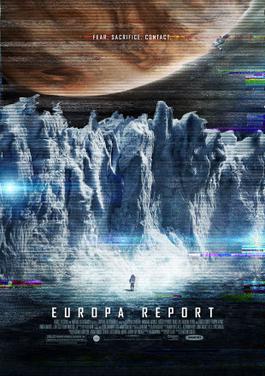
(Picture from here.)

I haven't done much on films. There's no particular reason not to but I haven't.

I decided to do one on Europa Report because of the press associated with it and Interstellar. Namely, that both films purported to be as scientifically accurate as possible. (See here.)

In the case of Interstellar there's a lot of truth in that. After all, when you have Kip Thorne as a scientific adviser it's hard to go far wrong. The problem with Interstellar isn't the science in the film. It's the film itself-- but that's a topic for another post.

In order to get at the science in Europa Report I'm going to have to talk about how the film ends. So, if you haven't seen the film and want to preserve your childlike innocence, leave now.

Okay? Then, let's begin.

Europa Report is about a manned mission to the Jupiter moon Europa. Since the entire thrust of missions looking for life in this solar system is founded on follow the water, Europa is a likely candidate. It actually has more liquid water than earth. (Here is a good description of NASA's proposed mission.) There's a fair bit of good science here along with a fair amount of drama put in for no good reason.

Quick plot summary: Europa One goes to Jupiter. After about six months of mission time they get hit by a solar storm knocking out communication. Two crew members go out to fix it, one gets killed by a plot device. The other one is haunted by guilt. Ship makes it into orbit around Europa and drills into the ice, releasing a probe. It gets disabled mysteriously. The ship lands. Crew drills through ice and gets samples: life. Biologist sees a light and must investigate in person. Ice breaks and she falls through-- camera suggests strongly she's been eaten or the equivalent. Ship tries to leave but engine malfunctions and the ship crashes back on Europa, cracks the ice and begins to sink. But the lone survivor manages to fix the communication before the ship sinks beneath the ice (and are eaten by something the looks like a tapeworm with a sea anemone for a head.) Earth receives communication and recognizes noble scientific heroes.

Now, as I said there's some good science in the film. Not great but good. There's a lot of false drama. By this I mean things that the filmmakers put in to keep our interest since the fact of finding life practically next door in the solar system won't hold us through the popcorn. Things such as the solar storm knocking out communication such that a person dies in the repairs, leaving the guilt ridden survivor there to send us a message in the end. Things like the ship missing it's landing spot. Or the engines failing on take off-- pretty much everything at the end.

Now, if you wanted to see this done right, watch Space Odyssey from the BBC. In that series the drama derives right out of what they're going through. For example, a man gets cancer from the radiation on the trip and can't use chemo since it will contaminate the water in the ship, poisoning his crew mates. Sure, a solar flare can happen. But the way they repair it, and how one crew member has to sacrifice himself for another is just bad mission planning.

You don't have to believe what is happening on the screen; you have to suspend disbelief. It's what makes the tag line for Christopher Reeves' Superman so irritation: "You will believe a man can fly." Well, no, I won't What I will do is suspend my belief that a man can't fly for the duration of this film. Didn't work for going back in time, though.

That's the problem with Europa Report: it doesn't have the courage of its convictions. I'm convinced the filmmakers initially thought we could cope with a dramatic film about science and then got scared and lost its nerve. I mean they made a lovely space suit. Europa is based on real imagery. The creatures they built could happen-- probably not on Europa, but somewhere. Weightlessness was based on actual weightlessness.

I can even suspend my disbelief that humans will ever get there. The only way we'll ever get to Europa is with robots.  Jupiter is a roiling sea of radiation and until China is ready, the rest of the manned space program is a joke. But enough of that.

I could have managed the false drama-- hey, I like a lot of films with predictable and tired drama. It's not a deal breaker. But Europa Report completely falls apart at the end.

Let's think about Europa for a moment. It's has a surface of ice on a body of water, probably with a rocky core. In a vacuum. The weight of the ice is pressing down on the water, right? There's no air pressure, right? What happens when the ice breaks? 500 km high geysers of water blasting into space. That's what.

So anyone breaking the ice to the water on Europa is blasted out into space. See a light shining through the ice? Unlikely the ice is transparent-- glacier ice isn't. Seems like there's an inherent selection against animals just hanging around on the surface. Besides which, I suspect that predators (And these were predators. No mistake.) would not dwell at the bottom of the ice flow. I mean it's possible if there were some sunlight getting through but I doubt it. I don't think there would be enough light and the places there were would likely be the ones most vulnerable to rupture-- the animals would run away rather than stay there.

A better way to do it would have been to can the false drama and get to Europa and build a mission base there. A pressurized bubble. Do all of the things you want to do-- false drama and all-- on Europa. Let's say the actually try to attract predators by mimicking the equivalent of sea weed or prey. Inevitably, they misjudge the situation (as they did in the actual film) and everyone dies but not before getting of the noble communication. That could have been good drama and good science.

I think people think of Europa Report as a good science film because it's so much better than so many others.

That's not a high bar. That's barely a paint stripe on the road.

Sunday, July 19, 2015

Plutogasm


(Picture from here.)

It's no secret what's been on my mind for the last week.

Because of New Horizons, we have now seen Pluto. Up close. Personal. And with it's pareidoliac heart open to us.

Like every other one of these missions, it changes everything we know about the solar system and planets in general. 

Pluto's one of those odd little places in the solar system that I thought about but didn't really consider. Oh, yeah-- ninth planet from the sun, isn't it? (Not anymore, Chucko! Ha! Ha! Ha! -- Neil DeGrasse Tyson) Discovered by Clyde Tombaugh. Cold as hell.

I first started thinking about Pluto as a place when I read Have Space Suit, Will Travel. Which has Tombaugh Station on the Moon and some very cold and courageous action that takes place on Pluto. (I'll talk about that book someday.)

I thought about it again when I read Niven's World of Ptaavs. In that book, Pluto used to be a satellite of Neptune that was knocked into a circumsolar orbit by the impact of an alien ship a billion years ago. (I should do a consideration of works past on Larry Niven.)

And I've been thinking about it for the last year.

I have an odd take on these long term satellite missions. NASA can always get me to write my congressman or senator for any long term space science mission. Mercury? Go. Here's my check. Venus? Should have been there for the last decade. Take the charge card. Mars? Do you even have to ask?

That said, once launched, they only register a little bit in my day to day thinking. Until they get near their destination. Once they're in place, I can't get enough of them.

Now we have some lovely pictures and over the next year we're going to get some really good scientific data. 

But for the moment, we have to content ourselves with images.

And what images we have. There's the one above. But we've seen mountains of ice. Canyons on Charon. Both Charon and Pluto are likely active. How? Why? We don't know yet. Some think it's radioactive mineral decay. Or possibly a slow freezing ocean-- I like that one but I can't think for the life of me why an underground ocean on Pluto could remain unfrozen for long.

New Horizons runs on plutonium. (Cool, right?) It cranked past Pluto for one flyby at a blistering 14.51 km/s. How fast is that? 14,510 m/s. 60 mph is about 27 m/s. So it's 542 times that. It's about five times the speed of the Lockheed SR-71 Blackbird. And it's been slowing down all this time.

NH launched at 16.26 km/s relative to earth but earth's motion gave it a boost to 45 km/s. It slowed down to 19 km/s by the time it neared Jupiter. Jupiter's motion brought it back up to about 23 km/s and from then on it coasted to meet Pluto.
Here's a picture of its trajectory. (See here.) I'd like to see it linger but you can see that would be hard to do. It would need a lot of propellant and power to turn.

It's now on its way to the Kuiper Belt running on about the same power as a nightlight. It was so streamlined for the mission that it's going to take another year and a half to get all that data back to us.

Which is fine with me. If it had been heavier it couldn't have gotten there as fast and a lot of the researchers might have died before ever knowing if the probe was successful. As it was, work was started on the probe in 1990 and launched in 2006. 25 years from start to finish. (There's a whole story of the stumbling drive to get it funded in the wiki article. Worth reading.)
Maybe it will meet other Kuiper Belt objects. We will see.

That said, New Horizons also saddens me.

We are really, really good at this. Think of Voyager. Think of Cassini. Think of Chandra. Think of Hubble. Think of New Horizons. We've sent out comparatively cheap robot missions. Sure, they cost more than a Buick. The Iraq War cost us between 7-10 million dollars a day. That's a New Horizons mission every 10 days. A Cassini mission couple of months. And we did that for years. We fight over pennies but are perfectly willing to toss billions down the drain.

But shake it off. Glory in the moment.

Okay. We've done the nine planets. (Suck it, Neil.) Where do we go next?

Robots on the moon building habitats is my choice. But a nearly permanent presence around Jupiter like Cassini would be nice.

Links:
io9's Pluto articles
New Horizon's future
Peaks on Pluto 
NASA's New Horizons Page

Addendum: FYI. Dr. Tyson is one of my favorite people on the planet. But I side with Stephen Colbert here.

Sunday, June 28, 2015

Consideration of Works Past: Lord of LIght


(Picture from here.)
 
Long before Roger Zelazny was famous for the Amber series, he won the Hugo for 1967 novel, Lord of Light. 

Lord of Light is an odd story that blends Hindu mythology, Buddha philosophy, technical progress and science fiction. It’s structurally odd as well. It begins in the now time for the story, has an extended flashback, and then returns to the “now” for the rest of the story. The transition between parts is subtle and if you don’t catch it (which I didn’t initially) you can misinterpret the book considerably.

First, a little world building.

The colony ship Star of India lands on a lovely world. The local inhabitants are incorporeal and have no actual form but are not higher beings. They took along with their transition all of the ego, anger and greed of their former lives. They resented the incursion onto their world and the colonists and crew had to fight for their place in it. During this process the crew discovers that the world or their journey or the time aboard ship—something—has released some latent powers within them. These powers allow them to tame their world. In so doing, they become like unto the gods of Hindu mythology. They retain this power and retard the growth of the rest of the world, keeping their authority to themselves.

All this happens long before the book opens.

And it opens with one of the stellar openings of science fiction: “His followers called him Mahasamatman and said he was a god. He preferred to drop the Maha- and the -atman, however, and called himself Sam. He never claimed to be a god, but then he never claimed not to be a god. Circumstances being what they were, neither admission could be of any benefit. Silence, though, could.”

Bang! You’re not in Kansas anymore.

Everything I love about Roger Zelazny is in this novel. Big action. Lovely prose. Self-involved characters. Bifurcated lines where the thread goes one way and ends up another: "Because the world has need of your humility, your piety, your great teaching and your Machiavellian scheming."

The story is a familiar one in science fiction. The authority is suppressing technological innovation for the populace’s own good. A reformer arises (or revolutionary. It works both ways in SF) to put things right. Hilarity ensues.

Except in this case the authority are those who can make a good philosophical case for being gods: they have taken on symbolic qualities of mythological beings with physical attributes as well. Who is to say their feet are clay?

Well, Sam thinks he is and there lies the tale.

Sam himself has such attributes but rejects godhood. Instead, he brings up Buddhism as a reform and makes it stick. There are a lot of such things: the philosophy of being, the nature of death, the aspect of divinity. All while making a pretty rousing tale. 

This isn’t Zelazny’s only foray into mythology and science fiction. There was This Immortal (1966), Jack of Shadows (1971), a science and fantasy morality tale. The Francis Sandow tales: To Die in Italbar (1973)  and Isle of the Dead (1969), and Creatures of Light and Darkness (1969). Except for This Immortal, they were later than Lord of Light but LOL was such a ground breaker that I don't think the others  measure up. 

The difference here is in the mythology. This Immortal is Zelazny's take on Hercules and merely hints at the underlying story. It's pretty much straight science fiction. While in the Sandow stories Zelazny creates his own mythology and in COLAD he uses Egyptian mythology. In LOL he seems to take the philosophical underpinnings seriously. Perhaps this is because Hinduism and Buddhism are living religions. I have no idea if the book is true to the spirit of Hinduism or Buddhism. I’m guessing probably not. 

However, the characters take their roles seriously. There is no real magic in the novel but there is advanced technology that people view as magic and as extensions of their divine personas. The "gods" consider what it means to be the incarnation of a mythological character and they (and Zelazny) manage the duality of underpinnings of a real world SF and the overlay of the imagined fantastic. 

This is a delicate balance that few have managed successfully.

The book has stood up well over time in part because Zelazny didn’t bother to trap himself with gadgets. The technology is cloaked in mystery so we never get a chance to check the wheels of the carriage too closely.

And it has a come from behind ending that I never, ever expected. 

It has a lesson for writers in it as well. Once a writer decides a set of guiding principles, those principles have to be present in all levels in the work. There is a fractal nature to writing in that the same principles that govern the overall structure of the novel must also guide the minor interactions. 

A good example of this is the “magic” element in LOL. At no point in the novel is it ever magic at all. Zelazny always keeps one foot on the ground. One of the main characters, Yama, the God of Death, talks about the original inhabitants of the planet that most call demons in this vein:


“If by 'demon' you mean a malefic, supernatural creature, possessed of great powers, life span, and the ability to temporarily assume virtually any shape - then no. This is the generally accepted definition, but it is untrue in one respect. ... It is not a supernatural creature.” 

“It makes a great deal of difference, you see. It is the difference between the unknown and the unknowable, between science and fantasy—it is a matter of essence. The four points of the compass be logic, knowledge, wisdom and the unknown. Some do bow in that final direction. Others advance upon it. To bow before the one is to lose sight of the three. I may submit to the unknown, but never to the unknowable. The man who bows in that final direction is either a saint or a fool. I have no use for either.”

Neither, I suspect, did Zelazny.