I just have to document this.
I recently wanted to get a new phone for my son Ben. I looked around and found visible.com. I created the account with his name but my email-- figuring once I got everything set up I would change it over for him to take care of it.
Little did I know I was about to enter hell.
So: I go through the set up of getting the phone and part way through I need to go to a meeting. I leave and come back and it says to continue where we left off. Okay.
But it can't proceed. It won't let me get past the point. Let me point out that, unlike all other commerce sites on the planet, there is no cart button. No way to empty the cart. No way to cancel the transaction. Just a little "Welcome back. Let's continue where we left off." So if I changed my mind-- well, I coudn't change my mind.
Chat with customer support. They cancel the transaction. No problem.
I do a little more digging. Decide it's the phone Ben wants. Go through it again. This time I get further. But it won't take my address. It pops up and says pick one of the selections. There are no selections. I take what I've typed in and go to google. Google finds it just fine. Go back to visible (which says "powered by google." HA!) Won't take the address. Back on the chat again.
BTW: it takes 10-15 minutes to get to a human being on chat. Every time.
They don't seem to have an answer but I'm able to finagle The Exact Match of What They Are Looking For. Which, BTW, isn't quite right. But hell, it's close enough.
I now get to the pay screen. I choose paypal. I have an amex account I use for paypal. It doesn't come up. Instead, paypal presents other cards to use. That's... weird. So I put in amex directly. It fails. Site says the card is wrong. The card is not wrong. They have the amex shield right there.
I put in a mastercard. I don't notice that it doesn't ask me the name on the card. It doesn't ask me if the billing address is the same as the mailing address-- LIKE EVERY OTHER COMMERCE SITE ON THE PLANET. No. It just takes it and I'm so irritated I don't notice.
I get a notice that everything is hunky dory. Then, about five minutes later, I get the transaction is failed.
Huh? That's when I realize. They didn't ask for the name on the card. They presumed (unlike any commerce site on the planet.) that the name on the account was the name on the card.
Okay. No problem. Breathe. I go back to the site. Surely there's a way to change the account, right? Only I can't get to the account. Instructions say: "Hover over the name and choose 'account.'" But no "account" appears. Back to chat.
Turns out that "account" only appears once a transaction goes through. Without a transaction, no account. With no account no ability to change the account to make the transaction happen.
Back to chat.
I explain: the account can't be used for a transaction as is and without a transaction it can't be changed to make a transaction possible.
Chat person comes back and says either to change the name on the account or start a new one with a new email. I like my email so person says the name should be changed in 24-48 hours. Okay. Fine.
I go back to work and then get an email about 10 minutes later: name can't be changed. Feel free to start a new account with a different email. Now I have a limbo account.
I'm going out on a limb and say that this is the worst commerce website I have ever seen. Ever. In my life. God only knows how good the service is. I'll never know.
I'm going over to google fi.
Tuesday, June 25, 2019


Sunday, February 10, 2019
Boskone 2019
This year I have a lot of panels and discussion groups at Boskone. It's 2/15-2/17. I hope to see you there.
Here's what I'm on:
My Favorite World
Format: Panel
15 Feb 2019, Friday 18:00 - 18:50, Burroughs (Westin)
What fictional (or nonfictional) world would you most like to visit? Or inhabit? What makes it particularly attractive to you? Our panelists join in a lively, fun discussion of what it takes to become a preferred planet — and whether or not we need an escape plan to get back. Why do/don't all our choices measure up? (Past, future, or alternate Earths gratefully accepted, too.)
Going Solar
Format: Discussion Group
15 Feb 2019, Friday 19:00 - 19:50, Independence (Westin)
Join aerospace software engineer and author Steven Popkes for a conversation about the possibilities of modern solar energy. How sustainable is it? How might we generate solar energy in the future? And are science fictional solar advances realistic?
Guilty Pleasures
Format: Panel
16 Feb 2019, Saturday 12:00 - 12:50, Marina 4 (Westin)
The Smurfs! B movies! All that goofy jazz. Certain entertainments or activities give us great personal gratification. But somehow, we're just a bit ashamed to admit that we like My Little Pony... or bowling ... or mud wrestling. Hear participants reveal their guilty pleasures, and why they indulge.
Can Bad Science Make Good Fiction?
Format: Panel
16 Feb 2019, Saturday 15:00 - 15:50, Burroughs (Westin)
We've all seen movies featuring explosions heard through deep space and other scientific faux pas. Some of these films are much-loved and/or are considered great despite their scientific flaws. How many transgressions against physical laws, or what sort of horrendously unscientific event, can occur before we should reject the movie or novel? How willing are we to suspend disbelief? Or does anything go if it's a good story?
Creating Your Evil Empire: A Practical Guide
Format: Panel
16 Feb 2019, Saturday 17:00 - 17:50, Harbor III (Westin)
Our crack team of evil architects takes you through a fun, lighthearted planning session on how to build effective evil empires, citing examples from film and literature. Tip #1: Never connect an exhaust port directly to the main reactor, so one paltry proton torpedo can make your shiny new Death Star go boom.
The Work of John Crowley
Format: Panel
16 Feb 2019, Saturday 18:00 - 18:50, Marina 4 (Westin)
John Crowley is an author with a powerful gift for examining what he describes as "the human condition and the human situation as it is now." Let's explore his works and try to understand his influences — from Byron to Le Guin — as well as how his fictions have influenced others. From Little, Big to Ka, where should a reader who is new to Crowley start? What expectations should we leave behind as we move more deeply into the worlds he's created?
Everything You Thneed: Climate Change and the Story of the Truffula Trees
Format: Panel
17 Feb 2019, Sunday 14:00 - 14:50, Burroughs (Westin)
Dr. Seuss's story The Lorax could be the most enduring tale of climate change — but has it helped? We follow Vandana Singh's talk with an open discussion. The summer of 2018 was the hottest on record; fire season has expanded into the Arctic; northern Africa has seen the relentless expansion of desertification; species are migrating to historically new areas on land and sea; ice is melting in all of the wrong places; and we're experiencing the most powerful storms in history. As Margaret Atwood said, "It's not climate change — it's everything change." Can the science-fictional imagination help us address the problem on a global scale? If so, how? Our panelists talk about sparking real change for lasting action.
Here's what I'm on:
My Favorite World
Format: Panel
15 Feb 2019, Friday 18:00 - 18:50, Burroughs (Westin)
What fictional (or nonfictional) world would you most like to visit? Or inhabit? What makes it particularly attractive to you? Our panelists join in a lively, fun discussion of what it takes to become a preferred planet — and whether or not we need an escape plan to get back. Why do/don't all our choices measure up? (Past, future, or alternate Earths gratefully accepted, too.)
Going Solar
Format: Discussion Group
15 Feb 2019, Friday 19:00 - 19:50, Independence (Westin)
Join aerospace software engineer and author Steven Popkes for a conversation about the possibilities of modern solar energy. How sustainable is it? How might we generate solar energy in the future? And are science fictional solar advances realistic?
Guilty Pleasures
Format: Panel
16 Feb 2019, Saturday 12:00 - 12:50, Marina 4 (Westin)
The Smurfs! B movies! All that goofy jazz. Certain entertainments or activities give us great personal gratification. But somehow, we're just a bit ashamed to admit that we like My Little Pony... or bowling ... or mud wrestling. Hear participants reveal their guilty pleasures, and why they indulge.
Can Bad Science Make Good Fiction?
Format: Panel
16 Feb 2019, Saturday 15:00 - 15:50, Burroughs (Westin)
We've all seen movies featuring explosions heard through deep space and other scientific faux pas. Some of these films are much-loved and/or are considered great despite their scientific flaws. How many transgressions against physical laws, or what sort of horrendously unscientific event, can occur before we should reject the movie or novel? How willing are we to suspend disbelief? Or does anything go if it's a good story?
Creating Your Evil Empire: A Practical Guide
Format: Panel
16 Feb 2019, Saturday 17:00 - 17:50, Harbor III (Westin)
Our crack team of evil architects takes you through a fun, lighthearted planning session on how to build effective evil empires, citing examples from film and literature. Tip #1: Never connect an exhaust port directly to the main reactor, so one paltry proton torpedo can make your shiny new Death Star go boom.
The Work of John Crowley
Format: Panel
16 Feb 2019, Saturday 18:00 - 18:50, Marina 4 (Westin)
John Crowley is an author with a powerful gift for examining what he describes as "the human condition and the human situation as it is now." Let's explore his works and try to understand his influences — from Byron to Le Guin — as well as how his fictions have influenced others. From Little, Big to Ka, where should a reader who is new to Crowley start? What expectations should we leave behind as we move more deeply into the worlds he's created?
Everything You Thneed: Climate Change and the Story of the Truffula Trees
Format: Panel
17 Feb 2019, Sunday 14:00 - 14:50, Burroughs (Westin)
Dr. Seuss's story The Lorax could be the most enduring tale of climate change — but has it helped? We follow Vandana Singh's talk with an open discussion. The summer of 2018 was the hottest on record; fire season has expanded into the Arctic; northern Africa has seen the relentless expansion of desertification; species are migrating to historically new areas on land and sea; ice is melting in all of the wrong places; and we're experiencing the most powerful storms in history. As Margaret Atwood said, "It's not climate change — it's everything change." Can the science-fictional imagination help us address the problem on a global scale? If so, how? Our panelists talk about sparking real change for lasting action.
Sunday, October 28, 2018
State of the Farm: Fall, 2018

(Picture from here.)
Man, it's been a while.
Yes, I’m alive. Yes, I still do this. But it’s been a crazy busy summer and I’ve had some shoulder issues that make sitting and writing difficult. Consequently, I’ve been giving my own fiction priority.
But it’s getting better.
It was a very, very strange summer for the farm,
too.
Things looked pretty good back in May. Good, warm
weather. Bees out—mostly. They missed the Cornelian Cherries. The CC’s came out
in a cold late April and the little guys just weren’t up for it. Maybe next
year.
Not much in the way of caterpillars. Everything
got pollinated. Fruit was set and *BAM!* Three weeks of cold, wet weather.
Since we have two cedar trees, we have a cedar
apple rust reservoir. Since I really like those trees—they remind me of
Missouri—the problem isn’t going away anytime soon. It doesn’t help that
sometime about forty years ago planting cedar trees was very common. I have no
idea why. There is a grove of them in the nearby state park. Several houses
have little lines of them in the front of the house. They don’t seem to
propagate up here and now all those groves and lines are dying and being hauled
out. It doesn’t help that they are not so fashionable now. But I take care of
mine.
Every year we have a little apple rust on the
apple trees. Nothing major. But *this* year, the stuff went nuts: all of the
lower leaves were covered with weeping sores. Really ghastly stuff. And, lo and
behold, *this* year is when we get apples. A real crop for the first time in
twenty years. Yay.
In previous years, black knot hasn’t been much of
a problem for the crop but did major damage to the plum trees. Then the three
weeks of rain. Every plum showed new black knot and even the nearby apricot got it. I didn’t even know that
was possible.
We’d had enough. We had a prune plum that seemed
to be the main reservoir that had already infected the pluot next to it. We ripped out both of them.
Then, we went through the remaining plums and cut off all of the black knot
branches and burned them. We sprayed a relatively mild fungicide over the
remainder. This winter it’s dormant spray: a fungicide so arcane and powerful
it will kill the tree if it wasn’t already asleep. Go team.
In the spring, Wendy hatched about twenty five
eggs. When the weather warmed up we brought them out into the chicken house.
They’re fun to watch. Our dog, Penny, thought so, too. She’s only eleven pounds
but turned out to be more than a match for a half dozen chicks. We were all
pretty sour about that. Wendy didn’t say much but I think the dog was lucky to
live. A few more eggs to hatch.
It warmed up in June and we started getting
peppers and tomatoes. I kept a close eye on the fruit trees. I put deer cages
around several young ones and they survived the winter fairly well. The ones
that I didn’t protect were severely eaten. More deer cages in production. One
nectarine died mysteriously: came out in leaf and blossom and went suddenly
brown. No evidence of disease. We’re still looking at it.
Peaches came in well. We have about forty pounds
in the freezer. The apples came in at about sixty pounds. They look horrible:
knobby and discolored with a black fungus pattern. We waited for a bit to figure
out what to do about the apples.
Then, in record heat in August and early September
followed by *more* cold rain.
We harvested the garden. We tried a blue corn we
got at the Topsfield Fair last year but it
didn’t do well. Back to Bloody Butcher next year. I always get
a kick watching people slow down to look at the eleven foot plants.
The grapes did very well. I got about fifty pounds
from the Concords alone. Froze them. Thawed them and now I have seven gallons
of Concord wine cooking in the kitchen. I make a good Concord wine. The batch I
made up last year turned into Concord wine dry champagne. Very, very good. My
fundamental rule for all things that come from the earth: everything is (or can
be) alcohol.
Then, there were all those apples.
A couple of years ago I built a solar dehydrator
but it actually requires the sun and we weren’t getting much. I’d follow my go
to rule and turn them into alcohol but apple wine and Wendy don’t get along
well. I broke down and bought a new dehydrator. Which I really, really like. In
addition, I had a Victorio apple peeler I had from God knows where. I clamped that puppy down and started making spiral
cut apples which I then turned into rings. This appliance is fast. I blew through fifteen pounds of
apples in less than 15 minutes. It took longer to place the rings in the
dehydrator trays than it did to make them. It works on potatoes, too.
Wendy pointed out that the Victorio had a specific
thickness that was nice for eating but less nice for cooking. She felt that
dehydrated cooking apples needed to be thicker.
Now the leaves are falling fast. The only outdoor
fruit left are the persimmons—which make a terrific wine, by the way. Tastes
like brandy. Everything is alcohol.
We have some plum trees to replace the ones we
pulled out. We’ll be planting them as soon as they go dormant and hope for the
best. In the greenhouse bananas are coming in. The Ponderosa lemons are huge.
The papayas are doing well. We might have a couple of pineapples by spring.
The roosters are pretty big now. When eleven
roosters start to form a choir it’s time to have them… taken care of. We’re
keeping a few of the females and selling the rest. We should be good for eggs
this winter.
It’s been an odd year. But these days with global
warming they’re all odd. Little is dependable.
That said and all complaining aside, we have wood
for the wood stove, fruit and wine in the cellar, chicken in the freezer, fish
and fruit in the greenhouse.
Life is good.
Addendum:
When I wrote the above we had something like
twenty-five chickens: eleven roosters, five hens and the remainder hens we were
going to sell. The idea was to end up with 1 rooster and five hens.
We split the group up so that the chickens that
were not destined to stay in the main chicken house and the ones we were going
to keep in the spare chicken yard—where we keep chickens that don’t fit for one
reason or another into the main yard.
Then, in the night, something got into the spare
chicken yard and killed. Every. Last. One.
We think it might have been a fisher cat.
I take solace that since the fisher is somewhat endangered that, like Matthew Broderick said in Godzilla, we fed it.
So, now we still have the roosters—who are slated
for delivery into the next karmic zone in the next week or so—and the hens we
had decided we didn’t particularly want. Which are now our egg layers for the
winter.
*sigh*
Life is still good. It’s just confusing.
Sunday, July 8, 2018
Considerations of Works Present: Avengers, Infinity War
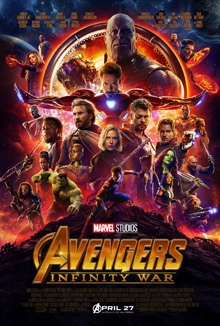
I’m going to talk about Avengers: Infinity War root and branch. I’m
going to talk about other films like it. If you don’t want to know what goes on
in the film, don’t read much further.
I will say this at the outset: A:IF is a well made
film and the visuals are terrific. So go see it.
SPOILERS-SPOILERS- SPOILERS-SPOILERS
There. That’s out of the way.
There’s an interesting trend in the Marvel universe that I
very much like—and, in fact, see rarely in comparable films about the
fantastic. That is, the stories are not about the fantastic at all. These are
not films about superheroes; they are films about human beings that happen to
have superpowers.
I think I first started noticing the distinction back in
2002 with Firefly. But I couldn’t
have articulated it at that point. That came when I saw Hancock.
Hancock is a film
where the main character, John Hancock (Will Smith) is endowed with superpowers
and lives pretty much as a bum in Los Angeles. He’s an amnesiac drunk who does
heroics in the worst possible way. It was poorly received. I don’t really know why—I thought it was terrific because it had no super
villain. The protagonist is his own worst enemy—the story is how he figures out
who he is in the absence of having any memory of who he is. Possibly the expectations were a superhero movie. What they got was a human being coping with problems who happened to
have superpowers.
Now, don’t get me wrong. I hate what I call high school movies or high school television. By
that I mean teenagers (or people who act like teenagers) that have angst about
who they are, flip through relationships and the stories devolve into will
he/won’t she fall in love? My own
experience in high school was that it was a great place to escape. Adulthood
was much more fun and way more complicated. Hancock
had no high school and there was little romance and the protagonist doesn’t get
the girl. The girl is happily married and stays that way.
So: a long path to the Infinity
War.
Marvel has been building up tp A:IW for ten years. It has a
main cast of maybe forty people? Fifty? If you haven’t been watching the
previous films you won’t know who they are. This film is for those of us who
have.
That said, how do you film a movie about forty people?
Answer: you don’t.
It reminds me of the kid’s riddle: you don’t get down off an
elephant; you get down off a duck.
The film is, instead, a situational biography of the “villain”
of the piece, Thanos. The forty people are the supporting cast. We learn who
Thanos is. Why he’s doing what he’s doing. How he’s doing it. And how he
ultimately succeeds.
It reminded me of Spielberg’s Lincoln. Lincoln
encapsulates all of the relevant biography of Abraham Lincoln in his struggle
to pull together the 13th Amendment after the war is over. The
action circles around that work but must reflect who Lincoln was and who the
presidency and the war has made him.
Similarly, A:IF is all about the struggle of the Avengers,
Guardians of the Galaxy, Dr. Strange, Spiderman and everybody else to keep
Thanos from his goal: to halve the population of the universe.
(One pet peeve: I hate
people talking about “the universe” frivolously. As if even someone with God
Like Power could have much effect on a thing 13.7 billion years old and 91 billion
light years across—and that size is only the observable universe. Make it “the
galaxy” or even better “the local spiral arm.”)
Why? Because he has seen his own world and others destroyed
by an ever increasing populace. He’s buying time. Not much time, either. We
went from 3 billion people to 7.4 in 48 years. So, at best, he’s given the “universe”
fifty years. But, hey. At least, he’s trying.
He sacrifices his daughter, his kingdom and everything he
has to get there and nearly fails but ultimately succeeds and half the
population disappears into smoke. He ends up resting peacefully by the side of a lake.
There’s a lot to unpack in A:IF. For example, we learn that
heroes make lousy soldiers. Twice, the heroes almost win but fail due to their
own inability to think strategically. The first time, they’re trying to pull
the gauntlet off Thanos’ hand while he’s asleep. (Why Iron Man or Dr. Strange
just cut the arm off is an interesting question.) But the emotionally
overburdened Peter Quill beats on Thanos because of he murdered his love and
wakes him up.
The second time is when Thor goes for the dramatic strike of
his axe to Thanos’ chest. Even Thanos realizes this was a mistake: “You should
have gone for the head.”
It’s Hancock all over again: there are consequences to
actions and heroes don’t often consider them well. Super people are those
endowed with the powers but aren't the best suited for the job.
We do learn a bit about the supporting cast—there’s a
substory involving Banner and the Hulk,who is beaten to a bloody pulp by Thanos
just for fun and then won’t come out regardless how much Banner pleads with
him. Poor Peter Parker clearly doesn’t want to die—that’s a pretty sad scene.
We might get a save from Captain Marvel but who knows how that’s going to come
out?
Which brings us to the last bit about A:IF: what’s next?
I don’t mean just what’s going on in the next movie. I mean that Marvel may have done their job too well. This is good movie.
It has profound implications for the rest of the Marvel Cinematic Universe. And
they’ve announced three movies a year.
They’re clearly going to bring back the dead. What’s
Guardians of the Galaxy without Gamora? No smoke for her: she was outright
killed. Same for Loki. Same for Vision. Gamora was dumped off a thousand foot
cliff. Loki was strangled. Vision had his brain plucked out.
And that’s just the onscreen killings. What about all those
people smokified?
The problem is that if the Marvel brings them back cheaply
it breaks the MCU. They potentially are going to use time travel but that is
the cheapest of cheap solutions and I’m not sure if I’d watch any more after
that.
My wife came up with a really good idea. One of the infinity
stones is the “soul gem.” She thinks the smoked were pulled into the soul gem.
We ran with this and came up with the idea that inside the soul gem is a whole
world where the people in the gem saw the other
people turn to smoke. They think their world is real. The story then when people both
inside and outside of the gem begin to understand where everybody is and
begin to push against the boundary. That would be fun.
That leaves the problem of the truly dead—Gamora, Loki and the
Vision—as an exercise for the intelligent reader.
Sunday, July 1, 2018
On Koko

On June 19th Koko the gorilla died.
I have to say, this had more impact on me than the deaths of other well known people. In the last few years I’ve mourned many people I respected and whose lives enriched mine. Some deaths were expected from age. Some were a surprise—those are somehow harder. But the two that have the most effect on me were Alex, Irene Pepperberg’s long time associate, and now Koko.
We raise turtles and have done so for over twenty years. Some have become part of the family in the sense that they will never be sold regardless of whether or not we can breed and sell their offspring. It has become clear over the years that these animals can recognize individual people. They come for food for some and not others.
Koko and Alex and our turtles are wild animals—they have not been condition over thousands of generations to love us like cats and dogs. Whoever they are came from evolutionary conditions in which we did not participate.
Several years ago we had a sulcata named Ibn. We grew him as a hatchling until he was better than fifty pounds. During the summer he had the run of the back yard. Often, he would come over and nudge my ankle for a treat or a scratch. These are what I would expect from any associative learning.
But other times I would sit in the back yard and Ibn would leave his usual spot where he grazed and came over nearby and recommence grazing next to me. This happened enough times that I couldn’t just attribute it to checking me out for food or a good scratch—he didn’t indicate that to me with a nudge. But he came to be near me just the same.
These are animals that diverged from our line over two hundred million years ago. There is little common ground between us. But between me and Ibn was something. There was something about being near me he liked. It wasn’t a friendship. It wasn’t anything remotely like anything a human might call a “relationship” except in the broadest terms. But it was something.
This is what made Irene and Alex so interesting. It was clear Alex and Doctor Pepperberg had a real relationship—more than just call and response or task and reward. Yet, Alex’s lineage was just as far from human as Ibn’s. Alex had a wonderful mind and spirit but whatever powered was not the same as what powered ours. All of the brain enhancements that made us human happened since that divergence. If Alex had feelings for Pepperberg—and all signs point to yes on that one—he felt them and expressed them using machinery we did not have.
I have been following Koko since the late seventies. What she and Francine Patterson did together in terms of communication was nothing short of remarkable. But that is not what is profound here is not the work they did together but the deep and lasting relationship they had.
It is easy for a human being to love another human being. While we’re all very different, from any perspective outside of our own species, we’re all pretty much the same. We work hard at that and it’s not a bad thing. When we try to see other points of view we draw ourselves closer. I’m not saying we’re not all individuals—we truly are—but perhaps no more individualized than many other individuals within a species. It’s an intraspecies thing.
Gorillas aren’t that different from us. They have a big primate brain. The brain is shaped a lot like ours. We didn’t diverge from them more than ten million years ago—more than twenty times that for Alex or Ibn. They’re practically cousins in an evolutionary sense.
They are, in fact, close enough that when we bridge that gap we can be fairly certain that what we recognize on the other side is probably not our imaginations.
I have no doubt that Francine Patterson loved Koko. It’s obvious in her filmed interactions with her. With the way she rewrote her life around Koko. I don’t think Patterson had any illusions about Koko. I don’t think she thought of Koko as another human being the way we so often foist our own species image on other animals. Right now she is no doubt heartbroken and grieving.
I have no doubt Koko cared for Patterson. There is something in the films—some difference between how Koko interacts with her and how Koko interacts with anyone else—that suggests that to me.
Where humans are really at their best is when we try to honestly reach across that species barrier. We do this all the time and if there is anything divine or magnificent about human beings, this is one place where it appears.
It’s not surprising when we love them. It’s a gift when they love us back.
Sunday, May 6, 2018
State of the Farm: Spring 2018

It has been a long winter.
Last year we had an incredible caterpillar infestation. Many
of the fruit trees didn’t bear at all—either the blossoms or the early fruit
buds were destroyed by gypsy moth or tent caterpillars. The garden wasn’t
attacked by those little, bristly creatures.
We keep box turtles in the east garden and they love to eat
anything that moves. I’m confident that any caterpillar that feel from the
maple tree met an unpleasant, squishy death. The turtles grew fat.
The main
garden has an apple in it and while the apple was attacked, the caterpillars
didn’t bother the vegetables. They left that for the cold, wet June. Many of
our plants either never got warm enough to blossom or, if they did, never grew
much. We had watermelons that set in August but up here in New England, what’s
the point?
We got a few potatoes, a fair amount of corn. No peppers or
eggplant to speak of. Not much in the way of tomatoes or tomatillos. We tried
planting cold crops but as soon as they grew large enough to eat the hot
weather came in and they didn’t do very well.
If it’s not drought, it’s wet. If it’s not caterpillars,
it’s potato bugs. Welcome to New England.
I sprayed the fruit trees like a mad man. Wendy wrapped the
trees the gypsies liked in tanglefoot tape. We were happy none of the caterpillars liked the pines since we have a lot of
them on the property.
It’s interesting to watch the slow war that happens on the
property. Half our property is wooded. In the south side there are two huge
pines, a massive hickory and some smaller trees—including a small stand of
struggling birches. . On the east side is a grand maple and oak and to the
north and west a stand of sixty foot pines.
There are some deciduous trees amidst the pines on the west
side. This is a stand only a half dozen trees thick between us and our
neighbors. Consequently, they’re vulnerable to a windstorm. Every year I sweat
the inevitably increasing storms, wondering if this is the one that brings a
pine down on the house. So far. So far.
Because the stand is so thin there’s enough penetrating
light to allow deciduous trees to get started: cherries, maples, ash. All trees
we like. But they’re at war with the pines.
I mean it looks
peaceful. These pines shed their lower branches as they grow so the understory
filled by the smaller trees gives us a buffer in the summer. But a maple has
height on its mind and these damned pines are in the way. The deciduous trees have a broader root base than the pines so
I imagine four fifths of this war is taking place under ground.
Cutting the understory out is a long standing discussion.
Cut out the ash? It’s under attack by many imported pests in our area but these
trees are vigorous and strong. There are a couple of maples—one swamp and one
sugar. Cut out the swamp? It will be a pretty tree, says one side. It’s going
to drop the pines on us, says the other.
Cut out the cherries and lose the pies. This discussion has been going
on for twenty years. It’s not going away soon.
The winter was hard on a lot of trees. It snapped to so fast
in the fall several trees never lost their leaves. Then, in the late winter, we
had a series of wet snow storms and lost a lot of branches and trees. Nice wood
but still. I especially regret losing a lot of our chestnuts. We make a pretty
good haul in chestnuts every year. Not this one.
That big hickory split four different massive limbs, the
lowest is forty feet over the ground and droops menacingly over the drive way.
I have a long saw but it’s not that
long. Several birches fell down and a whole lot of pine boughs. We cleared up
most of it but I left a pile in the corner of the lot. It took down the fence
and has now replaced it in our dog’s mind. I can’t pull it out until I’m ready
to repair the fence.
All that said, spring has been glorious.
Last year I cleared at least fifty gypsy moth egg clusters.
Maybe a hundred. This year I cleared three. The trees are blossoming
ferociously. None of them show caterpillar damage. (Yet. I keep telling myself.) This year we could get apples. There’s
an odd kind of peach I have growing on one of the espaliers that I have my eye
on. It’s never set fruit. Every one of the apples has blossoms—even ones that haven't had blossoms in twenty years.
We’re redoing a lot of the fruit trees. We have one
nectarine that produces leather or brown mold reliably every year. It’s a
grafted dwarf. Some squirrel gifted us with a volunteer in another corner of
the property. That produced a nice nectarine so we think the root is the
problem. We have a replacement but it hasn’t woken up. Not promising.
We also finally did in two plums that were covered in blackknot. We have
replacements that I have to put in. We have seedlings waiting in the
greenhouse.
The greenhouse fruits are also really kicking in. We have
guava, pineapple and papaya setting fruit. No banana blossoms this year but we
cut the trees down hard last year so it may be a bit. We picked up some
interesting fruit trees from Logee’s last year—some lemons, kumquats and the like. We’ve had bad luck with the
citrus in the past. They get a smut in the greenhouse we can’t seem to shake.
But the Logee greenhouses have varieties that seem to tolerate it so we’re
trying again.
Lastly, we have a wood crop this year.
Remember all that dropped wood we had last year? Well, I cut
it up and then sealed the ends so they would dry without checking. (A fancy
word meaning the ends crack. I just wanted to sound cool.) It’s been a year so
they should be dry now. I’m going to pull the lathe out into the driveway and
make some turning wood.
Things look (cautiously) optimistic.
Sunday, April 22, 2018
Consideration of Works Present: 1491
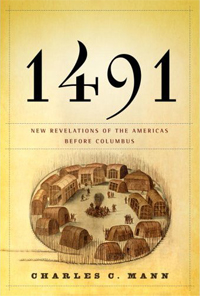
I just finished 1491 by Charles C. Mann.
I am very impressed.
There’s a lot to unpack in the book but fundamentally, it lays bare an assumption that I never realized I was making. One that I think we are taught continually in American culture.
I think it’s best phrased the following way as a sort of logic proposition.
- We know that in the “Old World” that humans put their mark everywhere they touched. It shows everywhere. In cities. In fields. In old monuments.
- We know that that humans are intrinsically the same. That is, all humans share the same capabilities of cognition, dexterity, etc. We express it different ways but one of the fundamental traits of being human is our ability to shape the environment to ourselves.
- Why should we ever consider “New World” humans any differently?
Once this proposition is exposed—and the obvious
answer is that “New World” humans are not
different—we have to look at the landscape differently. I.e., the “wilderness”
we think of was not a wilderness at all. It was sculpted every bit as much as
the “Old World”—differently, of course. Humans in the Americas had a different
tool set than those in Africa, Europe and Asia and thus we can expect different
outcomes. But that’s a difference in quality not quantity.
(For purposes of this discussion I’m going to
follow Mann’s utilization of the word “Indian” to describe pre-Columbian
natives of the America’s. He has a long chapter where he explains why he chose
that word. Since he used it, and I’m talking about his work, I’m going to use
it here.)
The reason that Europeans came up with the idea
that the land they saw was “natural” was that by the time they explored it, the
land was empty. Most of the native population died of introduced diseases long
before they saw a European. The empty land was full of game and plentiful
fruits and nuts—a natural paradise. Except it wasn’t natural at all. Europeans
reaped the harvest without ever knowing how cultivated it was.
There’s a certain foreshortening of history that I
think Americans are susceptible to. We have incredibly short attention spans
and cling to myths and beliefs against all evidence. One of the problems with
the American visualization of native populations is how it’s is based on a very
narrow window of time. American imagery comes from the Time of the West—the
forty years or so after the Civil War and before 1900. The remainder think
about Thanksgiving but when they do, often they conflate the two, dressing the Indians
in garb from two hundred years later and a thousand miles away.
The history between 1492 and the present—better
than five hundred years—is, of course, much broader than that. The Indians
didn’t all die at once—there were long stretches of time where there was significant
comingling of the cultures. But vast numbers did die.
There’s one story that rung out for me: the story
of Tisquantum who has become known as Squanto in the Pilgrim story. Tisquantuam
was kidnapped to Spain about 1614 and spent several years attempting to return.
When he left his village and the other villages in the area around Plymouth
were vibrant and numerous. The coastal area was heavily populated all the way
up into Main.
When he returned, it was
desolate. His home village was gone. Where there had been tens of thousands
there were not tens. The Pilgrims had squatted in the ruins of his old village.
Tisquantum ended up living with them. Did he live there because this was the
only thing that remained of his old life? Because after his time away, and this
terrible loss, he ended up having more in common with those that lived in the
ruins than the remainder of other tribes?
Mann tells these sorts of stories all through the
Americas from Canada down to the tip of South America. Ecological triumphs such
as the mispas—areas of combined
cultivation of maize, squash and legumes where the heavy feeders (maize) pulled
nitrogen from the soil that had been fixed from the atmosphere by the legumes.
Some areas had been continuously cultivated for hundreds of years.
There were also ecological failures. The Mound
Builders of Cahokia took to the introduction of maize with a vengeance and
nearly destroyed the clay soil. There are evidences of washouts when the
Mississippi flooded the area. Then, those washouts disappeared. The population
figured out what they had done wrong.
There are stories of the rise of cultures through
wonderful vision and the fall through nothing more than mean spiritedness in
interesting parallels to similar patterns in the Old World.
Man introduces a number of controversial points
and brackets them with the counter arguments and why he made his decisions. You
can argue with these points and you’ll be in good company—these arguments are
still going on as more and more evidence is being accumulated.
Even so, it changed my perspective and I welcome
that.
Highly recommended.
Subscribe to:
Posts (Atom)

 Posts
Posts

