Monday, June 21, 2021

Consideration of Works Past: The Manchurian Candidate


 (Picture from here.)

This is regarding the original 1962 film with Angela Lansbury and Frank Sinatra. The later remake sort of answers the question, “what if we rebooted The Manchurian Candidate without any of the understanding, humor, and themes of the original?”

I didn't see The Manchurian Candidate until long after it came out—I was 10


As a kid in Los Angeles, I watched way more television than I should have. Back then there weren’t such things as made-for-TV movies and though there was a lot of material there was also a lot of dead air time. Stations made up for this by showing old, and cheap, films from the—you guessed it—twenties, thirties, and forties. With a few monster movies of the fifties added in for spice. By the time we left for Alabama, I had seen a substantial number of films from those times. My movie heroes were W. C. Fields, Fatty Arbuckle, and Joe E. Brown. Most of my contemporaries didn't know who they were.


I had even seen the original Death Takes a Holiday—not to be confused with Meet Joe Black, which answers the question, “what if we rebooted Death Takes a Holiday without any of the understanding, humor, and themes of the original?” Wasting the talents of one of the greatest actors of all time was just a perk.


When I did finally see The Manchurian Candidate in the late seventies, I liked it very much. Later, after reading Prizzi’s Honor, I got on a Richard Condon kick and read the novel. Which is brilliant and someday, when I re-read it, I’ll do a column on it.


Then, just last week, I found a streaming source for TMC without commercials. I watched it and, this time, I was pretty amazed how it stood up.


Nowadays, the film is a period piece so there is absolutely no feeling of this could happen here with it, recent political years notwithstanding. I think it would be extremely interesting to talk about it with someone that saw it as an adult in 1962. I have no emotional understanding of the 1962 political landscape. It was a year into the JFK administration and a year before he was killed. I was 10. My political understanding is forever twisted around the JFK assassination. Other people in different age groups may have different understandings.


A quick synopsis of the film: Ben Marco and his squad are captured during the Korean War. When they are found, Marco recommends his sergeant, Raymond Shaw, for the Medal of Honor. Shaw is the stepson of John Iselin, a hack senator that is making his reputation on false Communist accusations, recalling Joe McCarthy. Iselin is managed by Shaw’s mother, Eleanor. It’s clear in the first five minutes of the film, Shaw despises John Iselin and hates his mother. He informs them he’s taking a job in New York with noted liberal Holbert Gaines.


Marco has become an intelligence officer. He is having nightmares about the Korean experience. This revolves around an upper-class women’s garden party where he and his squad are stuck and the women change randomly into uniformed men. He desperately tries to interest his superiors in the nightmare, saying something is fishy about the whole thing. His superiors are not interested and think he’s cracking up and send him on compulsory medical leave.


The nightmares show that Marco, Shaw, and the rest of the squad were brainwashed. Marco and the men were conditioned to support the story that gave Shaw the medal. But Shaw has been brainwashed to be the perfect assassin.


While Marco is on medical leave, he meets Rosie Cheyney in one of the most idiosyncratic, romantic conversations in the history of cinema. It is relatively true to the book. I think it is my favorite scene in the film.


I won’t spoil the rest of it. It is a thriller. It lives up to the hype. Go see it.


There is one time period tic that one must overcome in watching the film these days: the narration. Just ignore it. It derives back from the days when film makers or producers didn’t really believe the audience could possibly be intelligent enough to figure things out on their own. Any information in the narration could have been done in a quick scene. I’m convinced John Frankenheimer must have had it forced on him—the rest of the film relies on the intelligence of the viewer.


The visual storytelling has a certain quirkyness to it. At some points, there are shadow shots that look like they came from The Cabinet of Dr. Caligari. There are handheld shots that feel very much like cinéma vérité. But it all lies fully within the scope of American filmmaking. At no point does it feel like Frankenheimer is trying to be anything other than that. It just feels like he uses whatever techniques at hand to tell this story.


Condon’s novel, and this film, are interestingly subversive. The heavy-handed narration in the beginning suggests it’s going to be some kind of moralistic war film. But the moral nuances remain gray. In some ways, it reminded me of A Touch of Evil by Orson Welles. Same idiosyncratic personal style. Same gray morality.


What I liked about it—and what I take from it in my own work—is the absolute lack of a one-dimensional villain. Eleanor and John are clearly terrible people with an evil agenda. But they are human beings with flaws, failures, and strengths. Shaw is a truly dysfunctional human being and fails at his redemption, but he was worthy of redemption and tried to achieve it. Rosie does her level, quirky best to save Marco from this swamp of moral ambiguity and by the end of the film or the novel it’s not at all clear that she is going to succeed.


Another thing I liked about this work is the sense that life goes on beyond the work. These days, we have a flat out obsession with sequels. Even Condon was not immune. After Prizzi’s Honor, he wrote Prizzi’s Glory.


But in researching this, I found no indication that Condon wrote or ever intended a sequel to The Manchurian Candidate. For this, I am glad. Both the film and novel are integral to themselves. It’s a window into the lives of the characters. At the end, they walk away out of our sight, gone but unforgettable.


Monday, June 7, 2021

Oh, yeah. Characters.


(Picture from here.)

The 1978 Clarion Workshop Rules for Writing:

  1. Use other words
  2. In a different order, too
  3. Oh, yeah. Characters.

A while back I talked a bit about my writing process. I left out how I create characters. Sure enough, one of my two readers asked me about it.

So, I hemmed and hawed. Turned on them ferociously. Whistled and tried to walk nonchalantly out of the room.


All because I’m not sure how I do it.


Remember I discussed a given take on an idea. This was an approach or method. A take almost always involves people doing something with that idea. People who have some kind of vested stake in the outcome of what is going one. This gives me the shape of a character.


Some people call that a role but it’s not like that. A role is something that someone plays or a set of characteristics that need to be fulfilled. That tells me what a character could do or the purpose the character serves. But a character is a person. What they do does not directly involve who they are.


The shape of the character tells me what sort of person might gravitate towards that role.


For example, let’s say there’s a SETI scientist in the story. To be a scientist implies a thoroughness of approach, some significant cognitive horsepower, a fair amount of schooling of some sort. To work for SETI implies someone that can handle long efforts with little payoff. Those are the character requirements. Within the story, it might be someone who isn’t intimidated by new ideas or encountering extraterrestrial aliens. (I am an SF writer after all. Aliens come in at some point.) The person has to be somebody either that is approachable by the reader or interesting enough to hold the reader’s interest even though he’s repellent. (Think pretty much any character in Game of Thrones.)


The character might have to be articulate to explain the plot, athletic to run around while chased by evil, able to hack a computer with dark net technology, woo the romantic interest and be rooted for during necessary sunset sailing at the end of the story.


Okay. That might define a role. It does not define a character. But it does suggest the shape of a character.


Back to SETI: this is an organization that has never had any success. It continues to search for clues out there for any sign of intelligent life without any assurance of success. Think about it. The aliens might have sent out whole volumes of material just before their sun went nova and it passed through our solar system in 1890. Or it might have just been sent from Kepler-1659c last week to show up sometime in the spring of 2322. SETI pretty much defines a thankless scientific task. Sure, it might turn something up. More than likely it won’t and it hasn’t.


What sort of scientist would dedicate some or all of their time to this effort? Say, we’re talking an astrophysicist. Surely there are better paying jobs than SETI. More rewarding jobs, even. So, maybe our scientist likes lost causes. Or passionately believes in SETI. Or is dabbling in it because a little craziness on the resume suggests creative thinking. These are character shapes.


Back in 2007, before he descended into schtick, Jeff Goldblum starred in a short-lived police drama called Raines. I have nothing against schtick, but Goldblum has serious chops and we don’t get to see them much anymore. In Raines, they were on full display. The main character, Michael Raines, was a detective who hallucinated the victims in the homicide cases he worked. What was interesting about that, and why it’s relevant here, was that the character of the hallucinations changed as Raines found out more about them. He might start with a teenage girl as virginal cheerleader, who then transforms into harlot, then into studious bookworm.


This is how characters transform from shape to person. Personhood accretes from knowledge.


We start with a character shape and role. Well, that requires information and data to understand. If we’re talking about an articulate SETI astrophysicist with a fetish for lost causes, we need to do a little research. What does SETI do? How does it do it? What does an astrophysicist do? How is it done? What is our scientist’s specialty?


Then, we start to drill down: what did he do his thesis on? Where did he go to graduate school? Undergrad? Did he have loans to work off or did he have scholarships? You have to want to be an astrophysicist. No one is born Brian Greene. It takes work and those same skills can be used to game Wall Street. What drew our scientist to astrophysics and then to SETI? More interestingly, what choices were made to scale down the character’s ambition?—looking for aliens is a big, impossible ambition. What did our scientist decide to do that was possible and in the direction of that big, impossible goal? Oxygen detection on exoplanets? Radio analysis of signals?


What does our scientist do when he isn’t sciencing? We like to pretend that people are their jobs but it isn’t so. I worked for a medical researcher at one point that was also a professional cellist. One coworker I knew played trombone in a swing band. Is our scientist happily married? Divorced? Widowed? With kids? Had a child, lost it, the grief destroyed the marriage?


A lot of writers I know build characters like machines. Plug the marriage in there. Adjust the flow of sex and add in some dissatisfaction.


I can’t do that. It’s like outlining—I know writers that do that, too. Every scene blocked out. I can’t do that, either. If I do that, if I know everything, the well dries up and the work is never completed.


So, I just keep thinking about them. Try this on them. Add kids—a possible complication because that means the kids are characters in the story, too. Same for dogs. Add a spouse—same problem. But a misfit loner has problems, too. What fits? What doesn’t?


And the fit can’t be too exact. A character that is molded to fit the role is unpleasant and not terribly human—unless that’s the point of the story. One of the interesting scenes in Patton at the end of the war as an image of someone who’s lost their purpose.


Often, I’ll get to a point where the shape of the character is sufficiently detailed that I can start working. Then, I learn about them as I go. Heinlein said he wrote until the characters started talking to him and then he knew it was time to stop. From my point of view, that’s about when things are getting interesting. That’s when the characters start doing things on their own. Countless times they have derailed a perfectly nice plot with their own little needs and wants.


This is the alchemical point where dross turns to gold. A lot of what I’ve described is mechanical. But eventually, I learn about them and when I do, they start talking. They have fights. Soliloquies. Moments of tearful joy. Frightful anger. Deep regrets. I don’t know how they come to life but they do.


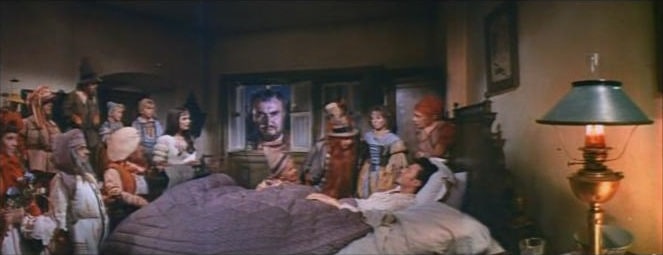
There’s a scene in the Disney film, The Wonderful World of the Brothers Grimm, where Wilhelm gets sick and is visited by all of the characters of the stories he’s collected.


That is what I meant by multiple-personality-disorder in harness.


Monday, May 24, 2021

Consideration of Works Past: Hancock and the Superhero Trope


(Picture from here.) 


A little context. Iron Man, the first entry of the Marvel Cinematic Universe, came out in the USA in May. Hancock, Will Smith’s superhero movie, came out in July that same year. No one knew at that point what a juggernaut the MCU would become, nor that eventually the Disney behemoth would be behind it. Regardless, Iron Man was a beautifully produced, well directed, finely realized superhero film. Hancock was not really a superhero film—at least not in the Iron Man mold. It was inevitable the two would be compared. Hancock was declared the lesser film. Problematic. A mess. Iron Man was praised as a terrific achievement.


Back in 2008, I wrote this entry regarding Hancock. I would have left it there but over the last couple of years with all of the fireworks over all of the different superhero movies (I’m looking at you, Justice League.)  a couple of reviewers brought out all of the old criticisms. So, I watched it again to see how it weathered.


I think Iron Man was terrific. But I think Hancock was brilliant.


Though the years have not changed my opinion, my reasons have changed.


The majority of superhero stories follow a set number of beats:

  1. Character discovers he has powers.
  2. Character discovers the nature of his powers.
  3. Character discovers the moral dimension of having powers.
  4. Character determines the path forward regarding the powers

The decisions the character makes in step 4 determine whether the character becomes superhero or supervillain. Superheroes see duty. Supervillains see opportunity. Peter Parker in MCU’s Civil War said this: “When you can do the things I can. And you don’t. And the bad things happen. They happen because of you.”

 If you look at the original Spiderman comic: Peter Parker discovers he has powers. He explores them. He does not engage with the world regarding his powers—in fact, given the opportunity to stop a criminal he opts out. That criminal kills his Uncle Ben. His guilt and responsibility for Ben’s murder cause him to become a superhero.


Not all beats happen in that order or with equal importance. The first Thor opens with him having full knowledge of his powers and their nature. But he’s a dick—so the film largely concerns itself with steps 3 and 4. The Iron Man arc through the films has Tony Stark create and extend his powers through the first couple of films. He spends the next several films exploring the moral dimension of his powers—each film changing the rules and having him adapt. By the Endgame film, Tony knows exactly who he is with relation to his abilities. I would argue his path through Endgame is the natural process of him deciding the logical end point of where those moral decisions take him.


There are several of superhero franchises in comics and two big ones in the film industry: MCU and the DC Universe with Superman and the rest. In all of them there’s a tension between character and abilities. Marvel made a decision to lean on character. DC made a decision to lean on abilities. Every now and then, DC will point out that Clark’s important memories are of Clark Kent, not Superman. But it never lasts. With Marvel, on the other hand, few people refer to Tony as Iron Man. He’s Tony Stark.


These emphases make a difference in the tone of the above beats but not their presence. They’re always there.


The reliance on these beats, and certainly the money involved, tends to make these stories keep in continuous spin. In the comics, no one stays dead and no profitable product ever ends. The DCU has certainly stayed with that idea. But the MCU has managed to kill a couple of major characters. That could prove interesting.


Enter Hancock. (Remember Hancock? This is an entry about Hancock.)


Hancock accepts that these beats occurred. But they failed. By this, I mean at some point in his life Hancock went through all of those beats and decided to become a hero—did it at least twice, according to the film. And they weren’t enough. The moral decision—by itself—is insufficient. At the beginning of the film, he’s still doing heroics but his heart isn’t in it. He’s drunk most of the time. There is no joy in his life. He is alone.


One of the most obvious comparisons between Iron Man and Hancock is that Tony Stark is loved. Oh, he’s an incredible dick. But there are people who care for him. Support him. Sympathize with him. Later in the MCU (and the DCU) the heroes themselves care for one another. Hancock has none of this.


It’s like the MCU and DCU wander across these four beats over and over: 1234, 3421, 1114, and all other combinations.


Those beats are Hancock’s past. Hancock has already learned all the lessons, fought them, rejected them, accepted them, left them behind. He’s still going through the motions—like Peter said, if you don’t, it’s on you. But it’s empty. A meaningless moral sham.


I wonder if the difference between Hancock is the perspective of age. Growing up is a continuous process of learning oneself and proving oneself. But, at some point, that learning is accomplished. That proof is done. What’s left? A joyless existence marching towards death? That’s where Hancock starts.


At the core of Hancock is the relationship between Hancock himself and Ray Embrey. Ray is one of many Hancock saves in the worst way possible—these bad saves are so common in the film that people neglect the fact of the save only to denigrate the way Hancock did it. (In this case, Ray is stuck on a train tracks. Hancock saves him by standing in the way of the train which destroys the train, the tracks, and a lot of real estate.)


But it’s Ray who realizes he has been saved, regardless of how it was done. It is Ray that reaches out to Hancock and wants what’s best for him. It’s Ray that realizes how the world is losing a remarkable human being--- Hancock’s powers are almost an aside. It’s Ray that creates a place where Hancock can find his way home. Ray doesn’t preach to him. Ray just shows Hancock things Hancock has done badly and asks: don’t you want to better?


At the core of the story is a person of abilities that is lost and a person that helps them find themselves.


See? Not a superhero story at all.