
For a limited time, Jackie's Boy, is on sale BVC. Go pick it up if you haven't already. Tell your friends. Tell your enemies. Shout it from the rooftops.
For a limited time, Jackie's Boy, is on sale BVC. Go pick it up if you haven't already. Tell your friends. Tell your enemies. Shout it from the rooftops.
.png/440px-Some_Like_It_Hot_(1959_poster).png)
Television was different when I was a kid growing up in California.
It was early days. There wasn’t the vast backlog of material available that there is now. But there was the same need to fill dead air. Without reruns, reality shows, and made-for-TV or licensed-for-TV movies, the stations filled that dead air with old movies. Movies from the 30s or 40s—movies from the 50s were still too valuable to waste on mere television.
I watched a lot of television.
Plan 9 from Outer Space and Death Takes a Holiday were fun. His Girl Friday was terrific—what’s not to like about Rosalind Russell standing up and winning against Cary Grant? But Some Like It Hot was something very different.
If you haven’t seen SLIH, skip this entry and go watch it. This is one of those films that you don’t want spoilers.
Okay. This is going to be a wild ride.
Billy Wilder’s SLIH has an amazing cast: Marilyn Monroe, Tony Curtis, Jack Lemmon, George Raft, Joe E. Brown, Pat O’Brien, and many others. The central characters are played by Monroe, Curtis, Lemmon and Brown. Because of the cross dressing and differing names, I’m just going to use the names of the actors here. Otherwise, it gets too confusing.
A quick synopsis: Curtis and Lemmon are big band musicians in 1930s Chicago. Curtis plays the saxophone and Lemmon plays the string bass. They are inadvertently identified as witnesses to a mob massacre. To escape, they disguise themselves as women and join an all-women band touring in Florida. Many of the women in the band (including Monroe) are interested in finding and catching a rich man to marry.
In Florida, Curtis falls for Monroe but can’t act on it—he’s disguised as a woman. Brown is rich and vacationing in the hotel. He falls for Lemmon as a woman. Curtis persuades Lemmon to go out on the town with Brown while he disguises himself as rich and makes a play for Monroe. Hijinks ensue.
The movie was an instant success for all concerned. It was one of the nails in the coffin for the Hays Code—it was produced without Hays Office approval since it flirted with homosexuality and cross-dressing.
The main storyline follows Curtis and Monroe as their romance blossoms with a backdrop as the gangsters looking for the witnesses get ever closer. As would be expected, they end up together.
I was initially interested in it because of Joe E. Brown—I had been seeing 30s and 40s films all this time, remember. Brown was one of my favorites. He had a kind of genial grotesqueness that appealed to me. He had wide open smile that gave the impression if he stretched just a little wider, his upper lip would go clean over his head. So, it was not an accident I paid close attention him in the film when I first saw it and every time thereafter.
Because the film centers on the Monroe/Curtis romance, the Brown/Lemmon romance gets taken as buffoonery, on the same order as the cross-dressing comedies of Shakespeare. I think this is a mistake.
The Monroe/Curtis arc is important—Curtis goes from phallic missile to legitimate human being by the end. Monroe’s arc is less dramatic. It’s not entirely clear she’s not just falling for another saxophone player by the end but it’s emotionally satisfying, anyway.
But it’s the Brown/Lemmon romance that really drives home what I think is the theme of the film: you love who you love.
There are two critical scenes in the film that show this. The first is when Lemmon goes out on the town with Brown and comes back ecstatically happy: he’s forgotten he’s a man. He was happy with Brown. It’s Curtis that brings him down to realize that this romance can never be because Lemmon is a man.
The second is the final scene in the move which I will reproduce here:
Lemmon: We can't get married at all
Brown: Why not?
Lemmon: Well, in the first place I'm not a natural blonde.
Brown: Doesn't matter.
Lemmon: I smoke. I smoke all the time.
Brown: I don't care.
Lemmon: I have a terrible past. For the last three years I've been living with a saxophone player.
Brown: I forgive you.
Lemmon: I can never have children.
Brown: We can adopt some.
Lemmon: You don't understand, Osgood. <Takes off wig.> I'm a man.
Brown: Well, nobody's perfect.
Brown’s character is often portrayed as oblivious to what Lemmon is saying. I think that’s wrong. Brown (Osgood) knows exactly what is going on here. But he’s accepted that the love he feels transcends those issues.
Joseph Campbell, in one of his lectures, describes five kinds of love in ascending order:
1. Servant to master
2. friend to friend
3. parent to child
4. spouse to spouse
5. compulsive, uncontrollable love
The other kinds of love have the blessings of society but the fifth kind persists in spite of societal condemnation. The normal view of this would be love within an unsanctioned union—such as the love between two men here.
But I think this goes deeper.
It is clear in the context of the film that both Curtis and Lemmon are not gay. They do not condemn it but they are not part of it. To be authentic to themselves, they intend to be with women.
However, the relationship between Lemmon and Brown is also true. In order to be true to themselves, Brown and Lemmon must act on it—this is what is happening in the first scene between them to the point that Lemmon forgets his orientation when he is with Brown. Forgets, even, that he is a man.
This is the finest sort of conflict: the conflict between two authentic selves. Brown accepts it immediately—I am absolutely convinced that Brown’s character recognizes Lemmon for who he is at first glance. And accepts their love as authentic, even if it is in conflict with another side of himself. Brown is not a buffoon here but an enlightened being. He realizes that in order to be true to his higher self, other portions of his authentic self cannot be satisfied. He does it instantly and with joy to the point of proposing to Lemmon, who accepts.
Lemmon has a harder time of it—largely because his companion, Curtis, does not recognize this conflict as legitimate. Curtis acts as societal norm and immediately dismisses it: Lemmon’s self as a non-gay man is more important than love. (There’s a subsection in this scene where Lemmon tries to justify being married to Brown as a sort of confidence game, but to me his heart isn’t in it.)
It’s Brown, at the end, that confronts this conflict directly, leaving Lemmon with a clear choice: both of these authentic selves are important. Lemmon must choose which he will act upon.
My own feeling—and the feeling, I think, Wilder intended—is that Lemmon chooses love. This does not mean he discards who he is in favor of someone else’s vision, but that out of a set of authentic selves he can choose, he picks the one that fulfills him the most. He’s going to be opening himself to a dangerous life but he accepts that.
This is my extension of the Campbell’s illicit love. It’s not enough to fly in the face of society—the rebel is the American ideal, after all. At issue in societal condemnation is the individual’s perception that condemnation is legitimate and/or whether the individual can withstand the punishment. Both are external forces.
What’s more interesting—and what is explored in SLIH—is that internal conflict between two legitimate and honest interpretations of one’s self. Both are true: in SLIH Lemmon is both a heterosexual man and in love with Brown. Neither can be denied honestly. In order to act on his love and be authentic to himself, he must accept that both are true.
That fact that Wilder is able to explore this sort of thing in a romantic comedy is pure genius.
(Picture from here.)
I don’t usually talk here about shenanigans on the public stage. But today, I’m going to make an exception.
I had a troubling phone conversation with a friend the other night. We’ll call her Brenda and her spouse equivalent Brian, for purposes of this discussion.
Brenda was telling me how Brian was ready to jump in his car and drive to help in the January 6th insurrection. She wasn’t having any of that and kept him home.
Brian got all of his news from social media—specific social media sites, at that. Social media sites that have been shown to lie. But Brian’s mind was fixed. He was convinced of the truth of these sites. Other data sources that showed they were lying were merely revealing themselves to be liars, themselves.
There’s a diabolical beauty to this sort of thinking: a standard is set up that cannot be challenged and, therefore, anything challenging that standard must be, by definition, in error.
This changes the field of discussion from rational thought to religion. To be clear, I am not against religion. But here the cognitive mechanism that makes some religions work—accepting scripture as revealed truth of one sort or another—is being used for other means.
Once that transition is made, no further intellectual discussion is possible. The conversation has moved from the cerebral to the emotional. Emotional discussions can only be fruitful when emotions are directly engaged, not in a faux scholarly way. If people argue out of fear, then that fear must be addressed. What they are arguing about is irrelevant. It’s the fear that is important. This is true for other emotions as well.
To reuse what Heinlein said in Glory Road, “…facts do not sway them in the pursuit of a higher truth.”
This is a problem, though. Because we need to address facts. What can you do when what you want to happen is thwarted? The obvious answer—the one we teach our children—is you accept the setback and work around the problem or right the wrong. When we teach that, we always say, explicitly or implicitly, that this means working through proper paths. If you get an F on your report card, you don’t shoot your teacher in an act of vigilante justice.
I see this as a twofold issue.
The first part is determining what is fact. These days, that’s hard enough.
Social media is a primitive mechanism for determining fact. It’s the modern-day analog of village gossip and just as reliable. It’s primarily built to convey emotion, which it does quite well. The whole underlying desire to connect to one another is emotional. It’s not surprising, then it fails spectacularly at distributing facts.
In the last hundred years and fifty years or so, we’ve built an entire news industry to propagate news: facts written as story. It is an imperfect, clunky, stumbling mechanism, prone to tipping one way or another depending on the whim of the moment and without the self-correcting mechanism of scientific peer review. It’s like democracy: it’s only good when compared to all of the other mechanisms.
News, like anything else, has to be vetted. We all have different ways of doing so with various degrees of success. Personally, I have a set of test subjects where I think I know the correct answer. Usually, this involves aeronautics or biology or computing—something I’m professionally competent in or something I’ve invested a lot of research time in. If a news source gets those right, I figure it has a higher probability of getting things right about which I’m incompetent. I also give higher credence to those news sources that give their sources.
A number of years ago, I found a story on the Human Events website that seemed strange. So, I followed it from source to source only to find my way back to a set of stories that referenced each other. I never did find an original source. Possibly, the story was made up. Or the story had sources I could just never find. The fact that I couldn’t find the original source reduced my trust of the story, and the site.
But the second issue—the more important issue, as far as I’m concerned—is that we have to recognize our own incompetence and the incompetence of others. News stories have to be vetted against a standard. Most importantly, the news stories have to reflect actual facts. Facts, in this case, are verifiable circumstances that are independent of our point of view. If I’m inclined to view the Palestinians favorably, I cannot dump facts that count against them.
This is, to me, the main problem with social media and why it’s like village gossip. We pick sources that are inclined towards our point of view over our perception of fact.
Worse, we have the Dunning-Kruger effect to consider: people are incapable of determining their own level of competency at things they know little about. Social media denies the D-K effect. Its underlying presumption is that the selected crowd that is telling you what you want to hear is capable of telling you the truth. It might be a set of capable people but there’s no standard against which this can be judged. And it flies in the face of our own deeply held belief that we are as good at anything as anyone else.
Instead, we must face our own incompetency and create mechanisms to guard against it. I am not a political theorist. But, I tend to think that a political theorist that has the credentials of a Nobel Prize to be worth listening to. He has to be vetted as well. And, yes, it never ends. There will always be a level of uncertainty and one must learn to be comfortable with this.
Americans are particularly susceptible to this problem. Built into our psyche is the unfounded belief that anyone can do anything. “Anyone can grow up to be president,” as the saying goes. Implied in a modern interpretation of this idea is that anyone can do anything without effort. We can determine competence without research. We can determine moral truth without searching our hearts. We can determine right action merely by being present. Often, with a gun. Batman says it, so it must be true.
Moral nuance need not apply.
I don’t have a solution for this. Daniel Patrick Moynihan said, years ago: “You are entitled to your opinion. But you are not entitled to your own facts."
That notion seems to have disappeared.
I wish I had a solution for this. Better education. More money to schools. Bring back the FCC Fairness Doctrine. Legislate truth in news.
But I think none of those will work. There’s too much money these days in disguising opinion as truth—and revealed truth, at that.
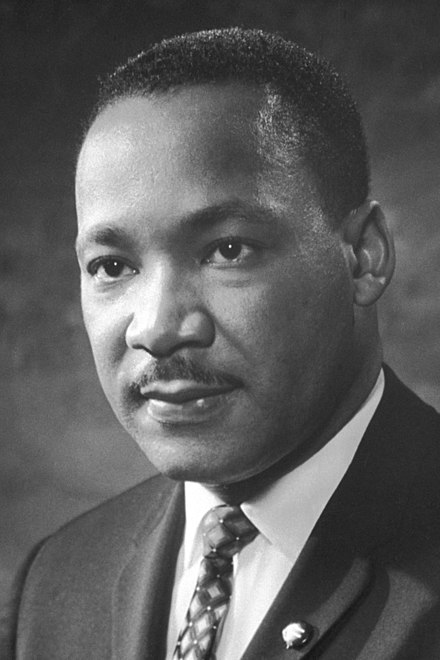
Possibly, the best we can do is what I once read attributed to Martin Luther King, Jr., but can now no longer find: “do good, eschew evil, and bear witness.”

The best way to get it is to go to my website, www.stevenpopkes.com, where all the links are.
Charles de Lint said this about the book:
"I love the compelling story that explores music, artificial intelligence, scientific methodology, corporate greed, mythology, religion and the breakup up of communication. But it also celebrates the joys of community and the interconnectedness of things."
Go. Enjoy.
On to the next.

(Picture from here.)
I’ve been reading several alternate world stories lately. Spinrad’s The Iron Dream, Dick’s The Man in the High Castle, Tidhar’s Osama. Not sure why these have shown up but that’s the way it is sometimes.
These are very famous works that have their followings. Tidhar won the World Fantasy Award for Best Novel. So, I suggest that people looking for a review of them need not seek them here. My tastes are too idiosyncratic to be useful.
I’ve spoken about TMITHC before. I read The Iron Dream some years ago and reread it recently. I read Osama for the first time.
What’s interesting is how all three authors tackled essentially the same take on the idea differently. In all three, the world of the characters is different from the world’s history and state as we know it. In TMITHC, the Japanese and Germans won World War II. The Nazis occupy the USA east of the Rockies. The Japanese occupy the USA west of the Rockies. The Rockies themselves are unclaimed territory.
In The Iron Dream, Hitler came to the United States and ultimately captured his life’s work in an SF novel which pitted purebred human beings against filthy mutants. Hitler’s novel occupies most of the novel.
In Osama, Osama bin Laden lives only in the pages of novels by Mike Longshott. The plot revolves around a private detective who’s been commissioned to find the author.
In all three cases, there is a world of the characters presented against a fictional world that depicts, in some way, the world we know. These are by no means the only works with contrived vs actual narratives. John Gardner’s October Light and Freddy’s Book are two more examples.
For purposes of this discussion, I’m going to create two terms: the actual narrative, that refers to the narrative that includes the characters of the created world. And the contrived narrative, which is the part of the work that shows our world in opposition to the created world.
In TMITHC, the cares and worries of the Japanese/German occupation is the central concern of the actual narrative. The contrived narrative is depicted by the novel, The Grasshopper Lies Heavy, where Hawthorn Abendson depicts the USA as winning the war against both Germany and Japan. But the center of the TMITHC is the world of the characters. The contrived narrative work is important in the actual narrative but considered propaganda. Even when Grasshopper is shown, it’s close to our world but significantly off. Like seeing the world through a dark glass. I’m not saying Grasshopper is tacked onto the world as an afterthought—it’s an important piece of Dick’s novel. But it lies in opposition to the world of the characters. It’s an alternate point of view. The prose of the actual narrative is very different from the contrived narrative. The two use significantly different prose styles.
The Iron Dream is hard over on the contrived narrative. That is the important part. The actual narrative is limited to a frame describing the origin of the included novel, and a critical analysis. The rest of the book is the contrived narrative as written by Adolf Hitler.
In Osama, the contrived narration and actual narration are given roughly equal footing. Several reviews have described significantly different prose styles between the two narrations but it was too subtle for me. I had trouble differentiating between the two.
The other choice Tidhar made was to keep a very low-level difference between the actual narrative and the contrived narrative. I.e., the two worlds weren’t all that different.
Three choices to handle the same idea in different ways.
I can see issues with all three approaches. In TMITHC, the actual narrative is so compelling and different that the contrived narrative can be lost. In fact, I suspect Dick introduced flaws in the contrived narrative for exactly that reason: the reader can’t discount the contrived narrative as just being something the reader already knows.
The Iron Dream was published in 1972 while TMITHC was published in 1962. Thus, Spinrad wrote TID knowing it would be compared to TMITHC. While the world of Hitler in the actual narrative might have been interesting, Spinrad keeps its exposure limited. Instead, Spinrad keeps the focus on the contrived narrative. This story is structured very much like a “traditional” SF, showing how close to fascism such a narrative can swing.
The issue with the third alternative—giving both the actual and contrived narrative equal standing—is that the two can blend in the reader’s mind. This, in part, I think was Tidhar’s intent: to show that no villain is so completely dark as to be inhuman. Osama was published in 2011 and, I think, largely insulated from Spinrad’s work but, perhaps, less so from TMITHC, given the attention given to Dick’s work in recent years.
That’s likely unfair to Osama: it is a vastly different work, in a vastly different time, with vastly different goals. Both Spinrad and Dick worked in the shadow of World War II. Tidhar is working with a completely different set of issues, icons, and symbols.
This shows the approach still has legs.

 Posts
All Comments
Posts
All Comments


