Saturday, March 31, 2012

Earl Scruggs, Rest in Peace

Earl Scruggs, of Flatt and Scruggs, died this last Wednesday.

When I was living in the south I listened to a lot of country music and Grand Old Opry. Flatt and Scruggs were a staple. Earl Scruggs played the banjo. Played it like I'd never heard before. Played it like you have heard since he inspired most of the banjo players across the world.

His web site is here.

Here are some videos from youtube to see what he was like:


A sad week.

Friday, March 30, 2012

Atheists To War!

The Oatmeal is a work of genius. See here.

Stalin's and Hitler's religious views are a matter of conjecture. See here and here.

Thursday, March 29, 2012

Sudden Cases of Inexplicable Political Depression

During the last election cycle I wrote a lot about politics. I haven't so much this time. Mainly because I'm so depressed about it.

Time to share the wealth.

Paul Ryan (R-Wis) has proposed an alternative to Medicare that looks nearly identical to Obamacare. (See here.) Note: Ryancare is touted by Republicans to be completely workable. Yet Obamacare, which functions identically, is touted by those same Republicans to be completely unworkable and unconstitutional. Apparently, something magical happens when you pass sixty.

Now let's add into that a larger look at the Republican budget as a whole. From Ezra Klein:
The Republican plans we've seen share a few basic premises. First, taxes are too high, and must be cut. Second, defense spending is too low, and should be raised. Third, major changes to entitlement programs should be passed now, but they shouldn't affect the current generation of retirees. That would all be fine, except for the fourth premise, which is that short-term deficits are a serious threat to the country and they need to be swiftly cut.

The first three budget premises means that taxes and defense will contribute more to the deficit, and Medicare and Social Security aren't available for quick savings. That leaves programs for the poor as the only major programs available to bear cuts. But now cuts to those programs have to pay for the deficit reduction, the increased defense spending, and the tax cuts. That means the cuts to those programs have to be really, really, really deep. The authors have no other choice.
Given this the Republicans are in the ideological position of having to tax the poor (after all, cutting a subsidy according to Grover Norquist is increasing a tax) for their deficit reduction and spending increases.

Or take it out of Federal workers paychecks (See here.) which will likely increase the cost of government before it decreases it.

On top of that the whole slut shaming of Sandra Fluke (See here) to the sanctioned cold blooded murder of Trayvon Martin (See here and here) just adds to this whole malaise. From what I can tell from the Martin case he was killed purely because he was black. No surprise there.

What's even more appalling than that (unsurprising) fact is the nature of the law in Florida that may well allow Zimmerman to remain uncharged (from here, wikipedia here):
A person is justified in using force, except deadly force, against another when and to the extent that the person reasonably believes that such conduct is necessary to defend himself or herself or another against the other’s imminent use of unlawful force. However, a person is justified in the use of deadly force and does not have a duty to retreat if:

(1) He or she reasonably believes that such force is necessary to prevent imminent death or great bodily harm to himself or herself or another or to prevent the imminent commission of a forcible felony;
The "reasonably believes" as opposed to "reasonably" is interesting here. It means that what the person believes, provided he is within reason, is sufficient for the person to use deadly force. "Belief" and "reason" are both contextual references. Zimmerman believed that Martin was up to no good and followed him. Was it reasonable? According to the 911 transcripts (see here.) Zimmerman followed Martin, classed him with people he clearly thought were undesirable and didn't want him to get away. Was this "reasonable?" Only in a world where black men are scary just by being black. Martin's last conversation suggests he was scared of Zimmerman, of being stalked, possibly of being killed. (See here.)

So here we have a situation created by Zimmerman in which he caused a confrontation, killed a man and then gets off because he might have believed he was in danger. This reminds me of an old joke, a definition of chutzpah: a man who murders his parents and then claims mercy because he's an orphan.

After a while the circuit breaker snaps and I go back to reading comics.

Sunday, March 25, 2012

Biological Revolutions: Go, Go Neurozoa


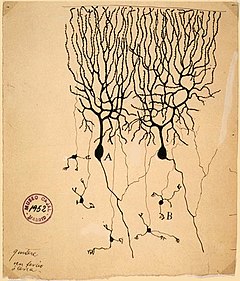
(Picture from here.)

This is going to be a bit long and rambling. The nervous system is not only one of the more interesting innovations in living systems, it's a key discriminator between categories of animals. So we'll have to delve a little bit into taxonomy.

I think of taxonomy as great fun but there are those whose eyes glaze over at the mere mention of clades or kingdoms. I blame bad high school biology teachers.

But enough of that. Let's begin.

As of the last post we now live in a world of single celled prokaryotes, single celled eukaryotes and some multicellular organisms. Some of these are plant precursors, some are fungi precursors and some are animal precursors.

We could make a long and varied collection of posts involving the origin of plants, fungi and animals but we're not going to. Instead, I'm going to attack what I consider one of the salient characteristics of animals: nervous systems.

At the beginning let me be clear. We're talking about all nervous systems: collections of cells that use ionic biochemistry to carry signals across and between them. These are neurons. Brains came later.

So, it's important to first define our terms: what is a neuron?

For once I'm going to quote wikipedia directly. This is a pretty good definition:

"An electrically excitable cell that processes and transmits information by electrical and chemical signaling."
Signaling both within and between organisms and cells has a much longer history than neurons. As soon as cells emitted chemicals there were other cells that understood it. However, neurons are very different. The neuron has a fundamental component architecture:
  • axon: neuron strand that is electrically excitable and carries information to another cell
  • dendrite: section of the neuron that is not electrically excitable but receives signals from another cell's axon
  • synapse: gap between the axon and dendrite where the electrical information is converted to chemical compounds (a neurotransmitter) that cross the gap and cause an electrical potential to occur in a dendrite.
"Excitable" in this context means the cell reaches a certain electrical potential which triggers a chemical and electrical reaction that can propagate across the cell and down the axon.

So, you have our example cell with a dendrite at one end, a cell body and the long thread of an axon leading away from it. At the far end of the axon is the synapse. On the dendrite of our cell are a bunch of synapses from the axons of other neurons. The dendrite is not excitable. The axon is.

An neuron fires and carries a nerve impulse down the axon to a synapse. This synapse releases chemical signals that cross a space between it (the "synaptic gap") and the dendrite of the next cell. The receiving dendrite (our example neuron) raises its potential until it fires the nearby axon material. Then the impulse races away to the next cell.

(The "synaptic gap" is extremely small. So small that it could only be theorized before the electron microscope. Some authorities in the 19th century suggested that the nervous system was one big cell since they could see no gaps between the cells. Santiago Ramon y Cajal put them right and showed the dendrite, axon and attachments between the axons and dendrites. For which he won the Nobel Prize in 1906. From the tiny delay in propagation between nerve cells,Charles Sherrington suggested the junction between nerve cells had a chemical and regulatory aspect. He named the junctions the synapse. For which he won the Nobel Prize in 1921. But the synapse itself was only deduced. It could not be seen until 1954. A good history of the discovery of the neuron is here.)

Like anything else in biology this is a great over simplification. There are synapses between dendrites. This description does not even mention glial cells or myelin. It generalizes the idea of a synapse when the reality is there are many different kinds. It doesn't differentiate a chemical synapse from an electrical synapse, which uses the actual electrical potential to cross a much smaller synaptic gap. Etc. But it is a definition that covers a lot of biological ground and that's why we're going to use it.

Even though there may be a chemical component to the transmission it is local in the tiny synaptic gap. In higher animals there are even enzymes around and inside the gap that destroy the neurotransmitters so that there are no lingering afterimages of the signals.

There are some serious advantages of neurons over general chemical transmission. For one there is separation of signal. If you're receiving chemical signals in a common environment you have to parse out which signals have which meaning-- or, worse, you have to react to all of them. With a neuron you can send separate signals without them competing with one another. You can selectively choose the target of the signal. You can selective choose the source of the signal. You can even encode something about the source of the signal in the frequency or pattern of the impulses.

Finally, the system is open ended. With a chemical transmission system each chemical queue represents a single piece of information. Combinations can have meaning but the molecular machinery has to be versatile enough to both sense a particular chemical and that same chemical in combination with other chemicals. The system can't scale up.

But with a neuron not only can you repurpose that dendrite or neuron into a sensor, you can link the nerve cells together. Some cells can be used to process the output of other cells. Or take input from them and transmit it to other locations. No only can you get discrete inputs you can have discrete outputs.

When I first started this series I spoke of a rapid and integrated response. With chemical systems, which are used by fungi or plants, the response is usually specific to a given stimulus and is either specific to that stimulus or general to the organism. With a neuron system you can have integration between stimulus response. With an integrated system you can have the following sorts of stimulus/response patterns.
  • General stimulus causing a general response such as the general withdrawal of a anemone to any touch.
  • Specific stimulus causing a general response such as touching a section of a starfish and causing the starfish to turn towards the touch
  • General stimulus causing a specific response such as many different possible stimuli causing a clam to clamp shut
  • Specific stimulus causing a specific response such as light causing jellyfish to swim away from the surface and darkness causing them to swim towards the surface
All with the same system.

Now, let's talk very briefly about animal divisions. Animals, also Metazoa, are broadly grouped into five groups:
Ctenophora and Cnidaria are also grouped together to form Radiata, the radially symmetric animals.

Porifera and Ctenophora were the first to diverge in the animal line. Bilateria, Cnidaria and Placozoa diverged later. Relationships between these groups reflect not only the evolution that occurred since they diverged from one another but also the common ground between them.
Bilateria, Cnidari and Ctenophora all have nervous systems though those nervous systems are organized differently. Poriphera and Placozoa do not-- which is interesting if Bilateria, Cnidaria and Placozoa diverged from the others later.

Back to the neuron. Consider the evolution of the neuron as the confluence of two distinct components: excitable tissue and the synapse. We need to consider them both.

Excitable tissue really means sodium channels. I could spend and entire post on just sodium channels but I'd rather refer you to this article on the channel itself and this article on how it relates to excitation in the form of the action potential: the electrical impulse that propagates down a nerve fiber. For our purposes, a sodium channel is the enabling technology of the action potential. Evolution can't work with nothing but always works on what's available. Consequently, sodium channels had to be in place prior to the development of the animal nervous system. (A side discussion of the Placozoan Problem can be read here.)

And surprise (see here) it was.

Some gentlemen at Woods Hole have been studying sponges and placozoans. (See here.) Remember, these animals do not have nervous systems. They've also been studying choanoflagellates, a group I mentioned before in the discussion of eukarotes and multicellular organisms. These are single celled organisms with flagella. They are not animals but many researchers have suggested that they serve as a potential source of multicellular life. The gentlemen looked at genetic variations in sodium channels as well as calcium channels, which are thought to be the source of sodium channels.

It turns out sponges and placozoans have genetically similar sodium channels to those used in the nerve cells of animals. In fact, they found homologs following a distinct pattern of relationships not only in mammals but in fungi as well. A graphical representation of these relationships is shown here. Fungi have the calcium channels but not the sodium channels-- no surprise there.

Observe the drawing at left (it should expand if you click it.) The successive branches are interesting. The pattern goes Choanoflagellata, Ctenophora, Placozoa, then a branch including Cnidaria (Medusas and Anthozoans), culminating in the Bilateria, marked here as CNS. While the placement of the placozoans is troubling, the march of that sodium channel right up the chain into animals with distinct central nervous systems is clear.

The precursors of excitable tissue were in place before the animals were.

Dendrites are nesting opportunities for synapses. I'm lumping in the evolution of dendrites with synapses since the synapse makes the dendrite necessary and possible while a dendrite without a synapse makes no sense.

Which leaves us with a synapse.

A synapse is an extremely complex structure. It has a transmission end that takes the electrical potential from the nerve cell and translates it into a witches brew of neurotransmitters. These are secreted into the synaptic gap and snagged on the other side. Depending on which neurotransmitter is received and the state of the receiver, the receiving component changes the surrounding electrical potential. When that gets sufficiently high, the electrically excitable part of the nerve cell fires an action potential and we're off to the races.


Tomas Ryan and Seth Grant wrote a terrific review of the research involving the evolution of the synapse in 2009. (See PDF here.) The drawing to the left is from that article. Go ahead. This one should also expand.

This drawing talks about the protiens and associated genes relevant to synaptic evolution. Note: fungi and Choanoflagellates. Poriferans peel off first. Then Cnidaria and Bilatera. This drawing doesn't address Placozoa or Ctenophora. Possibly this particular branch of the research hasn't included those different groups.

What's interesting is the ursynapse, the progenitor of all synapses, falling right between the Poriferans and the Cnidarians-- which exactly follows the Woods Hole research regarding the sodium channels.

There's another way to look at this. That's from the realm of control theory. If we view the nervous system as a controlling mechanism, then it should be amenable to analysis the way we would analyze any other control system. It does (see here) but more interestingly is that it also gives us another perspective of the evolutionary origin of the nervous system.

Animal control systems exist in organisms that reproduce and undergo selective pressure. Selection can then operate on the adaptation of the control system itself. A Swiss/Texas article (see here) suggests exactly in the form of the developing cooperative synaptic networks. Collectively, it is called neuroevolution and it is the assertion of these researchers that it works as well for actual nervous systems as it does for the evolution of artificial neural networks.

Okay. The stage is set for the next revolution. How to organize neurons.

There are two ways: neural nets or rings and the zombie's best friend: Braaiiins.

That's for next time.

Additional reading (some quoted above):
Self-Organization of Neural Systems: artificially modeling the organisms

Wednesday, March 21, 2012

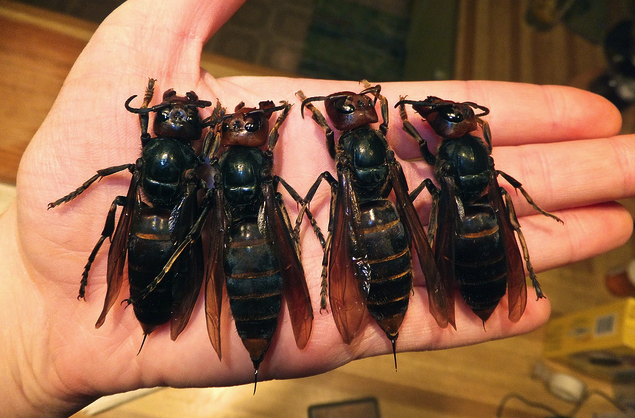
World's Creepiest Hornet


Here is its picture.

Here and here are videos and discussion.

Here is where you run screaming into the night.

Tuesday, March 20, 2012

Drag Queens vs. Chick-Fil-A

Check this out. Chick-Fil-A is known for dump millions into anti-gay groups.
I'd say the Drag Queens win.

Sunday, March 18, 2012

Biological Revolutions: Multicellularity


(Picture from here.)

In our ongoing saga of revolutionary life, we've arrived at a world with both prokaryotes and eukaryotes. All are single celled.

But, when we look around, we see multicelled organisms literally all over the place. From the lowliest parasite to blue whales, multicellular organisms are everywhere.

How did that happen?

Well, that's a complicated question. After all, which one are we talking about?

That's right. Multicellular life forms didn't evolve once. They didn't evolve twice. They perhaps evolved as many as twenty-five times. Animals and plants evolved it separately. Slime molds and algae. Cyanobacteria and myxobacteria-- though multicellularity appears to be more the province of the eukaryotes than prokaryotes.

There are a lot of advantages of being multicellular. Cells can specialize and with specialization comes a higher efficiency at a particular function. Organisms consisting of cells can grow larger. They can exploit different niches, digest different materials. They can employ sacrifice as a tool-- one unit of the organism sacrificing itself for the good of the whole. It's so ubiquitous in multicelled organisms we don't even think about it. Who considers shed skin cells? Dead leukocytes? The discarded cells of the gut? Yet these cells have, in effect, given up their lives on the hope that their genome will be continued by other specialized cells.

These are advantages if the organism is already multicellular. But evolution never works with an eye to the future. The only advantage is current advantage. A What have you done for me lately? sort of world. Thus, the origin of multicellularity must occur in a framework where it is advantageous. Once we have it we can talk about how great it is. But we have to get there first.

Figuring out how this happened is a problem unto itself. By the time multicellular organisms left fossils they were already well established. Whatever happened occurred long before-- some authorities think as much as a billion years ago. Certainly more than 500m years, since that's when we first see whatever fossils there are.

Alright, then. What can we do with living organisms?

Ah. Let me tell you about Volvox.

Volvox is a very pretty algae (see the picture above) that congregates in a wonderful hollow sphere. The somatic cells are on the outside. Reproductive cells are on the inside and near the posterior, so they have some limited specialization. The somatic cells have flagella and move the ball around. Some species have actual specialized cells that act as eyespots and cause the ball to move towards the light. How they manage this without nerve cells is a bit of a mystery but they manage. During asexual reproduction the daughter colonies occur inside of the parent colony and then the parent dissolves and the daughter colonies are released. During sexual reproduction male and female gametes are released, join and become new colonies.

A close cousin of Volvox is Chlamydomonas, a single celled green algae. They also have flagella. When they reproduce asexually, they pull in their flagella and then divide within the same cell wall. Sometimes multiple times so that many daughters share the same space. Eventually, the daughters develop flagella and swim away. C. reinhardtii has a sort of sexual reproduction. Normally, C. r. cells are haploid. When stressed haploid gametes develop that can be one or the other of two mating types. These join to form a diploid "zygote" which is dormant in the soil. When favorable conditions occur, the zygote divides via meiosis into haploid daughter cells which then go on their merry way.

What's interesting here is that Chlamydomonas and Volvox share the vast majority of their genetic content. And there is an interesting structural similarity between them in that Chlamydomonas undergoes a division where the daughter cells are packed together and in Volvox the daughter cells don't separate except in reproduction. Could there be a link here?

This represents the "colonial theory" of multicellular evolution. Haeckel came up with this in 1874. The idea is that organisms of the same species could fail to fully separate during division. Most of the time this would be destructive but if other predispositions were to occur at the same time an advantage for the colony would occur.

Interestingly enough, Volvox practices what is called "multiple fission." The nucleus divides multiple times before the cytoplasm divides the daughter cells apart. It's not hard to imagine a cluster of stuck cells resulting from a failure to launch.

An interesting experiment was published this last January. (See here.) Scientists at the Whitehead Institute thought they might be able to force single celled organisms to evolve multicellular behavior. They took single celled yeast and grew it in a test tube. Then, every day they shook up the tubes and pulled out what fell to the bottom and grew that in a new test tube. This went on for a couple of weeks (100 generations) and, sure enough, yeast cells began to show clusters of cells with limited self-sacrifice and specialization.

In the article I read there was no discussion of the heritage of the yeast cells. Could this be a previously evolved dormant property brought to light under extraordinary selection? Or is this the expression of a predisposition of traits towards multicellularity now expressed? I don't know. But it is very interesting.

This doesn't get past the what's-in-it-for-me problem of multicellularity in general. Why should the somatic cells put up with this? Why shouldn't they reproduce on their own? A kind of cellular tragedy of the commons.

In Chlamydomonas the number of cells produced depends on the size of the parent-- a reflection on quality of the environment. Volvox limit the number of cells in a colony. Cheaters are not so favored since the total number of cells limits their advantage. There are mutants where the somatic cells start reproducing but then the colony collapses and sinks. Such mutants are detrimental and are selected against. Volvox manages this by separating cell types very early in the colony's development, limiting the opportunity of mutations to accumulate and have an effect.

However, these mutations are still seen and suggest the opposition has not been silenced. This is not terribly surprising since it's estimate that Volvox evolved multicellularity only 200m years ago. It's probably still having growing pains.

While simple multicellularity (as exemplified by Volvox) has evolved many times. It appears that complex multicellularity is much more rare. Animals. Green plants. Fungi. Algae. Such skills of organization require much more dedication on the part of the workers. The rewards regarding the individual cells don't seem to match what the individual cells have given up.

Whales, squids and redwoods all must face a similar problem: how do you handle revolution in the ranks? Most cells in a complex organism are bound to their role. Each cell is using only that portion of the DNA required by its functionality. Some cells are even barred from reproduction. If that fails, each cell is always on the trigger of suicide (apoptosis) if something should go wrong. Should that fail the secret police (the immune system or its equivalent) are watching. Always watching.

Evading all the safe guards must come as liberation albeit at the cost of the organism.

Is cancer the price we pay for the majesty of our organization as we suppress the relic desire of our cells for their old single celled freedom?


Additional reading:
From Simple to Complex, The Scientist