Sunday, February 7, 2016

Strange Films to Watch During the Presidential Apocalypse


I've been perusing the depths of Amazon Prime and Netflix to see what sort of odd little films they serve up.

One piece of advice: for good or ill, I have found absolutely no correlation between the rating of these films and what I think of the quality of the films. The only way I've found to see if they're any good is to watch them.

That said, fortunately a film will announce that it is a dog early on. But there were a couple that kept showing promise right until the credits and you knew: there goes two hours I will never get back.

These, however, were pretty fun.


Mars
Or, as stated on the poster, Looking for Life and Love on Mars.
This is Geoff Marlett's film. It's animated-- sort of. It's animated in the same sort of style as Linklater's A Scanner Darkly, that is, he filmed the actors against a green screen, cartoonified them, added background and then cartoonified the lot.

It's one of those tongue-in-cheek, ironically detached films that are quite popular these days, though this is the first time I've seen it in a science ficiton. It has Kinky Friedman as the US President.

Boy and girl go to Mars with a oddball billionaire, discover Martians and return in love. Boy is sent because he's the best looking astronaut. The actors have a tendency to notice at intervals that they're in a film but it's done in a gentle, mocking way and is not offensive. At no point do they act like the audience is an idiot. Instead, they expect the audience to be participating in the experience. "Look, folks, we're having a movie" sort of thing. I found it charming.

Here are a couple of youtube videos both showing and discussing the film. Here, here and here.

Frequently Asked Questions about Time Travel
This little gem is the product of the twisted minds of Gareth Carrivick and Jamie Mathieson. Think Shaun of the Dead meet Gerrold's The Man Who Folded Himself. Three friends get unstuck in time via a time hole in the loo of a pub. All sorts of misfoldings occur while they are "helped" by a bumbling low level time travel bureaucrat. Like Gerrold's book, they pretty much run through all of the different tropes and like Shaun, it's loads of fun.

Trailer here.

John Dies at the End
Don Coscarelli did this one. This one is less slapstick and more irony-- sort of like Mars but with Lovecraftian horror rather than space travel. Again, the fun is in the surprises. It's also the only film I've ever seen where an amputee is in the script as important and funny at the same time.

There's also a little time travel in it when David, the main character, gets a future call from his friend John right after he's found John's dead body. John-- on the phone-- isn't quite sure what time it is and asks in all innocence: "Am I dead yet?"

Trailer here. But it's funnier than the trailer would suggest.

Only Lovers Left Alive
It's not clear if Jim Jarmusch still has his indie creds. Not that he isn't a completely original filmmaker. He absolutely is. I've been a fan since Dead Man-- which I still maintain is one of Johnny Depp's more compelling performances. But if your work is being added to the National Film Registry and you can make a film with Tom Hiddleston, John Hurt and Tilda Swinton, aren't you by definition mainstream? Not that Jarmusch has sold out. He hasn't. His films are just as interesting (and sometimes incomprehensible) as they ever were. But it seems the audience has caught up with him.

Anyway, OLLA is a vampire film that dwells on the ennui of age-- not new territory for vampires in general. But in this case the vampires are obviously more alive and conscious beings than humans and the destruction of the world by humans is the source of the ennui.

It's a lovely film. I get the feeling that Jarmusch had gotten pretty disgusted with the vampire genre and decided to flip the tropes. He does an excellent job.

Trailer here.

Ink
I've left the most interesting to last.

Ink is about a father and child out of touch with one another. The premise is that the world of dreams is divided between storytellers and incubi. Storytellers give us the good dreams and incubi give us the nightmares. There are other post-dead creatures in between. One of them, Ink, kidnaps the soul of a little girl. The storytellers try to get it back.

As the story goes on the backstory gradually fills in the whys and wherefores and I will not tell them here. The blend is good.

The film was written, directed and musically composed by Jamin Winans. He has another film on Amazone: The Frame. I can't wait.

Trailer here.


Sunday, January 31, 2016

Science Fiction and Nevada

Science Fiction and Fantasy is about world building more than about anything else. I mean this in the sense that once the author has made the decision to move the setting outside the realm of an accepted consensus of "normal", that world has to be described and presented.

This is also true of historical fiction or fiction that takes place outside of the audience's realm of experience. Describing the other takes a different prose representation than describing the same. But, for this post, I'm limiting the discussion to worlds that must be built. I.e., they don't exist in the normal frame of reference at all.

I'll dispose of it quickly: it's pretty much impossible.

What we end up doing, instead, is creating analogs of a built world and describe them in terms we would use to describe the world of our current understanding. For example, we can't describe a world based on mantis shrimp's perception of millions of color combinations or from the point of view of a cuttlefish's distributed perception. What we can do in that case is either create an analog-- a stand in for human perception-- or describe something that a human being would find as odd and lean on the oddness to present the world.

We don't just do it in fiction. We do it in the real world all the time. And then we borrow that ability to present a built world in fiction.

In our genre, the place is a character just like any other and must be as rigorously built and considered in the same way. And we do it by comparing it to our world. Unfortunately, we commonly do not use the amazing differences in geography and location available in our real for inspiration.

This was brought home to me in my recent Nevada trip.

For example, take this picture on the left.


This is a small tree we found in Valley of Fire. We ended up finding it all over Nevada. It's a gray shrub that has little life to show. It has green leaves at various parts of the plant but it largely looks dead.

Except, of course, that violent growth in the center of the picture with fruit. The branch structure is different. There are flowers. Fruiting bodies. It looks like an epiphyte parasite.

In point of fact that's exactly what we thought it was until we examined it more closely and realized the red branches were growing out of the dead looking gray branches. Was it a disease? A fungus that hijacked the plant?

Our conclusion was that it was the reproductive component of the plant. Normal leaves were produced for photosynthesis. But when conditions were right, the plant went nuts and produced the material you see. In some cases it really looked like the plant had been consumed.

Another example is shown at left. This is also in the Valley of Fire. In this case, the geology is truly bizarre.

Normally, we think of things getting mixed together. Basalt mixed with sandstone. However, here the red, yellow and gray sections of the area are combined and kept separate. The colors aren't as distinct as they should be but the demarcations are as sharp as if drawn.

Think of the mountains we see in Tolkein. Or in Kipling's Kim. We have a preconception of how they should look and the authors leave us to that. However, this photograph shows how different that preconception can be from reality.

This one comes from Utah.
Again, this is a different sort of mountain than is normally pictured in the common perception. Fossils are found neatly popping out of strata like that. The fact of finding bones or shells just in the dirt have an influence on people's thinking. We should capture that in our fiction.

Regional fiction often captures this sort of thing well. Southwest fiction, for example, presents the desert and water completely differently from fiction back east. And if you read many of the writers of the northwest, rain is a constant companion.

My point here is that the world building we do must necessarily reflect our own earth to some degree-- how could it not? It's our singular experience. That said, our own earth is wonderfully varied. So should be our fiction.

Sunday, January 24, 2016

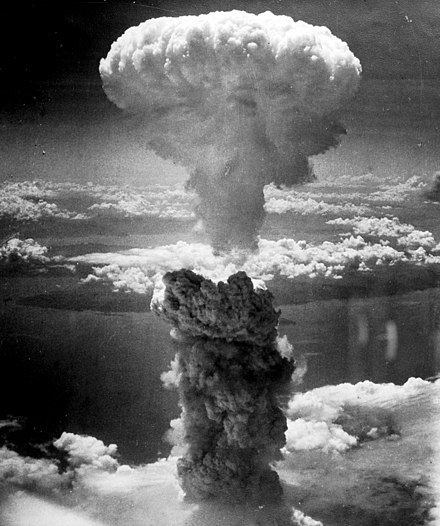
Fossils and Atomic Testing in Nevada


(Picture from here.)

I wrote this on the trip back and promptly fell quite sick. So it's going up now. 

Today is the last day of our vacation in Nevada. I’m writing this in the waiting area for our flight from Las Vegas back to Boston.

It’s been a good trip though probably not to everyone’s taste. We stayed in Mesquite rather than Las Vegas. Didn’t visit any of the casinos save for one fairly miserable experience where we had dinner there and had to cut our way through the smoke to the buffet. Not recommended.

We spent most of our time hiking around the area looking for neat rocks and fossils.

A few interesting facts about Nevada:

  • 87% of the state is owned by the federal government and administered by the Bureau of Land Management, the agency that manages federal land that isn’t parks and other sorts of whatnot. (Note, BLM rules change from state to state so what is true in Nevada might not be true in Utah.)
  • The BLM allows up to 250 pounds of rocks and fossils if they’re not to be sold
  • The BLM restricts vertebrate fossils. (A permit is required.) Non-vertebrate fossils are just fine.
  • Petrified wood is not considered a fossil.
  • The BLM has very nice maps that show you the different land ownership types such as BLM land, private or park land.

That’s the good news. The bad news is that the area was having the coldest winter in twenty years and the high country had significant snow—two to four inches in some places. Since we’re from New England, the bad news wasn’t all that bad.

Nevada is interesting geologically. Some of the uplifted rocks were laid down in the Cambrian so there are trilobite and other like fossils. Other areas were underwater during the time in the Jurassic so there are ichthyosaurs and the like. I didn’t research if there were dinosaur fossils in the state but I suspect there are. A lot of petrified wood.

It’s also interesting in that there is an abundance of volcanic events amidst the sedimentary rock. Often, you’ll be walking along a cut and see disintegrating mud underneath gravel underneath shale underneath basalt. A wash is the result of water flowing down the mountains and exiting down the valley. Often, you might find chalcedony, jasper, mud rock, and shale all mixed together. On one slope we found ammonites next to a pale, opalescent chalcedony. We brought home both.

We did do a few things that were not entirely rock collecting oriented. We did some hiking in Zion Park in Utah—highly recommended—and visited Hoover Dam. Also recommended.

We also visited the Atomic Testing Museum.

This was very cool.

I grew up in the fifties where we went to bed thinking wondering where we would hide if the nuclear bombs dropped. One of the movies shown in the museum had the “duck and cover” song, which made me a bit nervous.

There were a couple of things that this museum highlighted. One was that the people who were testing atomic weapons were absolutely sincere in thinking they were doing the right thing and protecting their country. To them this was not mere jingoistic patriotism. They considered the Soviet Union a very real and credible threat. The weapons stockpiles were important in maintaining peace between the nations. Whether this is, in fact, true or not is something that I’m not going to debate here.

A lot of times when you hear people talk about such things, there’s a sense that they’re trying to convince themselves. I got this feeling when I heard Robert McNamara talk about Viet Nam or Richard Cheney talk about Iraq. The people talking about what happened in the National Test Facility didn’t have a qualm about what they did at the time.

Part of this was they also now have a clear idea of the mistakes they made. Fallout yields were miscalculated. Energy release was underestimated. Bomb safety was not well characterized. None of this was due to incompetence. It was because this was all new. Much of the early testing took place in less than a decade since the nuclear explosions in Nagasaki and Hiroshima. No one really knew what was going to happen. Many of the interviewees acknowledged this and would have preferred waiting. It was just they didn’t feel they had the time. They have regrets that some things fell the way they did but have no regrets on their actions.

For example, in the sixties some incidents caused them to execute a safety review of the bombs themselves. It turns out that the way they were built, the bombs wanted to explode. They redesigned the bombs and warheads so they could be stored safely.

This is all up front in the museum. One gets the impression that the people who run the NTF feel they need hide nothing.

We live in an age where people hide acts executed in all good conscience lest they be subject to modern criticism. It’s refreshing to watch people saying, yeah: we would have told people to take shelter in the area for a couple of days after the bomb blast because we blew hell out of the ozone layer and it took three days or so for it to grow back. But we didn’t know. We would still have tested the bombs because we didn’t know squat about them back then. We would have just done it differently.

It was also a different perspective to see how people in Nevada viewed such things. I was living in California most of that time. We ducked and covered in the classrooms in case war came. But, in Las Vegas, people saw the flash. There were hundreds of tests in Nevada, many above ground. Every time an above ground test happened, it was seen across much of the state. In California, we were scared of something amorphous. In Nevada, they saw it every few months.

Then, back to the hills and looking for rocks and fossils.

We ended up with about 100 pounds of rock holding down every counter in the hotel room. Fifty pounds were our addition to the adjacent rock garden but the remaining 50 pounds needed to be shipped. We ended up purchasing a sturdy suitcase in Walmart and paying $25 for a check on. We heard, “what do you have in here? Rocks?” more than once. We just smiled and gave them our credit card.

So, now it’s back to work and writing and other stuff. I’ll get back to the Green Revolution before long. We haven’t even gotten to Darwin’s abominable mystery: flowering plants.

Sunday, December 13, 2015

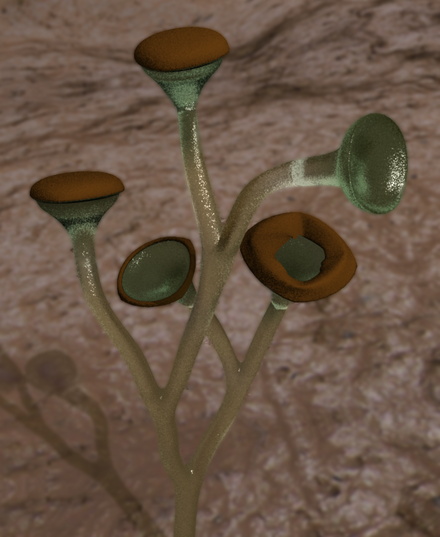
Biological Revolutions: The Green Invasion, Part 2


(Picture from here.)

It's hard to overestimate the importance of the plant invasion of the land. It's the precursor to everything else.

I don't just mean plants, either. The current model of vertebrates invading the land involves the changes in freshwater swamps being the source. What causes freshwater swamps? The plants surrounding the fresh water.

Let's imagine for a moment the world prior to the land invasion.

We have oxidation geology-- that started long before when the cyanobacteria pumped oxygen into the atmosphere. But there was no soil. No fixed nitrates. No decomposing strata. It was bare rock and gravel. Sure, there was slime at the edge of the estuary pools but not much else.

Even fresh water was different. One of the reasons freshwater lakes and swamps have life in them is the washed down organic material from the life on the land. Without washed down material there is nothing to eat. Nothing to feed the bottom of the web of life and without that bottom there's nothing to build anything above it.

The green invasion had to happen first. It was the enabling technology for everything else that came later. The land plants fix carbon out of the air into organic material. That organic material falls and decomposes-- how? It needs fungi and bacteria. Fungi are absolutely dependent other materials to consume. On the land that can't work without the plants, right? Fungi are very old-- they diverged about 1.5 billion years ago. But they couldn't invade the land until plants were there for them. Again: plants are the enabling technology.

Before the vertebrates, the most successful animals invading the land were what became the insects. Again, without plants there was nothing there for them.

Back to the swamp, the vertebrates came out to invade the land and become amphibians. I suspect the very first were there chasing the insects. But they wouldn't have been there at all unless the swamps were fertile first. Oh, yeah. That's due to the plants.

One of the very earliest innovations in plants that enabled this colonization was the development of the alternation of generations. This is analogous to the sperm and egg vs. organism in animals. Animals produce gametes-- eggs and sperm-- that are haploid, i.e., have 1/2 the total number of genes in the full organism. They come together to create a diploid individual with both sets of genes that then goes on to grow into another gamete producing adult. There are a lot of ways this occurs but this is the mechanism boiled down to the roots. (Heh.)

The embryophyta, are the equivalent in plants. There is a sporophyte,  which is diploid, and a gametophyte, which is haploid. Almost every plant you see, from liverworts to sequoias, are embryophytes.

There's been an enormous amount of discussion about haploidy vs diploidy. Why are diploids pretty much universally the norm in highly organized multicellular organisms? Diploid organisms have double the genetic material to work with and the sexual mechanisms are very efficient at presenting new combinations. Yet selection is far more efficient in acting on haploid organisms. Possibly the blending of these two approaches, diploid for organism and haploid for gametes, is the strength of the system.

The bryophytes were very early-- non-vascular plants. We talked about them last time.

Clearly, there were several early innovations but the first one that really enables increase of scale is vascularization-- the creation of a plant vascular system to move nutrients, oxygen and waste products around the plant system. The development of lignin was key for this and it gave structural rigidity to the plant cell walls and from that the structural strength of the xylem and phloem. This happened about 440-360 million years ago. This was a brand new innovation for plants and a significantly more recent than the similar system developed in animals.

It's interesting the plant vascular system and animal vascular system serve similar needs but evolved completely differently and under significantly different environments. In both cases, it enabled the organisms to scale up since it severed the requirement of being intimate with the organisms outside world.

All through the Devonian, these vascular plants proliferated. At some point, they developed an outside material to resist the loss of water. Thus we come to cellulose.

Land plants didn't invent cellulose. Algae did that and how it happened is a long and ongoing discussion. (See here.) But land plants had it in their repertoire. It was a component of their cell wall. (See here.) At some point, that cell wall thickened on the outside. The thick outer wall, likely selected for by the ability to preserve water, had an inadvertent advantage: it gave structural rigidity to the plant. Plants could grow tall.

Now, plants use a lot of mechanisms to support themselves. Trees use a dead rigid inner core (called "wood") they continually encapsulate. Bananas, for example, use a completely different mechanism. Cut a banana tree down and take it apart and you will find no wood. Just what looks like a tightly coiled leaf. In this case, the tree gets its rigidity by hydrostatic pressure-- the same thing that makes a garden hose stiff when the water is blocked.

The lignophytes, those plants that could generate wood, arose very pretty quickly. The first land plants showed up in the Ordovician, about 485-443 mya. Vascular plants showed up in the Silurian period: 443-419 mya. Wood shows up in the Devonian: 418-358 mya. The time from the first known land plants to woody plants that could become trees is about 67 million years. Approximately the time that it took from the meteor drawing the curtain on the Cretaceous to now.

Not bad. Not bad at all.


Monday, December 7, 2015

"All Lives Matter" vs "Black Lives Matter"


I was taken by the recent Trump event where a Black Lives Matter protester was roughed up. (See here.) As he was carried away, members of the crowd called out "All lives matter!" as some sort of argument against Black Lives Matter.

This refrain has been echoing across the media quite a bit, apparently without much thought. The idea of the All Lives Matter people is that Black lives shouldn't be singled out since everybody is important. The roughed up BLM protester might think their protest hypocritical.

I have my own point of view on racism in the United States. It's here. It's a problem. We have to deal with it. But that's not what caught my attention here.

The subtle shift from "Black lives matter" to "All lives matter" is a truly diabolical shift in perspective that is not being noticed enough.

First, let's consider the situation. Engineer that I am, I always go to numbers. The Guardian has provided a lovely database of statistics for a horrible collection of facts: police killing constituents. (See here.)

From this, we can determine that, so far in 2015, 775 armed people have been killed by police and 205 unarmed people have been killed by police. For the White, Black and Hispanic people, this breaks down into:


Event Total Wht Blck Hsp
armed people killed by police 775 397 185 125
unarmed people killed by police 205 91 68 32

Which works out to the following percentages:


Event % wht % blk % hsp
armed people killed by police 51.23 46.60 16.13
unarmed people killed by police 44.39 74.73 15.61

Now the population percentages of the USA for these three groups is %77.4 White, %13.2 Black and %17.4 Hispanic.

Given these percentages, we can derive expected numbers of police killings. This comes out to be:


Event Exp. Wht Exp. Blk Exp. Hsp White factor Black factor Hisp. Factor
armed people killed by police 600 102 135 0.66 1.81 0.93
unarmed people killed by police 159 27.1 35.7 0.57 2.51 0.90

Where it gets interesting is the ratio between the expected value and the actual value-- the factor column. From this, I conclude that Whites are under-represented, Blacks are over-represented and Hispanics come out pretty much on the money. The Hispanic statistics serve as a sort of control in this experiment. Black people are getting screwed.

Certainly there are other confounding factors: geography, poverty, etc. Statistics are slippery. If there is a correlation to wealth, perhaps there are enough rich Hispanics driving down the incidence of the police killings in their demographic. However, if that were the case, it would indicate that something was preferentially keeping Blacks in poverty more than Hispanics.

Which brings us back to the Trump incident in a predominately white crowd. The "Black lives matter" has an entire subtext that says: "Look, you f*$&*rs. We matter just as much as you do but you're killing us a lot more often." The "All lives matter" response denies that subtext and makes the (blatantly false) presumption that by someone saying "Black lives matter" implies that lives other than black lives are valued less.

The only rational response to that is pretty much: yes but so what? That has nothing to do with what was said. And the statistics shows pretty clearly that certain lives are valued more highly than other.

I'm very sensitive to how language is used and this is far from the most egregious example of subtly shifting the nature of the debate.

This is not the worst of this debate. Another mechanism is to bring up statistics that show Black on Black violence is far worse than police killings.

Again, the rational response: sure. Yes, non-police killings outnumber police killings. Thank God. Demographic on demographic killing outnumbers cross-demographic killings.  Does this surprise anyone?

But it has nothing to do with the problem at hand. Non-police violence cannot be compared to police violence. The police are the recognized officers of the state. They are our tax dollars and votes expressed locally. They are arbiter and authority in local disputes. Is the best argument supporting police is that they're not quite as bad a road rage?

Police should represent our best selves, not the hunkered down mentality of a soldier being fired on in a foreign land. We must make that happen.

I like how they do it in Canada with the Special Investigations Unit. The SIU is a civilian oversight agency that is called in to execute the investigation of any police circumstance involving death, serious injury or sexual assault.

Sunday, November 8, 2015

Biological Revolutions: The Green Invasion, Part 1


(Picture from here.)

There are a number of revolutionary events in the biological history of earth. I've spoken about many of them.

But one extremely large one was the invasion of the land by plants.

We had life in the seas nearly four billion years ago. The most likely origin of life is in the sea unless we were planted here by the Prometheans. However, life on land didn't happen until significantly later. And by life on land, I mean plants. Animals might have ventured on land before then but they didn't stay. Likely the looked around, realized this was a bad idea, and ran/skittled/slithered back to the water before they cooked.

And it was inhospitable. Imagine a bleak bare rock environment. No soil-- that's a product of life. Sure there's sand but soil requires an organic constituent. And without plants that didn't happen. No fungi-- fungi requires decaying organic matter.

There might have been photosynthetic single celled organisms here and there. For example, an algal cell blown up past the water might have landed in a lake and survived. It's not an invasion of the land but it's getting away from the sea.

Even then, it would have been a rough life. The organisms in freshwater lakes also depend on incoming organic material and specific minerals. Much of which happen as a consequence of-- you guessed it-- plants on land.

This was a hard problem.

Consider that nice green algal cell in the ocean.

No problem with water-- it's surrounded by it. It can get all the water it needs. Minerals and organic material? Not a problem: it's in the ocean. Even a billion years ago the ocean was a functioning ecology and a veritable soup of edible organic and inorganic material. All carried by the water. Reproduction? Dump eggs and sperm in the water. The probabilities are that a few will find each other. The water is doing all the work. Radiation? The water stops most of it. Heat and cold? It's going to range from freezing to boiling-- physics prevents anything else. But the temperature is always highly buffered by the mass of water itself. It takes an enormous amount of heat energy to push the water temperature around. (Question: why doesn't global warming happen more quickly? Answer: It's in the water.)

You see a pattern here. Water serves as a wonderful compendium of capabilities: medium of reproduction, temperature and chemical mediator, container of nutrients. Take away the water and what's a poor little algal cell to do?

Plants comprise the kingdom Plantae. All land plants and the green algae are in this kingdom. They are multicellular eukaryotes just like mammals. Unlike mammals-- or any other animal-- plants have have cell walls. The land plants have cell walls of cellulose. Cellulose is just like starch except for how the individual sugars bind to one another. That little difference in binding is the difference between the contents of a potato and the heart of an oak.

Plants photosynthesize-- a feature they share with the red algae and brown algae, which are not part of Plantae but are photosynthesizing eukaryotes.

There are two main divisions in Plantae: the land plants and the green algae. The current presumption is that a species of green algae made its home in fresh water lakes. This would have forced them to evolve mechanisms for coping with the lesser nutrient load, increased radiation load (depending on shallowness) and increased tolerance for temperature and chemical shifts. I.e., it prepared them for land.

This isn't all that far fetched. If you've ever been to a fresh water lake where the level fluctuates regularly, you'll see a band of dried algae at the high water mark. It's black, dried and crusty and looks like nothing more than burnt toast. Toss it in the water and wait a day and you'll get bright green algae.

But it's far cry from that to aforementioned oak. There are a lot of steps between.

The first, obviously, is to be able to operate in a dry, or relatively dry environment.

The land plants are called embryophytes.

Molecular evidence suggests the following clade relationships between living embryophytes:

(Picture from here.)

It's chancy to examine a clade of modern organisms and then attempt to project back in time. For example, humans and chimps share a cladistic relationship: in the great ape family humans and chimps share the most recent common ancestor.

However, that happened several million years ago. Chimps kept evolving since then. All that means, then, is that this common ancestor had shared traits between humans and chimps that evolved over time into humans and chimps. Looking at that last common ancestor, we'd likely expect a blend of traits.

In this cladogram, we would expect the last common ancestor of modern plants branched off to liverworts before it branched off to something else. But that's not the same as saying plants descended from liverworts. Like our chimp example, liverworts have been evolving right along with the rest of plants. The best we can do is examine liverworts and compare them with other modern plants and try to tease out what traits might have been preserved from that ancestor and what traits liverworts evolved on their own.

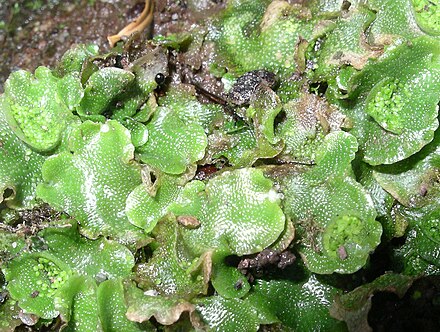
That said, what's a liverwort?

The Marchantiophyta are  bryophyte land plants. Bryophytes consist of mosses, hornworts and liverworts.

They're small, usually less than an inch. If you find a rock in a relatively moist environment you'll probably find lichen-- that flat, gray, leaf-like material-- and liverworts. They have no stems. No leaves. The ones that I've seen look like bits of green clay spread over a rock with a spatula.

They are non-vascular. Vascular plants have tubes inside of them that are used to transport fluid and nutrients-- the plant analog to blood vessels. Liverworts lack this. So it can't get very big.

Liverworts need water to reproduce. They build reproductive structures for their gametes and the gametes have flagella to propel themselves through thin films of water. It's not surprising that they are not prevalent live in excessively dry environments and are not terribly tolerant of direct solar radiation. That rock you found them on was likely shaded. Although, there are desert species.

The liverwort plant body is called a thallus-- interestingly enough, the same term is used in describing algae and fungi. It's anchored to the ground by a rhizoid. Rhizoids can be as little as one cell across and are hair like. Since the liverwort lacks vascularization, diffusion of nutrients, oxygen and waste products has to be across cells. Hence, it's thin. It's outer skin is often covered with a waxy material called cutin to protect it from drying out. Liverworts lack lignin, the main support polymer of vascular plants, so it can't get very tall.

(See here.)

In short, the liverwort does pretty much the bare minimum to survive on land. It looks as if a green algae thought of the cheapest and easiest ways to survive on land and implemented them. It's a long way from a liverwort to our towering oak. Still, it's a step in the right direction.

It's not hard to imagine liverworts (or something like them) in the shade of a boulder a few feet from a lake, in a lonely and barren world, bare rock in all directions.

The liverwort doesn't care. It's got a foothold.

More reading:
Early evolution of plant evolution
Invasion of the land by plants: when and where?
Climate change caused by land plant invasion

Sunday, November 1, 2015

State of the Farm: The Problem of Abundance


(Picture from here.)

Yeah, another State of the Farm. We're still in harvest season. It tasks me. I shall have it.

I've complained about this year's weather before and, truth be told, we did not get the amount of garden produce we wanted. Potatoes, not so great. Tomatoes were a joke. Beans and cold crops ended up lunch for a woodchuck.

I mean we did have enough garden crops to enjoy many good meals. We have some beans in the basement. But we didn't have what one would call abundance.

Not from the garden, anyway.

Much of our tree harvest-- chestnuts, peaches, cornelian cherries and persimmons-- were quite good.Which brings us to the problem of abundance.

Getting beans, tomatoes or plums here and there adds spice to the table. But harvest has to cope with the problem of scale.

For example, let us consider the chestnut.

The native American chestnut is all but wiped out by the chestnut blight-- a nasty fungus brought over to us from Japan. The chestnut ranged from north Alabama to Vermont. It was a climax tree and supplied food to native Americans and wood to colonists. In Italy, chestnut flour in some places was a more important staple than wheat flour. The blight changed all that.

What we have now are hybrids of various sorts between Chinese chestnut and American chestnuts or pure Chinese chestnuts. Resistant strains have been developed and it is possible that someday the American Chestnut will return in force. I hope for that. I hope for the return of the American Elm, as well.

We have three trees on our property. Until this year, we didn't have a mature enough pair to get a good yield. This year we went from a pound or two to somewhere between thirty and sixty pounds. This is several hundred chestnuts.

If you look at the picture at the top, you'll notice a vicious looking burr and brown nuts. The spikes on a burr will penetrate most leather gloves. It has to be removed.

The brown on the remaining nuts is a sheath. Most people boil the nuts in some way to loosen the sheath. That's okay for a few but isn't practical for hundreds. What we do is puncture the sheath and microwave them. This loosens the brown sheath so it can be removed with a paring knife.

Not shown in the picture is the papery covering underneath. We dry the nuts and then remove the papery covering. Then, we vacuum seal them and store them in the basement.

This process isn't so bad for a pound or two. But we've been skinning burs for a couple of weeks now. 

In previous years, we've used it in soups. I'm not sure how many dried chestnuts we have but it is north of twenty pounds. Clearly, we'll be discovering new uses for it.

My point is that the scale of harvest is meaningful. Every gardener has a zucchini story where they kept on coming like it was the zombie apocalypse. It's a painful experience. Here is the very earth providing you with more than you asked for. The compulsion to make use of it is overwhelming. I remember one place I worked where the break room had three large zucchinis on the table labeled "free", every Monday throughout the month of August.

But we'll manage the chestnuts. Grind them into flour like the Italians did.

A bigger problem for us this year was fruit. Specifically: peaches, grapes and persimmons.

The peach harvest was in the tens of pounds. Cut 'em up and put them in the freezer. Then the grapes came in-- somewhere around sixty pounds of Concords and about twenty pounds of Marechal Fochs. Twenty pounds isn't that much for the M/F's. The grapes are small and the bunches compact. I intended them for wine so I wait until I have about thirty to forty pounds and then it's into the press.

The Concords are a different problem.

The Concords loved this weather. This is the greatest yield we've ever had. All from one vine. But the Concords have always had a fairly good yield. This year was exceptional but perhaps as much for the low numbers of yellow jackets as anything else. In previous years, I've had to fight them for the grapes. About the time they come in the wasps start looking for a good food source for the winter.

I blended in the Concord to the M/F in the wine making and it worked pretty well. But then the harvest became too much.

I don't really like the taste of dried grapes and getting rid of the seeds is a problem. In addition, there are only so many grapes one can eat either directly or in the form of jam. I considered making a grape syrup similar to maple syrup but that turned out to be a shortcut back to jelly.

So, about fifteen years ago, I started an earnest journey to make a good, dry Concord wine. It took about ten years. I have technique and recipe, which I'll talk about in the future, but this post is already too long. Suffice to say, forty pounds of Concord grapes can be spun into six gallons of a nice blush wine. Much easier to store. But the steps are still a scale issue:
  1. Harvest the grapes.
  2. Pull the grapes off the stem.
  3. Freeze them.
  4. Thaw and press.
  5. Make wine-- it's own set of steps.
As the total amount increases, small inefficiencies start to play a center role. Once we figured out the best way to remove the nut from the burr, the limiting factor became removing the sheath and drying it. Our little food dry is running 24/7. In the case of the grapes, I spent a lot of time in front of the TV removing grapes from stems. Pressing can be done in a batch but it needs a big press. About six years ago I gave up and bought a good one. The time consumed in lots of little batches more than made up for any lost juice in a big press. But if I wasn't making wine, what would I do with the grapes? 

Abundance is a fact of nature-- we're not the only ones that take advantage of it. All organisms produce more offspring than are strictly needed to allow for attrition. Cod lay up to 500,000 eggs/kg of body weight. Our two chestnuts provided us with hundreds of potential offspring. The natural systems presume predation on offspring and produce accordingly. In this context, we're the predators. Others, like commercial bananas, depend completely on us to propagate them. The supermarket banana will not sprout on its own.

On our little farm, we're interrupting the chestnut reproductive cycle, preventing them from recolonizing the northeast for our own selfish purposes.
Makes me want to laugh like a super villain. 
Ha ha! Castanea dentata! Foiled you again!
Oh, please. Let me propagate and become a climax forest species again. I'll do anything you ask.
Never! You had your chance! Now it is the turn of the oaks and the maples.
Fiend!
Gives you something to do when you're pulling off burrs.