Saturday, May 22, 2010

Sim-Life... For Real


(Picture from here.)

The Second Big Thing that happened this week is the creation of an synthetic bacteria.

No, I don't mean fiddling around with an existing bacterial. I mean a fully functional artificial bacterial genome.

Craig Venter has been working on this problem for some time. His approach to artificial life is to create a synthetic bacterial genome and implant it in a host cell where the original DNA has been removed. The cell machinery itself is not synthetic.

Once the DNA was placed in the host cell, the cell behaved as it had been programmed to do by the synthetic DNA and not according to the DNA of the original host cell. The cell has replicated successfully.

This approach to synthetic life solves a piece of the problem: creation and transfer of a working synthetic genome.

The genome in question, though created in the lab, derives from a living system: Mycoplasma capricolum. The target cellular host is also a Mycoplasm. It is not a genome created from scratch to a particular purpose.

There is corresponding research into the smallest possible genome: the bare essential genome that can be used as a pattern for true synthetic life. Carsonella, for example, has only 182 genes and 160,000 DNA base pairs. The artificial chromosome used by Venter's team was a million base pairs. Carsonella, however, is a parasite. A recent nanoorganism, dubbed ARMAN, has been discovered in northern California. (See also here.) Its genome has about a million base pairs-- more comparable to Venter's chromosome.

It could be that Venter's team is pushing down towards the lower limit of a viable genome.

Articles on the work:
BBC
Nobel Intent
Make
Jerry Coyne
========================================
Wall of Idiots
James David Manning. And here.
Gleeeen Beeeeck
Lies about Kagan.
Brit Hume
Rand Paul and here
National Republican Congressional Committee
Sue Lowden
House GOP
Douglas Hughes, R candidate for CA governor
Andrew Brown

Links of Interest
Solar ovens
Earthworms don't just eat dead things
Japan launches Akatsuki probe to venus
Sexual deceit in antelopes
Birds don't like organic seeds
BP tries again
Crane locomotives

DIY
Solar Homesteading Videos
Satay peanut butter sandwich
Terracotta home composter
Your First Robot
Garden rain barrels
Resin cast parts
5 minute bottle brush
Bucket bee hive
Solar cooking

Tuesday, May 18, 2010

You'll Wonder Where the Anti-Matter Went


(Picture from here.)

Two Really Big Things happened recently in science. One in physics. The other in biology. We'll talk physics here today.

The physics Big Thing has to do with the composition of the universe.

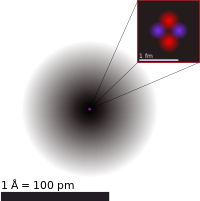
Anti-matter is the opposite of normal matter. Electrons have a negative charge. Their opposite number, positrons, have a positive charge. Protons have a positive charge and anti-protons have a negative charge, etc. Anti-hydrogen would be an anti-proton with a positron shell.

When anti-matter and normal matter come into contact they annihilate one another into photons.

However, there appears to be no other difference between anti-matter and matter. The particles are of the same mass. They interact with one another in the same way. Antihydrogen and antihelium have been created and appear to be identical to their normal counterparts.

So, in the big bang why weren't there equal amounts of matter and anti-matter created? (Other than we wouldn't be here to talk about it because we would be... annihilated.)

This has been an ongoing question for a long time and is referred to as asymmetry and is considered one of the big unsolved questions in physics.

Well, some new clues came out of Fermilab recently that sheds a few photons on the problem. It turns out that there are a set of particles called B-mesons that decay into matter and anti-matter. The neutral form of these particles oscillate between a matter and anti-matter form. Depending on the point of oscillation, the particle decay into muons or anti-muons. (A muon is an elementary particle similar to an electron. It has a negative electric charge. See here.)

The B-mesons preferentially decay into muons rather than anti-muons-- a preference of about 1%. Here's another demonstrable pre-disposition towards normal matter.

It's not much. But it is interesting.

The preferences that have been described are small-- 1% isn't very much since the universe is overwhelmingly normal matter. This causes me to have the following questions:
Is this tiny preference constant? Or was there a greater preference at the moment of the big bang?
If the preference is the same, and since normal matter is overwhelmingly present, this argues there was considerably more mass at the time of the Big Bang that was subsequently annihilated. Can that energy be accounted for?
Where is dark matter in all of this? Is there a normal/anti- form of dark matter or does it not have this sort of interaction?

Isn't physics fun?

Further links:
BBC
Nobel Intent
=========================================
Wall of Idiots
Wall Street Banks
Glenn Beck
Teacher, Center High School, Alabama

Links of Interest
English-Russia
Mechanical swallowtail butterfly
Solar sails
Artificial life. And here. And here.
V: Human industrial palace in action
Llyn Foulkes: One Man's Band
Billboard stop action animation

DIY
PVC didgeridoos
Upside down tomato planter
Old window greenhouse
Pringles wind turbine
Solar thermal collector
Saving energy
Sun jar
Solar panels
Bike generator
Water flow sensor
Eco-friendly living room lamp
Power generating wind turbine
Solar PV tracker
Pulse oximeter

Monday, May 17, 2010

About "Two Boys"


My story Two Boys goes up on Book View Cafe today. I chose that one to put up this time in celebration of the sequencing of the Neanderthal genome. I spoke about that here and here.

The story came about in an odd way. I was approached by an editor to write something for his anthology. The idea of the anthology was to take a bunch of SF writers and have us write upbeat stories that solved the world's problems. The anthology never materialized.

I thought for a long time about this and came up with absolutely nothing. What did I know about curbing global warming? Stop emitting CO2, I suppose. Or world hunger? I guess one could feed people contingent on not having more children-- since that was the root of the problem. Clean up the environment? Hm.

The more I looked at these as "problems" the technical solutions were manifest. We know how to solve these problems. It's not a technical problem. It's a managerial problem.

I came up with two stories for the anthology. Two Boys is one.

Sunday, May 16, 2010

Neanderthal Speculations


(Picture from here.)

I spoke in my blog (see here) about the recent Neanderthal sequence effort and the resulting evidence that Neanderthals and humans interbred.

Now, mitochondrial DNA of Neanderthals was sequenced some time ago. (2008: See here.) What's interesting about that is there is no evidence in that DNA of interbreeding. This new information is about nuclear DNA and has several common points. I suggest you go to the previous blog mentioned above sequences to get the original information.

The high points, then:
  1. Homo neanderthalis is 99.7% identical to humans. (Chimps are 98.8% identical to humans.)
  2. Neanderthals and humans split about 400,000 years ago.
  3. Interbreeding could have occurred as recently as 80,000 years ago, when modern humans migrated out of Africa, but more likely about 60, 000 years ago.
  4. Approximately 2% of the genomes of present-day humans living in Europe to Asia comes from Neanderthals.
  5. No appreciable DNA in present-day humans in Africa appear to have derived from Neanderthals.
  6. There is evidence of selective sweeps: DNA that was found to be sufficiently selectively advantageous to move through the population.
From this point on we're indulging in pure speculation. No data to support any of this and the sample size is too small for prediction. We're just gonna' have fun.

The first interesting thing is the differential inheritance between nucleic and mitochondrial DNA. Mitochondria derive solely from the mother. Now this cannot mean that human men would not mate with Neanderthal females. Humans will copulate with anything: dogs, cats, trees, garbage cans. If it can be done, human males will do it.

It can mean Neanderthal females would not accept human male advances. There's some evidence that sexual dimorphism between males and females were not as pronounced as between human males and females. Neanderthals were incredibly strong in comparison with humans. It's fairly likely that a single Neanderhal woman could easily take care of herself against human men. This doesn't preclude gang rape or possible infanticide of the offspring. But we have to start building some pretty high air castles to account for no interbreeding.

Although there is one interesting scenario. At some point in human history we started hiding estrus. We don't know when that happened-- none of the characteristics of an animal being "in heat" fossilize. But it did and it did long before recorded history. Chimps, our closest living relatives, have the standard primate estrus cycle. The female is not particularly receptive to sex when she's not ovulating. The males are excited by the physiological signals she puts out when she is. Humans don't do any of that.

It's not a far speculation to think that Neanderthals were like chimps in this respect rather than human. Like other primate species, males are always producing viable sperm even when no available female is in the vicinity. It's not too far off to think that Neanderthal women, even if willing, would not necessarily be viable outside of estrus periods. And it's also not so far off to think of this being the point when they would be most vigorously defended by Neanderthal men.

Another possibility is the differential representation is biological. Possibly the cross of male Neanderthal and female human was viable but the cross of male human and female Neanderthal was not. Perhaps female Neanderthal reproductive systems rejected human embryos as non-viable or irretrievably damaged and female human reproductive systems were not so selective.

So we have back in the past two human groups cohabiting the same landscape where males from both species are competing for females of one species. An interesting dynamic.

Of course, it could all just be the result of genetic drift. That's the basis for the mitochondrial eve hypothesis.

Another curious feature of the research is the differential between African and non-African human groups. The answer is obvious: the humans that moved north didn't move back south. Consequently, any genetic sweep that occurred stayed north of the Sahara.

The two questions that immediately leap to mind are 1) What were the selective advantages of the genes in the sweep? and 2) Do they have any bearing on the world now?

Now this is the sort of thing a blogger might say: "here be dragons." After all, it doesn't take very much to get a good racist attitude going. The Eugenics Movement started with less.

Still, where we came from is an indicator of where we're going. So, let's dive in.

Some of the genes implicated as "sweep" genes are DYRK1A, CADPS2 and AUTS2. RUNX2 is also implicate. It's already known that Neanderthals share the FOXP2 gene, though it is thought that this is more an artifact of common heritage than interbreeding. DYRK1A is implicated in Down Syndrome. CADPS2 has to do with managing the vesicles in neurons and has been implicated in autism. AUTS2 is also one of the candidates for autism. RUNX2 is one of the regulatory genes for skeletal development. FOXP2 mutations have been associated with speech and language disorders.

So: we have two regulatory genes (DYRK1A, regulating cell proliferation and possibly brain development, RUNX2, skeletal development) and two genes strongly correlated with neurological development (CADPS2 and AUTS2).

Why would they sweep?

It can't have much to do with intelligence-- Africans show little difference from Europeans when corrected for test deficiencies. It's also an unlikely candidate since intelligence is highly selected among human beings. Any thing that swept on basic intelligence would be driven strongly towards maximum. I.e., we'd see a huge difference.

The skeletal development gene might be interesting. Are there cold adaptations in skeletal development between African and Eurasians? Hard to say.

It must also be remembered that whatever selected for the sweep of these genes through the population may no longer be active. We could easily be seeing an artifact of a past sweep and the relic has no present bearing at all. Or, it could be that the group that moved north had some disadvantages that were remedied by the introduction of Neanderthal DNA and the net effect is zero.

But I'm a science fiction writer. I like to play with dangerous things.

I've read Jared Diamond's two books: Collapse and Guns, Germs and Steel. When I read both books, I kept coming back to the idea of the Tragedy of the Commons, Garret Hardin's article from 1968. To encapsulate a very interesting idea: private gain trumps common good. This is something I see as an American all the time. (Of course, America is the encapsulation of the world, right?)

When I read about other cultures I see it considerably less than I see it in Euro-centric cultures. In many other cultures, tribe and/or family trump individual gain. What if this was something we gained from the Neanderthals, a change in the boundary condition between tribe and extended family versus local family and individual? A minor reduction in the ability of the individual to defer gratification based on inhibitory cultural patterns? A tiny reduction in the ability to sensing tribal/familial place? Something that might have served us back when we had to fight mammoths and glaciers but which has little place now?

Now, let me say on record that I think any genetic differences between races, genotypes and gender are completely overwhelmed by the noise of cultural adaptation. Whatever we use in our heads to navigate the internet or solve differential equations is not derived from any tiny differences accumulated from 80,000 years ago when one small group of humans moved away from another small groups of humans.

I expect there are differences between peoples based on genetic heritage. I also expect that they rarely manifest themselves as conveniently as simple differences in abilities. Do Kenyans have an innate genetic ability to win the Boston Marathon? Or are Kenyans predisposed by their upbringing and geography to win the Boston Marathon? My money is on the latter more than the former. But the former has more juice for a science fiction story than the latter.

To paraphrase Randy Newman, "I'd sell my soul and your soul for a story idea".

That said, genetic sweeps don't just happen; they're the result of something useful propagating through the biology of the population. They are evidence that different subgroups of the human population have, historically, evolved differently from one another.

They are relics of where we came from.
======================================
Wall of Idiots
V: Bleeding Gulf and here and here
Kagan and the American "Heartland"
Identity politics and the right
Tea Party Woodstock
Senator Kit Bond (R-MO) and here
Laura Ingraham
Republican lies about Bobby Bright

Links of Interest
DNA Robots
Bared teeth in archaeological artifacts
Possible new Homo species and here

Friday, May 14, 2010

Pet Trade Logistics


(Picture from here.)

We have pet turtles. The majority of them are captive bred and we like that for a reason: the terrible logistics of the pet trade. Most imported reptiles (or any exotic) come from the third world. This makes sense given that the developed world has largely depleted its own stock of reptiles or didn't have much to begin with. The path goes like this:
  1. capture
  2. holding in the source country
  3. shipping
  4. holding in the target country
  5. distribution to point of retail
  6. retail sale
  7. home husbandry
There have been some estimates that each step can take as many as 50-80% of the animals. But, even if only 10% are lost at each step, a hundred animals in the wild drop to forty-eight in the home. If 30% are lost at each step that forty-eight drops to eight.

We reasoned that reversing that logic, by competing with wild caught animals, any captive bred animal in the pet trade saved at a minimum forty-eight animals. Breeders lower demand on the retail end. It's not at all clear that this might have any effect. We'll see.
=====================================
Wall of Idiots
Lies from the Pennsylvania special election
More birther nonsense
More bad climate news
Bogus anti-net-neutrality campaign
Cage match: Adobe vs Apple
Facebook: Creeping up the evil scale
Minerals Management Service
More crap about Kagan
Louisiana house

Links of Interest
Tracing light in paper
More on the new Eurasian human
More on the Burgess Shale
V: Clustershag at 10 Downing Street
Hermes Private Spaceship
Does immigration cost jobs?
Criticisms of Obama's space plan
Diabolically admirable evil: Paul Hubbert
Archaeopteryx biochemistry

DIY
Rok-Bak Chair and here
French toast
Chili
Nomad furniture
V: Solar cooking
Wall mounted barbecue
Inventions of Prisoners
Chicken house in a box
Database of electrical components

Monday, May 10, 2010

BVC Steampunk Photo Contest


(Steam Punk Iron Man from here.)

Book View Café’s Extraordinary Steampunk Photo Contest

In celebration of Book View Press’ upcoming release of The Shadow Conspiracy Volume II (SCII), Book View Café is holding a steampunk photo contest. The winning photo will be used on the cover of SC II which is scheduled for publication in December of this year. Prizes for the winning entry will include a copy of The Shadow Conspiracy Vol. I and The Shadow Conspiracy Vol. II, as well as assorted ebooks from BVC authors. Additional photos may be chosen for illustrations in SCII.

Details and rules for the Shadow Conspiracy Extraordinary Steampunk Photo Contest can be found here.

============================
Wall of Idiots
Fox News
Pubic lice for sale
Right change.com
Don Benton, Washington state candidate
Blamethrowing: oil executives and the spill
V: Bradley Byrne, runnning for Governator of Alabama and here
Brad Goehring, R candidate for Congress
AmeriPAC
God smacking

Links of Interest
Language of evolution
Best optical illusion of the year
The ice in the oil slick: clathrates
Blackbird SR-71 flight manual
Status on the BP oil spill
Making government work: handling the oil spill
Black hole hurled from galaxy
Belgian recumbent bicycles
Tea-tards conquer Maine
Hexapod dance off

DIY
V: Stuck in Vermont: Tiny Houses
V: Overhead projector music
V: Jarton: The Robot
6 month solar duration images
Backyard fire pit
Twig trellis
Bagels
Concertina disassembly
Spice jars
Tiny house in Pacific Grove
V: Tiny Yellow House
Soda can Stirling engine
Stirling engine videos: Here. Here. Here. Here.
V: Taking apart a Stirling engine

The Great Neighborhood Oil Spill


It's hard to put things in perspective when you hear it on the news. Paul Rademacher has managed to give us a tool to do just this with the Gulf Oil Spill.

If you go to his google maps site here, the site will take your given location and take the current extent of the spill and place it over the location.

I live up here near Boston. It covers from Boston to Worcester and a good portion of the harbor. I got the site from Jessica Palmers Bioephemera, which I highly recommend. Another site gives the perspective of the size of the really big oil spills: here and here. Current status here, here and here. Here's a discussion on how oil chemically breaks down in water.

Other places I've lived:
Columbia, MO: All of Boone County. Jefferson City. Booneville.
St. Louis, MO: All of St. Louis. Most or all of St. Louis county. St. Charles and much of nearby Illinois.
Seattle, WA: All of the Sea-Tac area. All of the inland sound. Bellevue. Snoqualamie. The nearer cascades. Mt. Rainier is missed. Barely.
Thousand Oaks, CA: Oxnard. Santa Clarita. Anacapa Island and a good deal of the Pilgrim Banks.
Huntsville, AL: All of Madison County. A good portion of north central Alabama with a tongue half way to Burmingham.
Albuquerque, NM: West nearly to Mesita. Santa Fe. Las Vegas, NM. Pena Blanca.
===================================
Wall of Idiots
Senator John Barrasso (R-WY)
NJ Judge Kenneth Del Vecchio and here
GW Bush US Minerals [Mis-] Management Service
People's impression of "just a theory"
Economic loss from nature loss
Senator john Cornyn (R-TX)
Arizona
Losing coral snake antivenin

Links of Interest
Solar in a shipping container
Water colors as response to heart condition: Lorianne Parker
State budgets unwind. And here.
3 best optical illusions of the year
Footprints of nonsentient design in the human genome and here
Granny pods
Losing Voyager 2
World's tiniest cannon

DIY
Upside down tomato planters
Kid cabin
Greenhouse
Vegetable oil heater
V: Bottle island
V: Peltier cooled cloud chamber
Biltong maker
Webcam -> Microscope and here
Molasses cookies
Sugar infused apple-cinnamon ice cream thingee
Wood lathe-sander-grinder/sharpener
Garden fountain
Coke can Stirling engine
Hybrid photovoltaic/thermal solar panel
Model hovercraft
Seasoning small section timber